

Protect Your Wind Turbine Investment by Predicting the Unpredictable
Emerson’s Ovation™ Green software and automation technologies includes comprehensive wind solutions that leverage our decades of deep industry expertise.
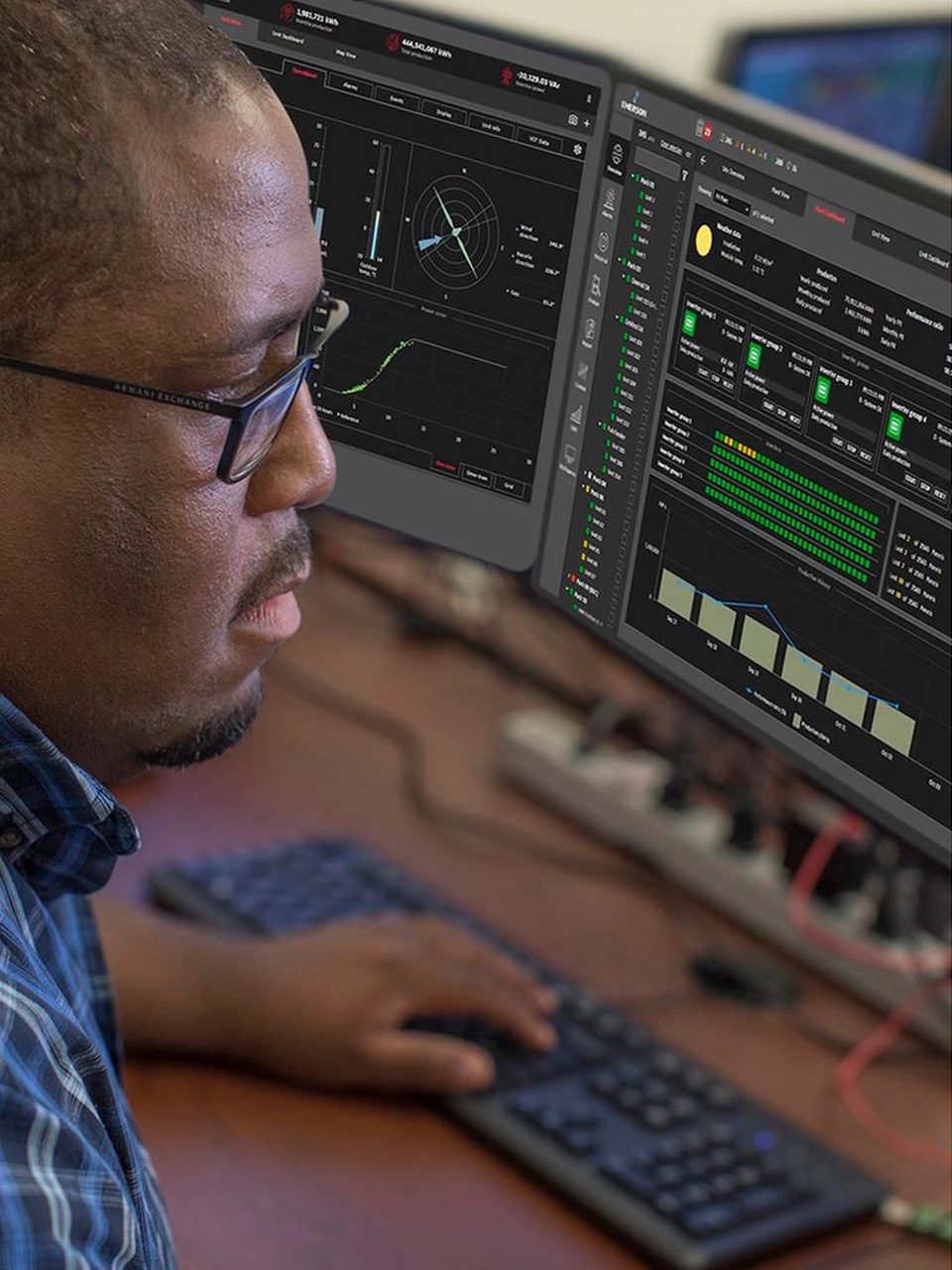
Specifically designed for wind turbines, our condition monitoring software uses real-time data to quickly pinpoint the root cause of an issue before it escalates - enabling faster, more informed decisions.
Each solution is tailored to meet unique individual turbine needs and is adaptable for implementation across a fleet of wind assets.
Key Benefits of Ovation Green Wind Turbine Condition Monitoring
- Powerful software and robust hardware
- Advanced diagnostics using kinematic equipment data and sophisticated monitoring algorithms
- Tight integration with Ovation Green asset management and SCADA software
- High level of signal quality
- Certified (standalone and integrated versions)
- Optional integration with third-party control systems
- Ability to use existing or Emerson-supplied vibration sensors
- Flexible setup and extension with auxiliary sensors
Versatile Implementation Options
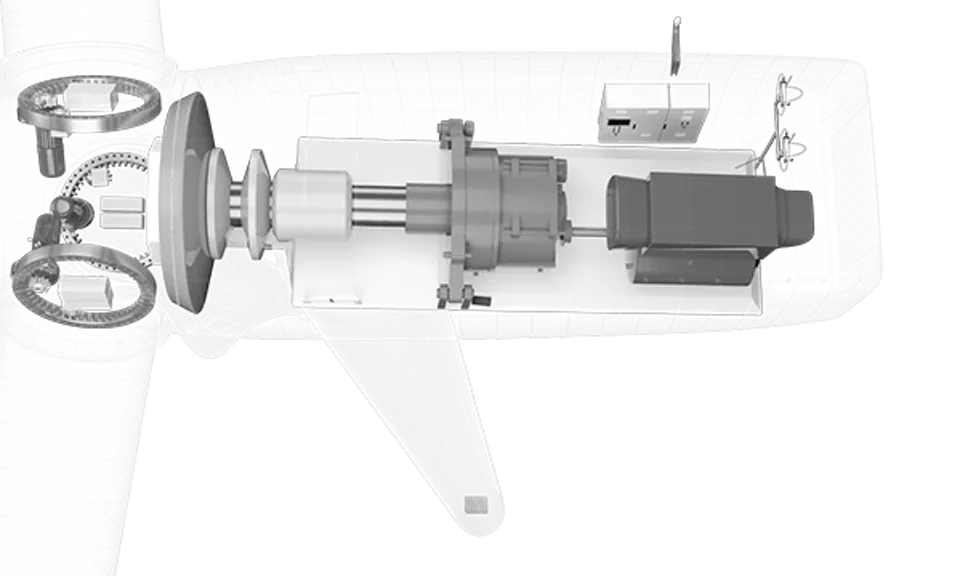
A combined solution of wind turbine and condition monitoring control embedded in an Emerson controller.
- Wind turbine control
- Condition monitoring system software
- Condition monitoring system control platform
- Power panel
- Sensors and cables
- Accessories
Frequently Asked Questions about Wind Turbine Condition Monitoring
Forecasting upcoming wind turbine maintenance can be challenging as some wind turbines lack condition monitoring or the OEMs restrict access to detailed data needed for maintenance planning. Wind farm operators without a wind turbine condition monitoring solution often rely on “reactive” maintenance, where problems are addressed only after they cause disruptions, leading to unplanned site visits, increased service costs and reduced turbine availability. Real-time insights into wind turbine performance available through condition monitoring provide operators with the data needed to plan ahead to keep turbines running at peak availability and performance.
Operators who lack a condition monitoring system face several operational hurdles. The most obvious is providing real-time status and trending insight on the rotating components in their turbines. From the vibration signatures, much can be told about how serious the condition is. Without this, assessing the health of individual wind turbine generators (WTGs) becomes guesswork. Additionally, poor communication between disparate systems—such as SCADA, CMS, and OEM diagnostic tools—limits the ability to consolidate and analyze data effectively. This fragmentation makes it difficult to detect early warning signs or compare performance across turbines or sites.
These limitations often result in a high dependency on manufacturers for analysis and troubleshooting. While OEMs may issue alerts quickly, operators without their own CMS must rely solely on the OEM’s interpretation of the issue, which may potentially lead to more expensive corrective actions. Without independent data and analysis, operators have limited ability to validate the severity of a fault or explore less costly maintenance options.
Operators that implement condition monitoring report a range of tangible benefits. With faster and more detailed alerts about rotating component issues, maintenance planning becomes more strategic and proactive. This leads to improved turbine uptime and maintenance that is more predictive, cost-effective and performance driven. With better visibility into asset performance, operators can extend the lifespan of components and maximize energy production. Ultimately, condition monitoring helps protect investments and ensures long-term reliability.
Yes, condition monitoring systems can be compatible with older wind turbines When evaluating condition monitoring systems, consider one from a reputable supplier, designed to be flexible and compatible with a wide range of turbine models, including older units.
Emerson offers comprehensive Wind Turbine Condition Monitoring solutions and expertise that tackles these challenges, offering a tailored solution that fits your operational goals.