
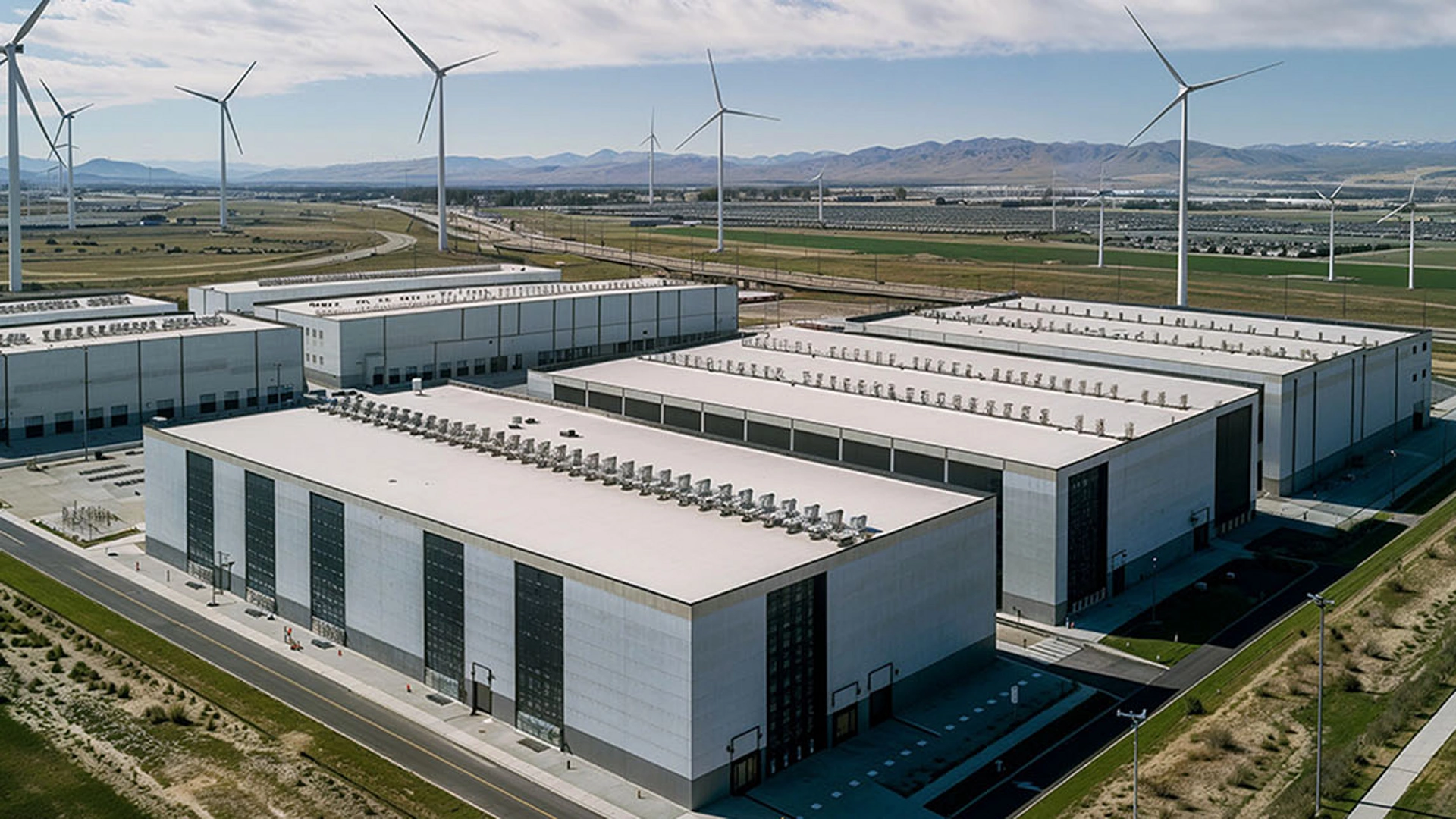
AI workloads are reshaping hyperscale data center design at unprecedented speed. Facilities that once required years of careful power planning are now expected to come online in compressed timelines, often exceeding 200 MW while supporting highly dynamic, GPU‑intensive loads. At the same time, operators face mounting pressure to integrate renewable energy sources as part of long‑term sustainability strategies.
This combination creates a dilemma: how to deliver capacity fast today without locking in rigid power architectures that restrict renewable options tomorrow.
Why Speed and Flexibility Often Conflict
To meet aggressive deployment schedules, many hyperscale projects prioritize firm generation, grid interconnections, and proven electrical designs that minimize risk during commissioning. While this approach supports near term reliability, designers should consider their automation strategies from the onset before renewables integration is eventually done later.
Solar, wind, battery storage, and other distributed energy resources introduce variability that cannot be reliably managed through manual processes or loosely connected tools at hyperscale scale. Implementing a unified control approach from the very beginning helps mitigate the complexity, cost, and operational risk that could occur when adding renewables later.
A Control‑First Architecture Changes the Equation
A renewable-ready data center has control and data systems in place that allow renewable energy sources to be integrated later in the lifecycle without disrupting reliability or operations. Instead of layering additional systems as energy strategies evolve, operators establish a unified control environment capable of coordinating firm generation, renewables, storage, and grid interaction in real time.
Emerson supports this approach by designing and implementing site‑level and grid‑interactive control architectures that scale with facility growth. The Ovation™ Automation Platform provides deterministic, real‑time control across diverse energy assets, while Digital Grid Management software adds forecasting, scheduling, and market‑aware optimization capabilities.
Together, these systems allow hyperscalers to:
- Commission facilities quickly using stable initial power configurations
- Integrate renewable energy incrementally without destabilizing operations
- Balance AI‑driven loads with variable generation and storage in real time
- Make informed day‑ahead and intraday energy decisions as markets evolve
Preserving Optionality Over the Data Center Lifecycle
The most resilient hyperscale facilities are not defined by a single energy choice, but by their ability to adapt. As AI workloads shift, grid conditions change, and new renewable or firming technologies mature, a control‑first architecture preserves optionality without requiring fundamental redesign.
By treating control and energy orchestration as core infrastructure, hyperscalers can move fast today while keeping future energy pathways open.
Frequently Asked Questions about Renewable-Ready Data Centers
A renewable‑ready data center has control and data systems in place that allow renewable energy sources to be integrated later in the lifecycle without disrupting reliability or operations.
By using unified control and forecasting systems that coordinate renewables with onsite dispatchable generation, storage, and grid interaction in real time.
Emerson designs and supplies a unified control and automation platform with integrated energy management software that helps hyperscale operators balance response, reliability, and long‑term energy flexibility.
Learn More
- Explore how the Ovation Automation Platform supports unified, real-time control for hyperscale energy systems
- Learn how Emerson enables data center energy management and power orchestration across firm generation, renewables, and storage
- Discover how Ovation™ Green supports renewable operations within grid-interactive facilities
Source Acknowledgment
This Emerson perspective expands on industry challenges discussed in DatacenterDynamics, “Data center dilemma: How hyperscalers can meet AI‑driven timelines without limiting renewable energy options” (April 2026). The original article presents an industry view of the challenge; this page extends the discussion with Emerson’s experience designing and installing control architectures for large‑scale, grid‑interactive hyperscale facilities. Read the original article ↗