
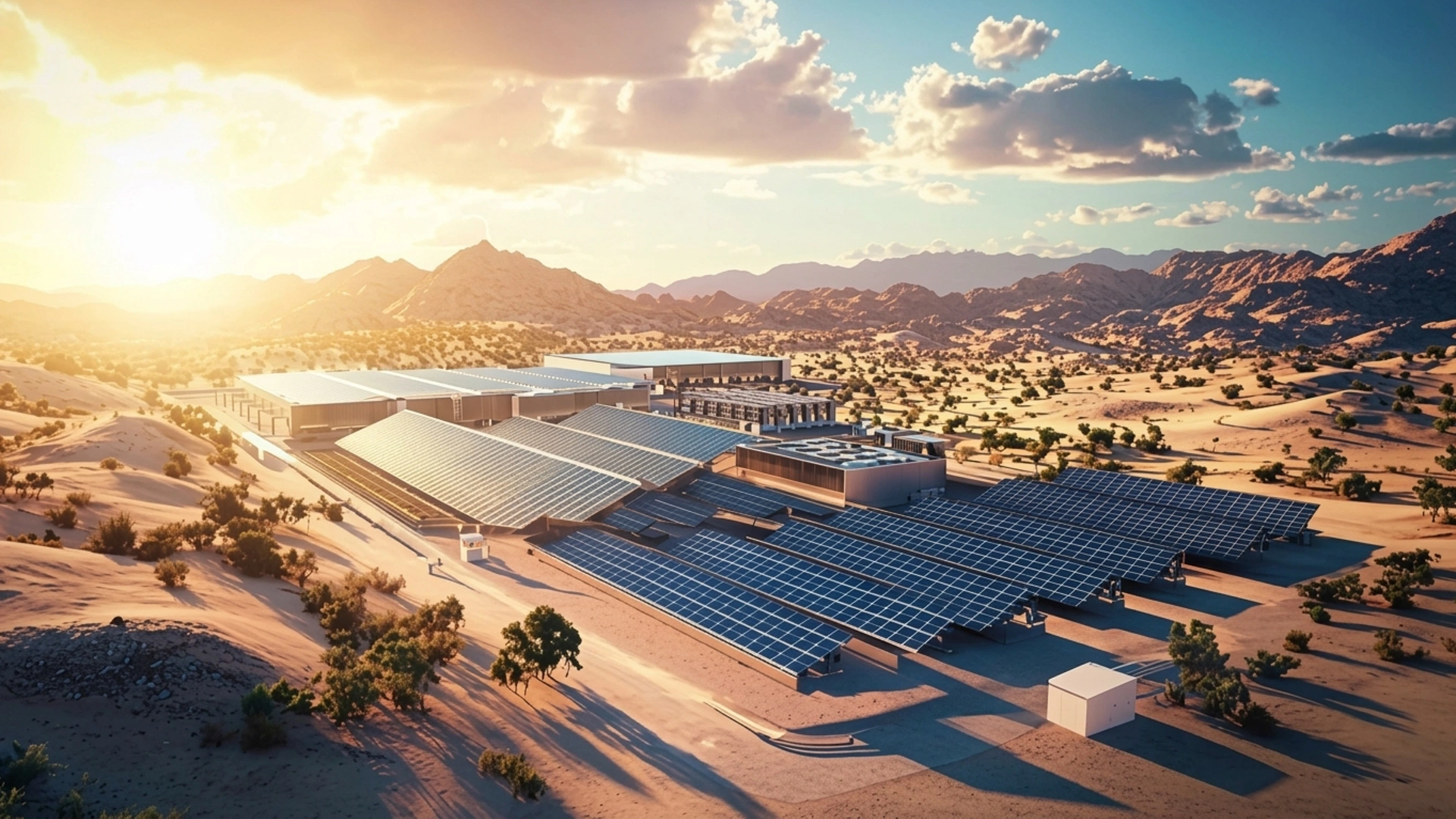
AI-scale data centers are driving unprecedented demand for power while simultaneously reshaping how power systems must operate. Highly dynamic AI workloads can create rapid fluctuations in demand, while growing reliance on solar energy introduces variability on the generation side of the equation.
Battery energy storage systems (BESS) help bridge this gap, providing the flexibility needed to balance intermittent renewable generation with fast-changing load requirements. However, as solar, storage, generation, and grid interconnections are added to the data center energy mix, the challenge shifts from deploying individual technologies to coordinating them as part of a single energy system.
Successfully managing solar, storage, and AI-driven load volatility requires a unified approach that enables all assets to operate together in real time.
Solar and Storage Are Reshaping Data Center Energy Strategies
Solar energy is becoming an increasingly important component of hyperscale data center power strategies. It offers opportunities to expand generation capacity, support sustainability objectives, and reduce exposure to fluctuating energy markets.
At the same time, battery energy storage systems are evolving beyond traditional backup roles. Modern BESS deployments help smooth renewable variability, respond to sudden changes in load demand, and provide operational flexibility across a wide range of operating conditions.
Together, solar and storage create new opportunities for data center operators. However, they also introduce new levels of operational complexity that increase as systems scale.
The Coordination Challenge at Hyperscale
As data center energy systems grow, operators must manage increasing volumes of operational data and coordinate assets that often originate from multiple vendors and control environments.
Solar arrays, battery systems, inverters, onsite generation, and utility interconnections each generate their own data streams and operating requirements. Without a coordinated approach, operators may face:
- Limited visibility across energy assets
- Slower response to changing operating conditions
- More complex commissioning and troubleshooting processes
- Reduced ability to optimize energy use in real time
These challenges are compounded by AI-driven load volatility, where large shifts in demand can occur within seconds. In these environments, reliable operation depends not only on the performance of individual assets, but on how effectively those assets work together.
Emerson’s Approach: A Unified Energy Control Architecture
Emerson has the proven history of helping hyperscale operators address these challenges through a unified control architecture that coordinates generation, storage, renewable energy resources, and load behavior within a single operational environment.
The Ovation™ Automation Platform provides deterministic real-time control and centralized visibility across complex energy systems, allowing operators to manage diverse assets as one coordinated system.
This approach enables:
- Real-time coordination across solar, storage, and conventional generation assets
- Automated response to fluctuations in supply and demand
- Centralized operational visibility
- Faster troubleshooting and commissioning
- Improved reliability under highly dynamic operating conditions
By establishing a common control framework, operators can transform solar and storage from standalone technologies into integrated components of a responsive energy architecture.
Connecting Real-Time Control with Energy Optimization
Maintaining stability in real time is only one part of the equation. As data centers continue to scale, operators must also optimize energy usage, storage utilization, and resource planning over longer time horizons.
Emerson supports this layered approach through integrated forecasting, scheduling, and optimization capabilities. Platforms such as AspenTech Digital Grid Management (DGM) help operators:
- Forecast renewable generation and load demand
- Optimize battery charging and discharging strategies
- Plan energy usage across day-ahead and intraday horizons
- Improve operational efficiency while supporting reliability goals
Together, real-time control and predictive optimization enable a coordinated energy strategy that balances flexibility, resilience, and cost management.
Building Energy Systems That Scale with Future Requirements
As data center power requirements continue to grow, operators need energy architectures that can evolve alongside changing business, regulatory, and sustainability objectives.
A coordinated approach to solar generation, battery storage, and energy control helps preserve flexibility throughout the facility lifecycle. New renewable resources can be integrated more efficiently, storage capacity can expand as requirements grow, and operators gain the ability to participate more actively in evolving energy markets.
Ultimately, the ability to coordinate energy resources as a unified system will play an increasingly important role in determining how effectively AI-scale data centers balance growth, reliability, and long-term energy flexibilit.
Frequently Asked Questions About Solar and Storage Integration for AI Data Centers
While solar energy provides cost-effective and sustainable generation, its output varies based on weather and daylight conditions. AI-scale data centers typically require additional resources and coordinated control systems to maintain reliable power availability.
Battery energy storage systems help smooth renewable variability, respond rapidly to load fluctuations, and provide operational flexibility that supports stable power delivery.
Solar arrays, batteries, generation assets, and grid interconnections must operate together in real time. Coordinated control helps optimize performance, improve reliability, and reduce operational complexity.
A unified energy control architecture provides centralized visibility and coordinated control across generation, storage, renewable energy resources, and facility loads within a single operational environment.
Operators use real-time control systems, battery storage, and energy optimization tools to coordinate resources and maintain stable operation as demand changes.
Emerson provides control, automation, SCADA, battery management, and energy optimization solutions that help operators coordinate renewable energy resources, storage systems, generation assets, and load behavior within a unified framework.
Learn More
- Explore how the Ovation Automation Platform enables centralized control across data center energy assets
- Learn how AspenTech Digital Grid Management (DGM) supports forecasting, scheduling, and energy optimization
- Discover how Emerson supports data center energy management across renewable generation, storage, and grid interconnection
- Learn how Emerson’s battery energy management capabilities help coordinate large-scale energy storage deployments

Source Acknowledgment
This Emerson perspective expands on industry challenges discussed in DatacenterDynamics, “Making solar and storage work for AI-scale data centers” (July 13, 2026), by Ryan Franks. The original article examines the growing role of solar energy and battery storage in supporting AI-scale data center power requirements. This page extends the discussion by highlighting how Emerson’s unified control architectures, real-time coordination, and energy optimization technologies help integrate solar generation, battery storage systems, and dynamic AI workloads into a cohesive energy system. Read the original article ↗