
Executive Summary
Growing electricity demand, renewable energy expansion, battery energy storage deployments, industrial electrification, and the rise of hyperscale data centers are reshaping how energy systems are designed and operated.
As organizations coordinate increasing numbers of generation assets, storage resources, grid connections, and electrical loads, traditional approaches to energy management may no longer be sufficient. This evolution is giving rise to a new concept called the hypergrid.
Building upon the principles of microgrids, hypergrids apply coordinated control and optimization across larger, more multifaceted energy ecosystems. While the term is still emerging, hypergrids provide a useful framework for understanding how future energy systems may be managed to improve reliability, resilience, operational flexibility, and efficiency. Recent industry discussions describe hypergrids as an extension of microgrid concepts designed to support increasingly complex, energy-intensive environments such as hyperscale data centers.
The Evolution of Energy Management
Energy management is steadily expanding in scope. Initially, organizations managed individual assets. Later, they optimized power plants, renewable fleets, and industrial facilities. Microgrids introduced coordinated control of local generation, storage, and electrical loads.
Today, many operators face a new challenge: managing interconnected networks of generation resources, battery storage systems, utility connections, and major electrical consumers across multiple facilities and locations. Hypergrids represent the next stage in that evolution.
Key Takeaway: Energy management is evolving from optimizing individual systems to coordinating entire energy ecosystems.
What Is a Hypergrid?
A hypergrid is a large-scale energy ecosystem that coordinates generation resources, energy storage systems, utility interconnections, and major electrical loads through a unified operational strategy.
While there is no universally accepted industry definition, hypergrids are generally viewed as an extension of microgrid principles applied at much larger scales and across more diverse resources.
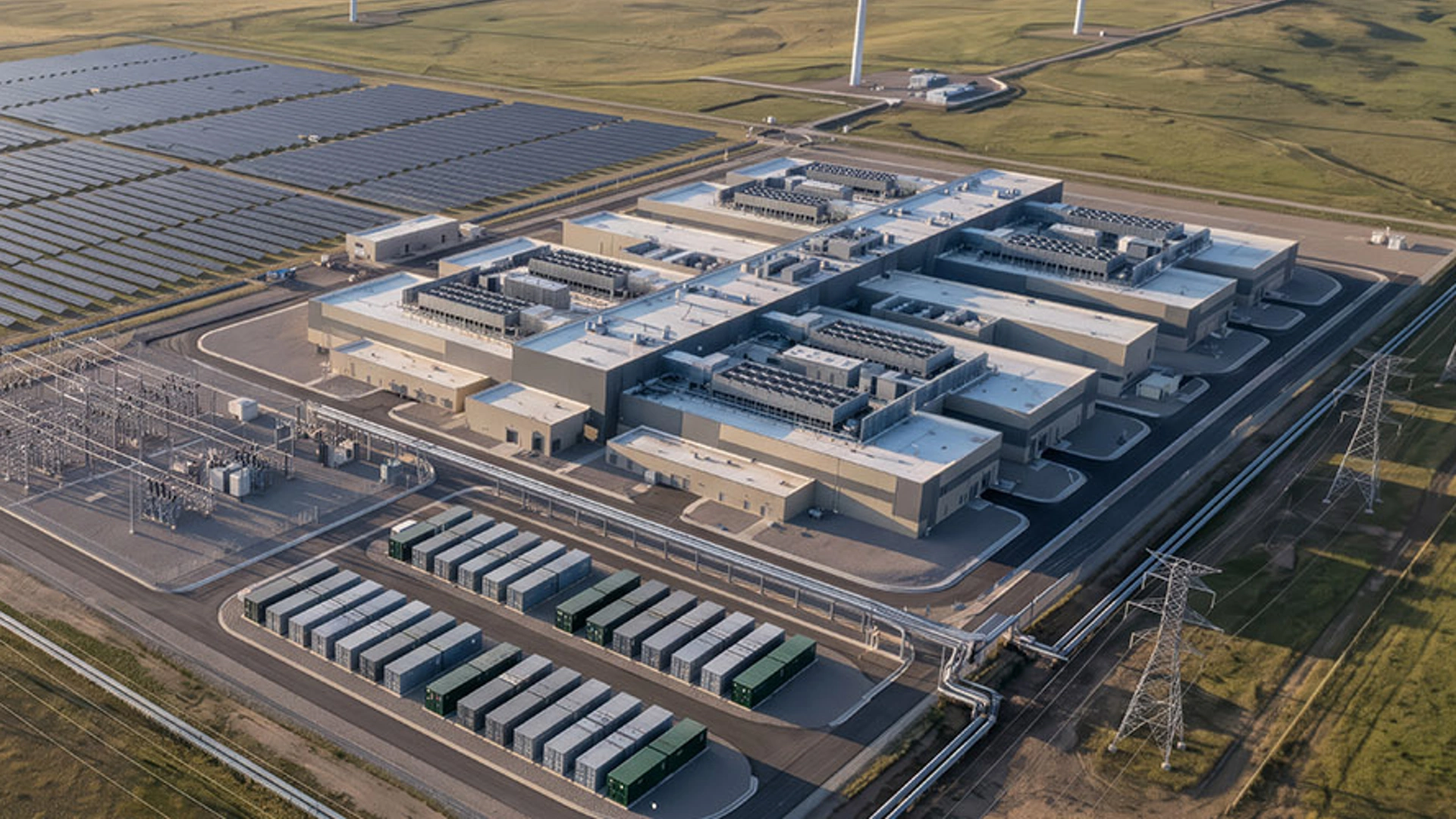
A hypergrid may operate as a large power island, coordinating distributed energy resources, battery energy storage systems, and grid connections to reliably serve large critical loads, such as those associated with industrial facilities and hyperscale data center campuses.
A hypergrid may interconnect the operations of:
- Conventional and renewable generation
- Battery energy storage systems
- Utility grid connections
- Large industrial facilities
- Data center campuses
These resources are typically coordinated through advanced monitoring, control, and optimization technologies.
Why Hypergrids Are Emerging
Access to power is one of the primary forces driving interest in hypergrids. Rapid growth in large, energy-intensive facilities, particularly hyperscale and AI data centers, is creating demand for electricity at a scale and pace that existing grid infrastructure may not always be able to support.
For many organizations, developing and operating their own generation is not the preferred model. Grid-supplied electricity allows industrial operators and data center owners to focus on their core businesses rather than operating power generation infrastructure. However, long interconnection timelines and limitations in available grid capacity are leading some organizations to evaluate on-site or behind-the-meter generation as a way to obtain the power they need sooner. Recent industry reporting confirms that some data center developers are explicitly considering these resources as bridge solutions while awaiting grid connections.
- Rapid Growth in Large Critical Loads
AI infrastructure and hyperscale data centers are accelerating both the scale and urgency of electricity demand. New facilities can require substantial amounts of power concentrated within a single campus, increasing pressure on utilities and transmission infrastructure to deliver new capacity when and where it is needed. From Grid Constraints to On-Site Solutions describes access to electricity as an increasingly important factor determining whether data-center projects move forward on schedule.
- Grid Access and Interconnection Constraints
When the required grid capacity is unavailable or cannot be delivered within a project's development timeline, operators may need to develop dedicated generation and energy infrastructure. This can create power islands incorporating distributed energy resources, battery energy storage, and eventual or existing grid connections to reliably serve large critical loads.
- Coordinating a More Complex Power System
Once organizations begin operating this mix of on-site generation, energy storage, and grid-connected resources, the challenge extends beyond simply securing power. These resources must be monitored, controlled, and coordinated as an integrated power system.
This convergence of rapidly growing critical loads, constrained grid access, and increasingly complex on-site power infrastructure is helping drive the emergence of the hypergrid concept.
How Is a Hypergrid Different from a Microgrid?
A microgrid typically coordinates generation, energy storage, and electrical loads within a single facility, campus, or localized area. A hypergrid applies those same principles across a much larger and more complex ecosystem that may include multiple sites, diverse energy resources, utility interconnections, and major electrical loads.
In simple terms, a microgrid focuses on local energy optimization, while a hypergrid focuses on ecosystem-wide energy coordination and optimization.
Scope | Local facility or campus | Multi-site, regional or large ecosystem |
Scale | Typically kW to MW-scale | Hundreds of MWs to GW-scale |
Resources | Limited and localized | Diverse and distributed |
Objective | Site optimization | Ecosystem optimization |
Complexity | Moderate | High |
Hypergrids build upon the concepts used in microgrids but extend them across larger networks of generation assets, storage resources, utility interfaces, and electrical loads.
Managing a Hypergrid
Managing a hypergrid requires more than simply connecting assets. Operators must continuously monitor, forecast, optimize, and coordinate resources across changing conditions while protecting the systems and communications that enable those resources to operate together. As the scale and connectivity of these critical power systems increase, cybersecurity becomes an important consideration in maintaining secure and reliable operations.
Key capabilities include:
- Real-time operational visibility
- Generation and load forecasting
- Energy storage optimization
- Grid interaction management
- Automated operational decision-making
- Cybersecurity and secure communications
Advanced technologies such as SCADA systems, energy management systems (EMS), microgrid controllers, renewable asset management platforms, integrated grid and generation control systems, and cybersecurity solutions help provide the visibility, coordination, protection, and control needed to manage increasingly complex energy ecosystems.
As the number of connected resources grows, the ability to automate operational decisions, protect critical infrastructure, and optimize performance across an entire energy ecosystem becomes increasingly important.
Are Hypergrids the Future of Energy Management?
Hypergrids are not a replacement for traditional grids or microgrids. Rather, they represent an evolution in how increasingly interconnected energy resources can be coordinated and optimized.
As organizations integrate more renewable generation, energy storage, electrified loads, and large-scale computing infrastructure, the ability to manage entire energy ecosystems may become increasingly important.
While the concept is still emerging, hypergrids offer a useful framework for understanding the future direction of energy management.
Just as microgrids helped redefine how local energy systems are operated, hypergrids may help define how large-scale energy ecosystems are coordinated in the years ahead.
Learn More About the Technologies Behind Hypergrids
While hypergrids are still an emerging concept, the technologies required to monitor, control, optimize, and coordinate complex energy ecosystems already exist. From microgrid control and energy management systems to SCADA platforms, battery storage optimization, and renewable asset management, an integrated solution helps provide the visibility and operational intelligence needed to manage increasingly interconnected energy resources.
- Data Center Energy Management
Learn how advanced energy management strategies help data centers optimize energy consumption, improve reliability, and coordinate on-site and grid-connected power resources.
Microgrid Control Systems
Explore how microgrid control systems coordinate generation, storage, and electrical loads to improve operational flexibility and resilience.
Battery Energy Storage System (BESS) EMS
Discover how energy management systems help optimize battery performance, dispatch decisions, and participation in energy markets.
Renewable Asset Management
Learn how renewable operators monitor, analyze, and optimize fleets of wind, solar, and storage resources.
Power Plant Control Systems
Explore how advanced control systems help utilities and industrial operators optimize plant performance and reliability.
Cybersecurity for Critical Infrastructure
Learn how cybersecurity technologies and strategies can help protect the control systems, communications, and connected assets supporting critical energy infrastructure.
AI-Enabled Operator Assistance
Learn how AI-enabled technologies can help operators quickly access relevant information, troubleshoot issues, identify insights, and make better-informed decisions across increasingly complex operations.
Frequently Asked Questions About Hypergrids
A hypergrid is a large-scale energy ecosystem that coordinates generation resources, energy storage systems, utility interconnections, and major electrical loads through a unified operational strategy. Hypergrids extend many of the principles used in microgrids to support larger, more diverse, and more complex energy environments.
A microgrid coordinates energy resources within a local facility, campus, or site. A hypergrid extends those same principles across a much larger ecosystem that may include multiple facilities, generation technologies, storage resources, utility connections, and major electrical loads. The primary differences are scale, complexity, and the breadth of assets being managed.
AI and hyperscale data centers require enormous amounts of reliable electricity. Industry discussions increasingly identify hypergrids as a potential framework for coordinating dedicated generation resources, energy storage systems, utility connections, and large computing loads to support these rapidly growing power requirements.
Yes. Hypergrids may incorporate renewable generation resources such as solar, wind, and hydroelectric power alongside conventional generation, battery energy storage systems, and utility grid connections.
Not necessarily. However, battery energy storage systems often play an important role by providing flexibility, energy shifting, resiliency, and operational optimization capabilities within larger energy ecosystems.
A hypergrid may consist of multiple control systems supplied with individual distributed energy resources (DERs) and other equipment. These systems can be integrated into a common supervisory management and control system that coordinates assets in response to power demand and other facility requirements. Supporting technologies may include SCADA, energy management systems (EMS), forecasting and optimization software, cybersecurity solutions, and AI-enabled operator assistance.
Potential applications include hyperscale data centers, industrial energy parks, utility-scale renewable developments, ports, transportation infrastructure, mining operations, large manufacturing campuses, and other energy-intensive operations that require coordination across diverse energy resources and large loads.