
Integrated, digital orchestration of data center systems using a unified platform built for speed, stability and resilience
The Ovation™ Automation Platform, supporting over 10 GWs of data centerpower capacity under construction, helps data center owners and operators connect connect power, cooling, facility and critical infrastructure systems into a single operational environment. By combining supervisory control, automation, alarming, historian data, services, and operational intelligence, the Ovation platform helps simplify facility management while enabling reliable, resilient and scalable operations.
Operate Your Data Center as One Connected Facility
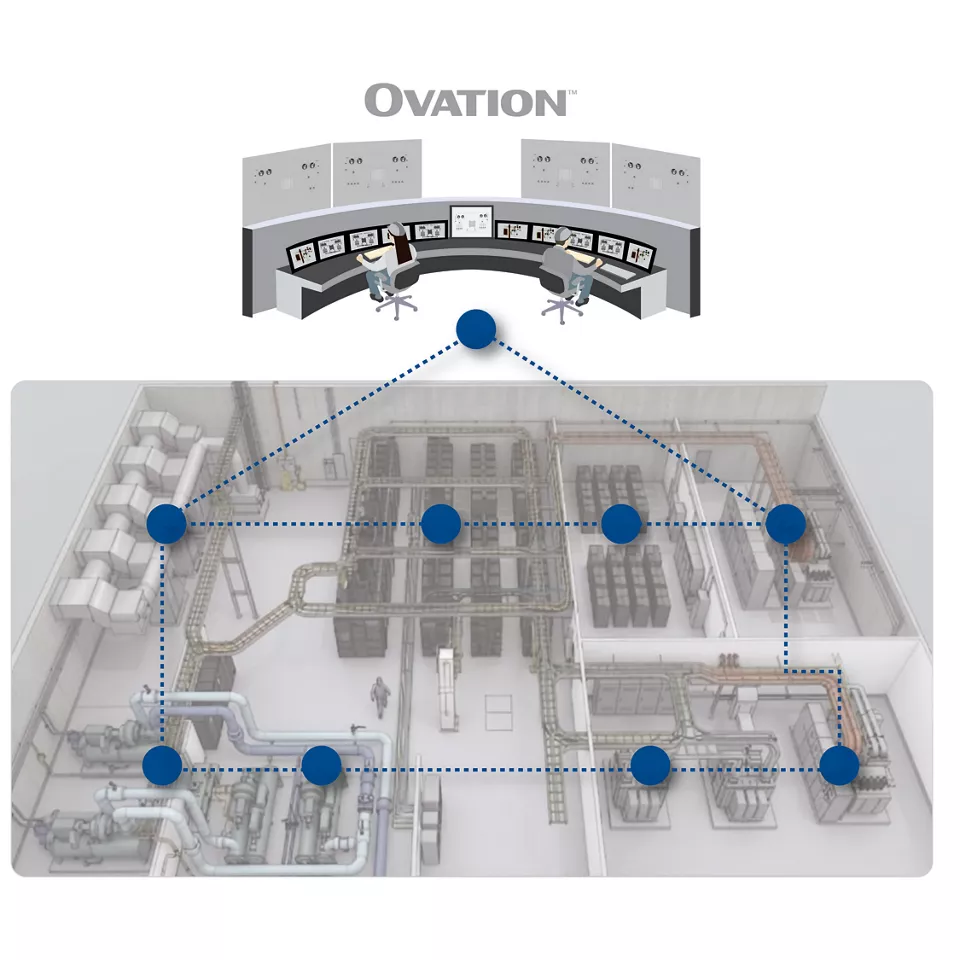
Today’s AI facilities have become increasingly complex environments composed of numerous independent technologies. As facilities scale, it becomes more difficult to navigate fragmented data, multiple interfaces, isolated alarm environments and disconnected-decision making processes.
The Ovation Automation Platform provides a single, unified operational environment that enables power, cooling, building systems, and critical infrastructure to be monitored and managed as one interconnected platform.
By bringing together disparate systems, data streams, and control functions across the facility, the Ovation platform helps teams improve visibility, simplify operations, and support reliable, resilient performance.
Efficient, Secure & Redundant Facility Management for Resilient Operations
A unified, fault-tolerant automation platform integrates supervisory control of critical data center systems, optimizing facility performance to help achieve 99.99% reliability.
CAPABILITY
Coordinate actions across multiple facility systems
HOW IT WORKS
Uses automation workflows, sequencing logic, and supervisory control to manage operational transitions
VALUE
Improves operational consistency, reduces manual intervention, and minimizes operator error
CAPABILITY
Consolidate alarms, events, and notifications across the data center campus
HOW IT WORKS
Aggregates alerts from multiple independent systems into a common alarm environment with prioritization, filtering, and event tracking
VALUE
Reduces alarm overload and fatigue, shortens troubleshooting time, and improves operator response during abnormal conditions
CAPABILITY
Create a centralized record of facility operations across critical infrastructure
HOW IT WORKS
Collects and stores time-series data from power, cooling, building, and support systems in a common repository
VALUE
Supports troubleshooting, root-cause analysis, performance benchmarking, compliance reporting, capacity planning and continuous operational improvement
CAPABILITY
Coordinate infrastructure response to changing demand
HOW IT WORKS
Combines real-time monitoring, supervisory control, automation, and coordination across power and cooling infrastructure
VALUE
Manages dynamic power and cooling demands, supports reliability amid fluctuating compute loads, reduces infrastructure risk, and facilitates AI expansion
CAPABILITY
Connect multi-vendor equipment without requiring replacement of existing assets
HOW IT WORKS
Leverages open communication standards and integration technologies to connect PLCs, OEM packages, BMS, UPS, switchgear, chillers, and auxiliary systems
VALUE
Reduces integration risk, protects existing investments, and supports future scalability or phased modernization
Manage Crictical Infrastructure As One System

POWER
Every megawatt matters.
The Ovation Automation Platform helps operators coordinate utility connections, switchgear, UPS systems, standby generation, battery storage, and distributed energy resources through a single platform. Operators gain real-time awareness of facility conditions while enabling coordinated control across electrical infrastructure.
Key Applications
- Utility and grid interconnections
- UPS and backup generation
- Battery energy storage systems
- Campus load management

COOLING
Power and cooling are inseparable.
Every megawatt delivered to IT equipment creates thermal load that must be managed through interconnected cooling and water systems. The Ovation Automation Platform helps operators understand how compute demand, power consumption, cooling requirements, and equipment performance relate across the facility.
Benefits
- Understand power-to-cooling relationships
- Improve equipment reliability
- Detect degradation earlier
- Reduce unplanned downtime
Start Where You Are. Expand at Your Own Pace.
The Ovation Automation Platform supports a practical modernization path that allows organizations to progressively simplify operations and expand automation capabilities.
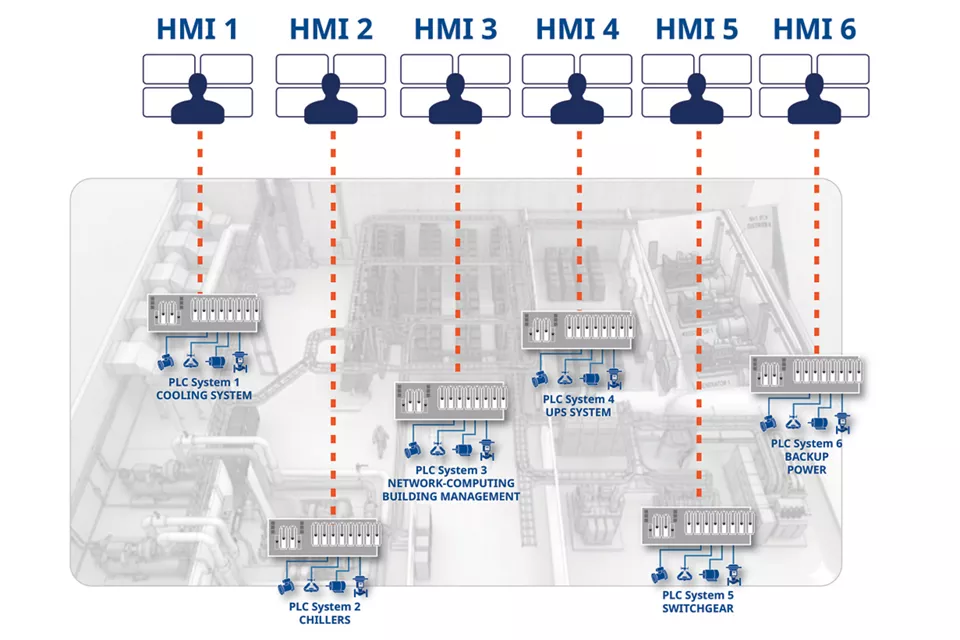
Stage 1: Islands of Automation
Numerous independent systems increase operational complexity:
- Multiple OEMs and systems
- Separate HMIs
- Different historians
- Independent alarm environments
- Siloed operational data
- Limited, varying cybersecurity
CHALLENGE:
Limited visibility and coordination across facility infrastructure
One Platform. One View. One Coordinated Operation.
The Ovation Automation Platform creates a common automation layer across critical facility infrastructure. By connecting independent systems into a unified operational environment, operators gain centralized visibility, supervisory control and coordinated automation across the data center campus.

Unified facility dashboard
Operational analytics

Common alarm management

Condition monitoring

Centralized historian

Role-based visualization

Supervisory control

Open integration with OEM systems
Equipment sequencing and automation

Secure-by-design architecture
Explore Enabling Ovation Technologies
PRECISE CONTROL, OUTSTANDING PERFORMANCE
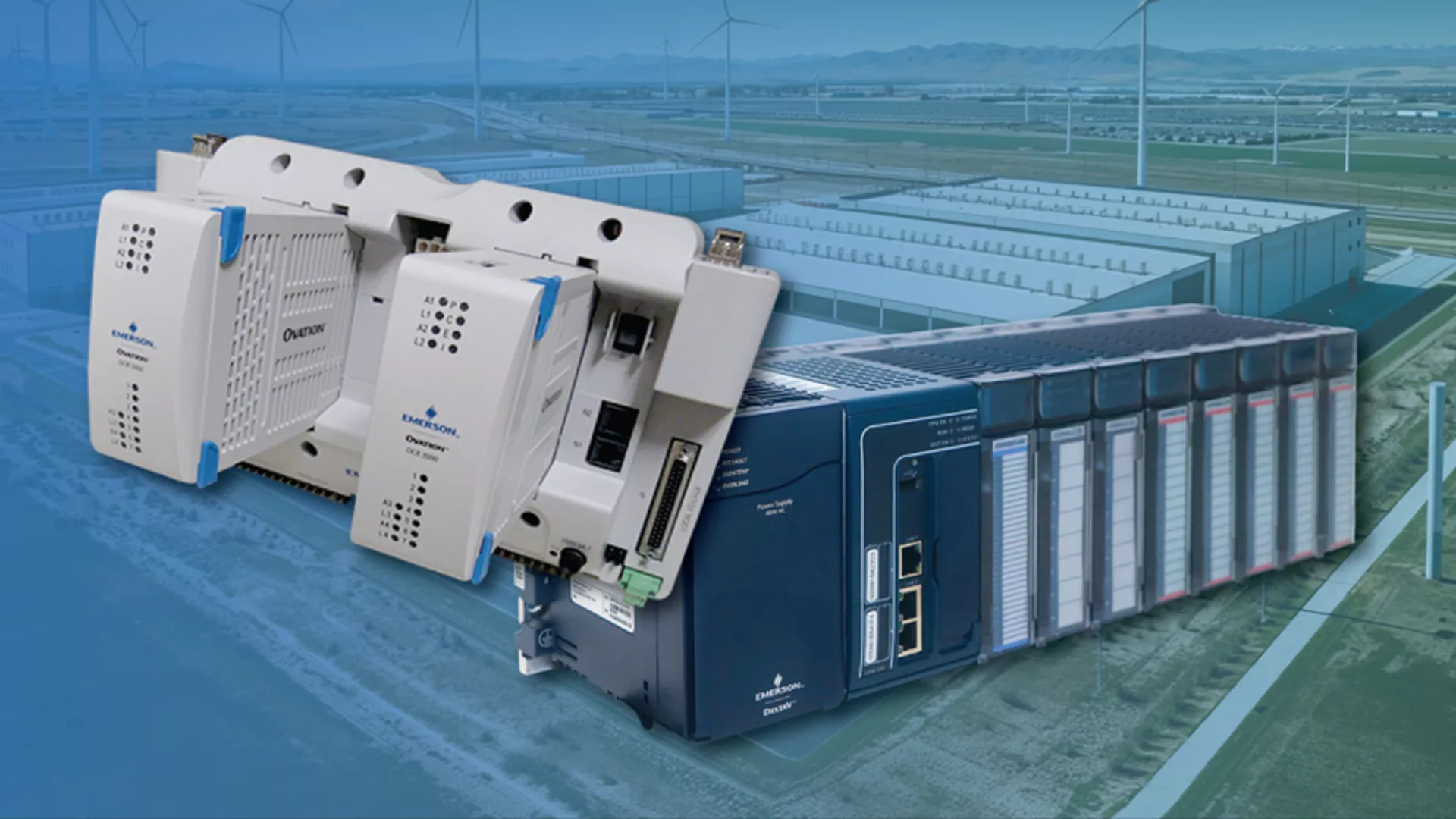
The Ovation Automation Platform is proven technology specifically designed to optimize critical power and water operations with precise process and equipment controls.
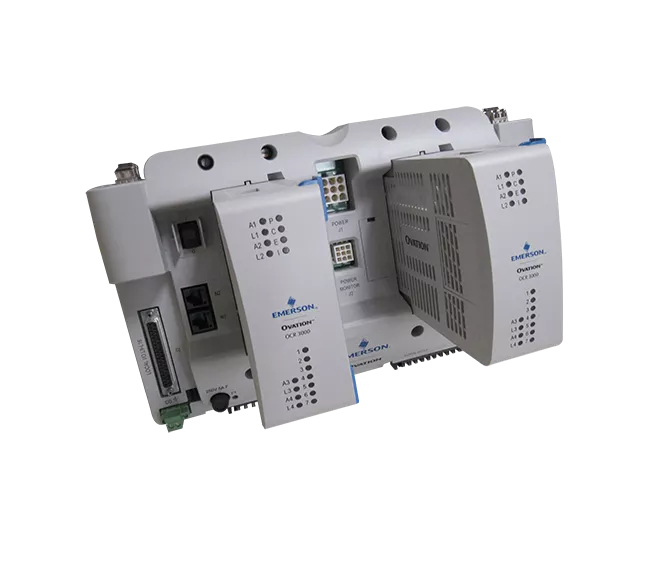
Ovation Microgrid Controller
Cost-effective management and automated control of a microgrid’s distributed energy assets and macrogrid interconnections to satisfy power demand and maintain stable operations.

Ovation Distributed Control System
For decades, the industry-leading Ovation Automation Platform has helped customers deliver reliable power, green electricity, and clean water. The Ovation 4.0 release advances this legacy with a future-ready, AI-enabled, scalable, and software-defined architecture.
Ovation Digital Twin Simulation
With Ovation power plant simulation, operators can validate new control strategies before deployment, reducing plant incidents, maintenance costs, and unplanned trips while improving safety and availability.
Frequently Asked Questions About Data Center Infrastructure Orchestration
Data center infrastructure orchestration brings power, cooling, building and other critical facility systems into a common operational environment. By connecting data and operational functions across traditionally independent systems, infrastructure orchestration provides centralized visibility, supervisory control and coordinated automation to help operators manage the data center as one interconnected facility.
Data center infrastructure orchestration extends beyond visibility into individual systems by providing a common automation layer for coordinating operations across critical facility infrastructure. It brings information and operational functions from independent systems into a unified environment, allowing operators to understand system dependencies, manage alarms and operational history, and coordinate facility-wide operations.
Not necessarily. Data center infrastructure orchestration can connect existing multi-vendor systems and equipment into a common operational environment rather than requiring wholesale infrastructure replacement. The Ovation Automation Platform uses open integration technologies to connect systems and equipment such as PLCs, OEM packages, BMS, UPS, switchgear, chillers and auxiliary systems.
A data center infrastructure orchestration platform can bring together systems and equipment across critical facility infrastructure. With the Ovation Automation Platform, this can include PLCs, OEM equipment, BMS, UPS systems, switchgear, chillers and auxiliary systems, as well as electrical infrastructure such as utility interconnections, backup generation, battery energy storage and distributed energy resources.
Power and cooling are closely interconnected in data center operations. Power delivered to IT equipment creates thermal load that must be managed through cooling and water systems. Bringing operational information from these systems together helps operators understand the relationships among compute demand, power consumption, cooling requirements and equipment performance across the facility.
Centralized alarm management brings alarms, events and notifications from multiple independent systems into a common alarm environment. Prioritization, filtering and event tracking can reduce alarm overload, shorten troubleshooting time and help operators respond more effectively during abnormal operating conditions.
AI workloads can create changing power and cooling demands across data center infrastructure. By combining real-time monitoring, supervisory control, automation and coordination across power and cooling systems, infrastructure orchestration helps operators coordinate facility response as demand changes and support reliable operation as AI infrastructure expands.
Infrastructure orchestration can extend facility operations into data center energy and microgrid management. This can include coordinated utility and onsite generation management, renewable energy and battery energy storage integration, campus energy optimization, demand-response readiness and microgrid control strategies.