

Unlock Predictive Intelligence and Operational Visibility with Secure, Reliable Industrial Wireless Solutions
Industrial wireless technology delivers reliable, continuous data streams that enhance your facility’s safety, operational efficiency, and sustainability. By enabling cost-effective monitoring of previously inaccessible or high-risk areas, Emerson’s wireless solutions reduce cabling needs and installation time while providing over 99% data reliability. Unlike traditional wired technologies, wireless solutions eliminate costly “blind spots” in your plant, empowering you with predictive intelligence to detect issues before they arise. Advanced wireless technology digitizes manual rounds, allowing operators and maintenance teams to focus on higher-value tasks while ensuring timely, secure data flow. Transform your facility into a proactive, data-driven operation with seamless, scalable wireless monitoring that improves safety and reduces operational costs.

Products
Industrial Wireless Technologies
Industrial Wireless Gateways
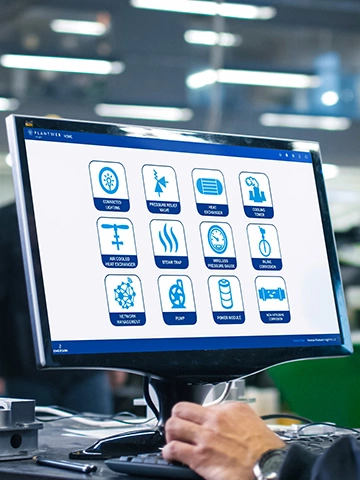
Plantweb Insight Applications
Wireless Power Modules
Wireless Discrete Transmitters
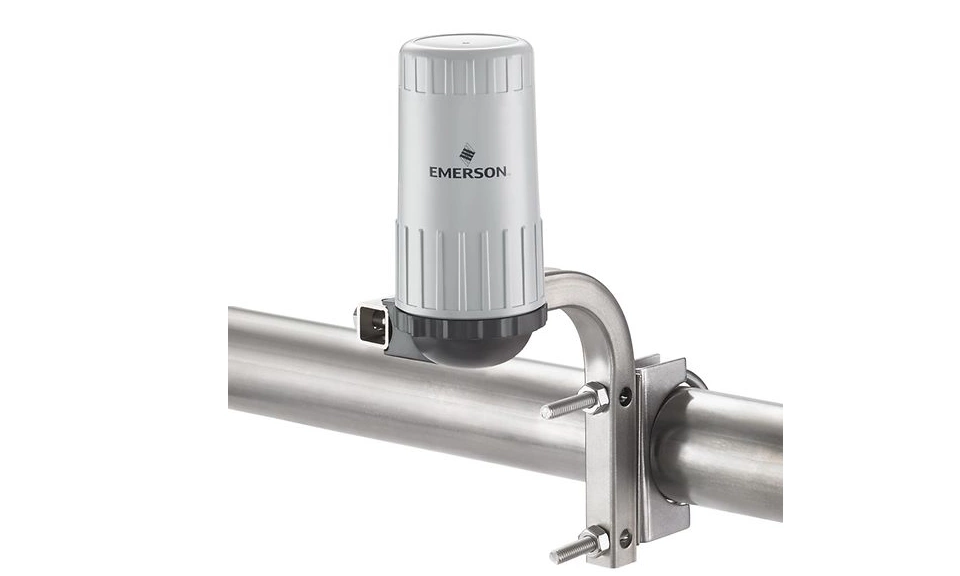
Wireless Acoustic Transmitters
Emerson Synchros™ IIoT Platform
Wireless Instrumentation
Wireless Pressure Measurement
Wireless Temperature Measurement
Wireless Corrosion & Erosion Monitoring
Wireless Flow Measurement
Wireless Level Measurement
Wireless Flame & Gas Detection
Accessories & Spare Parts
Featured Products
Wireless Tools
Product Applications
Mining & Minerals & Metals

Enhancing Safety and Operational Performance in Heap Leach Mining Operations

Pump Barge Monitoring on Tailings Basin

Temperature Monitoring for SAG & Ball Mill

Conveyor Belt Monitoring for Mineral Transportation

Level Monitoring Improves Tailing Dams Safety and Prevent Environmental Hazards
Resources
Video: Reach Sustainability Goals and Monitor Energy Usage With Wireless Solutions and Apps
Case Study: Corrosion Monitoring Enables Faster Refinery Startup and Helps Avoid Production Loss
Case Study: Steel Mill Reduces Downtime and Improves Productivity Through Wireless Monitoring
Frequently Asked Questions
Learn the Basics
Industrial wireless is foundational to Industry 4.0 because it digitizes the measurements that drive every other piece of the connected plant. Wireless sensors unlock data from assets that were previously manual, unmonitored, or too costly to wire, feeding real-time insight into control systems, analytics platforms, and cloud applications. The result is an operation that can act on what's happening now, not what was logged yesterday.
Industrial wireless delivers the most value in industries with remote, hazardous, or hard-to-reach assets. The biggest adopters today include:
- Oil and gas — tank levels, wellhead monitoring, pipeline integrity
- Chemical and refining — pressure relief valves, corrosion, safety showers
- Power generation — steam traps, rotating equipment, emissions
- Life sciences — clean utilities, environmental monitoring, steam quality
- Metals, mining, water, and wastewater — remote pumping stations, tailings, level
- Discrete manufacturing and food & beverage — energy tracking, condition monitoring, steam traps
Wireless field devices send data over a secure self-organizing mesh network to a gateway, which translates that data into protocols your DCS, PLC, or SCADA already understands such as HART-IP, OPC UA, and Modbus TCP. No rip-and-replace of existing host systems is required. Learn more about Industrial Wireless Gateways.
WirelessHART® is the global industry standard (IEC 62591) for process automation wireless. It uses a self-organizing, self-healing mesh where every device can route data through multiple paths, delivering over 99% data reliability even in environments with interference, extreme temperatures, or physical obstructions. For process plants, it is the most widely deployed and field-proven industrial wireless protocol available.
Solve Real Problems
For maintenance and reliability teams, wireless sensors continuously monitor the conditions that signal a developing problem, including vibration, temperature, pressure, acoustic emissions, and corrosion. By trending this data against operating baselines, teams can identify issues weeks or months before failure, schedule repairs during planned outages, and reduce unplanned downtime. Emerson's Plantweb™ Insight applications turn that sensor data into prioritized, actionable maintenance recommendations.
Industrial wireless improves worker safety by reducing time spent in hazardous areas. Wireless automates measurements that previously required manual rounds, so personnel make fewer trips into classified zones while operators get continuous visibility into toxic gas levels, pressure relief events, and tank conditions. Emerson offers devices certified for use in intrinsically safe and explosion-proof areas under FM, CSA, ATEX, and IECEx standards.
For remote and outdoor use, Emerson's Rosemount™ wireless transmitters are rated for extreme temperatures, corrosive atmospheres, and high-vibration environments. Common deployments include the Rosemount 3051S Wireless for pressure, Rosemount 648 Wireless for temperature, and Rosemount 5300 Wireless for level monitoring. All are powered by long-life Emerson SmartPower™ modules and communicate over self-organizing WirelessHART mesh networks for reliable data even at the edge of coverage.
A typical wireless level deployment includes:
- Rosemount™ wireless level transmitter (5300 or 3408)
- Emerson SmartPower™ module for multi-year battery life
- Emerson Wireless Gateway to aggregate data and connect to your host system (1410S1 or 1410S2)
No trenching, conduit, or new process penetrations are required. For very remote sites, the gateway can backhaul data over cellular, satellite, or existing IT infrastructure.
Design & Deploy
Every industrial wireless network has three core components:
Field devices: Transmitters, adapters, or actuators that collect measurements
Wireless gateway: Aggregates data, manages the network, connects to host systems
Power modules: Long-life batteries that keep devices running for years
Security is layered at every level with AES-128 encryption, device authentication, and network keys managed by the gateway.
For automation engineers and project leads, the best starting point is identifying high-value monitoring gaps in your facility. Emerson's Wireless Network Planning Tool lets you upload an aerial image of your site and design a network using industry best practices for device density, gateway placement, and coverage. Networks scale easily from a pilot of a few devices to plant-wide deployments of hundreds of points without redesigning the architecture. Additional wireless devices can easily be added to existing WirelessHART mesh networks.
Emerson wireless gateways support multiple output protocols including HART-IP, OPC UA, and Modbus TCP, which means they connect into existing DeltaV™, Ovation™, third-party DCS, SCADA, and asset management systems with no rip-and-replace required. Emerson's AMS Device Manager provides full diagnostics and configuration for wireless field devices alongside your existing wired instrumentation, giving maintenance teams one workflow for both.
Industrial wireless networks built on WirelessHART use defense-in-depth security including:
- AES-128 encryption on every message
- Device-level authentication with rotating session keys
- Channel hopping to prevent jamming
- Isolated network segments to contain potential threats
Even if a single device is compromised, the rest of the mesh continues operating safely. Emerson wireless gateways add role-based access controls, audit logging, and secure host protocols.
Value & Next Steps
Most industrial wireless deployments deliver payback within 12 to 24 months. Typical value drivers include:
- Up to 60% lower installation costs vs. traditional wired instrumentation
- Avoided unplanned downtime from earlier issue detection
- Faster commissioning with no cabling, conduit, or process penetrations with wireless non-intrusive devices
- Recovered production hours and reduced manual rounds
ROI accelerates when wireless data is paired with Plantweb™ Insight analytics for prioritized maintenance and energy-savings actions.
Start by identifying the highest-value monitoring gaps in your facility. Then use Emerson's Wireless Network Planning Tool to design a network using industry best practices for device density, gateway placement, and coverage. A typical first deployment includes a wireless gateway, field devices, power modules, and integration into your existing host system. Your local Emerson Impact Partner can support site surveys, planning, and commissioning.
Emerson offers technical support, certified training through Educational Services, firmware downloads, and a global Impact Partner network for sales and service.