
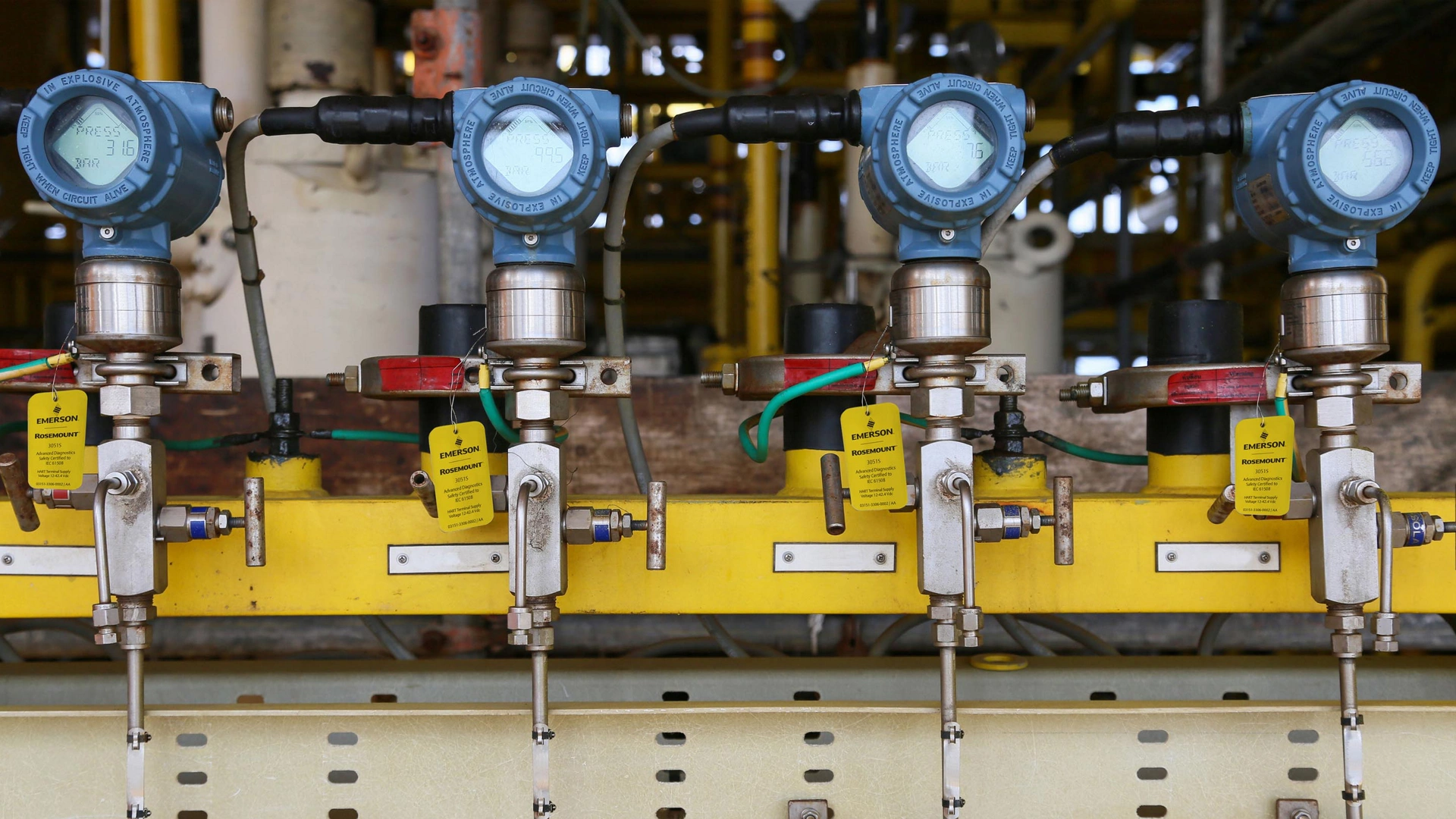
See the benefits of each Rosemount Instrument Manifold type side-by-side.
Products
Instrument Manifold Types
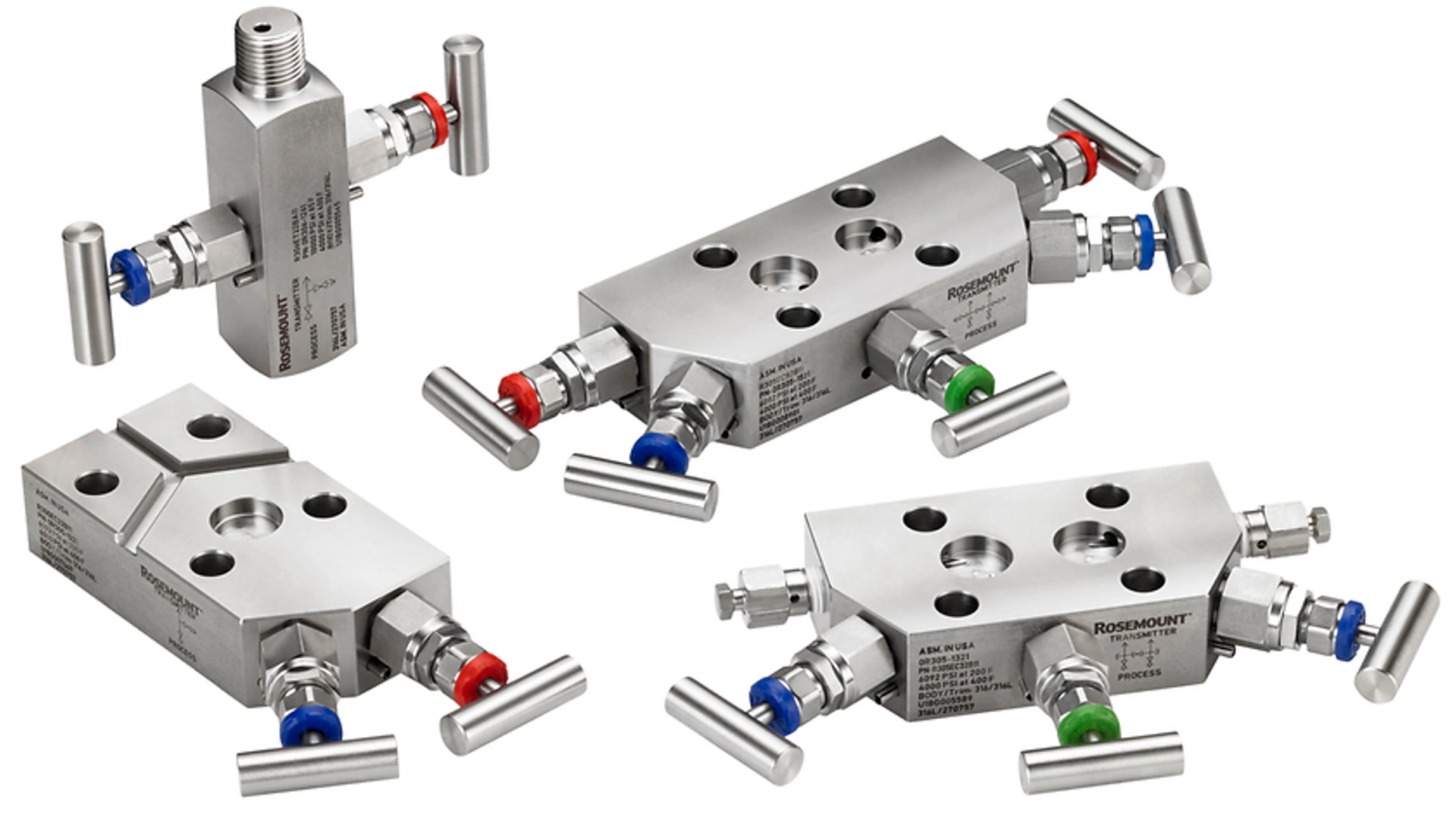
Rosemount Enhanced Manifolds
Rosemount R305 and R306 enhanced manifolds feature Pressure-Lock™ Valve technology which offers simplified operation, enhanced reliability, and increased operating safety. Enhanced manifolds also contain a large internal process bore to resist plugging. Enhanced manifolds are available in Coplanar and in-line connection styles. This product is compatible with all Rosemount pressure transmitters.
Rosemount Instrument Manifold Comparison
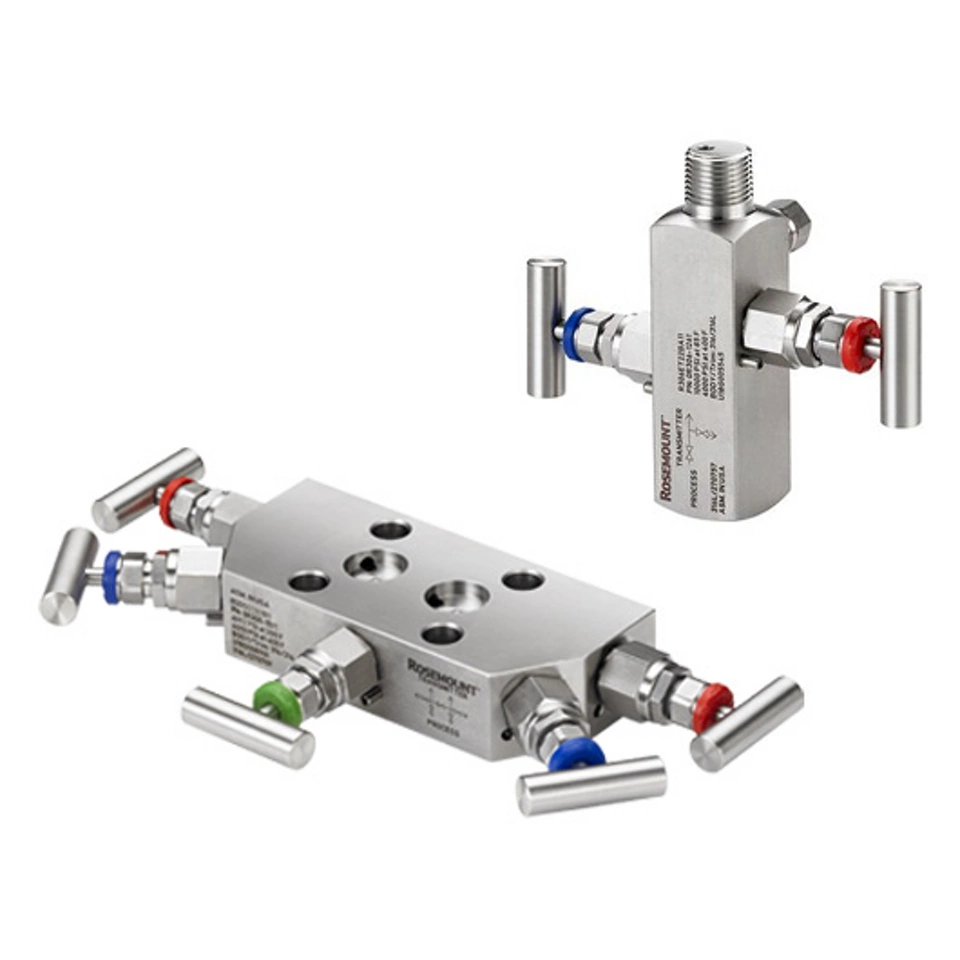
Rosemount Enhanced Manifolds
Rosemount Enhanced Instrument Manifolds are offered in both Coplanar (R305) and Inline (R306) assemblies. The valves are designed to be the most reliable and ergonomical for almost any application.
- Lower operating torque for simplified operations
- Safety back seating for increased operator safety
- Larger internal process channels to reduce plugging & improve the measurement integrity
- Removable handles to reduce unwanted tampering
- Multiple valve styles suited to fit the measurement & application
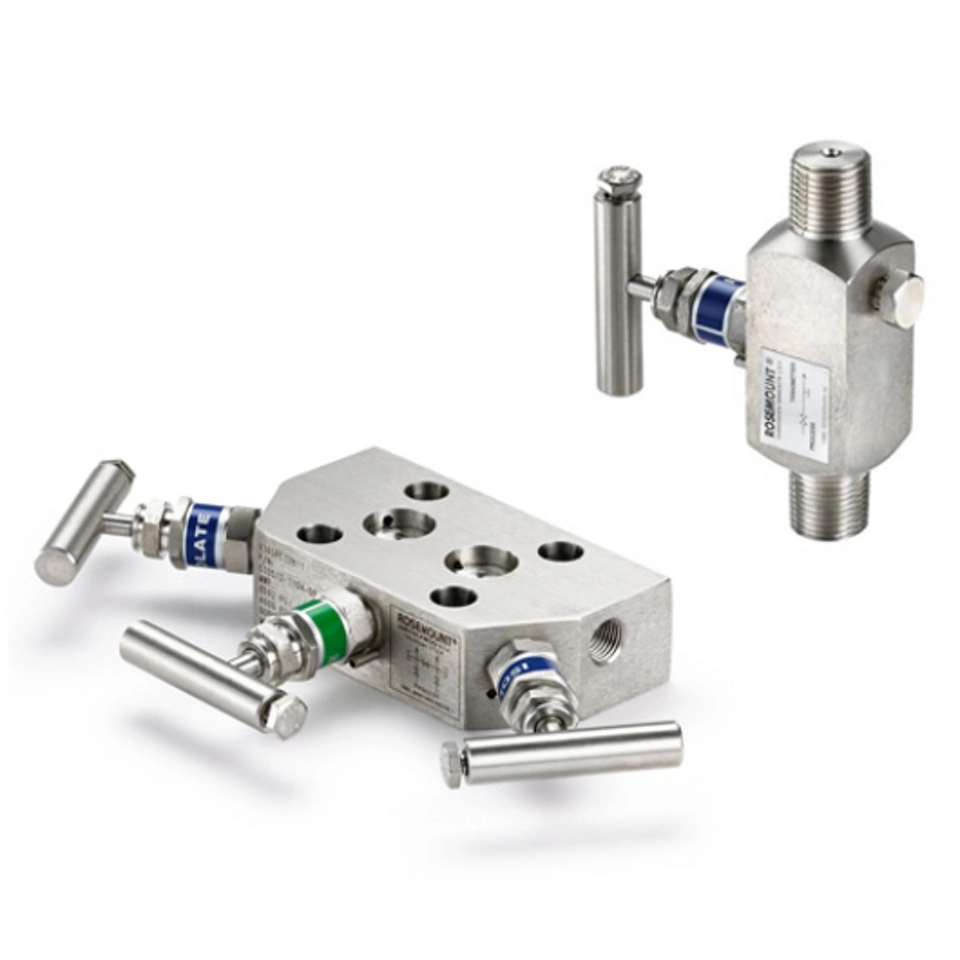
Rosemount Standard Manifolds
Rosemount Standard Instrument Manifolds are offered in Coplanar (0305), Inline (0306) and Conventional (0304) assemblies. The instrument manifolds are configurable to even the most unique applications and provide operators with a leak tight pre-assembled solution.
- Multiple manifold body styles to pair to existing process connections
- Multiple materials to be compatible with harsh process conditions
- Multiple valve styles to pair with your pressure measurement type
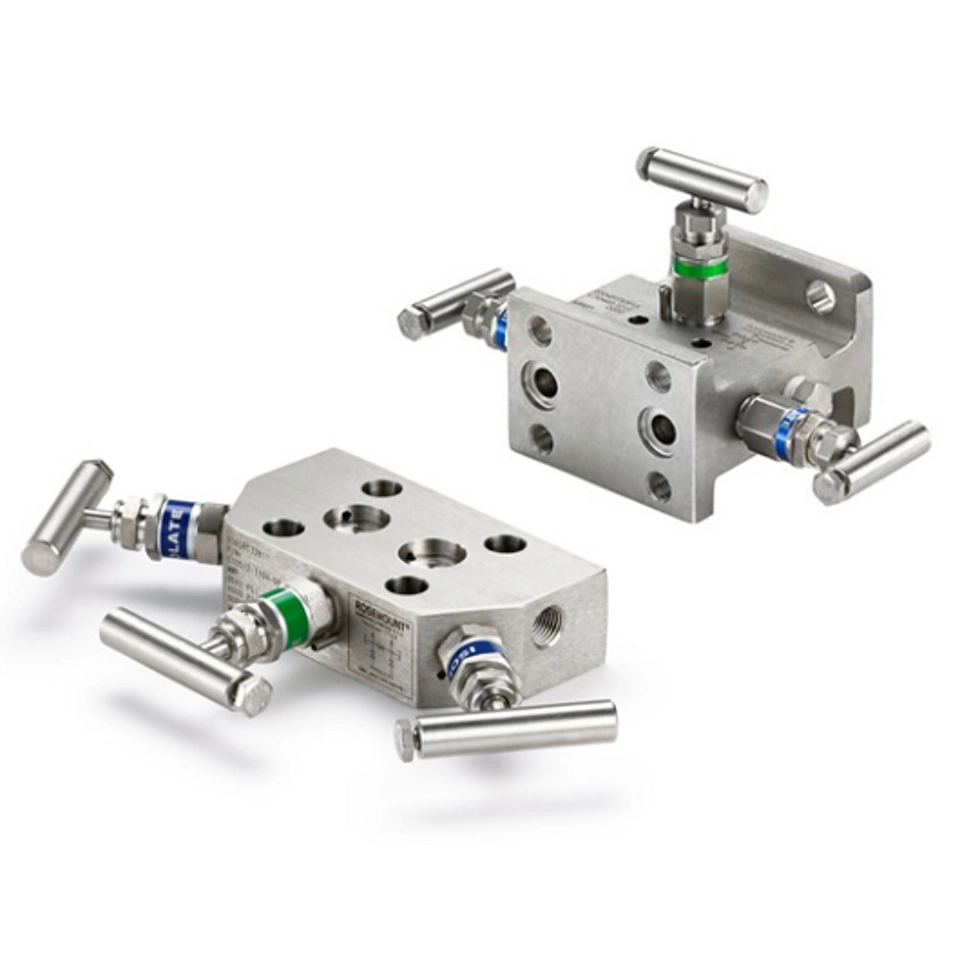
Rosemount Natural Gas Manifolds
Rosemount Natural Gas Instrument Manifolds are offered in the Coplanar (0305) and Conventional (0304) assemblies. The product is designed for challenging natural gas applications like measurements in custody transfer. The instrument manifolds have multiple features unique to those applications to increase reliability.
- Wide 5-valve natural gas valve pattern for safe & easy operation
- Soft seat valves for a tighter valve seat seal for no loss of product or fugitive emissions
- Stabilizer & dielectric isolator kits to adapt and protect the measurement
- Fully roddable 3/8” bores to reduce plugging
Resources
Frequently Asked Questions
If you have additional questions related to Rosemount Instruments Manifolds, please contact us.
Instrument manifolds are a type of process connection system that provides isolation, venting and equalization for various types of pressure measurement applications.
Instrument manifolds are typically used with other measurement instrumentation including pressure transmitters, pressure gauges, pressure transducers or any other pressure sensing devices.
Instrument manifolds can be ordered in a variety of sizes, materials and valve patterns that can be unique to any application. Application considerations can include what material is compatible with the process, what valve types are needed for the pressure measurement and what standards are needed for applications like power and piping (ASME B31.1) or Natural Gas Custody Transfer.
The type of pressure measurement you are need and the process fluid will dictate the instrument manifold type, number of valves needed and the material required for your instrument manifold. Find more information in the Product Data Sheet.
Typical manifold types are Coplanar, where the transmitter module is mounted directly to the instrument manifold, Conventional, where an additional flange is used to adapt the transmitter module to process connection and Inline (block and bleed), where a static pressure transmitter is mounted directly to the manifold. Various valve styles are available in those types for further customization.
Instrument manifolds provide the ability to isolate a process fluid from a pressure measurement. This gives you the ability to calibrate, zero, trim or replace a transmitter safely and without having to take equipment offline.
The ability to isolate your pressure device in a safe and easy manner allows operations to continue while routine maintenance can be done on a pressure transmitter. This can save you time and money as operations can continue while maintenance work is completed.
Manifolds have three valve types: isolation, equalize and vent valves. Isolation is used to close off the process from the transmitter. Equalize is used in a zero trim or calibration routine to balance the high- and low-pressure sides of a differential pressure manifold. Vent valves are used to bleed process fluid or air out of a manifold or when installing a calibration device for applying a known pressure. Find more information, see page 58 in the Manual.