

Detect Leaks in Food, Beverage and Aerosol During Production with Confidence
Today’s packaging lines must accommodate unprecedented levels of package varieties, ensure quality, safety and regulatory compliance while increasing production to meet market demands.
Emerson’s Rosemount™ packaging leak detection systems help manufacturers meet quality requirements and reduce waste and production losses caused by faulty packaging. These automated, inline systems use Quantum Cascade Laser (QCL) technology to deliver 100% product leak testing in real time for a wide variety of package types and sizes in aerosol, food and beverage, and pharmaceutical packaging applications.
Products
Packaging Leak Detection Applications
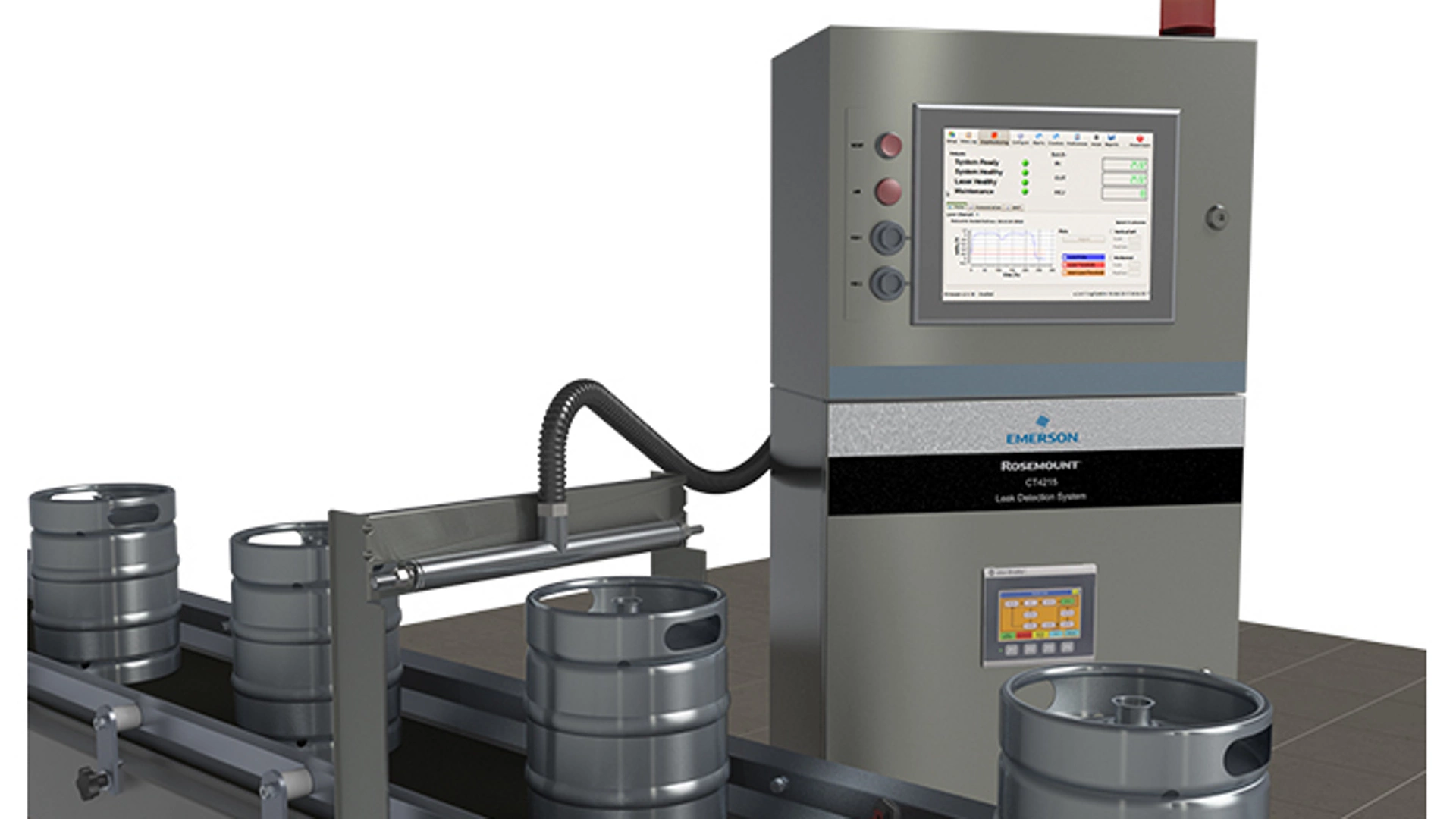
Modified Atmosphere Packaging (MAP) is only effective if the actual package itself is intact, making leak testing an essential process step in any end-to-end MAP operation.
The Rosemount CT4215 Packaging Leak Detection System identifies leaks smaller than 0.3 mm at speeds of up to 200 packs per minute without pack deformation. The system tests a wide range of products, including meat, shredded cheese, flatbreads, ready meals and salads. It can also accommodate different packaging media such as pouches and bags for improved packaging line flexibility and changeover versatility.
Pouches and Bags
Manufacturers of consumer-packaged goods (CPGs) are challenged with accommodating unprecedented levels of package varieties, increasing production to meet market demands, and ensuring quality, safety and regulatory compliance.
Emerson can help manufacturers reduce waste and production losses caused by faulty packaging and meet quality requirements using the Rosemount CT4215 Packaging Leak Detection System. This automated, inline system can be configured to test for leaks in a variety of pack types and applications to ensure producers can obtain consistent quality, increased flexibility, and changeover versatility.
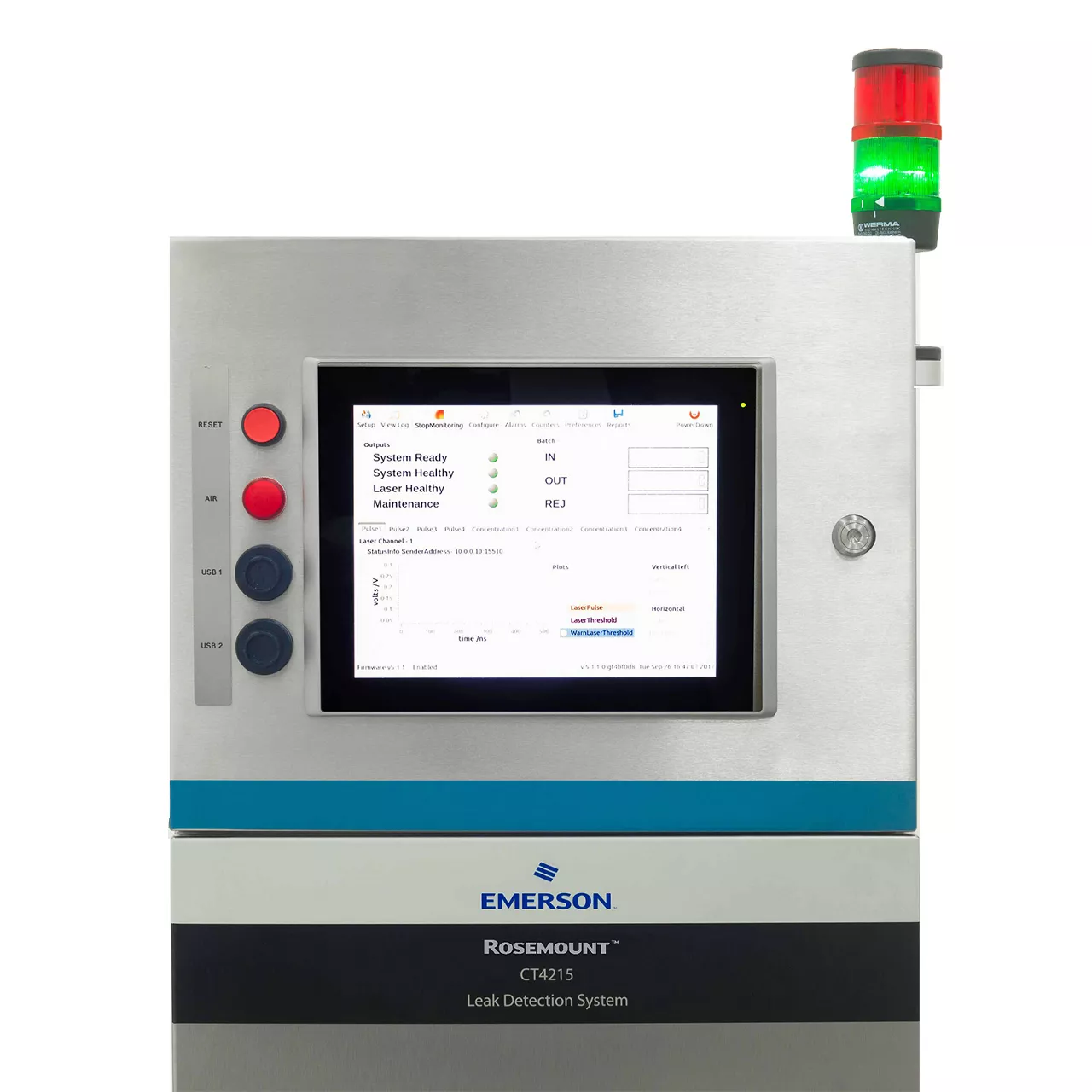
Rosemount™ CT4215 Packaging Leak Detection System
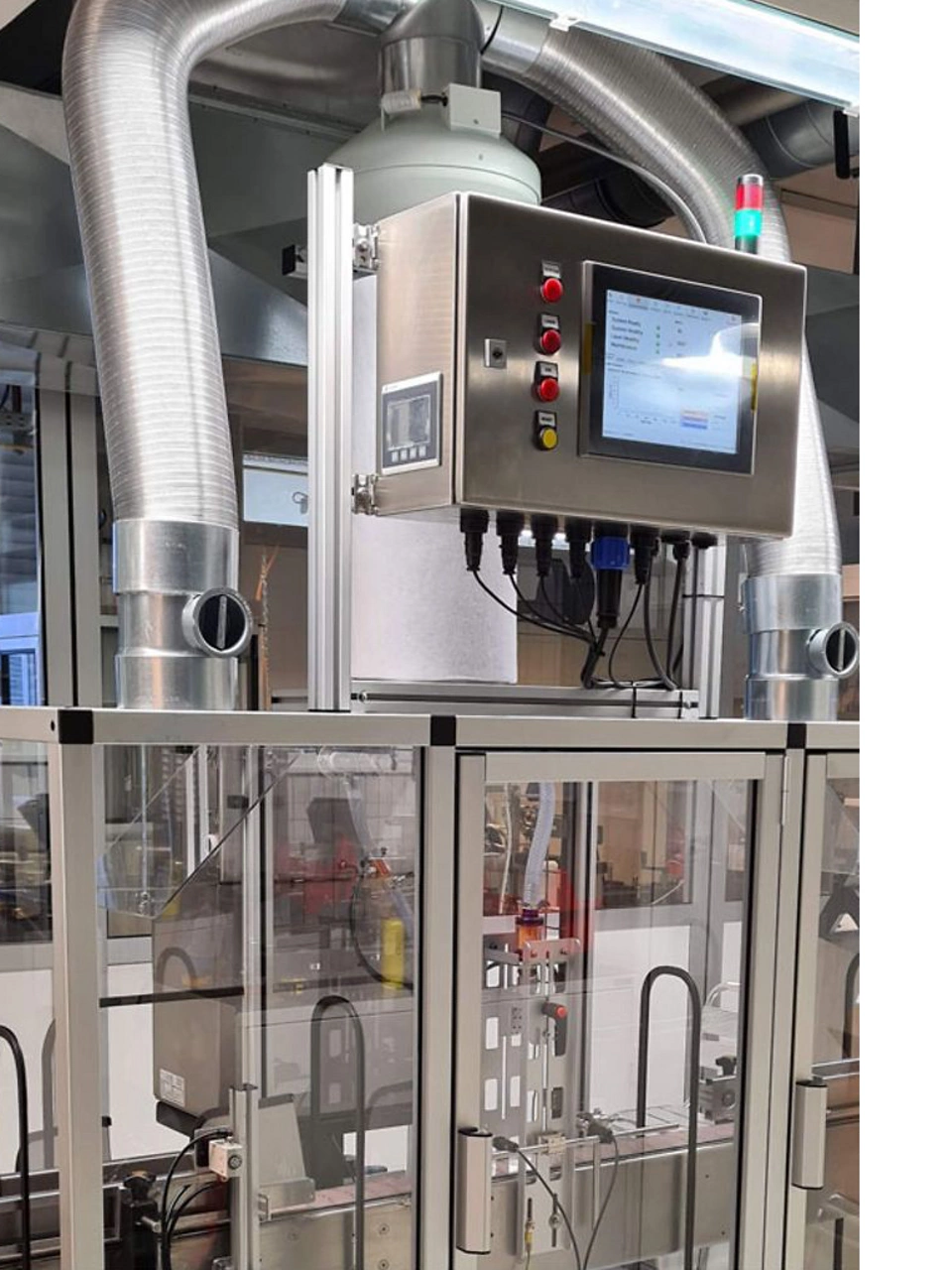
The Rosemount CT4215 is an inline system that accurately tests 100% of food and beverage product packages going through the production lines to ensure seal integrity.
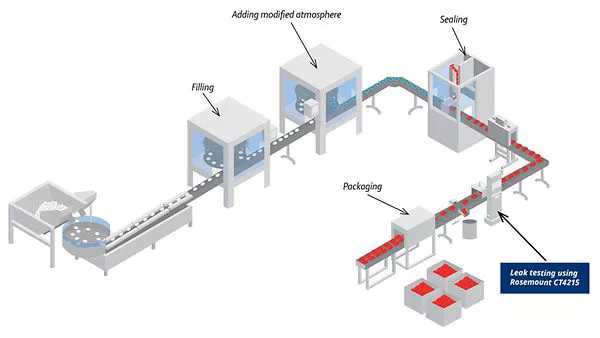
Detect Leaks in Food & Beverage Modified Atmosphere Packaging Using Automated Seal Testers Application Page
Ensure 100% Product Inspection Using Inline, Real-Time Leak Detection and Rejection of Individual Leaking Packs
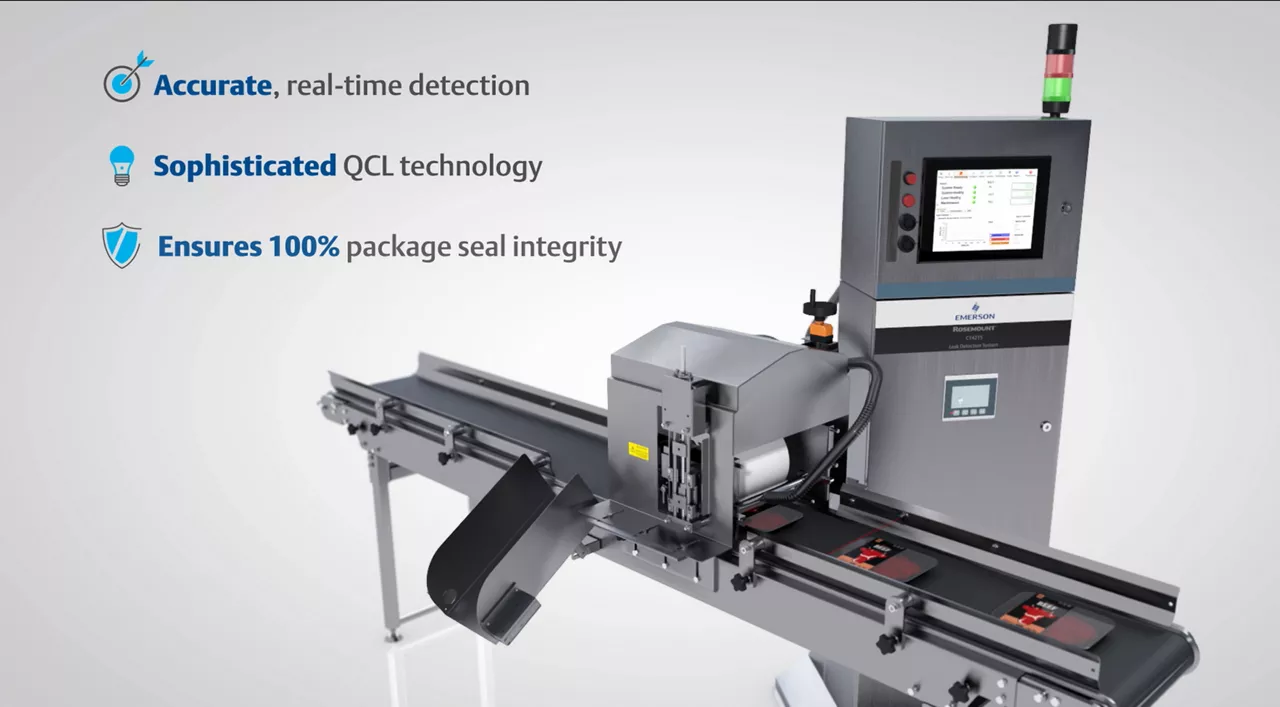
Leak Detection of Modified Atmosphere Packaging (MAP) Using Rosemount CT4215 Video
Ensure 100% seal integrity of food & beverage modified atmosphere packaging (MAP) using an automated, high-speed and in-line, laser-based solution that delivers accurate, real-time detection of leaks smaller than 0.3mm.
Resources
Ensure 100% seal integrity of food & beverage modified atmosphere packaging (MAP) using an automated, high-speed and in-line, laser-based solution that delivers accurate, real-time detection of leaks smaller than 0.3mm.
Fast, laser leak detection helps specialty lubricant manufacturer reduce waste and cost.
Aerosol manufacturer meets safety and quality demands using Emerson's leak detection system.
Frequently Asked Questions
Packaging leak detection is an inline or at-line process used to identify leaks in sealed packages by detecting escaping gases, ensuring product quality, safety, and shelf life.
In high-speed production environments, leak detection systems continuously inspect packages as they move through the line. Emerson’s systems use Quantum Cascade Laser (QCL) technology to detect trace gases such as CO₂ or propellants escaping from defective seals—without damaging the package.
If a leak is detected, the system automatically triggers rejection mechanisms, allowing manufacturers to isolate defective products in real time while maintaining production throughput.
Why it matters:
- Prevents contamination and spoilage
- Protects product shelf life
- Ensures regulatory compliance
- Reduces waste and rework
Choose the system based on your packaging type, industry, and required throughput.
The Rosemount™ CT4215 is best for food, beverage, and MAP packaging (trays, pouches, bags) where seal integrity is critical
- Detects leaks <0.3 mm
- Tests up to ~200 packs/min
- Ideal for CO₂-based modified atmosphere packaging
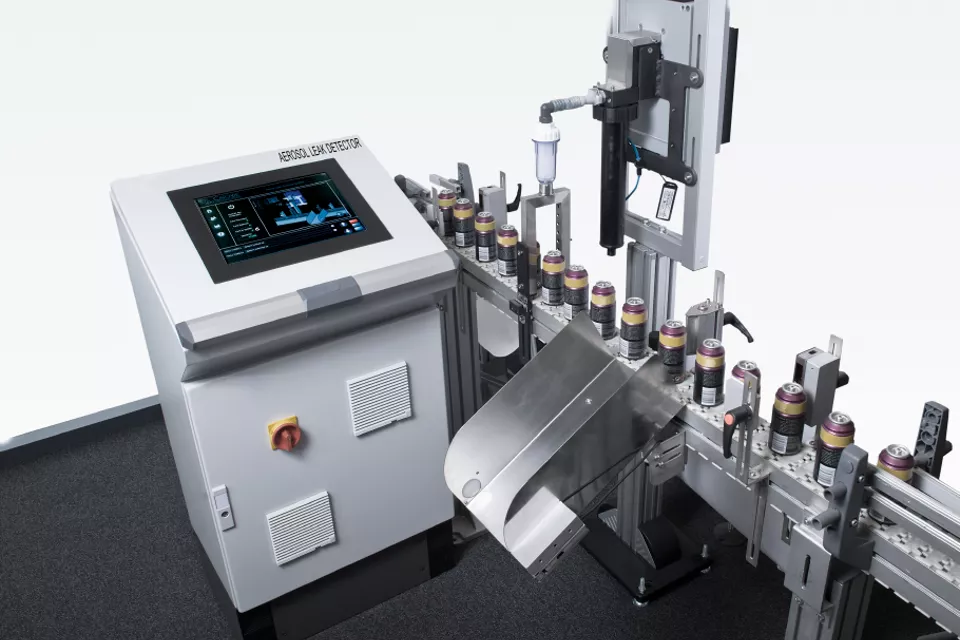
The Rosemount™ CT2211 is designed for aerosol and pressurized containers.
- Tests up to ~600 cans/min
- Detects propellant gases (e.g., LPG, CO₂, DME)
- Approved alternative to traditional water bath testing
Emerson packaging leak detection systems support a wide range of package formats and detect gases commonly used in sealing or propulsion.
Supported package types:
- Trays and modified atmosphere packaging (MAP)
- Pouches and flexible bags
- Rigid containers and cans
- Aerosol containers
Detectable gases include:
- CO₂ and N₂O (typical in MAP food packaging)
- Propellants such as propane, butane, LPG, and DME
- Specialty gases depending on configuration
Because systems use laser-based detection, they can identify trace concentrations of gas escaping from even very small leaks, making them effective across diverse applications.
Emerson’s inline leak detection systems are designed for high-speed production while maintaining precise sensitivity.
CT4215 (food/MAP applications):
- Up to ~200 packs per minute
- Detects leaks smaller than 0.3 mm
CT2211 (aerosol applications):
- Up to ~600 cans per minute
- Detects extremely small leak rates in pressurized containers
These systems are engineered to perform 100% inspection in real time, enabling manufacturers to maintain throughput without introducing bottlenecks.
Inline leak detection improves product quality by identifying seal failures immediately—before defective products reach distribution.
By testing 100% of packages in real time, manufacturers can:
- Remove defective products instantly
- Prevent contamination and spoilage
- Maintain consistent product quality across batches
Additionally, these systems help reduce operational costs by:
- Minimizing product recalls
- Reducing waste from undetected leaks
- Identifying packaging issues early (e.g., sealing inconsistencies)
The result is a more stable, predictable packaging process with improved yield and less downstream risk.