
Products
Chlorine Uses
Chlorine Solution Types
In industrial manufacturing engineering, chlorine exists in solutions as free or combined chlorine. Free chlorine serves as a disinfectant in water treatment, whereas combined chlorine results from free chlorine's reaction with organic matter. Total chlorine encompasses both forms. A chlorine sensor measures the concentration of chlorine in these solutions.
Choosing Chlorine Sensors
Free Chlorine Sensors
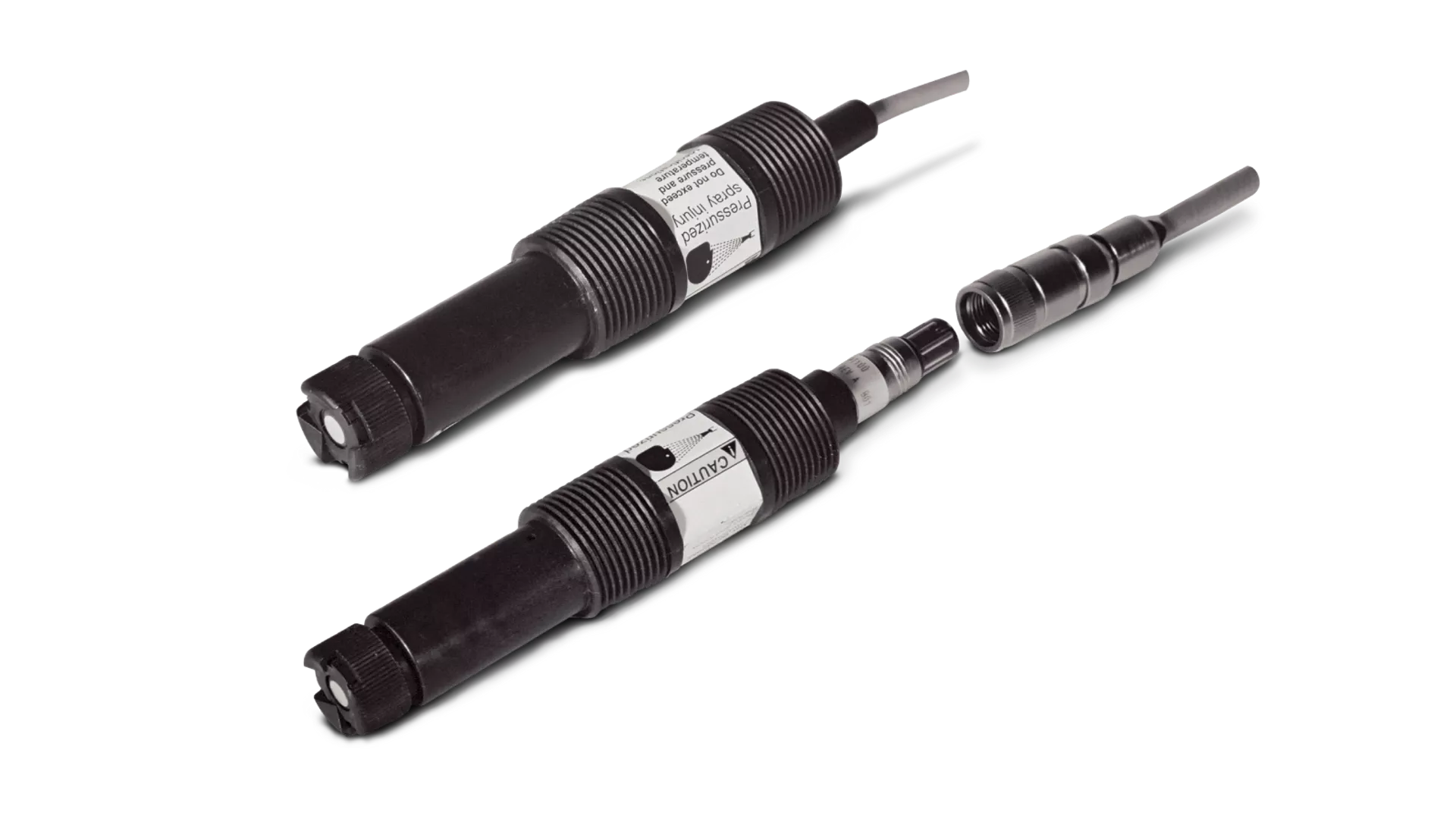
The Rosemount 499ACL-01 sensor measures free chlorine in water, eliminating the need for sample pre-treatment or costly reagents. It offers continuous pH correction when paired with an auxiliary pH sensor, enhancing its integration into industrial processes.
Frequently Asked Questions
A chlorine sensor is used to determine the amount of chlorine present in water. These sensors are critical for monitoring water quality in various industries. They can detect both free chlorine and total chlorine.
Chlorine sensors can be calibrated via zero-point calibration or full point calibration. Please refer to the sensor manual for detailed calibration instructions.
Chlorine sensors can be used in several different applications, such as drinking water and wastewater treatment, desalination plants, and cooling water control for chemical plants and oil refineries.
Chlorine sensors typically last three to five years if maintained well with rebuilds every three to four months.