
Products
What is Dissolved Oxygen?
Dissolved oxygen (DO) is the oxygen gas dissolved in a solution, crucial for controlling biochemical processes in wastewater treatment, biopharmaceuticals, manufacturing, and steam power generation. DO sensors monitor oxygen levels for microorganisms and help control these levels to reduce corrosion and scaling. Common DO measurement methods include amperometric or optical sensors.
Dissolved Oxygen Sensor Types
Optical Dissolved Oxygen (DO) Sensors
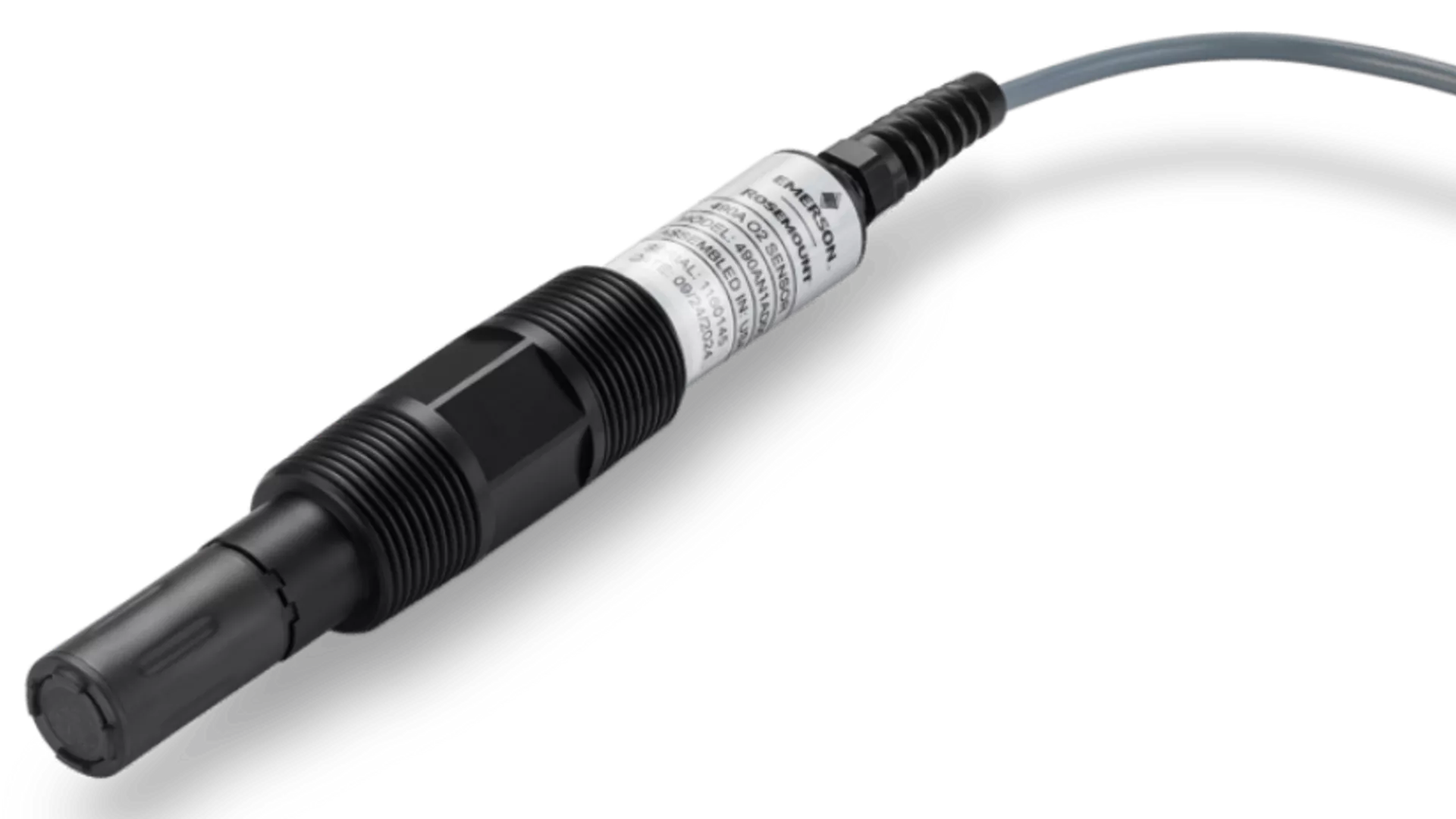
Optical Dissolved Oxygen Sensors use an EPA-approved luminescence-quenching method, measuring DO from 0 to 60 ppm. Blue light excites the sensor cap to emit red light, which oxygen inhibits. The red light's intensity, inversely related to oxygen concentration, is measured. With excellent chemical resistance, abrasion resistance, and digital Modbus output, these sensors offer easy installation and high reliability, ideal for wastewater aeration.
Frequently Asked Questions
Dissolved oxygen (DO) sensors are used to measure the amount of dissolved oxygen in a liquid.
There are several different ways to calibrate a DO sensor, such as one-point, two-point, and concentration calibration methods. Please reference the sensor manual for more detailed instructions.
Emerson DO sensors can be used across an array of industries. These sensors can monitor DO levels in wastewater aeration basins, ponds, steam power plants, high purity cooling water, and more.
Typical lifespan is approximately two years. Amperometric sensors will need electrolyte refills twice a year and membrane replacement once a year. Optical sensors will need sensor cap replacement every two years.
Within the sensor information (accessible via the transmitter), there is a “Remaining Days” field. This field is tied directly to the sensor cap and will count down from two years from the first reading. Two years represents the recommended reading life of the sensor cap. The sensor cap needs replacement every two years.