
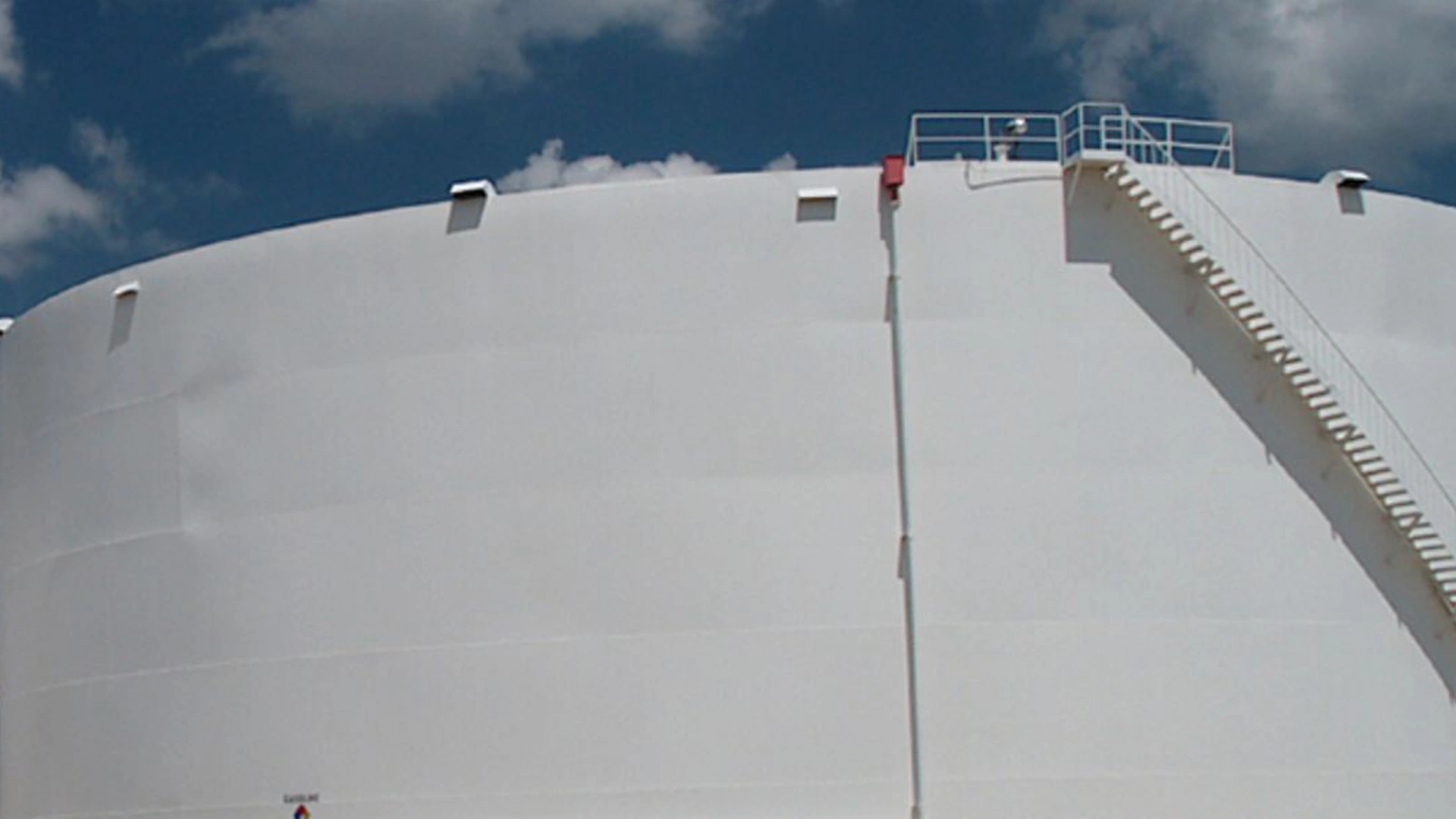
Protect your pressure transmitters with flanged and threaded diaphragm seals by isolating internal parts from corrosive and erosive material or damage from extreme temperature process media.
Products
Differential Pressure Level Technology
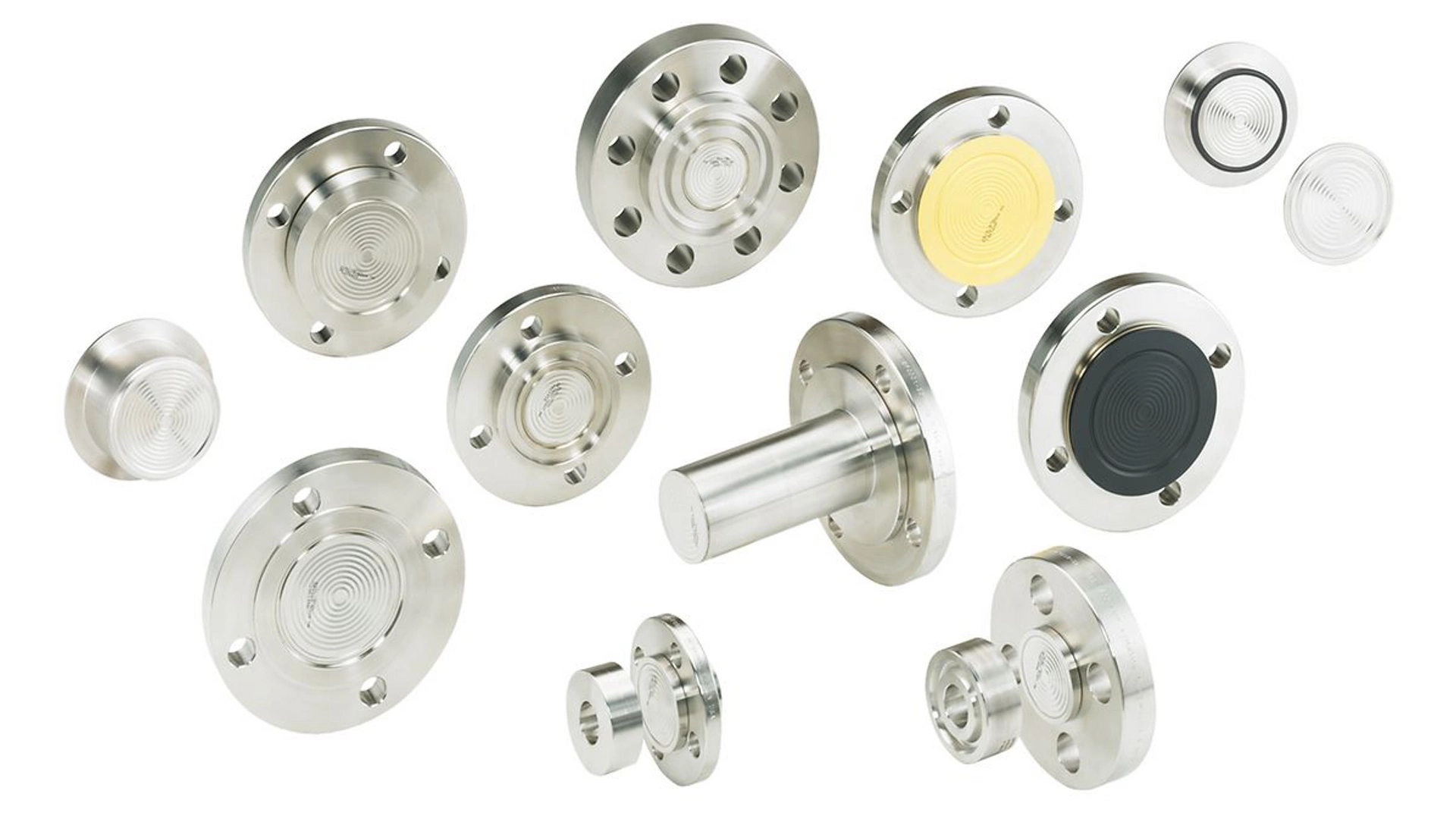
Remote Seals
The Diaphragm Seal System protects transmitters from hot, cold, corrosive, erosive or viscous processes. Seals are available with differential, gage and absolute pressure transmitters. Advanced welding and assembly techniques prevent weld corrosion and improve seal strength to deliver reliability and performance in the toughest applications.
Seal Systems in Challenging Applications
SEAL SYSTEMS
Extreme Temperatures
Emerson can help you address process and ambient temperatures up to 770°F (410°C) and temperatures as low as -75°C (-103°F) with the use of a Thermal Range Expander.
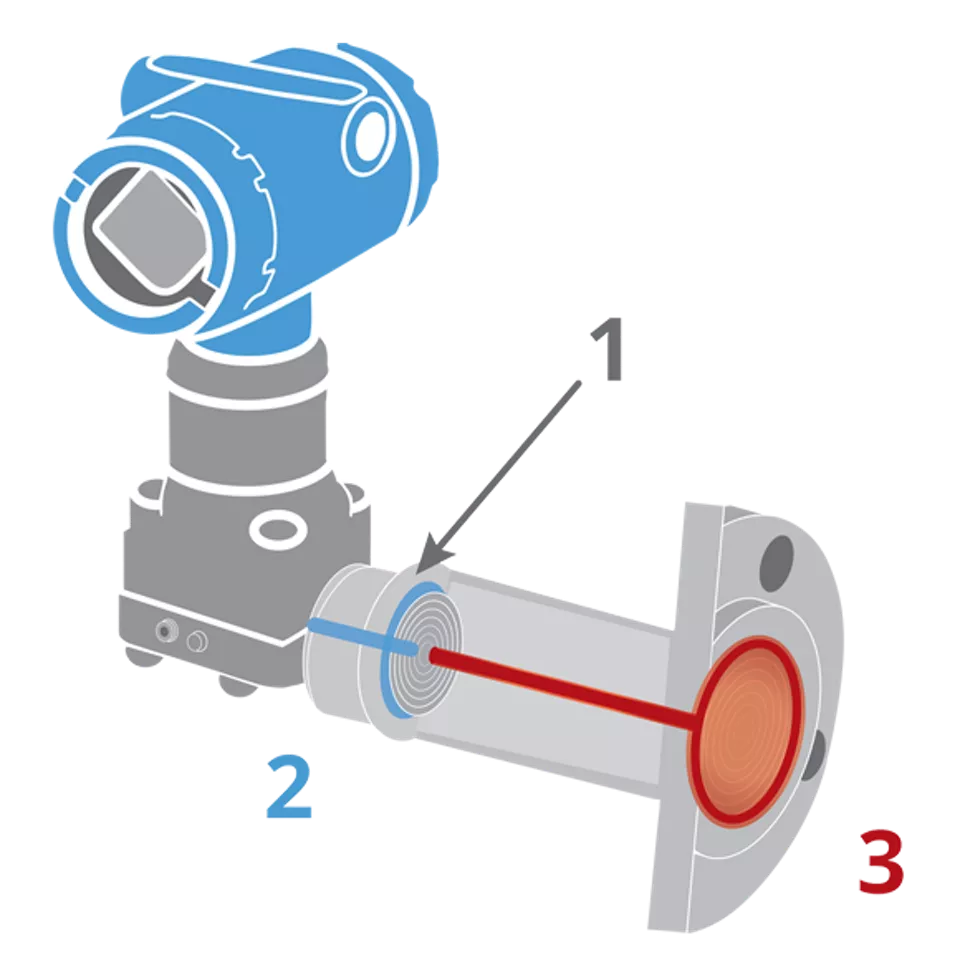
Graphic References:
- Intermediate diaphragm
- Ambient temp. fill fluid
- High temp.fill fluid (viscous)
STEP-BY-STEP GUIDANCE
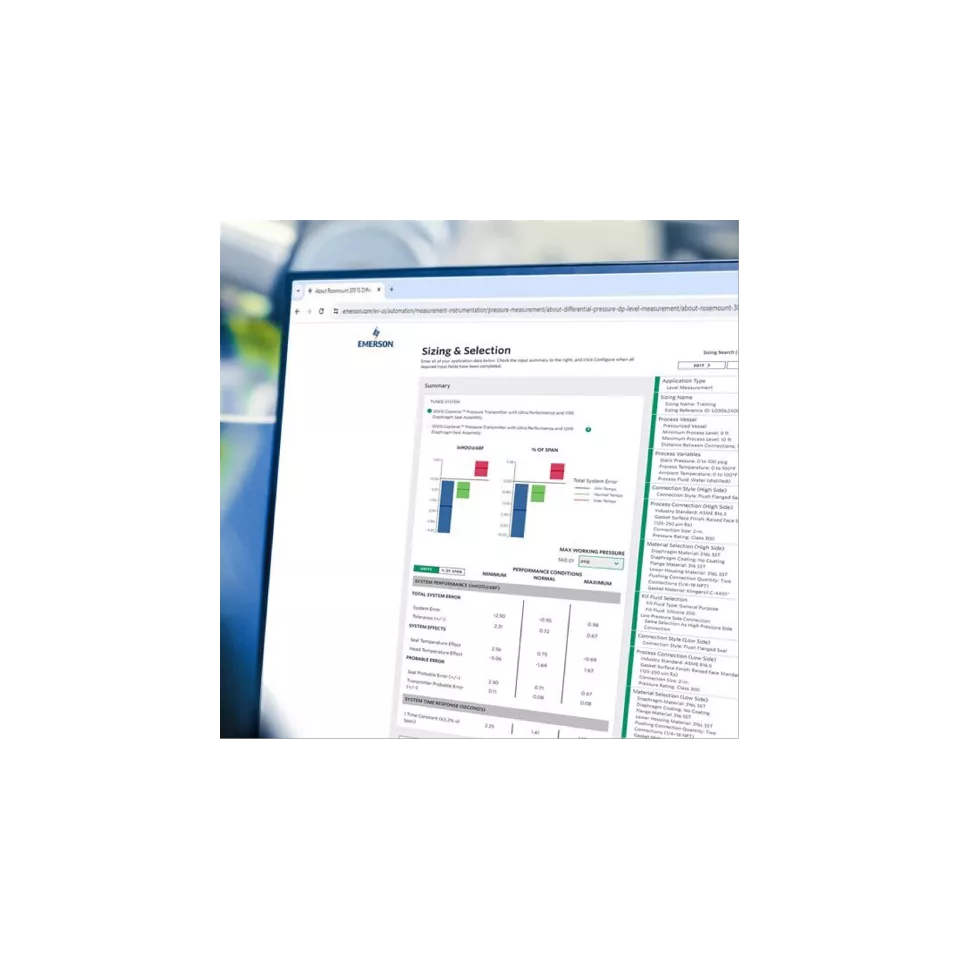
Differential Pressure Level Sizing & Selection Tool
With this step-by-step tool, you can easily size, configure and order Rosemount differential pressure level assemblies. It can help you save design time and reduce uncertainty.
Differential pressure level assemblies are a traditional level measurement method that can be influenced due to ambient and process conditions. An array of options complicate the specification process. Our DP Level Sizing & Selections tool simplifies this calculation and specification process. Easily optimize your DP level assembly to your unique application.
Gain Efficiency & Precision with ERS™ Systems
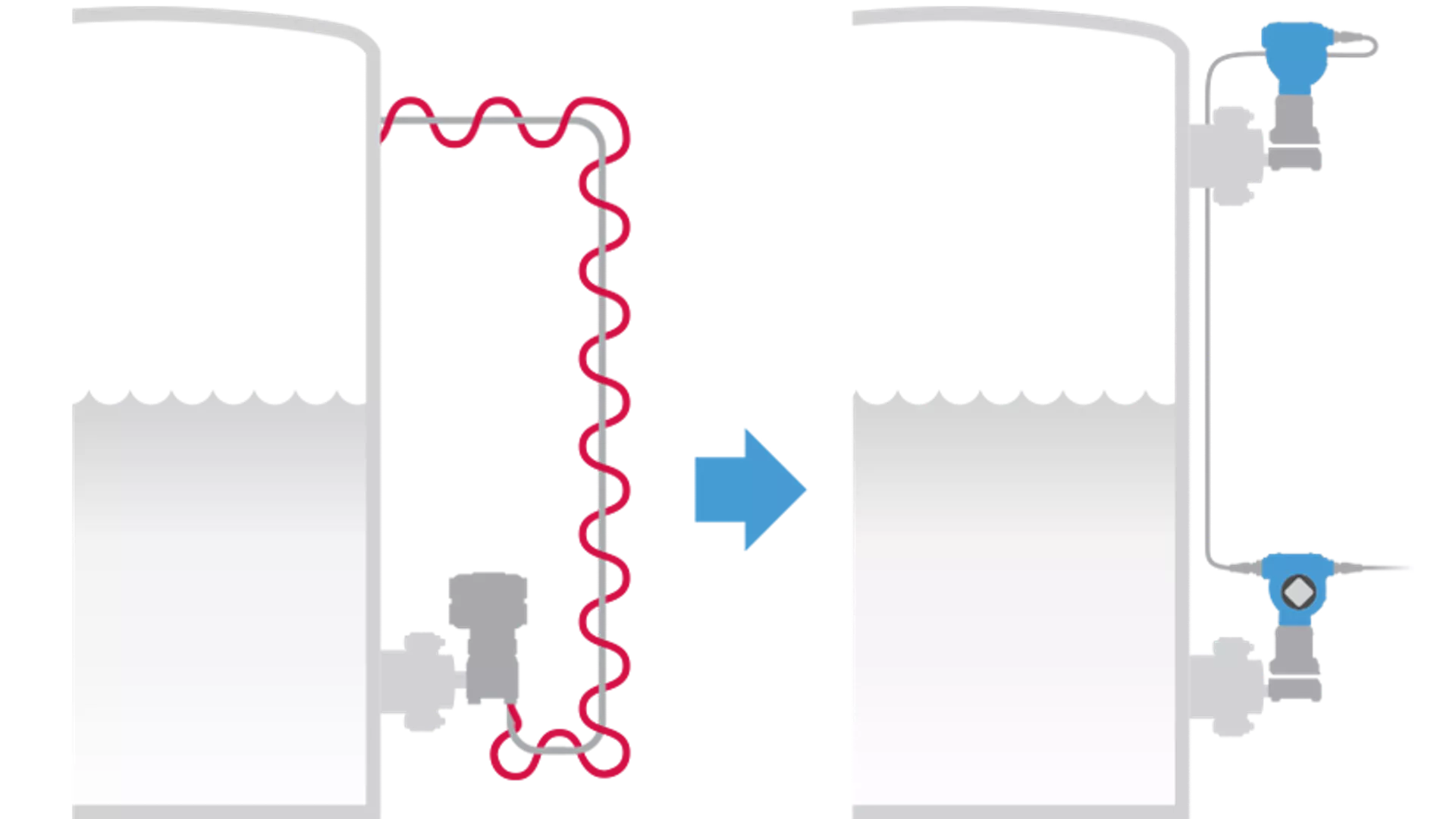
Eliminate Heat Tracing
Electronic Remote Sensor (ERS™) Systems provide differential pressure level measurements by calculating differential pressure using two pressure sensors connected by an electrical cable. This solution eliminates the need for heat tracing on impulse piping or capillary, reducing cost and maintenance complexities.
Thermal Range Expander
Greater Thermal Operating Range & Response Times
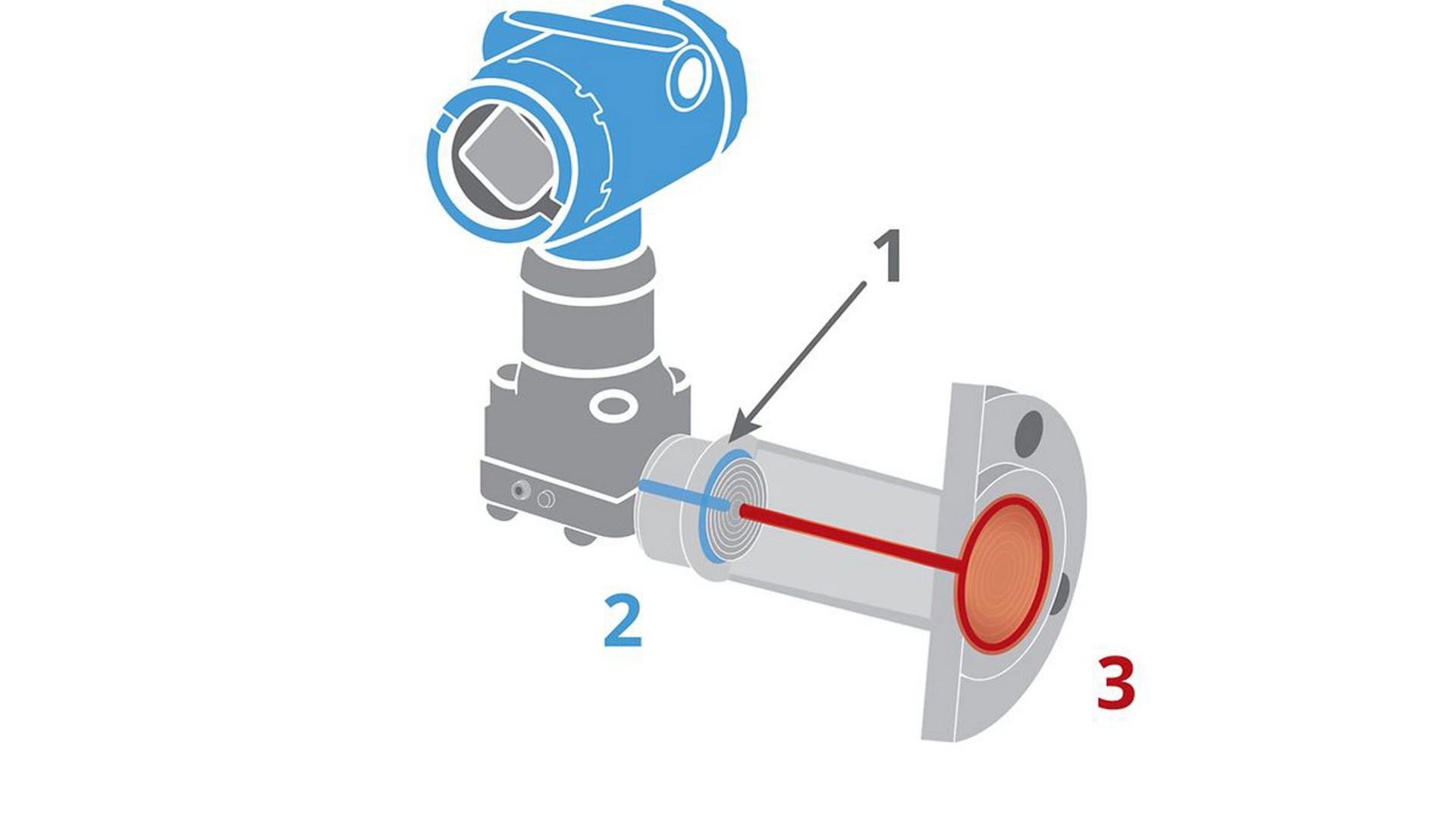
Choosing a thermal range expander allows you to attach a Rosemount 3051S Pressure Transmitter to high temperature processes and extend the thermal operating range and improve response time.
Graphic References: 1. Intermediate diaphragm; 2. Ambient temp. fill fluid; 3. High temp. fill fluid (viscous)

Remove Heat Trace
Eliminates the need for heat tracing and impulse piping which reduces installation costs and maintenance headaches.

Time Response Improvement
Tuned-systems can reduce temperature effects by 10-20% and improve response time by 80% vs. traditional installations.

Hot Process/Cold Ambient
Operates with process temperatures as high as 770 °F (410°C) and ambient temperature as low as -40 °F (-40 °C).

Direct & Capillary
Allows for direct mounting, remote mounting and balanced systems to meet various application requirements.
Flushing Ring Comparison
Compare flushing ring technologies. If you have questions related to Rosemount Flushing Rings, please contact us.
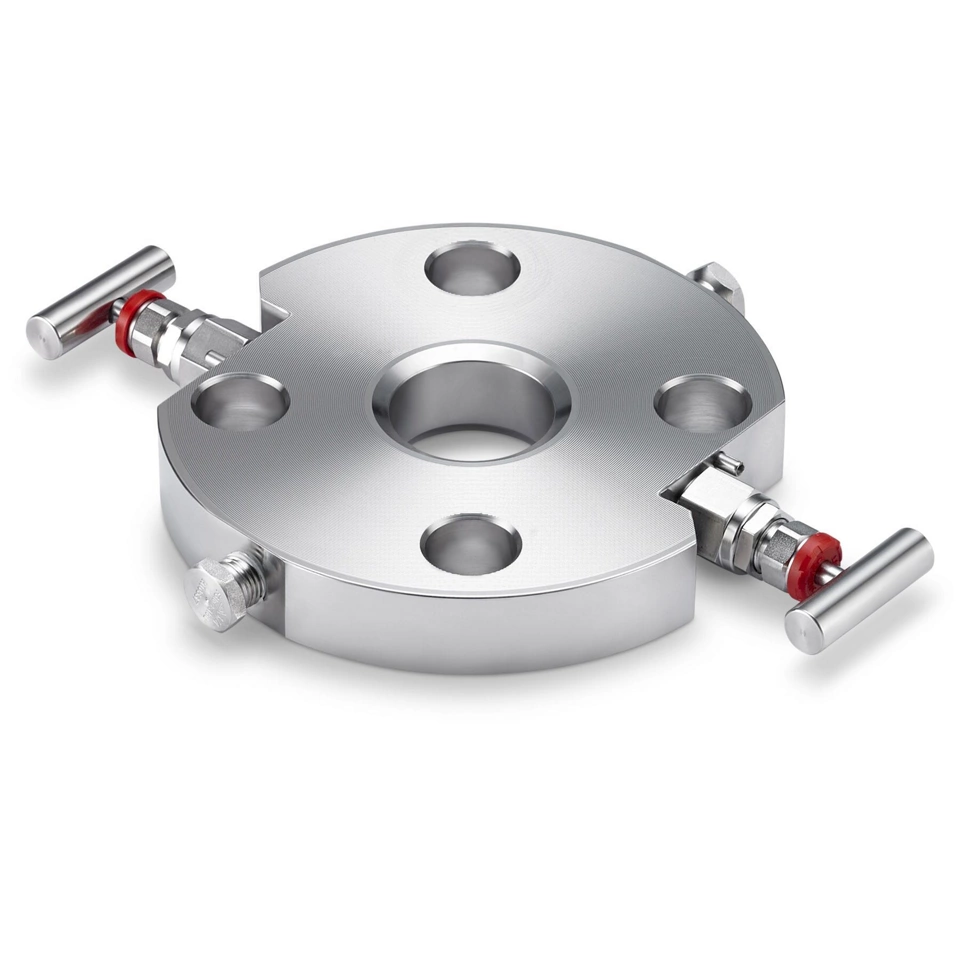
Rosemount 319C Flushing Rings
The Rosemount 319 Flushing Ring compact design is engineered using offset port angles to generate a superior vortex cleaning action for faster removal of residue build-up on diaphragm seals and can clean up to 30% more seal surface area than traditional designs. It offers 50% less leak points by eliminating unnecessary process joints for a more streamlined connection to your process. Plus, the compact design is smaller and more lightweight to fit into tighter spaces. Designs are offered in multiple materials of construction including: 316SST, C-276, Tantalum, Duplex 2205 SST & Alloy 400.
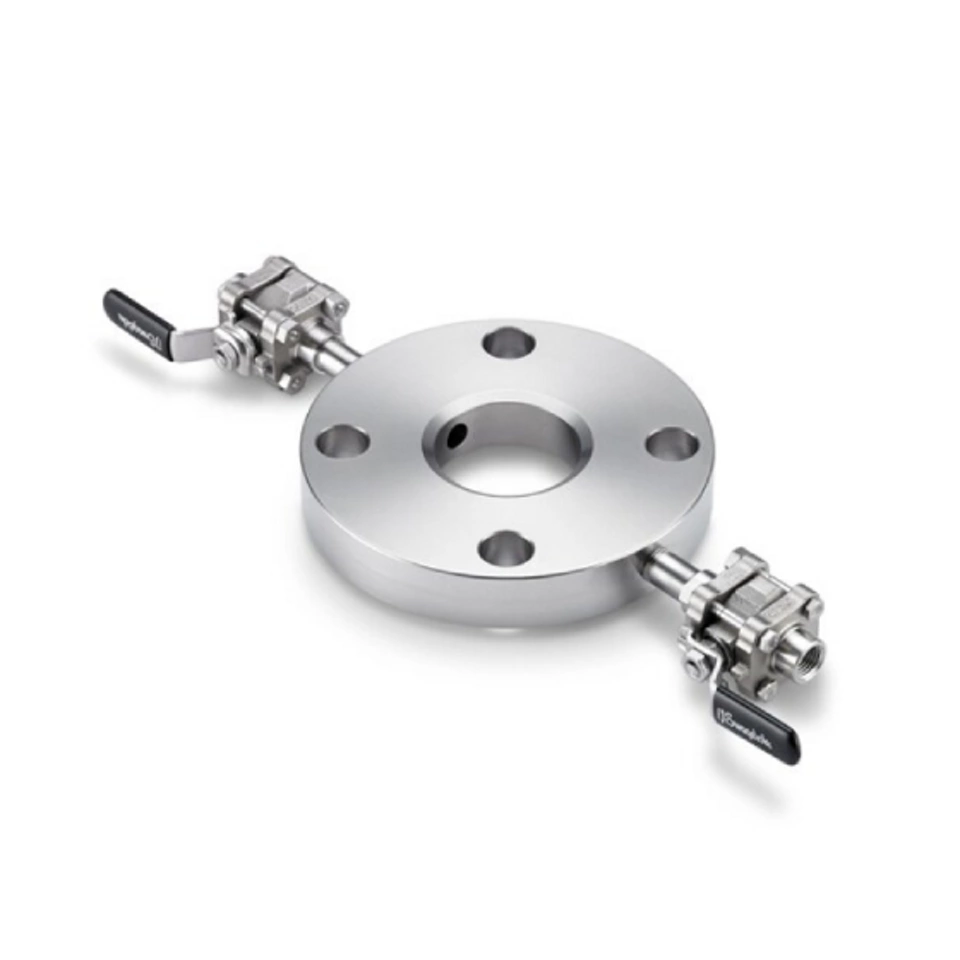
Rosemount 319T Flushing Rings
The Rosemount 319 Flushing Ring traditional design utilizes a flow-through cleaning action and can be assembled to fit most any application to clean diaphragm seals without removing assemblies for the process. Its design is available with your choice of ball valves, needle valves or gate valves and pre-assembled and leak tested for a right the first-time installation. Designs are offered in multiple materials of construction including: 316SST, C-276, Tantalum, Duplex 2205 SST & Alloy 400.
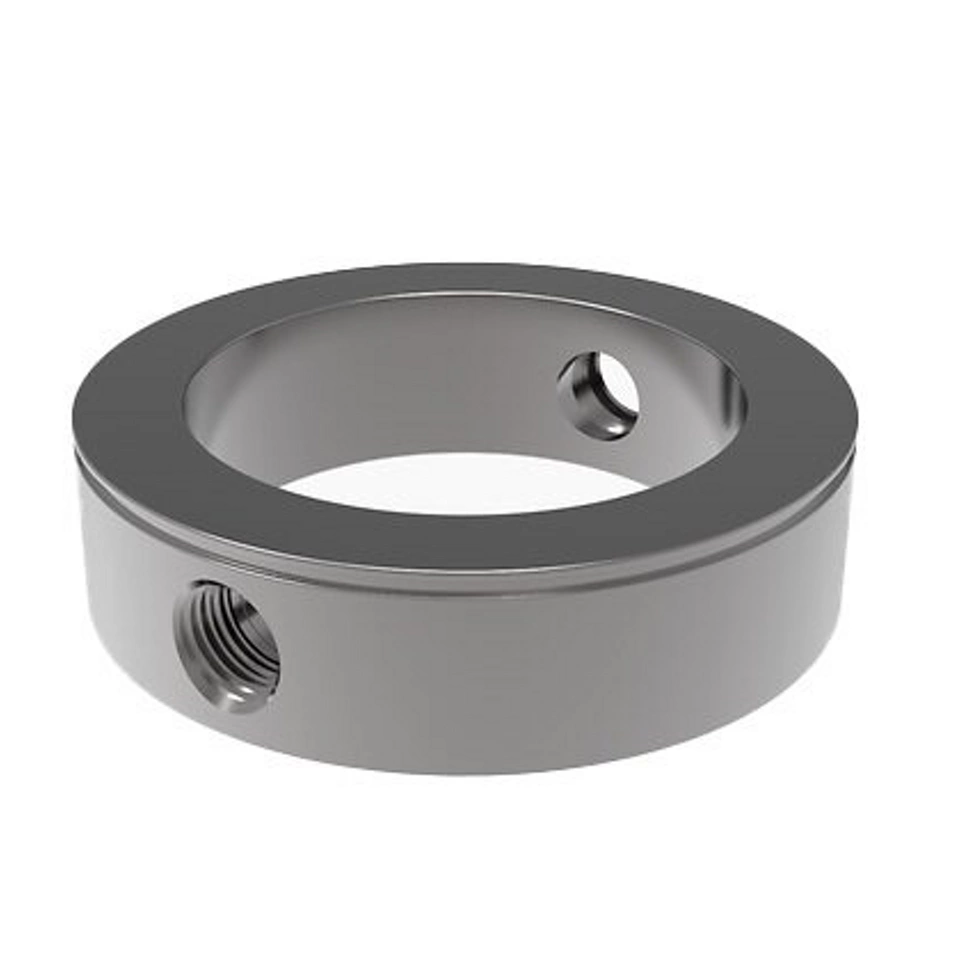
Standard Flushing Ring
Rosemount Remote Seals can be ordered with standard flushing rings. These rings have NPT connections, but are not available with integral valves. Designs are offered in multiple materials of construction including: 316SST, C-276, Tantalum, Duplex 2205 SST & Alloy 400.
Resources
Frequently Asked Questions
If you have additional questions related to Rosemount Differential Pressure Level Transmitters, Please Contact Us.
Differential pressure level is measured by calculating the difference in pressure between two points - typically the top and bottom of a tank or vessel. There’s a high-pressure side located near the bottom of the tank (where pressure is higher due to liquid head) and a low-pressure side located near the top of the tank (lower pressure, often just vapor or atmospheric pressure). The differential pressure (ΔP) transmitter measures the pressure difference between these two points. The pressure difference is directly proportional to the height of the liquid column.
Using the formula: Level (Height)=ΔP/SG where: ΔP = differential pressure and SG = Specific gravity of process fluid.
If the density of the fluid changes, compensation may be necessary for accurate level measurement. Differential pressure level measurement is commonly used in closed and pressurized tanks because it accounts for both liquid and vapor pressures.
A differential pressure transmitter (or DP level transmitter) measures the difference in pressure between the top and bottom of a tank. A differential pressure level transmitter is typically used in pressurized or sealed tanks. Differential pressure level measurement is calculated by converting the pressure difference to liquid level using specific gravity of process fluid.
A level transmitter measures the level of an open or closed tank using ultrasonic (sound waves), radar (microwaves), float-based (mechanical) or capacitive or conductive. Level transmitters most often measure level directly, not by converting the pressure.
A differential pressure transmitter measures a liquid level by detecting the pressure difference between the bottom and top of a tank. A high pressure port is installed at the bottom of the tank, while a low-pressure port is installed at the top (or open to air in open tanks). The pressure difference is proportional to the height of the liquid.
A differential pressure level transmitter measures the pressure difference between the bottom and top of a tank to determine the liquid level. The high-pressure port is mounted at the bottom, and the low-pressure port at the top (or open to atmosphere). It calculates the pressure caused by the liquid column, converts it to a level reading based on fluid properties, and outputs a 4–20 mA or digital signal representing the level.
Electronic differential pressure level measurement uses two individual pressure transmitters connected with an electronic cable. Unlike a traditional capillary or impulse piping system, which directly measures the differential pressure, an electronic differential pressure system uses two synchronized sensors, that electronically calculate the differential pressure. Electronic remote sensing improves time response and performance while eliminating the need for heat tracing and maintenance headaches. In addition to level and volume measurements, each pressure reading can be individually monitored, offering more process insight.
Unlike capillary or impulse piping systems, ERS systems (Electronic Remote Sensor Systems) utilize two individual pressure transmitters. For that reason, the pressure range needs to be specified based on the maximum static pressure, not the differential pressure. Therefore, as a general guideline electronic remote sensors should be used in the following conditions:
• Level span less than 10 ft and static pressure less than 145 psi
• Level span between 10 ft to 32 ft and pressure less than 145 psi
• Level span more than 32 ft
Note: These are general guidelines of when to use electronic remote sensors in differential pressure level measurement. An application sizing should be completed to understand full accuracy and device need for the application.
Calibrating a Rosemount Differential Pressure Level Transmitter follows a structured process, especially when you're working with WirelessHART® protocol or a handheld field communicator.
1. Prepare the setup:
- Isolate the transmitter from the process.
- Connect a 24VDC power supply and loop wiring.
- Connect a HART communicator.
- Hook up a pressure source or water column to simulate input pressure.
- Connect a multimeter or loop calibrator to measure the 4–20 mA output.
2. Re-range the transmitter:
- Using the WirelessHART communicator: Input your desired Lower Range Value (LRV) and Upper Range Value (URV). These values define the range of pressure (or level) that maps to 4–20 mA.
3. Apply known pressures:
- Apply pressure that corresponds to 0%, 25%,50%, 75% and 100% of the range.
- Verify that the transmitter outputs the correct mA signals at each point.
4. Trim the sensor (if needed). If the output isn’t accurate:
- In field communicator device, choose:
- Zero Trim (with equal pressure on both sides), or
- Lower/Upper Trim (with known applied pressures)
- Follow the on-screen instructions to complete the trim.
5. Verify output by checking the output at several points again to confirm linearity and accuracy. Ensure it reads correctly across the full range (within spec).
6. Document results. Record as-found and as-left readings. Note the date, technician name and any adjustments made.
Differential pressure capillary systems outperform impulse piping by reducing maintenance, avoiding plugging or freezing and improving reliability in harsh conditions. They handle temperature effects better, ensure accurate readings with challenging media and simplify installation. This makes differential pressure capillary systems ideal for critical or hard-to-access level measurement applications.
The thermal range expander with using UltraTherm 805 fill fluid has an operating temperature that can reach up to 770 °F (410 °C). To see the temperature limits of all our fill fluids for remote seals, see our go to Rosemount DP Level Fill Fluid Specifications.