
Chemical Company Improves Product Quality, Meets Air Permit Requirements with Emerson Wireless Products
RESULTS
- Improved ink purity
- Saved thousands by eliminating material rejects
- Quick compliance with modified environmental air quality permits on solvent streams
PLUGGED FILTERS CREATED QUALITY ISSUES
The chemical plant wanted to improve ink quality by reducing the number of over-pressure incidents.
Customer
American chemical company
Application
Plugged filters resulting in lost product
Challenge
A producer of printing inks and pigments was using gauges on the filter housings used in ink production to measure differential pressure. Operators would check the gauges periodically. If filters weren’t changed in time, particles could pass into the ink being produced and result in lost product.
“Unfortunately, these filters are plugged much more frequently than a typical air filter,” said the process engineer. “The degree to which the filters are plugged is reflected by the differential pressure (DP) across the filter housing. Once it gets to a preset level (40 psi) the filters are changed to prevent overpressure in order to meet ink purity requirements.” Local gauges were checked regularly by the operators, and filters were changed as soon as DP readings approached 40 psi. The chemical plant wanted to improve ink quality by reducing the number of over-pressure incidents as well as eliminate manual readings with online measurements and alarming. Unfortunately, long conduit runs made a wired solution unfeasible.
“We had a second project come up at the same time we were looking at bringing the filter housing DP’s online,” continued the process engineer. “This was fast track. There was a transition in air permit classification for the plant that required sixteen additional monitoring points. These points were on multiple solvent vent condensers, and were located on three different roof elevations across the entire site. For the air permit, we needed to document when there was a flow. We are talking about very low pressures such as 2.6 inH20. The vent condensers act to take HAPs (hazardous air pollutants) out of the vapor stream. A vapor stream is not continuously running through these vents, but we need continuous monitoring to identify how often and how long they run.”
Because the plant has different areas of electrical classifications, it is always tough to install instruments. “We are not allowed to simply string them,” said the engineer. With the layout of these points spanning the entire site, multiple roof elevations, and special electrical classifications for some areas, a wired solution would have been a challenge.
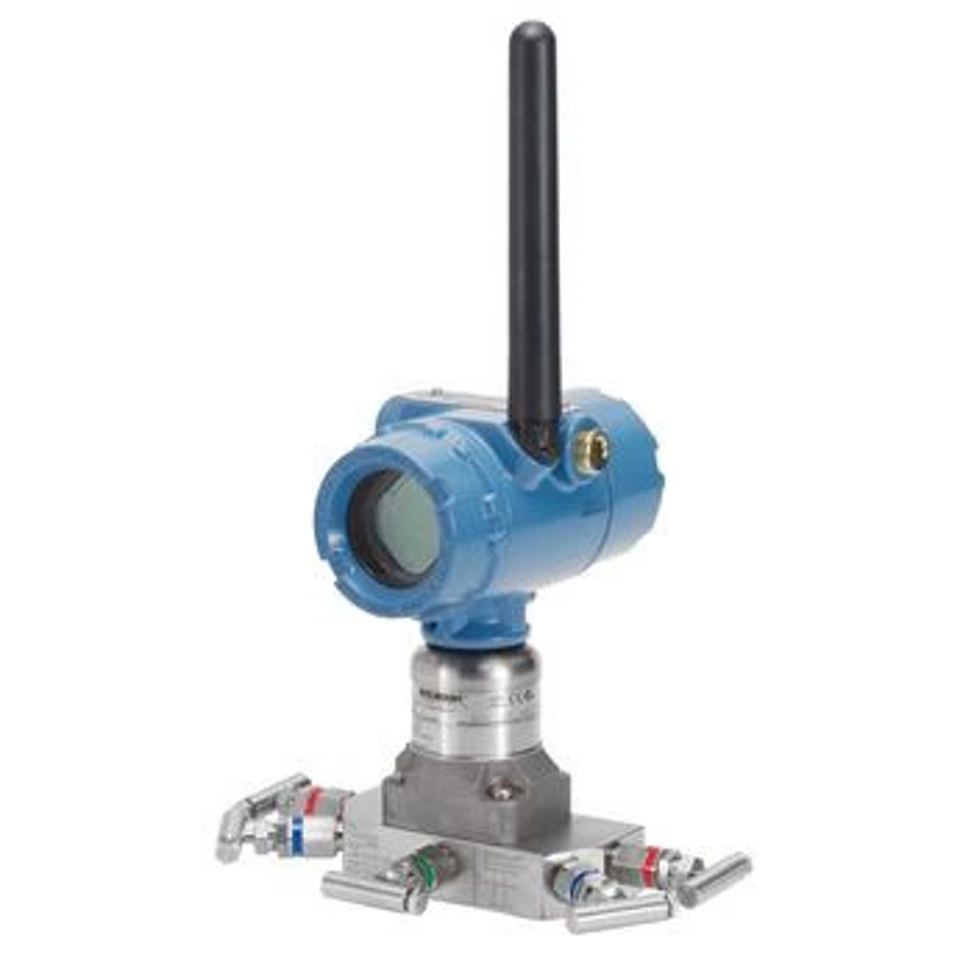
The customer chose the Rosemount 3051S Wireless DP Transmitter to save on the electrical installation cost and time.
Solution
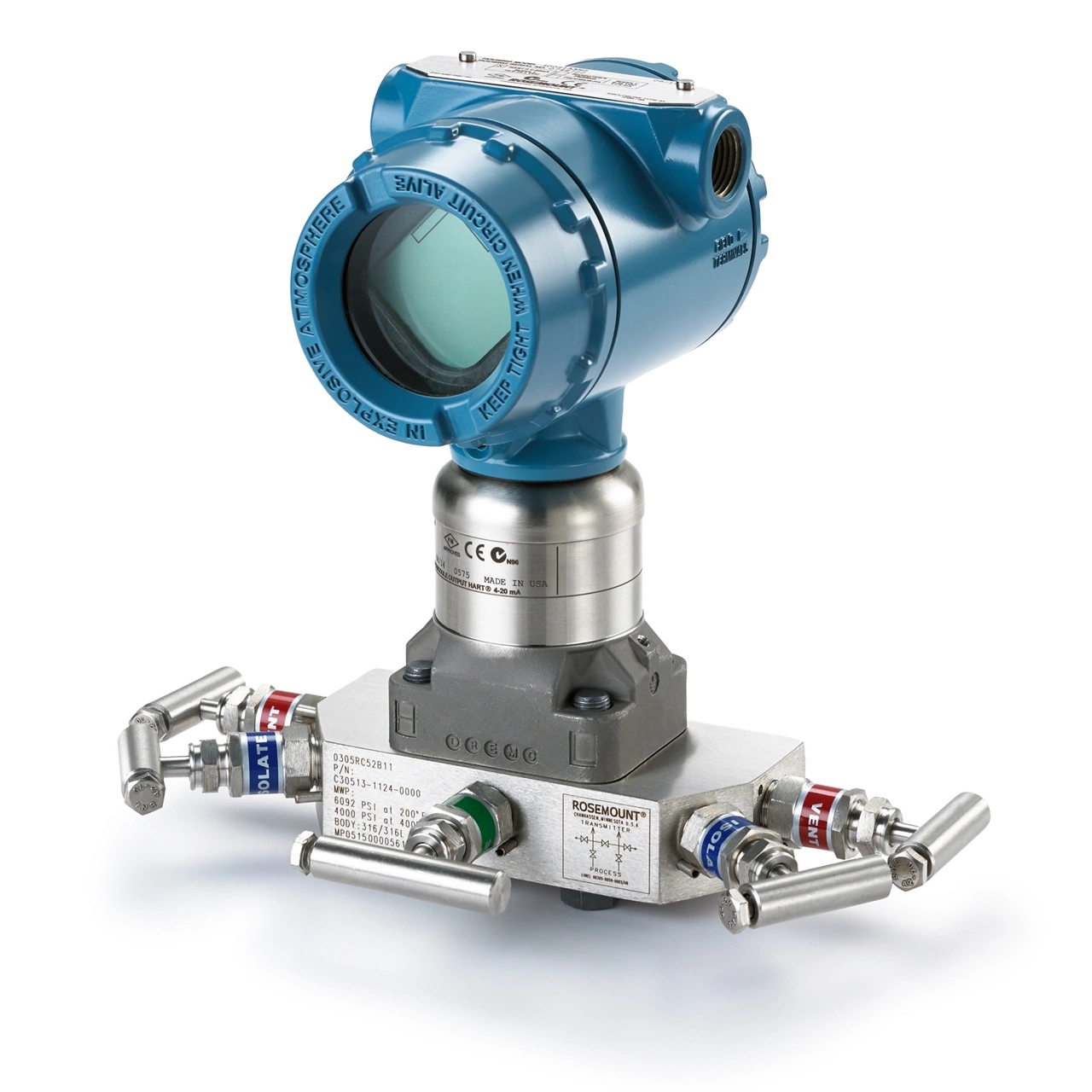
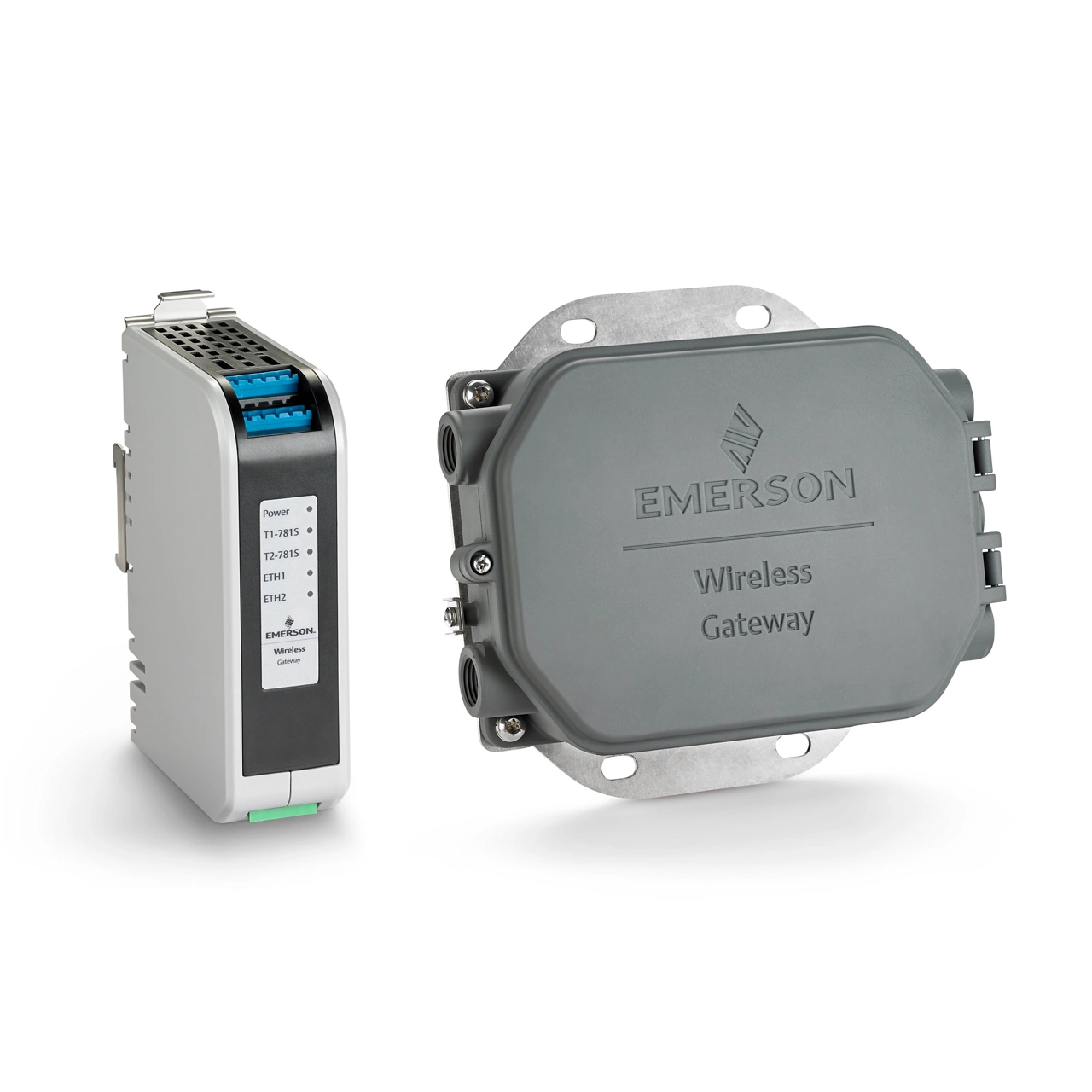
Fourteen Rosemount 3051S Wireless Differential Pressure (DP) Transmitters are installed on the filter housings and communicate to an Emerson Wireless Gateway, which seamlessly transfers the data to the plant PLC. “We installed wireless to save on the electrical installation cost and time, as well as accessibility (communication) to the devices wherever they needed to be mounted,” stated the customer. “Now we can ensure that we don’t over-pressurize the filter housing and provide better quality ink. We have saved thousands by eliminating rejects of material.”
The second project followed closely, with sixteen Rosemount 3051S Wireless DP Transmitters installed on vapor streams from the solvent vent condensers on multiple locations and varying elevations across the plant. “Emerson quickly delivered a solution that was easy and quick to install,” he stated. “We had long conduit runs on the second project, and a very short time to meet the new air classification.” In fact, the customer had only 30 days to comply. All 16 points were delivered and installed in the short time window, and connected to the plant PLC for online trending and reporting.
“With these (vapor stream) points spanning the entire site at multiple roof elevations, we could never have met the 30-day time frame with a wired solution,” he added. The order was turned around in two weeks, and it took the plant two days to install the transmitters, connect them to the Gateway and integrate them into the PLC. The customer also noted that with Wireless Snap-on, he could see the communication path of the wireless instruments and “we could see for ourselves that the network was self-propagating.”
“The Emerson wireless solution enabled us to improve ink quality, save thousands of dollars by eliminating rejects, and easily meet the modified air permit classification,” the process engineer concluded.