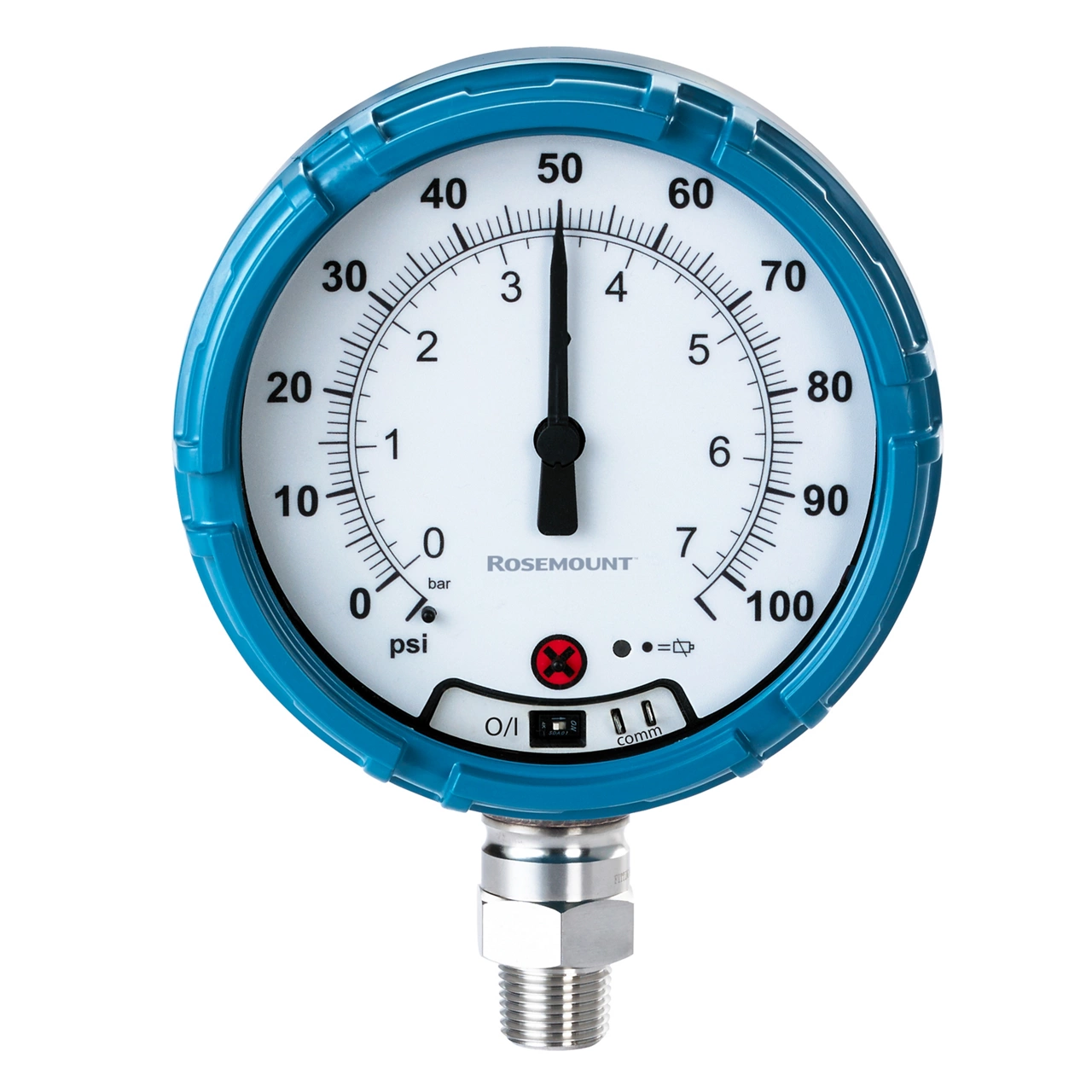

TFC Uses Rosemount™ Wireless Pressure Gauges to Prevent Release of Toxic Gases from Wastewater Treatment Facility
RESULTS
- Improved operator & environmental safety by preventing toxic gas releases
- Savings of 450,000 yen (3,957 USD)/day per single blower failure
- Improved operator productivity by eliminating manual rounds
- Total installation cost reduced by 50%
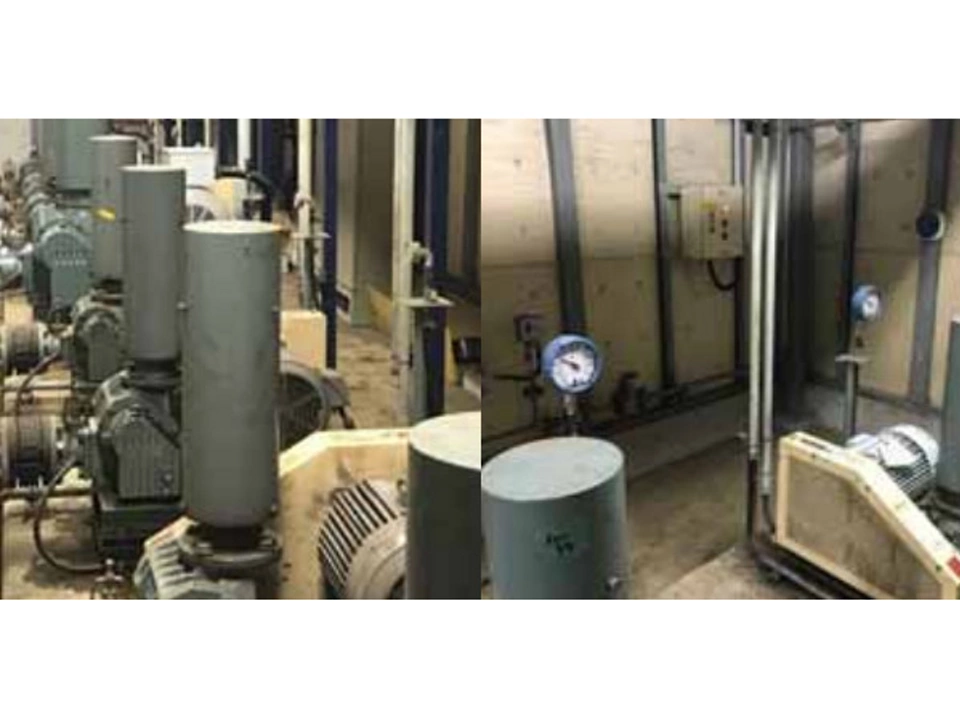
(Left) Before, with the existing mechanical pressure gauges, it was difficult, and potentially dangerous, to detect blower malfunctions. (Right) After the installation of Rosemount Wireless Pressure Gauges, the discharge pressure is continuously monitored at the operator station.
Customer
Toray Fine Chemicals, Chiba, Japan
Application
Continuous monitoring of blower discharge pressure
Challenge
Toray Fine Chemicals (TFC) in Chiba is the only plant to produce DMSO (dimethyl sulfoxide) and polysulfide polymer in Japan, and also produces acrylic polymer.
Wastewater discharged from factory manufacturing processes is biologically treated at the wastewater treatment process plant before being sent to public water bodies. A typical blower used in a wastewater treatment process is an aeration blower that sends oxygen into the aeration tank. In TFC, six blowers are also used for biological treatment equipment other than general aeration tanks.
The operation state of the six blowers is monitored continuously by using the signal (ON/ OFF) from the operation circuit to monitoring system. Like aeration blowers, if these blowers are stopped, the supply of oxygen is stopped. Once the supply of oxygen is stopped, the processing of waste liquid sludge becomes anaerobic and toxic hydrogen sulfide and phosphorous is generated. Therefore, when the blower stops abnormally due to some cause, it is critical to restore oxygen supply immediately to avoid toxic releases.
In the case of an aeration blower, one can detect the malfunction of the blower early by operation monitoring of the pump and trend management of dissolved oxygen in the aeration tank. However, for the six blowers of this biological treatment facility, it is difficult to detect malfunction as the blowers can only be monitored through manual rounds.
The following continuous monitoring methods will help to detect blower malfunction due to breakage of belt and detachment of belt:
- Monitoring load current (power)
- Monitoring of blower discharge flow rate
- Monitoring of blower discharge output pressure
Monitoring of load current requires significant rework such as adding new measurement equipment into the existing control panel and other related installations to send output back to the operator station. Monitoring of blower discharge flow rate requires large scale construction work to install a flow meter for the discharge piping with large diameter. On the other hand, continuous monitoring of the discharge pressure of the blowers using the existing process connection of pressure gauge is a viable option.
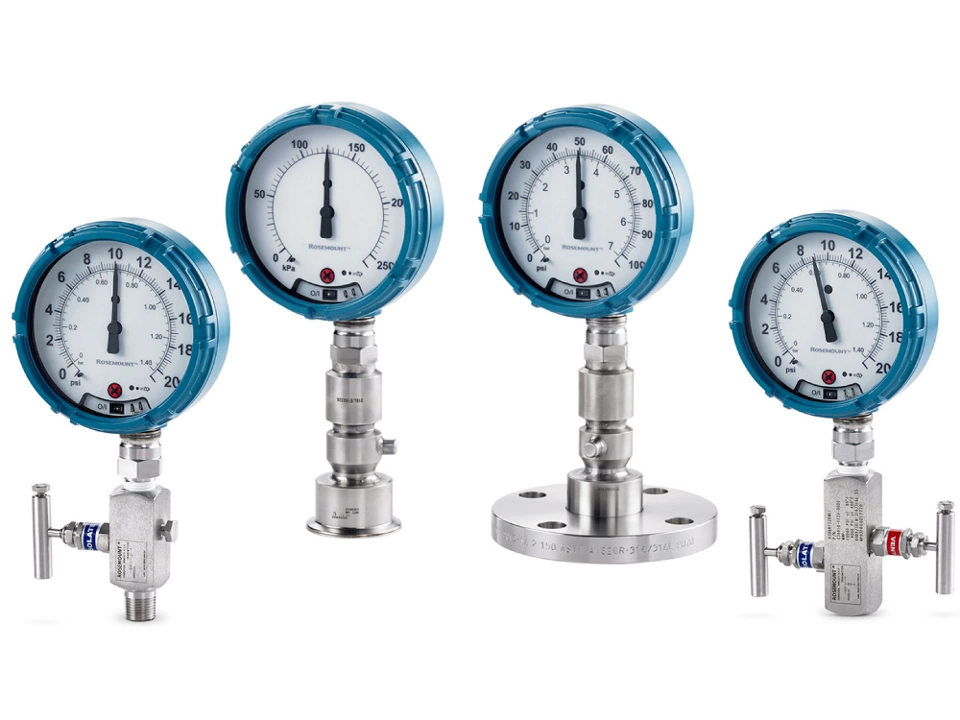
Rosemount Wireless Pressure Gauges provided continuous monitoring and trending of blower discharge pressure to help prevent the generation of toxic gas.
Solution
TFC installed Rosemount™ Wireless Pressure Gauges, replacing the existing mechanical pressure gauges to measure the discharge pressure of the blowers. Previously, it was difficult to detect malfunction as it was just the on/off status monitoring of the blower or by periodic manual round to visually inspect for any detached or breakage of belt. With Rosemount Wireless Pressure Gauges, the discharge pressure was continuously monitored at the operator station with minimal manual rounds and early detection of blower malfunctioning is now possible.
With continuous monitoring and trending of blower discharge pressure, TFC is now able to prevent the generation of toxic gas by early detection of blower malfunctioning which would impact the supply of oxygen to the biological treatment facility. Blower discharge pressure trending can also be used to detect and confirm membrane clogging issues. The Rosemount Wireless Pressure Gauge utilizes field-proven piezoresistive sensor technology to deliver reliable pressure readings. The large 4.5-inch gauge face provides easy field visibility.
The total instrument and installation costs were reduced by approximately 50 percent when compared to analog/wired instrumentation. There was no additional mechanical gauge needed for field checks. And, there were no more mechanical gauge failures due to high vibration of the blower, hence the measurement was reliable and maintenance-free.