
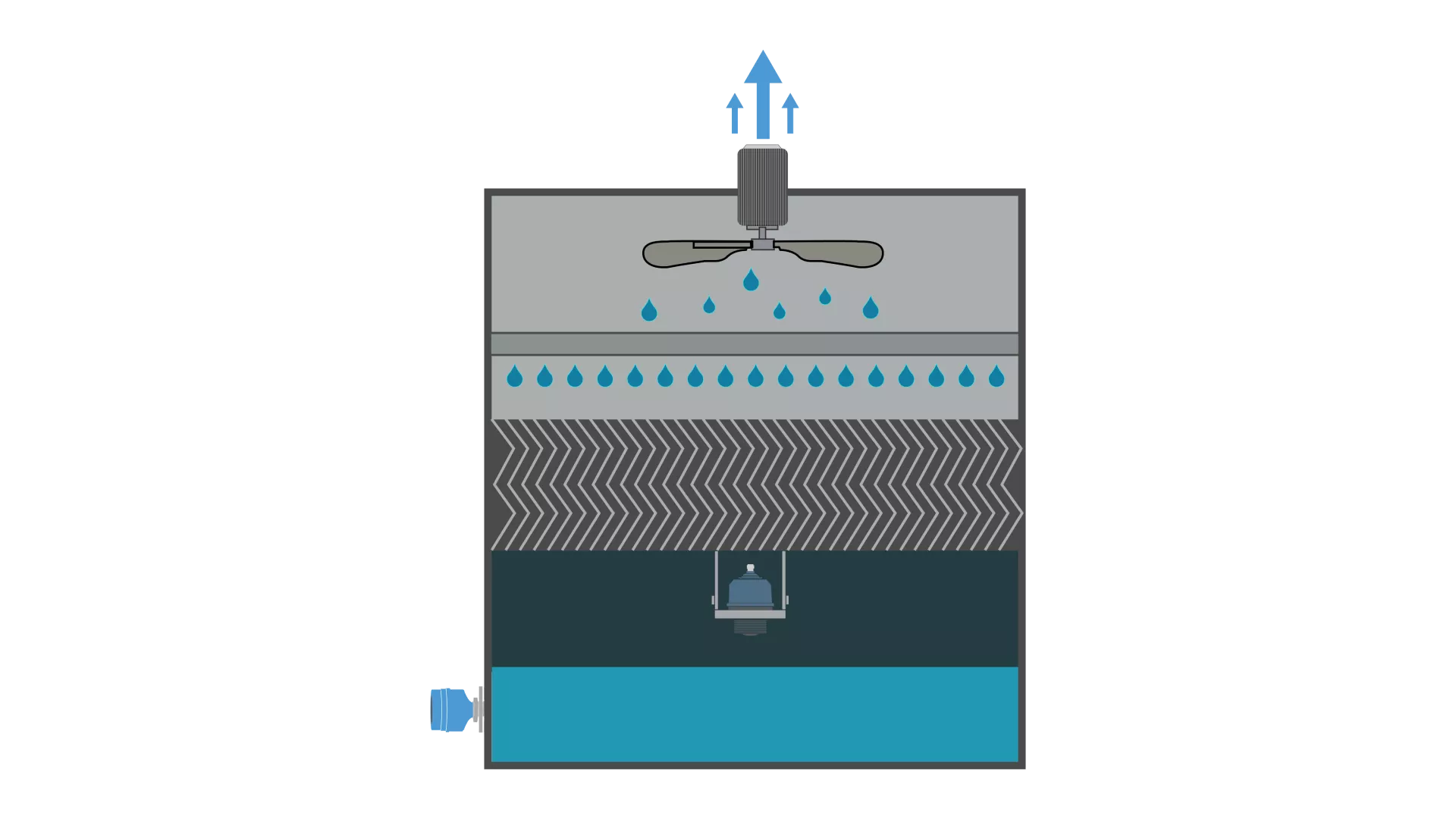
Application Overview
Cooling towers remove heat from the data center cooling system and release it into the atmosphere. These assets are typically located outdoors and help maintain the temperatures required for reliable and safe operation.
Key Challenges in Cooling Tower Basins from Data Centers
- Low basin levels can restrict water availability and expose pumps to dry-running conditions.
- High or unstable levels can cause overflow, water waste, and inefficient cooling operation.
How level measurement helps
- Maintains visibility into water levels and ensures water supply.
- Helps protect equipment from dry running.
- Supports leak detection.

Frequently Asked Questions
Cooling tower basin level measurement monitors the water collected in the basin at the bottom of the cooling tower. Continuous level measurement provides ongoing visibility into the basin water level, while point level switches can detect predefined high- or low-level conditions.
Continuous level measurement tracks the water level in the cooling tower basin and sends the measured value to a connected controller or control system. This allows the system to display the level, generate alarms, or operate pumps and valves to help maintain water within the required operating range.
Maintaining the required level helps ensure a consistent water supply, protect pumps from dry running, and support reliable heat rejection from the condenser water loop.
A low basin level can reduce the water available to the circulating pump and create a risk of pump starvation or dry running. Reliable level measurement gives operators or the control system an earlier indication of the condition so corrective action can be taken before cooling performance is affected.
Level measurement allows operators and control systems to identify when the basin is approaching its upper operating limit. The measurement can be used to generate a high-level alarm or support control of makeup water before the basin overflows, reducing water waste and associated treatment costs.
Yes. An unexpected or sudden decrease in the measured basin level can provide an early indication of abnormal water loss or potential leakage. Operators can investigate the condition before insufficient water affects pump operation or cooling performance.
Level measurement provides an indication of changing water level, but it does not determine the exact location or cause of a leak.
Automated level measurement gives operators continuous electronic visibility into basin conditions without relying exclusively on routine visual checks. When connected to a controller or control system, the measurement can also provide local display, alarms, data logging, or pump control.
The best technology depends on the basin design, process conditions, mounting constraints, control objectives, and the presence of foam or debris. Non-contacting radar is suitable for continuous basin level monitoring, while point level switches can provide independent high- and low-level alarms.