
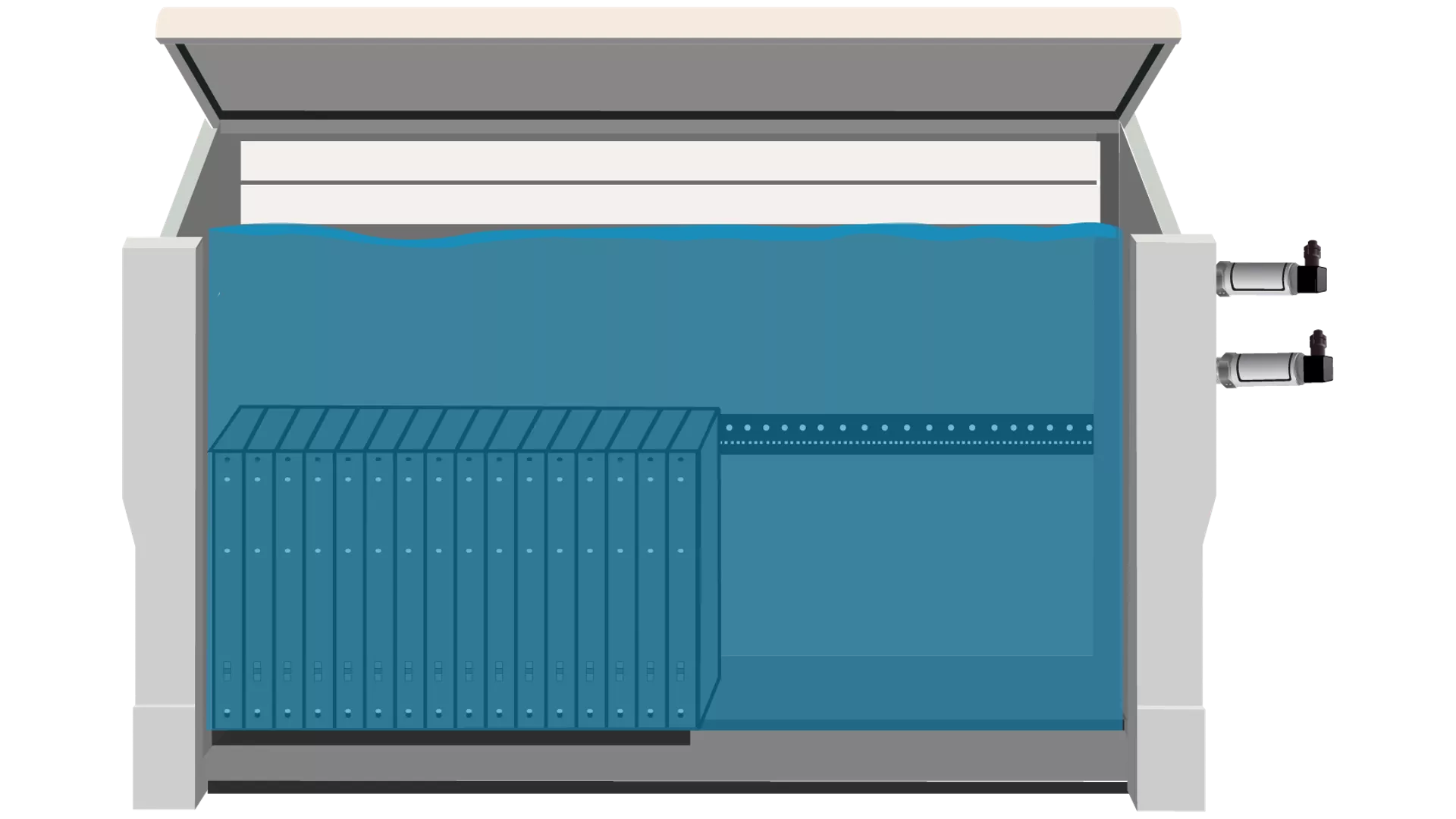
Application Overview
Immersion cooling systems submerge servers and IT equipment in non-conductive dielectric fluid, allowing heat to be absorbed and transferred to the cooling system.
Key Challenges in Immersion Cooling Systems
- Maintaining proper cooling fluid levels.
- Detecting leaks before nearby equipment is affected.
How level measurement helps
- Maintains cooling fluid visibility.
- Supports reliable cooling performance.
- Provides leak detection capability.

Frequently Asked Questions
Point level switches detect when the dielectric cooling fluid reaches a predefined high or low level and send a discrete signal to the connected control or alarm system. This can trigger an alert for operators, enabling them to respond to potential overfilling, insufficient fluid coverage, or fluid loss. High-level alarms help prevent overflow, while low-level alarms help ensure servers remain adequately submerged for reliable cooling.
High- and low-level alarms notify operators when the dielectric fluid reaches a defined limit. A high-level alarm helps prevent overfilling and potential spills, while a low-level alarm helps prevent servers and IT components from becoming exposed.
If the fluid falls below the required level, servers or other IT components may no longer be fully submerged. This can reduce cooling effectiveness and increase the risk of overheating. A low-level switch provides an alarm when the fluid reaches the predefined minimum level.
A low-level alarm can indicate that the dielectric fluid has fallen below a predefined limit, which may be caused by a leak or another source of fluid loss. This gives operators an opportunity to investigate before insufficient fluid coverage affects cooling performance.
Point level switches automatically indicate when the dielectric fluid reaches a defined high or low limit. This reduces reliance on manual checks for critical alarm conditions and enables operators to respond when attention is required.
The appropriate point level technology depends on the dielectric fluid properties, tank design, mounting position, connection requirements, and operating conditions. Vibrating fork level switches can provide high- and low-level alarms for liquid applications, including space-constrained installations.