
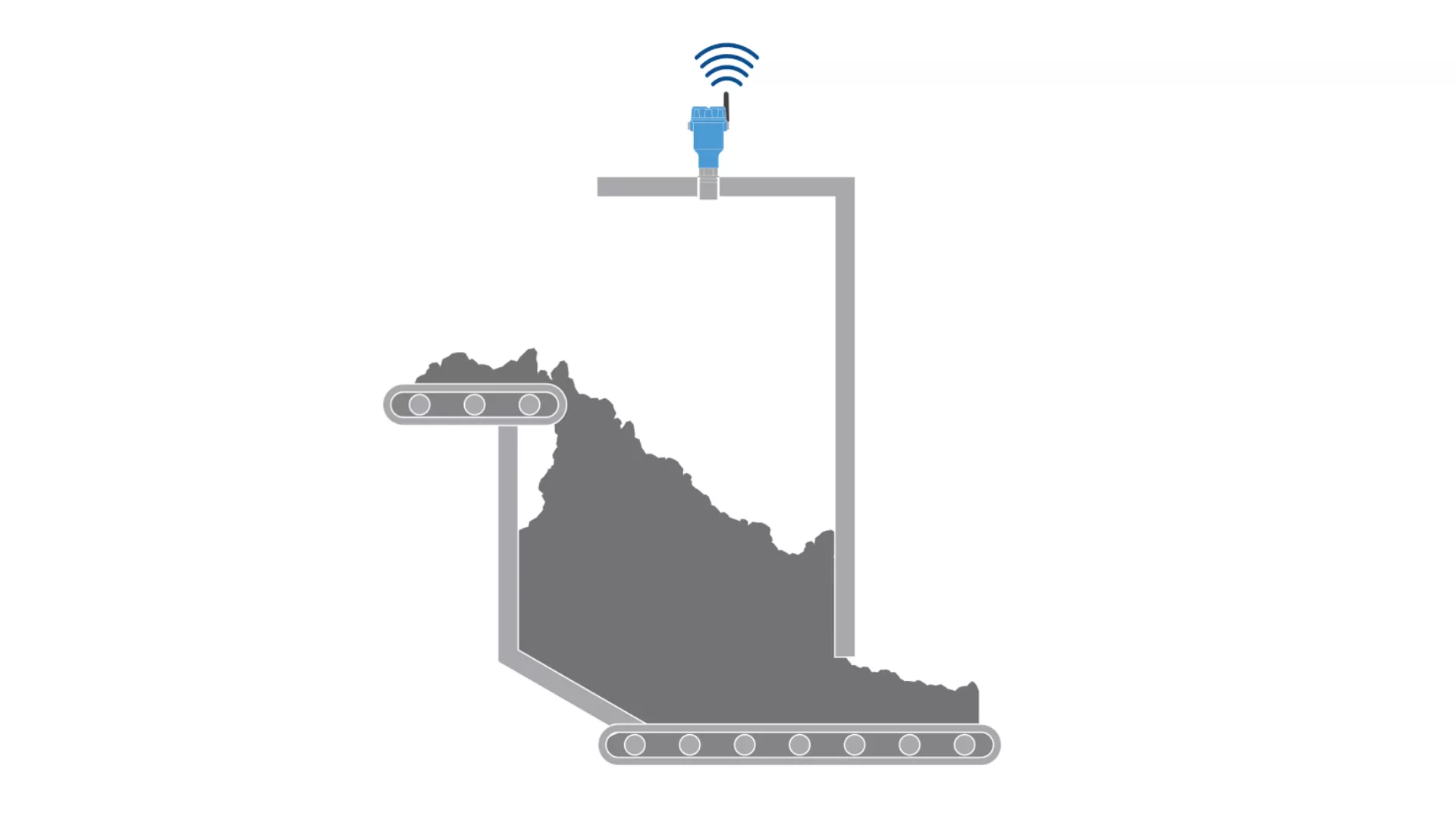
Application Overview
Conveyor systems move ore and bulk solids between processing stages. Level measurement at transfer points, buffer silos, and material chutes helps monitor material flow, reduce production disruptions, and improve operational visibility.
Key Challenges
- Material buildup and uneven flow can lead to blockages, overloading, and conveyor disruptions.
- Dust, vibration, and harsh operating conditions can affect measurement reliability.
- Improves visibility of material levels at transfer points and buffer silos.
- Helps prevent overloading, blockages, and unplanned downtime.
- Supports stable material flow throughout the operation.
- Non-Contacting Radar – Continuous solids level monitoring
- Wireless Non-Contacting Radar – Remote transfer point monitoring

Frequently Asked Questions
Level measurement monitors material accumulation at conveyor transfer points, chutes, and buffer silos to help maintain consistent material flow.
Transfer points help balance material flow between process stages. Monitoring these locations helps prevent overloading and production disruptions.
Continuous monitoring can identify low inventory, buildup, or flow interruptions before they impact production.
Reliable visibility into material flow helps operators maintain consistent throughput and optimize conveyor utilization.
Yes. Non-contacting radar technologies are widely used in conveyor transfer points, buffer silos, and other solids-handling applications where dust and material buildup are common. Rosemount non-contacting radars such as the Rosemount 5408 and Rosemount 3408 can include features such as air purging to help keep the antenna clean and advanced diagnostics that monitor signal quality and identify buildup before it impacts measurement performance. This helps improve reliability and supports proactive maintenance planning.
Wireless solutions can be useful when transfer points are difficult to access or when reducing cabling and installation effort is a priority.