

Power Company Uses Rosemount™ Wireless Monitoring to Prevent Power Trips
RESULTS
- No power trips since 2010
- Savings up to $1,250,000/year
- No interruption to existing operations
- Vibration sensors monitor motors
“The company experienced a quarter-million dollar loss when ever the plant went down and it had to be brought back up, all because we weren’t monitoring temperatures continuously.”
Instrumentation and Control Supervisor, Power Company
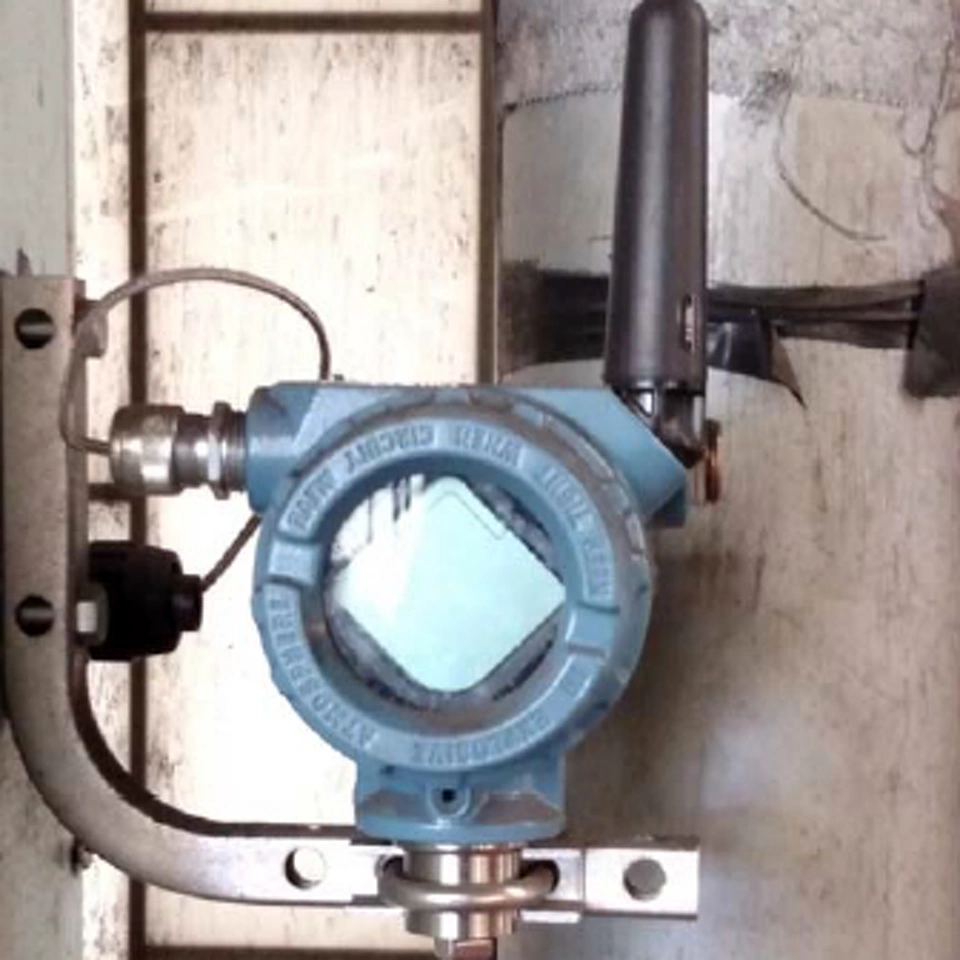
Rosemount 648 Wireless Temperature Transmitter measuring room temperature in the turbine house for freeze protection
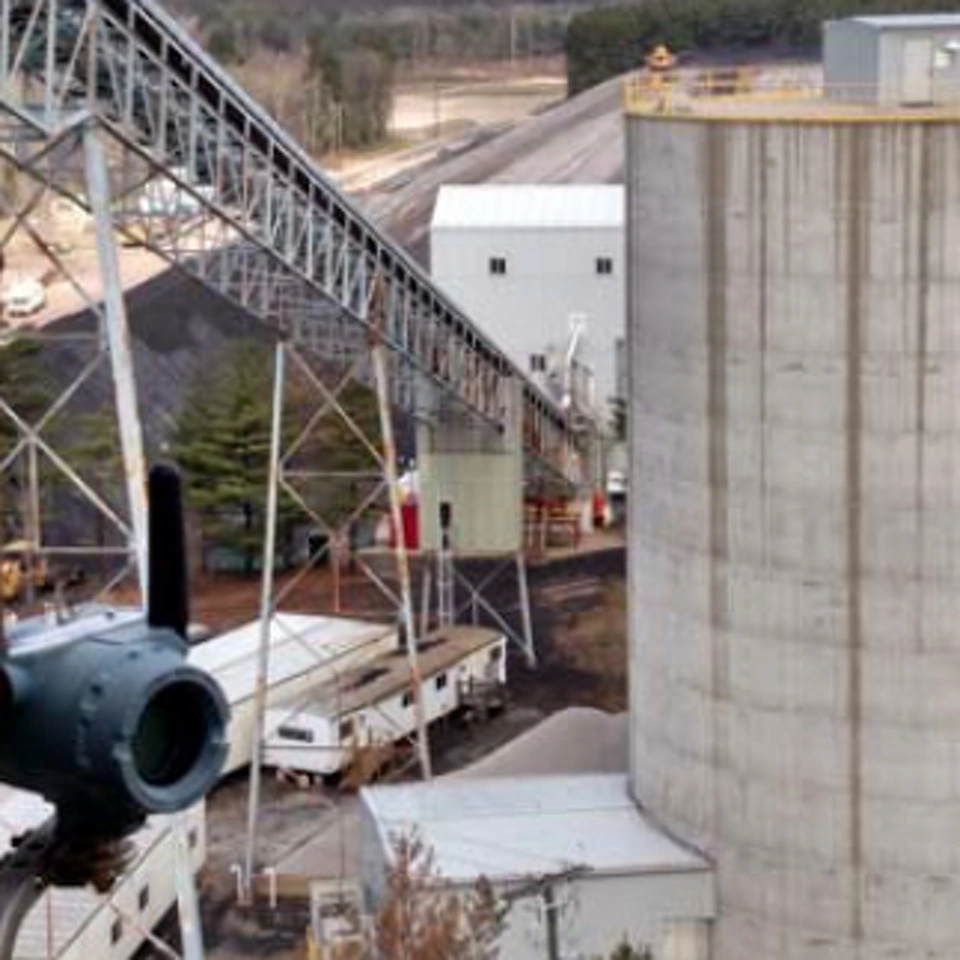
This transmitter monitors the outdoor drum level indicators, while also providing line of sight re transmission for the building freeze wireless transmitters. These transmitters are located over 600 feet away in the white building in the background.
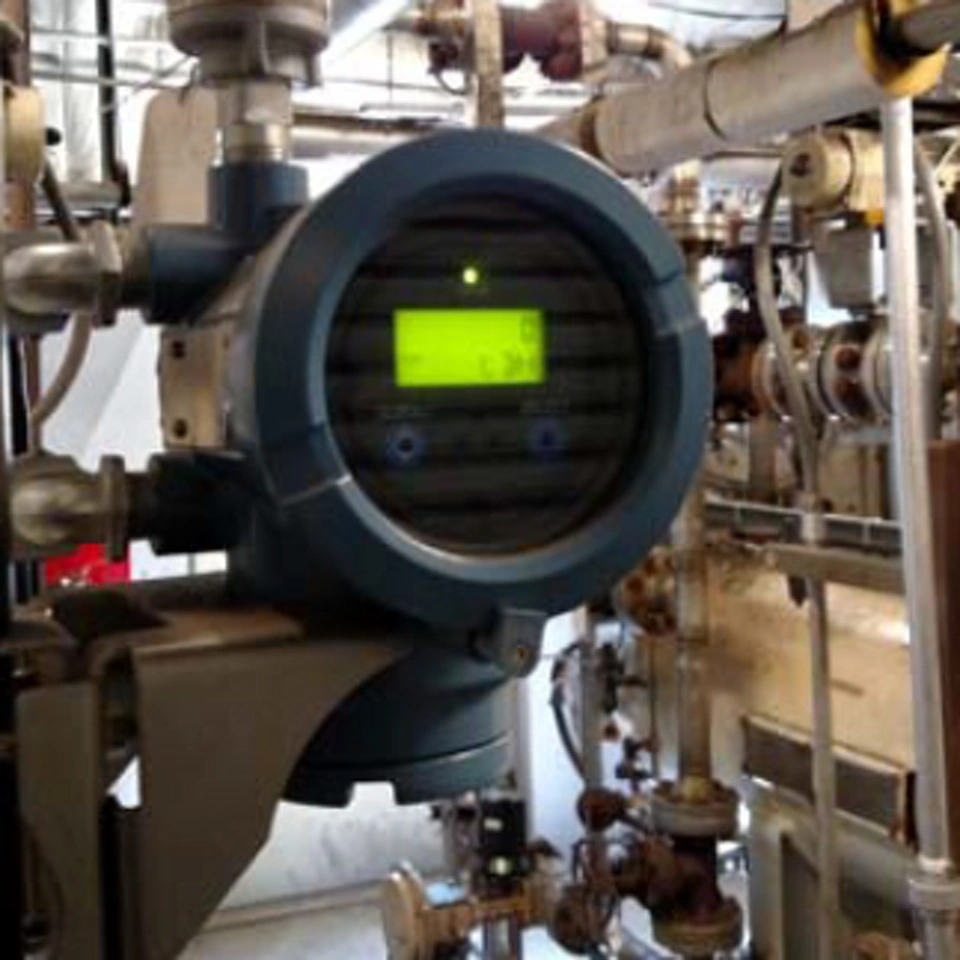
Rosemount ammonia flow measuring device for NOx control. The wired signal (4-20ma) provides the flow control signal. The THUM Adapter brings remaining process and diagnostic information provided by Micro Motion out to the plant data handling system.
“We can put wireless instruments on any equipment that people now look at manually.”
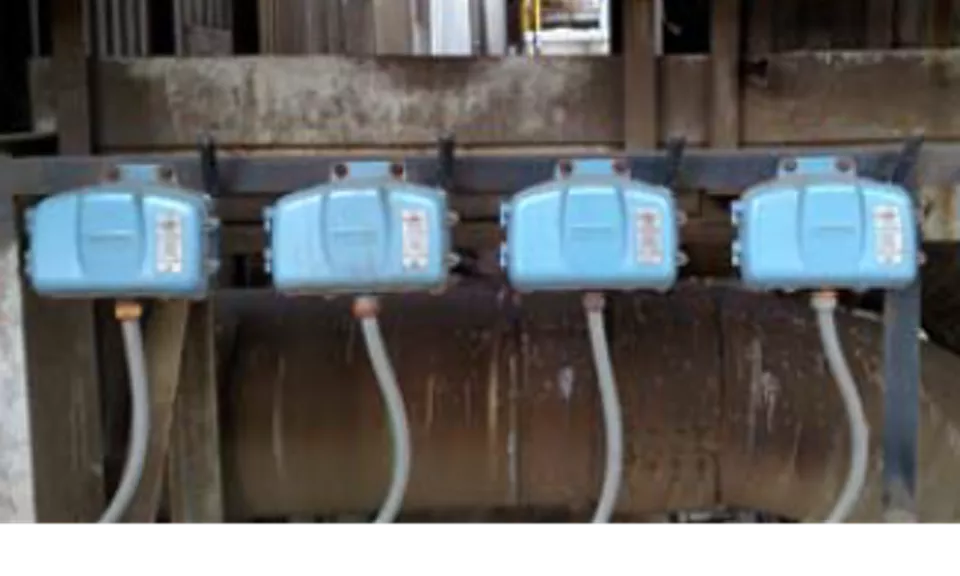
These transmitters were installed as a replacement for the 1000-Ft. 20 pair thermocouple cable that failed. Having the wireless system in place allowed for a rapid return to service without immediately replacing the cable.
Customer
A power company in the northeastern part of the United States.
Application
Remote monitoring of turbine stations, boiler drums, and buildings for freeze protection.
Challenge
The company was experiencing up to five power trips every winter in cold weather when equipment froze up. Whenever the plant’s power went down and had to be brought back up, it could cost up to $250,000, all because the company wasn’t monitoring temperature. Installing wired instrumentation was too expensive, but wireless temperature transmitters solved the problem. The initial installation of five wireless temperature transmitters worked so well, the company now has more than 60 wireless devices installed to measure temperature, pressure, flow, vibration, and level across the plant. The power plant is a 60-year old facility, has limited existing instrumentation, and cabling for new instruments isn’t readily available. Installing wired transmitters and their supporting infrastructure was too expensive. The plant is vast, and it needed to measure temperature in several widespread turbine buildings. Complicating the problem was the presence of two non-Emerson control systems and a common data handling system (DHS) for the balance of plant operation.
Solution
The initial installation used five Rosemount 648 Wireless Temperature Transmitters and an Emerson 1420 Gateway. The Modbus® output of the Gateway made the connection to the DHS easy. The plant is now continuously monitoring remote turbine stations, remote boiler drum level transmitters, and remote building temperatures for freeze protection. Transmitter data is passed through the Gateway to the DHS for live monitoring, trending and alarming. This real-time monitoring capability combined with the alarming function sent to the control room allows the operator to take corrective action to avoid an event.
The same Gateway is now being used to connect 60 additional WirelessHART® devices to the control system for machinery health monitoring. These devices include Rosemount 3051S Pressure Transmitters, Rosemount 648 Wireless Temperature Transmitters, CSI 9420 Vibration Transmitters, differential pressure transmitters and Micro Motion™ Coriolis Flow Transmitters. Emerson Wireless THUM™ devices are installed on various 4-20 mA wired transmitters to convert their two- or four-wire 4-20 mA HART® signals to WirelessHART. THUM Adapters are also installed as standalone repeater units to expand the wireless network throughout the plant. “The Emerson THUM Wireless Devices are so flexible, I’m even using them on non-Emerson wired equipment,” says the power plant’s Instrumentation and Control Supervisor. “One example is a HART-compliant guided wave level transmitter on a fly-ash tank.”
The power plant just bought a wireless Rosemount 3308 Guided Wave Radar Level Instrument for an ignition oil tank to augment manual rounds. “We are always going to need people to monitor equipment, but Emerson wireless instruments send the data to a control room screen, which we never had before,” notes the I&C Supervisor. “We can put wireless instruments on any equipment that people now look at manually. Instead of getting numbers once every six hours from a manual round, that data is now available in real-time, continuously. If I want to know what’s in the tank, I can log in and see. It’s all available on-demand. I look at wireless as aiding me and giving me ‘dream sheet’ information. Now, with wireless, I can get that info for a reasonable price.”
The power plant has many motors—some up to 1500 hp—that do not have vibration monitoring probes on them. It also has hundreds of other devices where temperature, pressure, and other sensing would be useful. The I&C Supervisor has devised a unique way of deciding where to justify installing wireless monitors. “I am able to connect any HARTcapable device to the Gateway and record that information on the plant DHS. Likewise, when engineering is looking at performance improvements and requires short term monitoring, I will use the Emerson wireless setup to bring this information to the plant DHS,” he says. The wireless setup has now become a troubleshooting tool when unmonitored equipment or areas experience intermittent or otherwise unusual problems.
Business Results
“Using wireless costs me $2500-$3500 per point versus $10,000-$15,000 for a wired version,” he explains. “Putting in an instrument at $10,000-$15,000 is hard to justify. And if that information isn’t deemed 100 percent necessary all the time, $10K is a lot of money for data we haven’t had for 30 years. However, putting in a wireless device that can be moved around at $2500-$3500 per point is much more doable. If the data proves to be important enough, we’ll consider making the installation permanent. I have temperature, pressure, and vibration setups that can be installed anywhere, anytime. They report back to my SCADA system, and we evaluate the results.”
The installation of wireless transmitters has been a success from the first installation in 2010. “Since then, we’ve had many alarms come in, and we can now identify issues prior to a unit freezing,” explains the I&C Supervisor. “The temperature transmitters have been operating for five winters now, so they’ve had plenty of run time. We catch small problems before they turn into huge problems.”
Since the first installation in 2010, the power plant has not suffered any freeze-related trips. “With five possible trips a year depending on the severity of the winter, and with each trip costing $250,000, that’s a savings of up to $1,250,000 per year,” he says.