
Refinery Initiates Tank Overfill Protection & Optimization of Pre-Heaters with Smart Wireless
Results
- Saved upwards of $1 million by eliminating tank spills/remediation during ship off-loading
- Initiated cost effective overfill protection on over 60 crude and product tanks
- Improved safety with heater firebox draft monitoring
- Increased energy efficiency with heat exchanger temperature monitoring

A U.S. refinery cuts spill risk and manual field checks by automating tank level, heat exchanger and firebox draft monitoring across its sprawling site.
Overall the refinery has eliminated tank spills from level measurement errors on the crude tanks, provided overfill protection on all crude, intermediate and product storage tanks, improved safety by measuring pressure on heater fireboxes, and improved energy efficiency of the heat exchangers.
Senior Instrument Engineer / Large U.S. Refinery
Customer
A major oil and gas company in the United States.
Application
Tank overfill protection, heat exchanger energy efficiency monitoring, heater firebox draft monitoring.
Challenge
A large refinery in the United States accepts crude oil from ships and stores it in crude oil storage tanks in the tank farm on the south side of the refinery. To reduce expenses, these ships are off-loaded as quickly and efficiently as possible. This means large volumes of oil being moved with measurements and controls that are critical to moving it safely and efficiently.
The crude oil storage tanks had a primary level measurement system that would sometimes fail. The loss of crude oil was minor compared to the cost of cleanup. Remediation from a single tank spill cost the company $1 million. A redundant system was too expensive to wire, as the tank farm is spread out over several square miles. When the tank gauging system failed a second time, the Plant Manager insisted that an independent secondary system be installed immediately. He did not want an overfill situation to happen again.
Other challenges for the plant included heat exchanger energy efficiency calculations and heater firebox draft monitoring. Since the refinery is an older structure with dense piping as well as tanks, vessels and other obstructions in the area of the pre-heaters, wiring is very expensive and difficult at some locations. The customer was looking to optimize efficiency of the pre-heaters and minimize energy consumption, and could not do it effectively with spot checks from an infrared gun. They also wanted to install a safety precaution by measuring pressure in the heater firebox, and ensure noxious gases were not escaping. Given the large geographical location of the tank farms, wiring was cost prohibitive.
Given the complexity of the infrastructure near the pre-heaters, wiring would have been difficult and expensive. The only alternative for the customer was regular trips to the field for manual measurement. To improve safety and optimize efficiency, the plant was looking to automate.
Solution
A Senior Instrument Engineer at the refinery started to look at wireless technology to provide fast, cost effective overfill protection on the tanks. At the time, wireless was just emerging on the market. One technology required line-of-sight, and had difficulty in dense infrastructures. The other technology, a self-organizing mesh, promised three dimensional application of the technology.
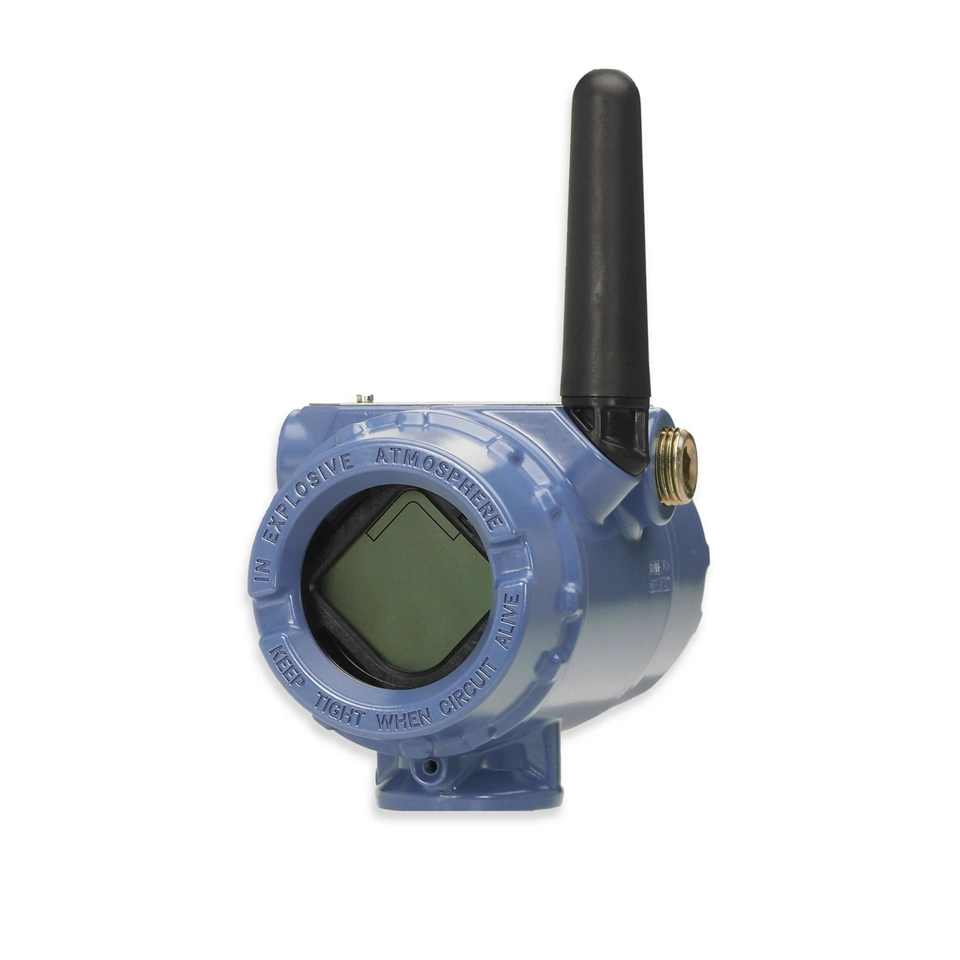
After carefully evaluating both systems, the customer purchased the Smart Wireless self-organizing network from Emerson. A high level displacer switch was placed on each of the floating roof crude tanks, and connected to a Rosemount 702 Wireless Discrete Transmitter. Each of the wireless transmitters communicates to a Smart Wireless gateway in the east side of the south field, where the crude tanks are located. The wireless points were easily integrated into an existing Modbus port on a 1980’s distributed control system, so it did not require extra I/O from the vintage control system. “A wired solution would have been very expensive, and required additional I/O on our control system” said the Senior Instrument Engineer. “We took a chance on the wireless mesh from Emerson, and it has worked great.”
In fact, the plant has not had an overfill condition since the wireless network and level switches were installed. With one minute updates from the wireless measurements, the operators have early warning if the primary level measurement fails and a high level is reached. That gives operators enough time to either stop the tank fill or divert it to another storage tank. “We monitor the level measurements from the control room” said the customer, “as well as battery life on the wireless transmitters. We know when we have a couple of weeks to change the batteries.”
With the successful installation of secondary level measurements on the crude tanks, it was decided to add all 30 product tanks in the east field to the gateway as well. “Once you have the gateway, it is easy to add additional measurements” the engineer commented. “We installed 30 more displacer switches and Rosemount Wireless 702 Discrete Transmitters and joined them to the existing network. The interface to our vintage DCS was already in place.”
Although the customer had not had problems with overfill on product tanks, they wanted to take preventative action to ensure it would never happen. This was partly in anticipation of legislation changes concerning tank overfill protection, which has already been passed in some states like California. Given the relatively low cost of installation for wireless points, it was an easy decision to make.
Once the east field was finished, second and third networks were installed in two other fields. Twenty-five product tanks in the first field and three in the second, both of which are even further from the control room, were given the same independent secondary (wireless) level measurement system as insurance against overfill. Each field had its own gateway installed. One was integrated into a Modbus port on the vintage DCS and the other was integrated via Modbus into the next generation DCS from the same vendor.
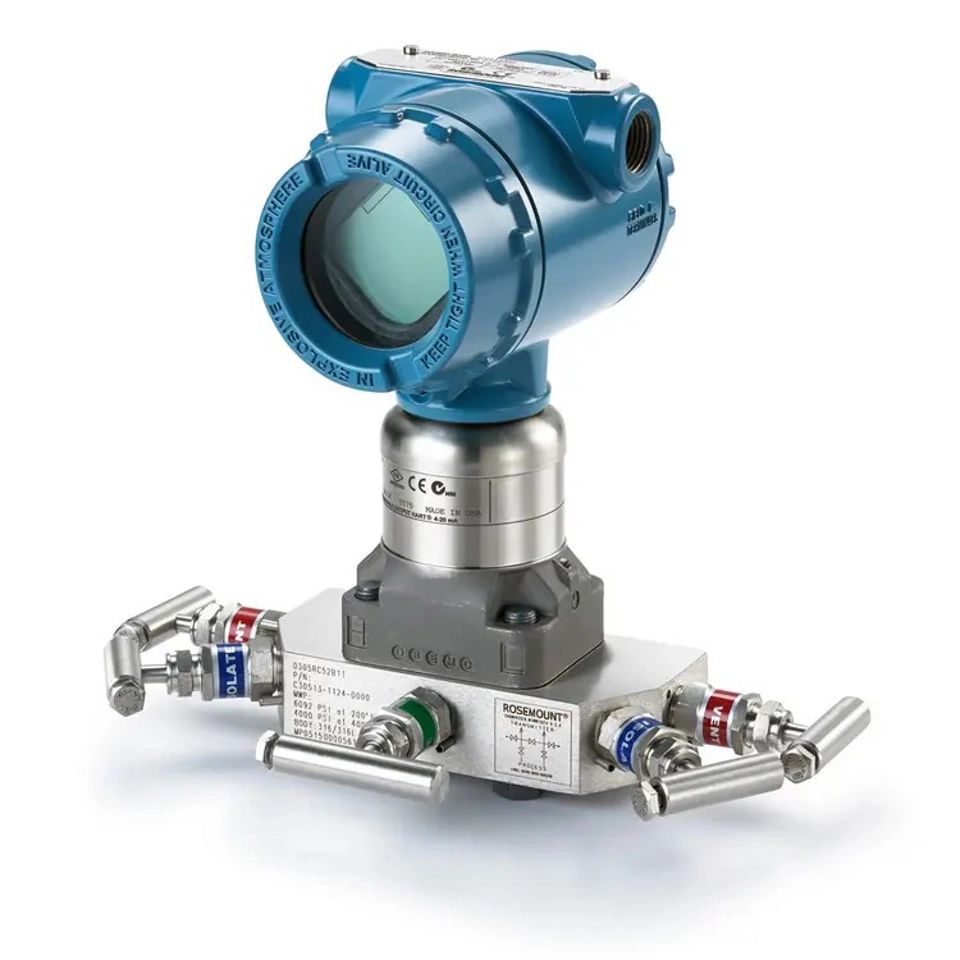
With the success of wireless in the tank farms, the refinery looked to secondary draft monitoring on two heater fireboxes to further improve safety. To ensure the heaters were operated within specified operating limits, two Rosemount 3051S Wireless Pressure Transmitters (with 4 second update rates) were placed in the heater draft system to give early indication of any loss of pressure. These pressure transmitters connect to a fourth gateway in that area of the refinery, and were easily integrated into another vendor’s DCS through existing Modbus I/O. With open standards, the Emerson wireless network is easily integrated into multiple host systems.
The most recent project was the installation of a fifth gateway in the crude oil pre-heating area. The refinery was plagued with poor temperature measurements on the heat exchangers from degradation of thermocouple and RTD wiring. Because of the dense infrastructure, line-of -sight wireless technologies would not work. Operators had to take spot measurements with an infrared gun once a month, and manually enter the readings so heat exchanger efficiencies could be calculated and cleaning schedules developed. Unfortunately, this caused loss of efficiency as the differential temperatures would often fall far below optimal before readings were taken.
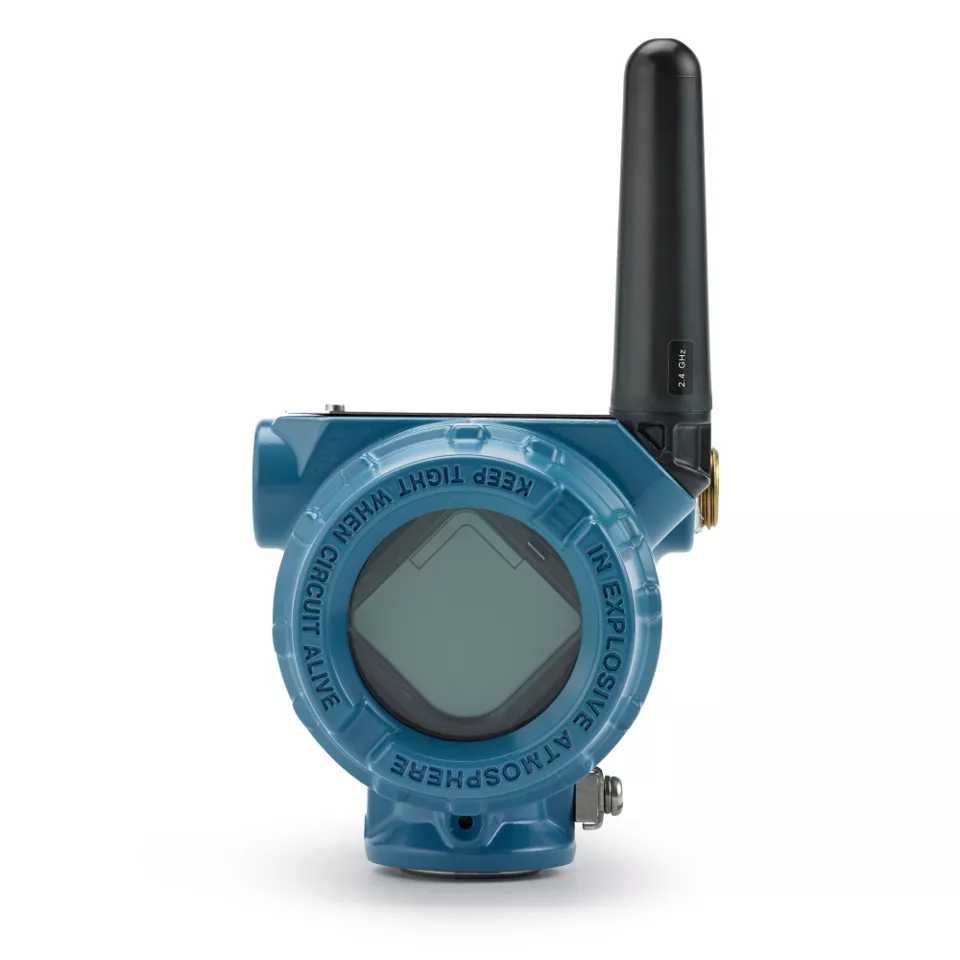
Ten Rosemount 648 Wireless Temperature Transmitters were installed on the inlet and outlet of several heat exchangers with one minute update rates. The installation points were hidden behind dense piping, vessels, and tanks, but the mesh remains strong with high signal reliability. Now process engineering has live, accurate, information at one- minute intervals instead of once a month. Richer information, 43,200 automatically measured and recorded points per month compared to one manually measured and recorded point, gives engineering the tools to optimize energy efficiency. Timely alerts are issued to operators to clean the exchangers and optimize thermal efficiency for each unit. The improvements in energy use have led process engineering to ask for three more wireless temperature transmitters to be added.
“Overall, the refinery has eliminated tank spills from level measurement errors on the crude tanks, provided overfill protection on all crude, intermediate and product storage tanks, improved safety by measuring negative pressure on heater fireboxes, and improved energy efficiency of the heat exchangers,” the customer concluded. The plant continues to expand the wireless mesh networks, and sister companies are following suit.