
Refinery Reduces Risk of Shutdowns & Improves Plant Safety with Advanced Diagnostics
RESULTS
- Decreased risk of unplanned heater shutdowns
- Reduced safety risks

The Rosemount 3051S Pressure Transmitter can help detect furnace flame instability.
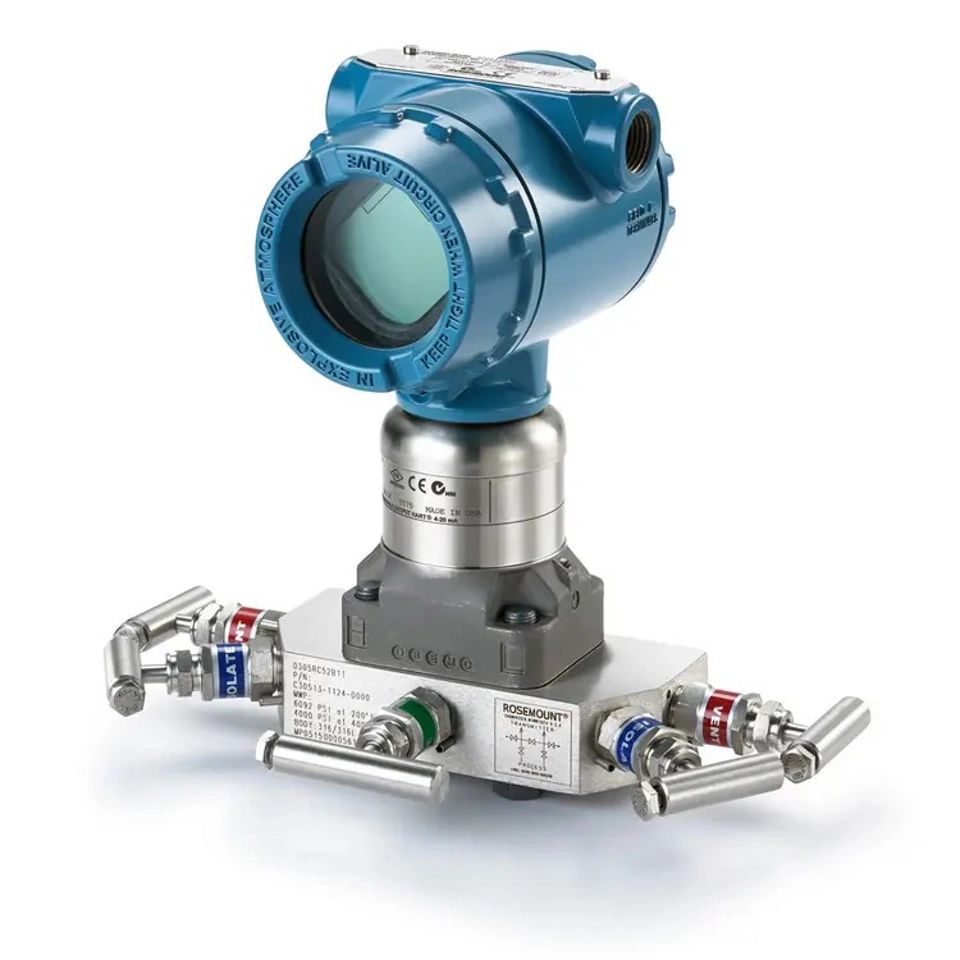
The Rosemount 3051S Pressure Transmitter provided a viable means of reducing the risk of low NOx burner flame-out and preventing unplanned heater shutdowns.
Customer
Large refinery in North America
Application
Fired heater flame instability detection
Challenge
This refinery installed ultra low NOx burners to their existing fired heaters for compliance with new Environmental Protection Agency (EPA) emission regulations. As part of the inherent ultra low NOx emission design, the burners run very lean and are constantly on the verge of flame-out. Therefore, a flame-out detection system is required to ensure that fuel gas does not continue to be charged to the burner chamber and create an explosive environment. Preferably, the refinery wanted an early warning system to detect flame instability before a complete shutdown of the unit.
The refinery previously tried two different solutions to solve this problem. The first solution was an optical detector (FIREYE) to detect the presence of a flame. This solution worked reasonably well, but was cost prohibitive because each low NOx burner required a dedicated optical detector to ensure the presence of a flame. This amounted to several hundred detectors for a large furnace, and was too costly to implement.
The second system the refinery tried was a very sensitive and very fast differential pressure (DP) transmitter made by another manufacturer. Although the shop tests were positive, actual field tests revealed high drift and a lack of reliability.
Absence of an early warning system to detect flame instability did not provide the operators with any opportunity to take corrective action (i.e. add more fuel gas to enrich the burner feed) to prevent fired heater shutdown in case of a flame-out situation. This increased the risk of unplanned unit shutdowns, reduced plant availability and reduced throughput. In addition, it also increased safety risk due to the possibility of creating an explosive environment in the fired heater during a flame-out condition.
Solution
The customer solved this problem by installing a RosemountTM 3051S Pressure Transmitter with advanced diagnostics. The advanced diagnostics capability was well suited for this flame instability detection that required high frequency process monitoring. The Rosemount 3051S Pressure Transmitter measured the amplitude of the process noise by sampling at 22 times per second and provided a secondary variable (standard deviation) for early detection of flame instability. Additionally, this transmitter is very accurate and reliable even in the low pressure ranges, which are typical for draft pressures in fired heaters. A HART® Tri-Loop was used to provide the standard deviation variable to the legacy host system for continuous diagnostic monitoring of flame instability.
The advanced diagnostics capability of the Rosemount 3051S Pressure Transmitter provided the refinery with a viable means of reducing the risk of low NOx burner flame-out and preventing unplanned heater shutdowns. In addition, this also decreased the safety risk of creating an explosive environment in the fired heater.
