

Compare pressure transmitters. If you have questions related to Rosemount Pressure Transmitters, please contact us.
Products
Pressure Transmitters
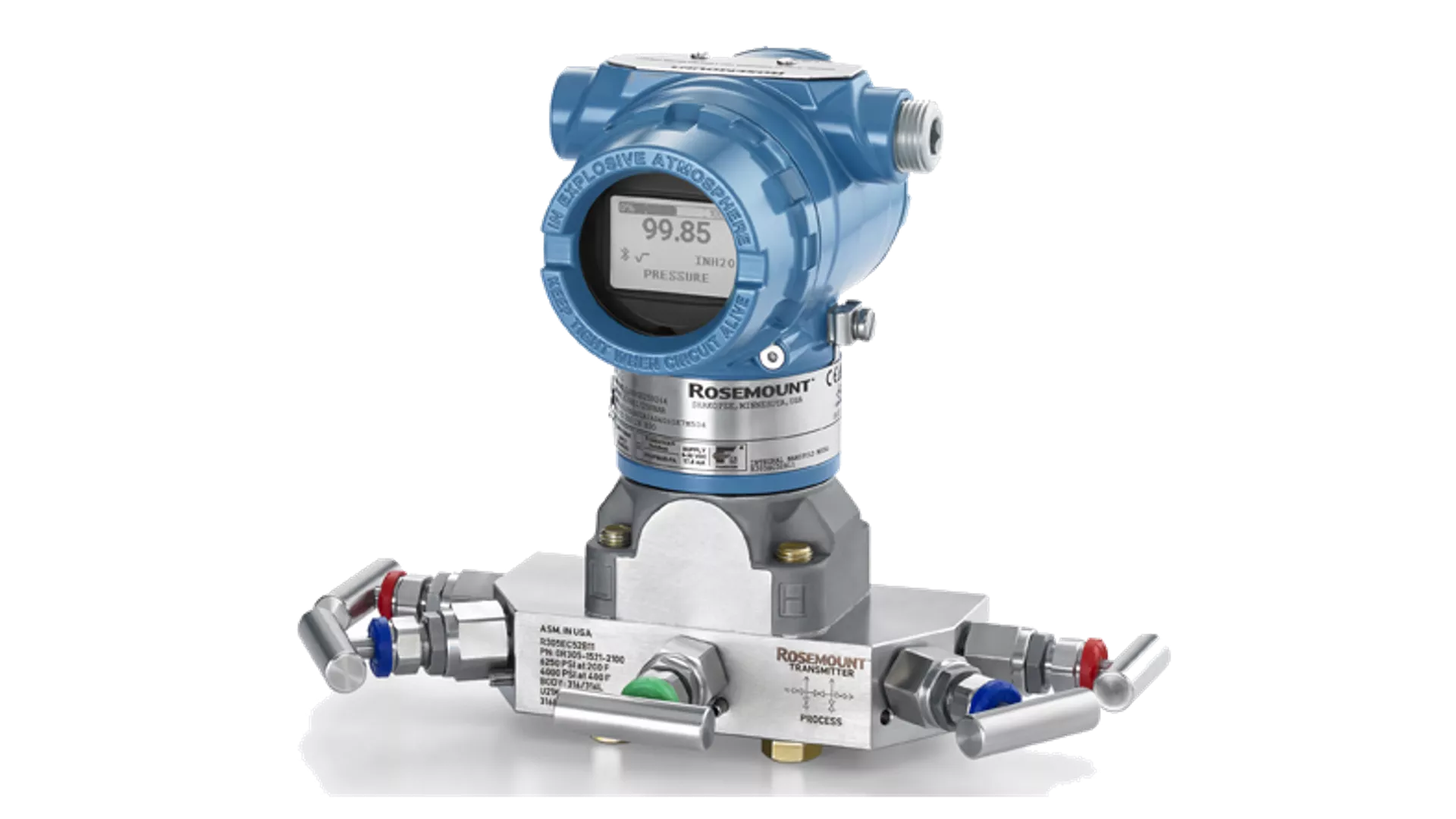
Gauge Pressure vs. Absolute Pressure
Gauge and absolute pressure transmitters measure static pressure in a process. Gauge pressure measures relative to the atmosphere, while absolute pressure measures relative to a perfect vacuum. Static pressure applications across industries are almost endless, and gauge pressure is the most common measurement type of pressure transmitters.
Multivariable Measurement Advantages
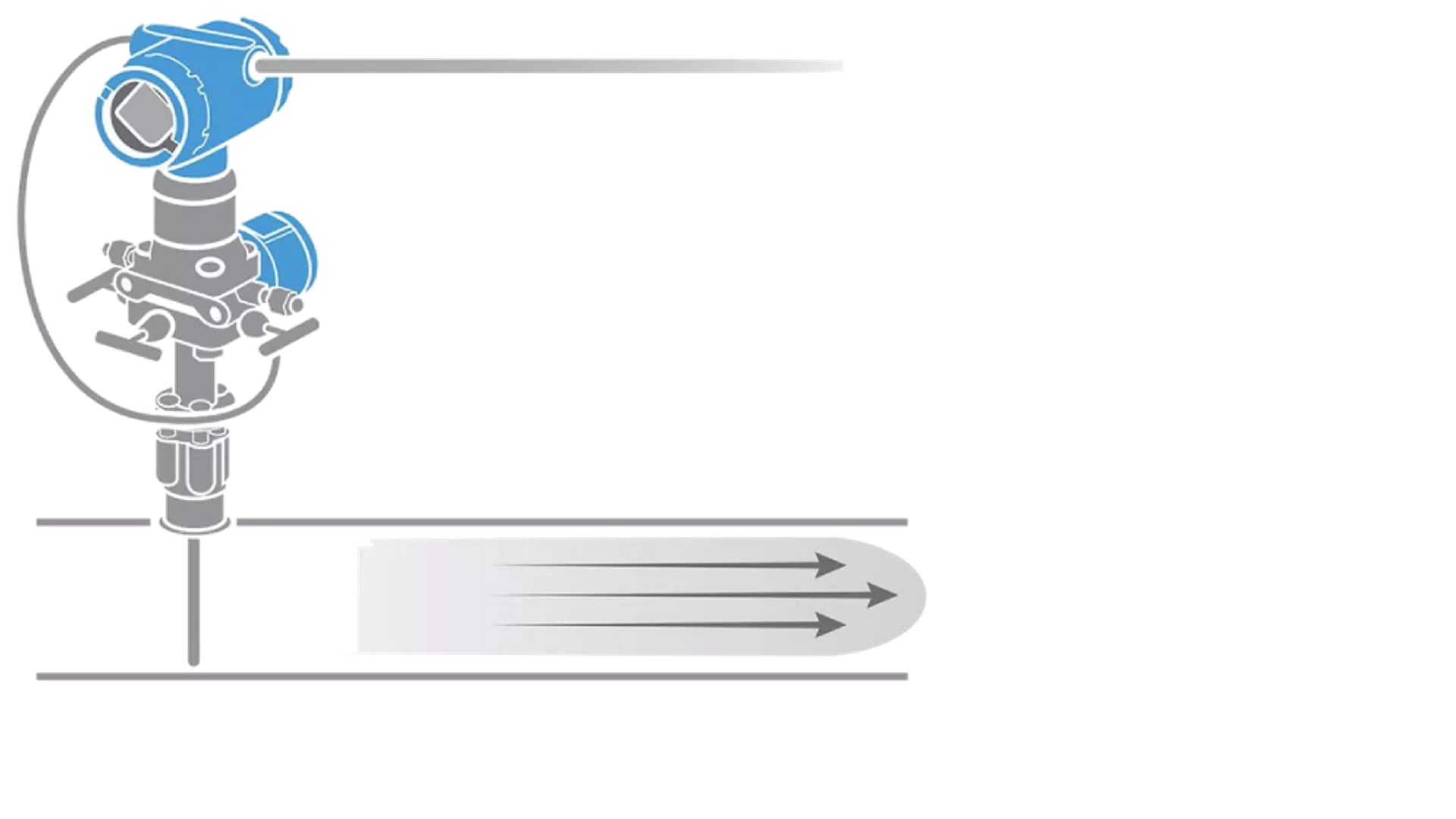
Enhanced Performance
Multivariable measurement solutions help enhance performance. Features include Ultra for Flow (+/- 0.04% of reading specification) for high accuracy in flow measurement and Callendar-Van Dusen (CVD) sensor matching, which uses CVD constants to increase RTD measurement accuracy up to 70%.
Pressure Transmitter Comparison
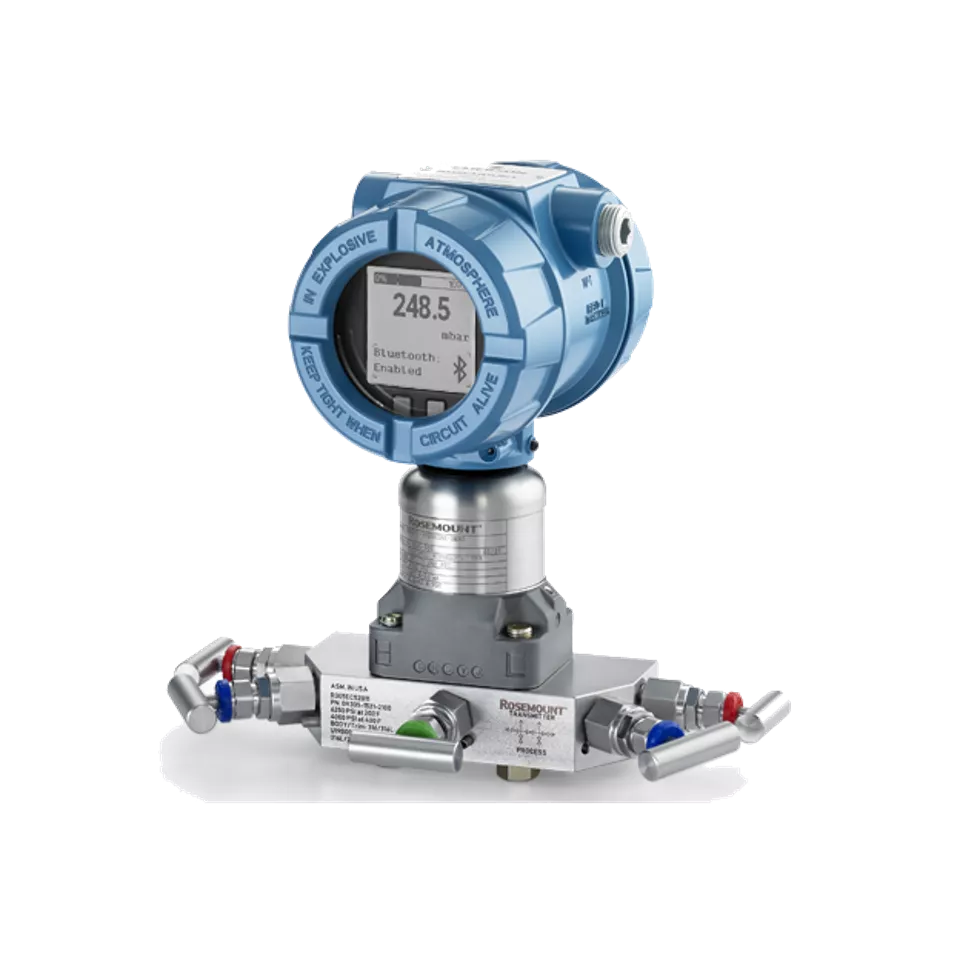
Rosemount 4051S Pressure Transmitter
- 20 year warranty
- 20 year stability
- Up to 0.025% reference accuracy
- Process Intelligence
- Dedicated Plugged Line & Loop Integrity Diagnostic
- Expanded Process Alerts
- Bluetooth® connectivity
- Backlit graphical display
- 4-20 mA HART®
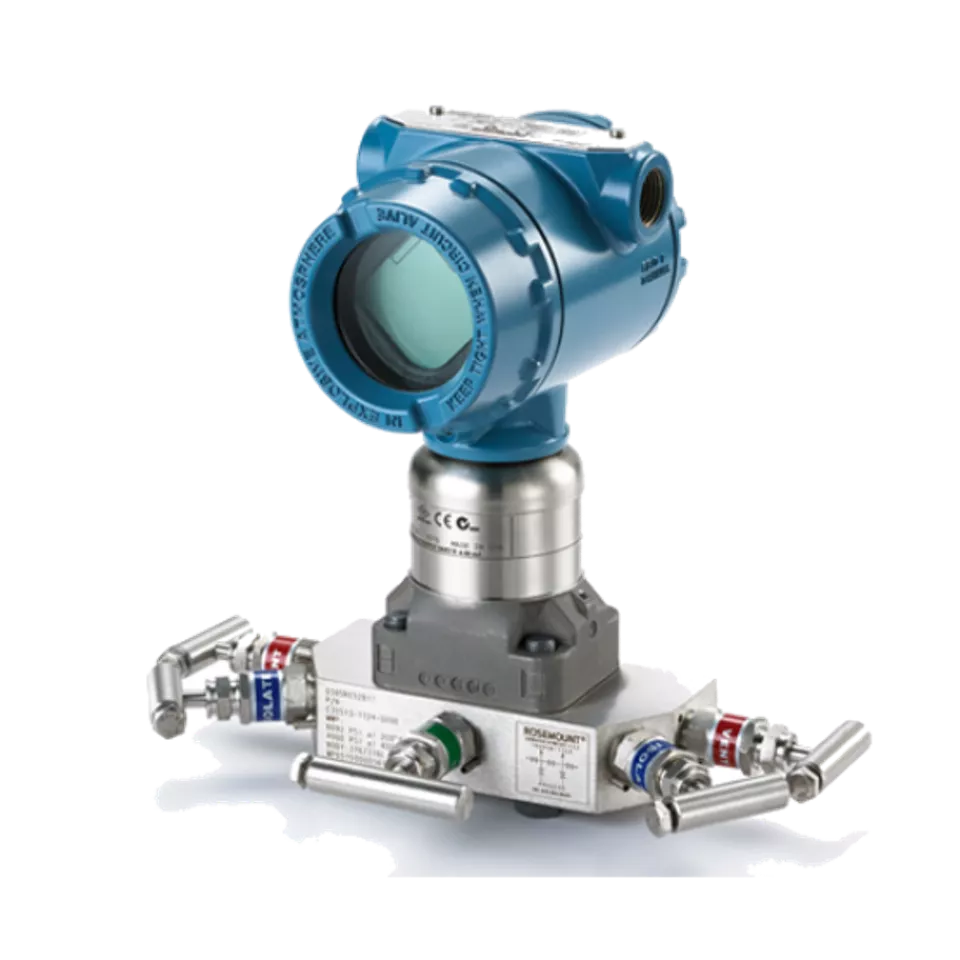
Rosemount 3051S Pressure Transmitter
- 15 year warranty
- 15 year stability
- Up to 0.025% reference accuracy
- Process Intelligence
- Plugged Line & Loop Integrity Diagnostic
- Process Alerts
- Remote display
- 4-20 mA HART®, WirelessHART® protocol, FOUNDATION™ Fieldbus
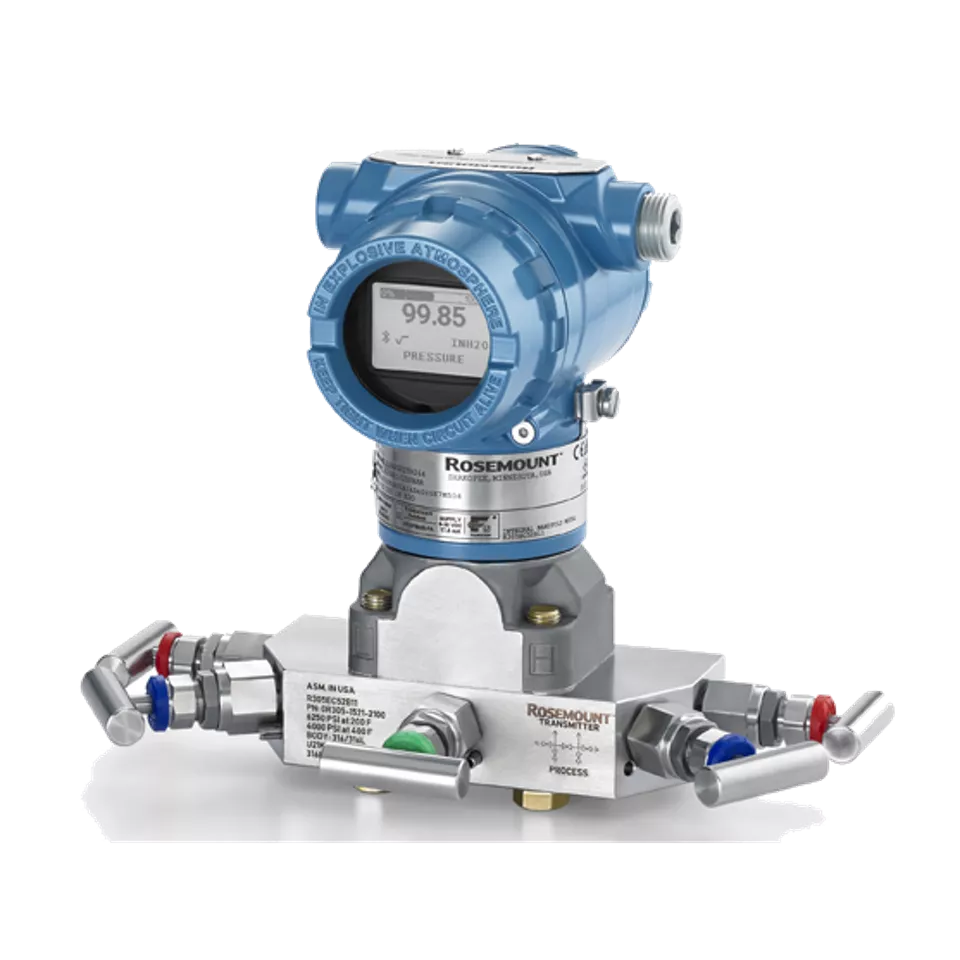
Rosemount 3051 Pressure Transmitter
- 5 year warranty
- 10 year stability
- Up to 0.04% reference accuracy
- Process Alerts
- Plugged Line & Loop Integrity Diagnostic
- Bluetooth® connectivity
- Backlit graphical display
- 4-20 mA HART®, WirelessHART® protocol, FOUNDATION™ Fieldbus, PROFIBUS®, 1-5 V Low Power HART®
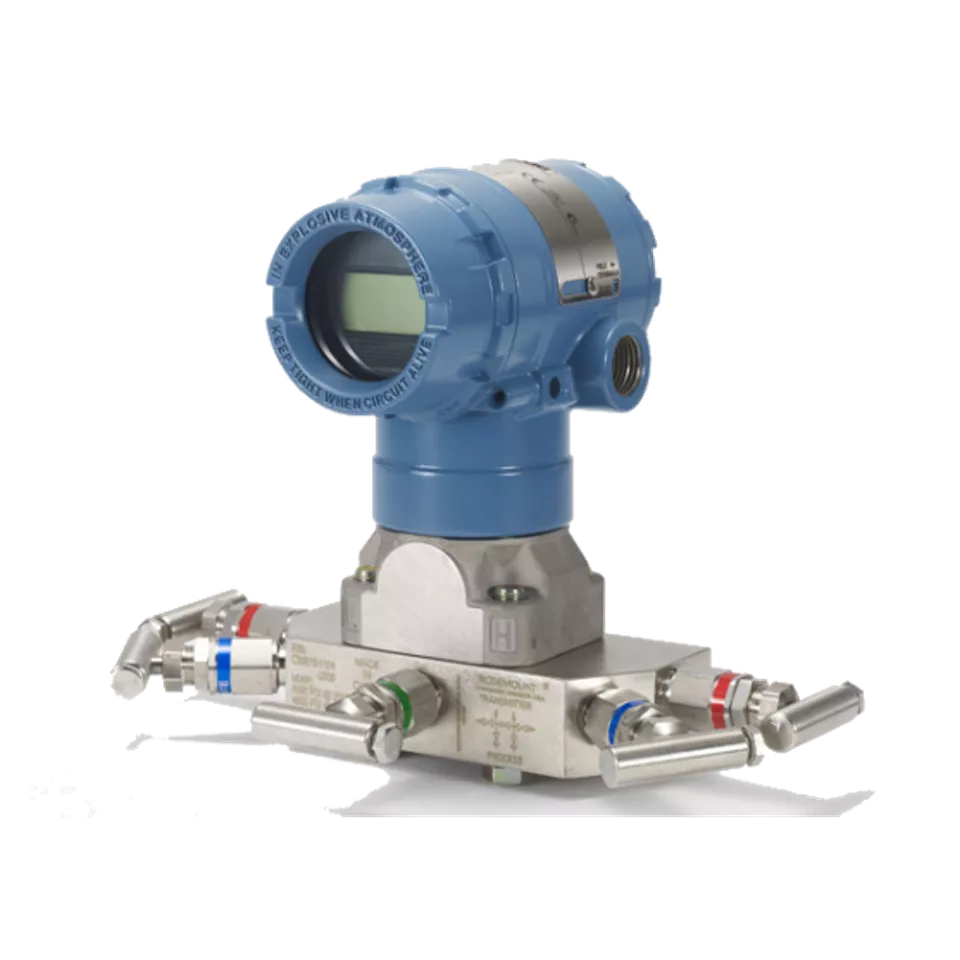
Rosemount 2051 Pressure Transmitter
- Up to 5 year warranty
- Up to 7 year stability
- Up to 0.05% reference accuracy
- Basic diagnostics
- Local Operator Interface
- 4-20 mA HART®, WirelessHART® protocol, FOUNDATION™ Fieldbus, PROFIBUS®, 1-5 V Low Power HART®
Tools
Frequently Asked Questions
If you have additional questions related to Rosemount Pressure Transmitters, please contact us.
A pressure transmitter is a device that measures pressure and converts that measurement into an electrical signal. The electrical signal is often transmitted to a control system, effectively communicating the pressure measurement for control or monitoring purposes.
All pressure transmitters include a pressure sensor that measures the pressure of a process and electronics to output that pressure measurement as an electrical signal. Pressure transmitters can vary in the sensing technology used and the type of electrical output.
Pressure transmitters should be chosen to fit your specific applications. In choosing, you must consider the application requirements for things like measurement type, pressure range, accuracy, material compatibility and mounting considerations. Different pressure transmitters may offer different options for these considerations. Tools like DP Level Sizing & Selection Tool and DP Flow Sizing & Selection Tool can assist with proper transmitter selection.
Pressure transmitters can be categorized by several different ‘type’ categories but the most common is by pressure measurement type. Measurement type refers to what type of pressure measurement is being made, of which the options are absolute pressure (reference to vacuum), gauge or gage pressure (reference to atmosphere) or differential pressure (difference between two process pressures). There are also multivariable measurement type transmitters which can measure more than one of these pressure measurement types as well as additional measurements like temperature.
Pressure transmitters are often specified for specific applications, with factors like pressure range, pressure measurement type, materials of construction and output being key factors to consider. Generally, pressure transmitters that measure gauge pressure, have SST wetted materials, and utilize a 4-20 mA HART output signal are the most common, but there are many different options available to accommodate any application.
Calibrating a pressure transmitter involves applying a known accurate pressure to the transmitter and comparing the transmitter pressure output to that known applied pressure. If the difference between those values is outside of desired tolerance, apply a sensor trim to the transmitter to correct the difference. If the difference is within desired tolerance, no sensor trim is needed, this would be considered a calibration verification.
Pressure transmitters and pressure transducers are very similar devices, but differ in the final electrical signal they output. A pressure transducer converts a pressure sensor measurement into a simple voltage signal, which lacks linearization and temperature compensation. A pressure transmitter goes a step further by compensating, linearizing and amplifying the electrical signal and outputting as common signal types like analog 4-20 mA or digital communication protocols.
Wireless pressure transmitters can simplify remote monitoring by eliminating wiring, which helps reduce installation cost and complexity while enabling deployment in locations that are hazardous or hard-to-reach. They provide continuous, real-time access to pressure data through remote systems, improving visibility and enabling faster response to issues like leaks or unexpected pressure changes. The flexibility of wireless pressure transmitters allows operators to add or reposition measurement points as needs evolve, without redesigning infrastructure. Fewer physical connections also mean fewer failure points, which can lower maintenance demands and support more reliable operation. Overall, wireless pressure transmitters help expand monitoring coverage, improve safety by reducing field visits and enable more proactive, data-driven maintenance strategies.
Wireless pressure transmitters offer a clear advantage over wired alternatives when it comes to installation cost, typically reducing upfront expenses because they eliminate the need for cabling, conduit and extensive labor. Wired systems, while reliable, require significant infrastructure and longer installation timelines, often leading to higher overall costs and disruption during deployment. From a data security standpoint, wired systems have traditionally been seen as more inherently secure due to their physical connections, but today’s wireless pressure transmitters use industrial protocols with encryption and layered security approaches, allowing them to deliver secure, reliable communication when properly configured. In terms of battery life, wired pressure transmitters benefit from continuous power, whereas wireless pressure devices rely on internal power sources. Advances in low-power design now enable wireless pressure transmitters to operate for several years on a single battery, making them practical for long-term remote monitoring. Overall, wireless solutions trade continuous power for flexibility and cost savings while closing the gap with wired systems in both security and performance for most monitoring applications.
The Rosemount 3051S Wireless Pressure Transmitter offers the most robust wireless capabilities and supports WirelessHART® communications. The scalable platform of the Rosemount 3051S integrates wireless communication with diagnostics, high performance and long-term stability while offering the flexibility to deploy in remote or hard-to-reach locations. Its versatility makes it well suited for a wide range of process measurement needs. The Rosemount 3051 Wireless Pressure Transmitter and Rosemount 2051 Wireless Pressure Transmitter also provide reliable WirelessHART® communications by combining proven pressure measurement with wireless capabilities. For applications requiring update rates of one minute or greater, the Rosemount Wireless Pressure Gauge is also available to provide reliable and efficient monitoring solutions.
The ongoing maintenance costs of a wireless pressure transmitter network are mainly driven by battery replacement, calibration and field labor. The largest cost driver is typically battery management. Most wireless pressure transmitters rely on internal power modules, and depending on update rate and usage, batteries may need replacement multiple times over the device’s life. Periodic calibration and verification add labor and service costs to maintain measurement accuracy. However, today’s wireless pressure transmitters with built-in diagnostics, like the Rosemount 3051S Pressure Transmitter, and verification tools can help reduce how often full calibrations are needed, shifting maintenance toward condition-based checks instead of fixed schedules. There are also smaller costs tied to maintaining gateways, software and connectivity, along with technician time for site visits, especially in remote or hazardous areas.