
Products
How Sensors Work
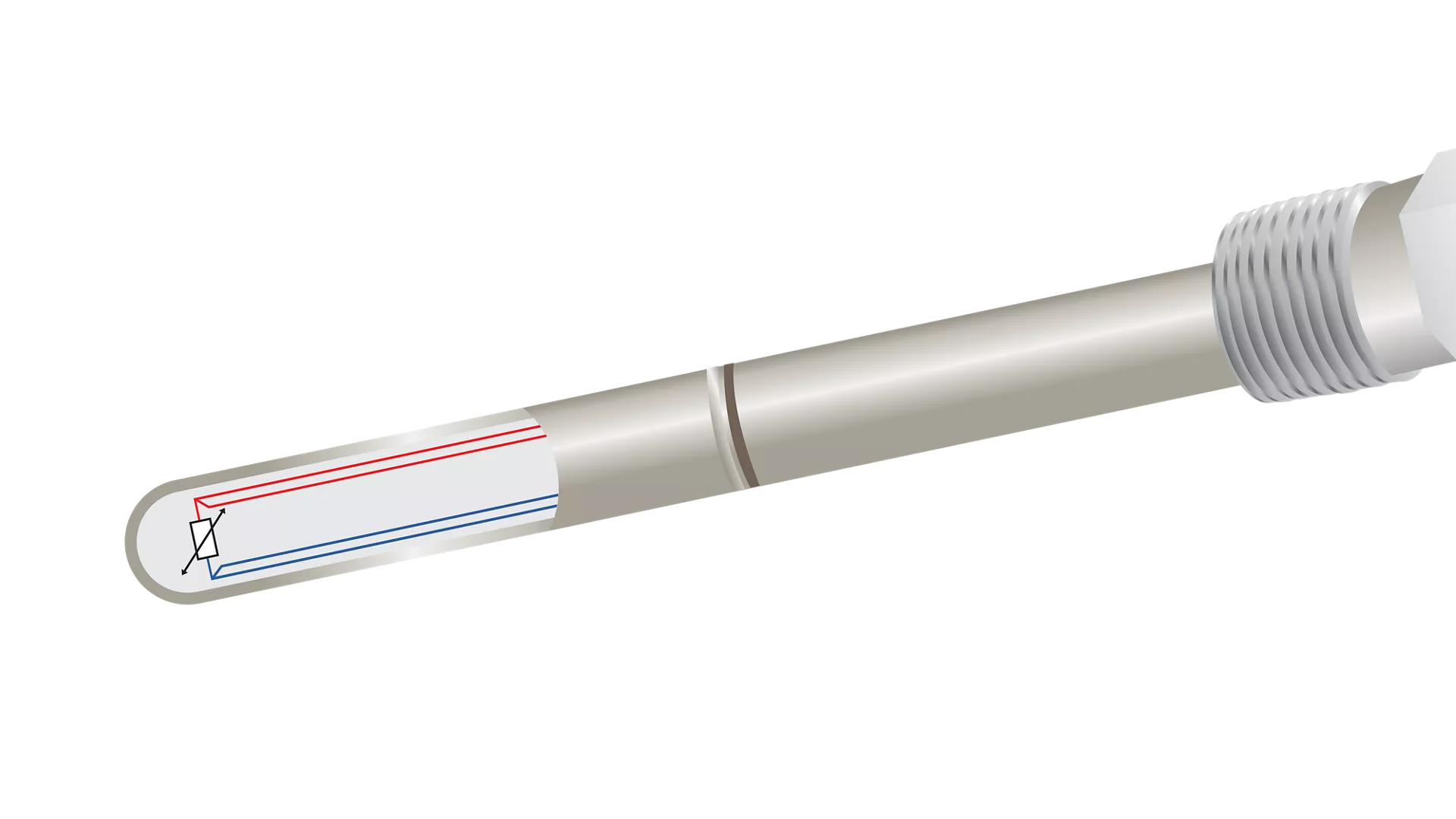
Resistance Temperature Detectors (RTDs)
Resistance Temperature Detectors (RTDs) are constructed from a resistive metal with leads contained in a protective sheath. Based on the thermal resistivity phenomenon, temperature readings can be inferred from the change in resistance in the RTD, meaning if temperature increases, resistance increases. The resistive metal may be platinum, copper, or nickel with the most common being platinum because of its high accuracy and excellent repeatability.
Resources

Frequently Asked Questions
An RTD (Resistance Temperature Detector) measures temperature based on the resistance change of a metal (typically platinum). It offers high accuracy and stability over a limited temperature range.
A Thermocouple measures temperature based on the voltage generated at the junction of two different metals. Ideal for wide temperature ranges and rugged environments.
It depends on the application. RTDs often provide higher accuracy, especially at lower temperatures (up to ~600°C). Their response time can vary depending on the sensor size and construction (MI RTDs are faster than encapsulated RTDs). Thermocouples can withstand much higher temperatures (up to 1800°C depending on type), typically withstand vibration better, and have a fast response time due to their simpler construction.
Not usually. They differ in signal type, required instrumentation, accuracy, and temperature range. Always select the sensor based on application needs.
Using a transmitter is highly recommended, because transmitters:
Convert low-level signals (ohms or mV) into 4–20 mA or digital output
Improve signal integrity over long cable runs
Enable integration with control systems
Have diagnostics to monitor the health of your devices
Contamination of the sensing element, prolonged exposure to high temperatures, mechanical stress or vibration, chemical or environmental contamination, oxidation or corrosion, and moisture ingress or poor sealing can all affect the lifespan of an RTD or thermocouple sensor. Emerson’s Temperature Transmitters are equipped with several sensor health diagnostics to help notify you if your sensor is failing.