Ensure Data Center Reliability Through the Health of Rotating Mechanical Assets, Process Instrumentation, and Control Valve Networks
Data centers rely on continuous performance from expansive assets like rotating mechanical equipment, process instrumentation, control valves, IIoT, and others to maintain uptime across critical cooling and power systems. Emerson’s AMS Reliability portfolio delivers class-leading sensing, software and workflow automation solutions that unify machinery health analytics, field device management, diagnostics, workflow orchestration, and real-time condition monitoring in single, unified ecosystem.
Serving a Diverse Array of End-users Across The Data Center Ecosystem
Your Single-Source Provider For The Data Center Industry
By combining diagnostic intelligence, device data, and operational workflows, Emerson’s AMS technologies support a broad data center user base and work ecosystem—from hyperscalers, colocation providers, and enterprise operators to builders, integrators, and technology suppliers.
This includes EPCs, A&E firms, general contractors, system integrators, OEMs, and equipment providers across power, cooling, and digital infrastructure. It enables these stakeholders to extend asset life, reduce maintenance costs, improve availability, and turn reliability into a measurable advantage across every phase of the data center lifecycle—from design and construction to commissioning and ongoing operations.
Asset Performance & Reliability for Data Centers
Emerson's AMS Reliability brings greater confidence to the teams powering the world's most critical infrastructure.

Asset Performance & Reliability Built for the Entire Data Center Ecosystem
As data center infrastructure becomes more complex, maintaining asset health is more important than ever. Discover how Emerson helps teams improve visibility across critical equipment, enabling predictive maintenance and more reliable operations.
Main Challenges of Data Centers
Modern data centers are increasingly operating with minimal on-site staffing, creating a gap between critical infrastructure demands and hands-on expertise. Without consistent monitoring and routine maintenance—from visual inspections to preventive care—equipment reliability and long-term performance can be put at risk.

Personnel & Condition Monitoring Expertise
- Minimal on-site staffing
- Skilled labor shortages
- Workforce transition (retirements vs. new hires)
- Growing complexity (AI, liquid cooling, microgrids)
- Overextended teams: limited time for validation, analysis, and follow-up

Energy & Cooling Challenges
- Grid constraints and power availability
- Rising energy costs and PUE pressure
- Water use, cooling efficiency, and leak prevention
- ESG and carbon reduction requirements
- High-density AI workloads (50–200+ kW per rack)
Operations
- Downtime risk and SLA exposure
- Cooling system reliability (chillers, pumps, CDUs, fans)
- Limited visibility into pending equipment failures
- Increasing maintenance and spare part costs
- Capacity derating impacting compute availability
- Cybersecurity and OT network risks
Key Critical Assets Across Data Center Infrastructure
Data center reliability depends on a wide range of interconnected mechanical and instrumentation assets that support cooling, airflow, and power continuity. These systems include:
Cooling & Thermal Management Systems
- Pumps (chilled water, condenser water, liquid cooling loops)
- Chillers and compressors
- Fans and blowers (CRAC/CRAH units, air handlers)
- Cooling towers and heat rejection systems
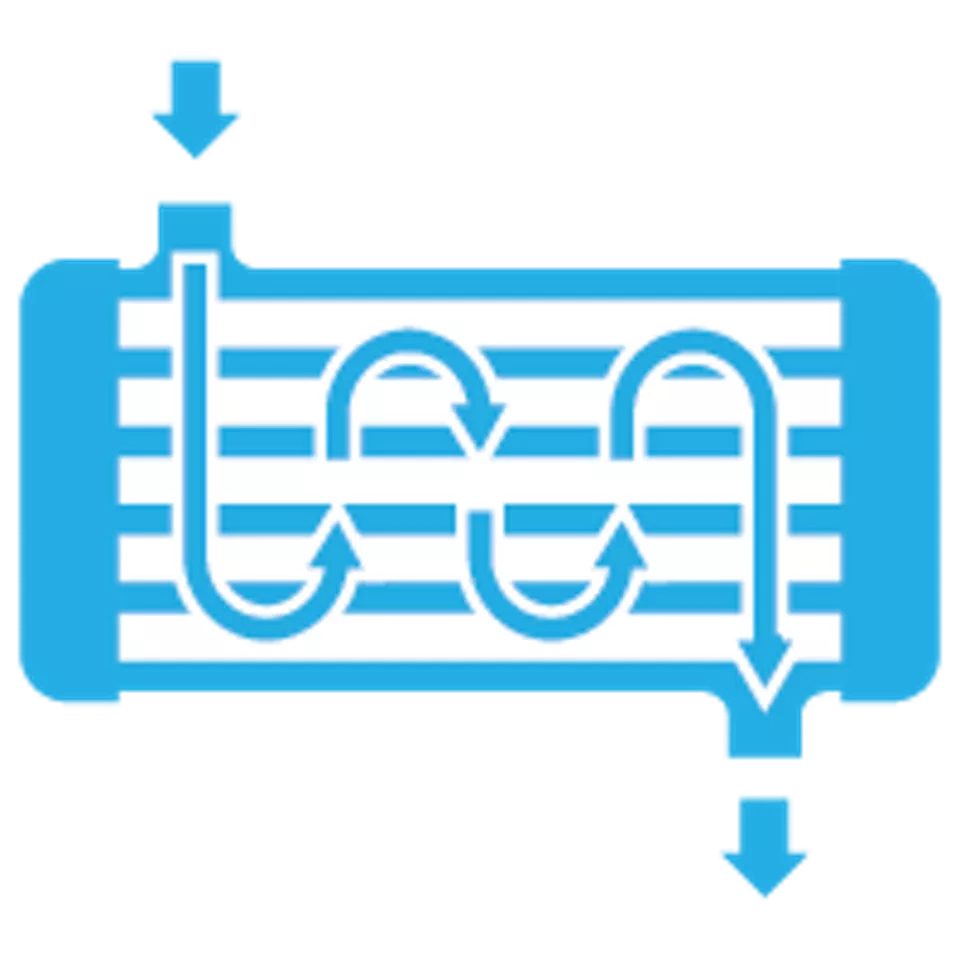
- Heat exchangers

Power Generation & Backup Systems
- Alternators and associated mechanical systems
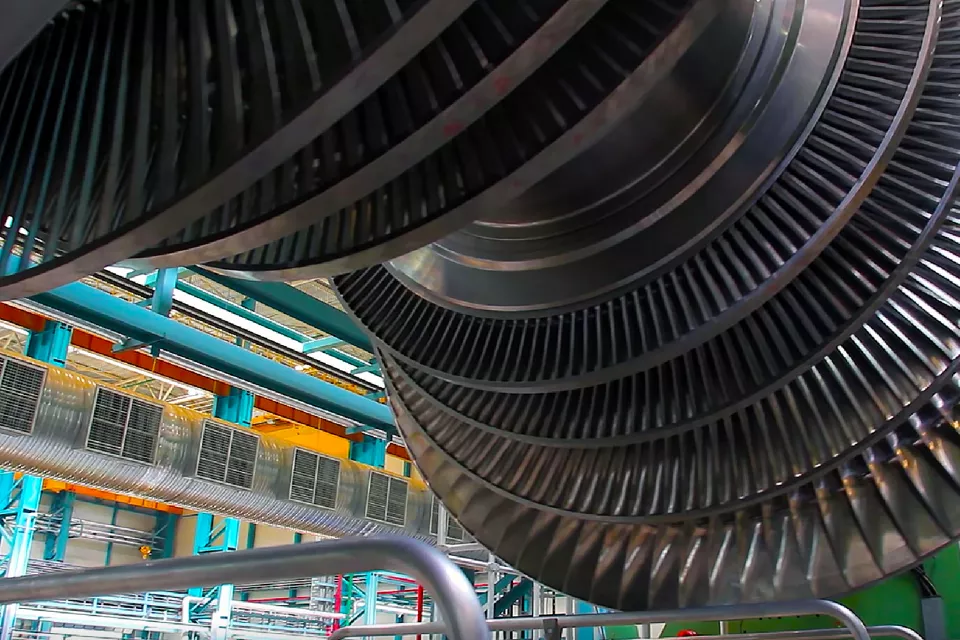
- Gas or steam turbines (where deployed)
- Diesel generators
Fluid Control & Mechanical Systems
- Lubrication and auxiliary equipment
- Flow control and pressure regulation systems
- Control valves and isolation valves

Process Instrumentation & Connected Assets
- Smart field devices and IIoT-enabled sensors
- Level and analytical measurement devices
- Pressure, temperature, and flow transmitters
Machinery Health Asset Monitoring—Data Center Applications
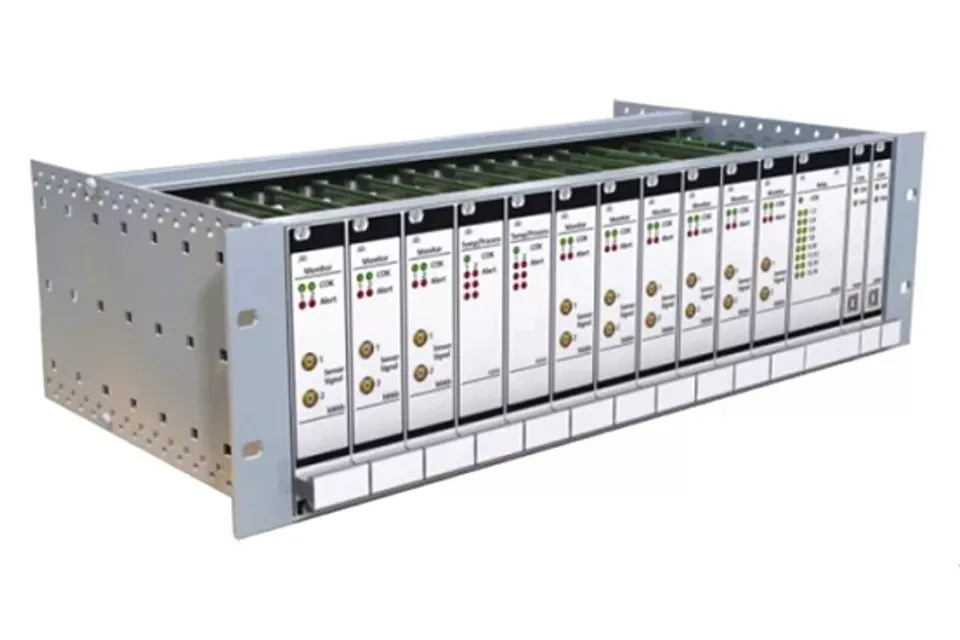
Rotating equipment such as fans, pumps, compressors, and generators is critical to cooling and power reliability in data centers. Condition monitoring and API-based protection systems detect and protect against issues like imbalance, misalignment, and bearing wear before failure. Wireless sensors and edge analytics provide scalable visibility for balance-of-plant assets, while online protection systems cover high-criticality equipment. This enables remote diagnostics, predictive maintenance, and early identification of bad actors—reducing downtime risk and avoiding unnecessary repairs.
HVAC & Cooling System Monitoring—Mechanical Elements
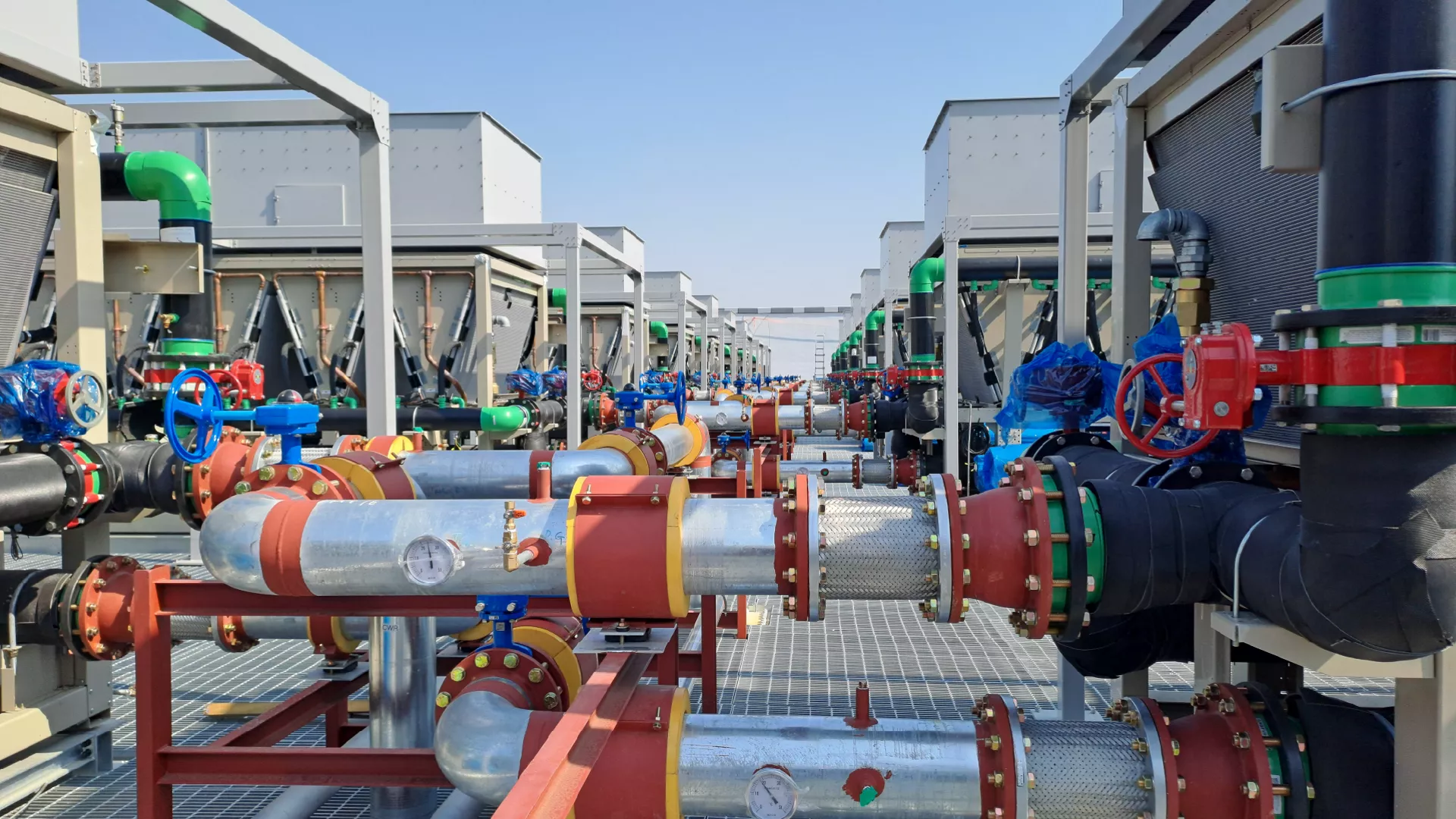
Key Assets: Air-Cooled Chillers, Dry Coolers, Cooling Distribution Units (CDUs), Liquid Cooling Pumps, and others.
The cooling system is the backbone of data center operations, connecting chillers, pumps, compressors, and IT equipment to continuously remove heat. Each component—especially motors, pumps, and compressors—is critical and represents a potential point of failure, making equipment-level monitoring essential.
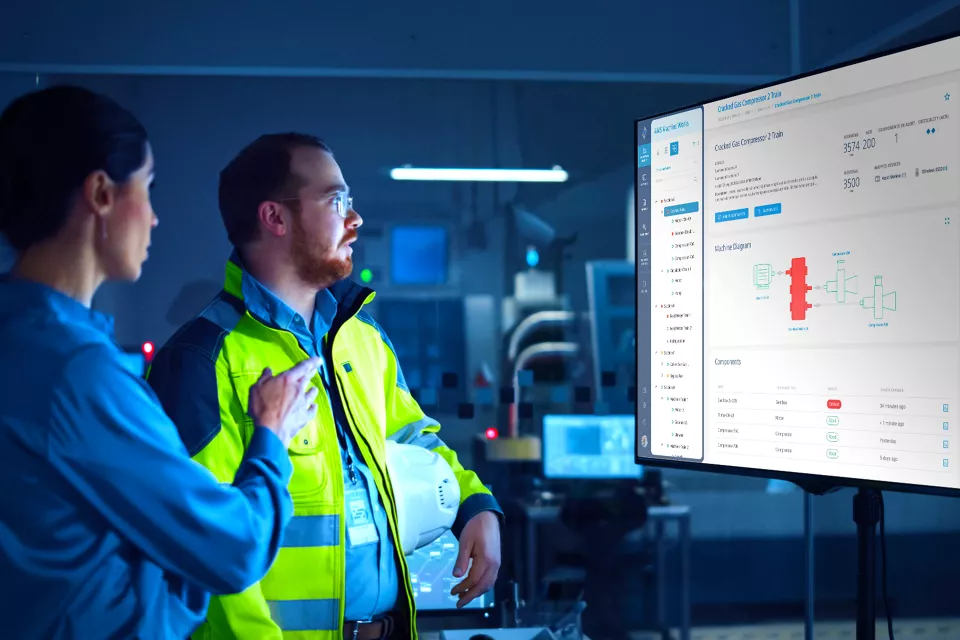
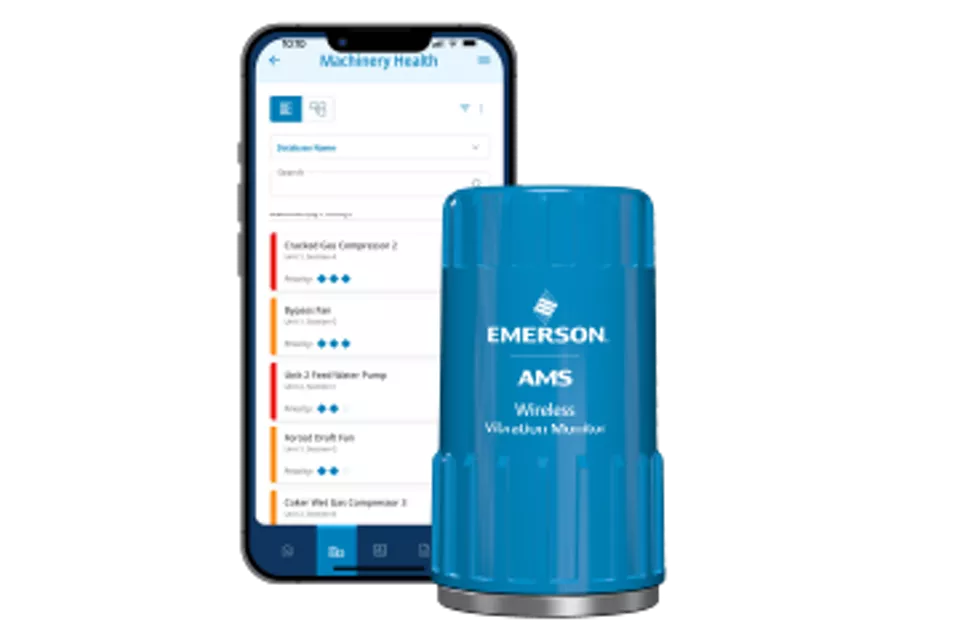
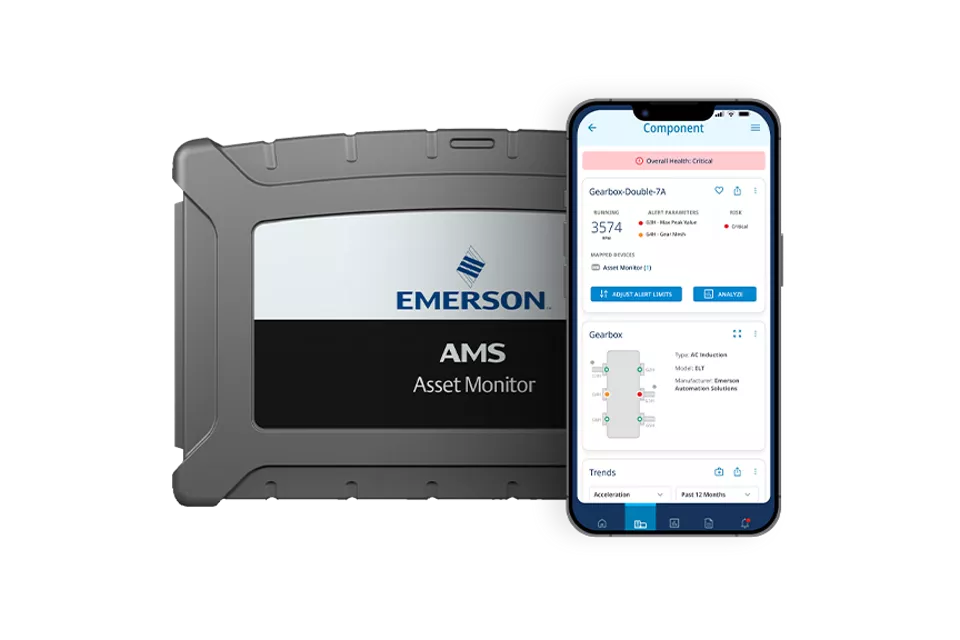
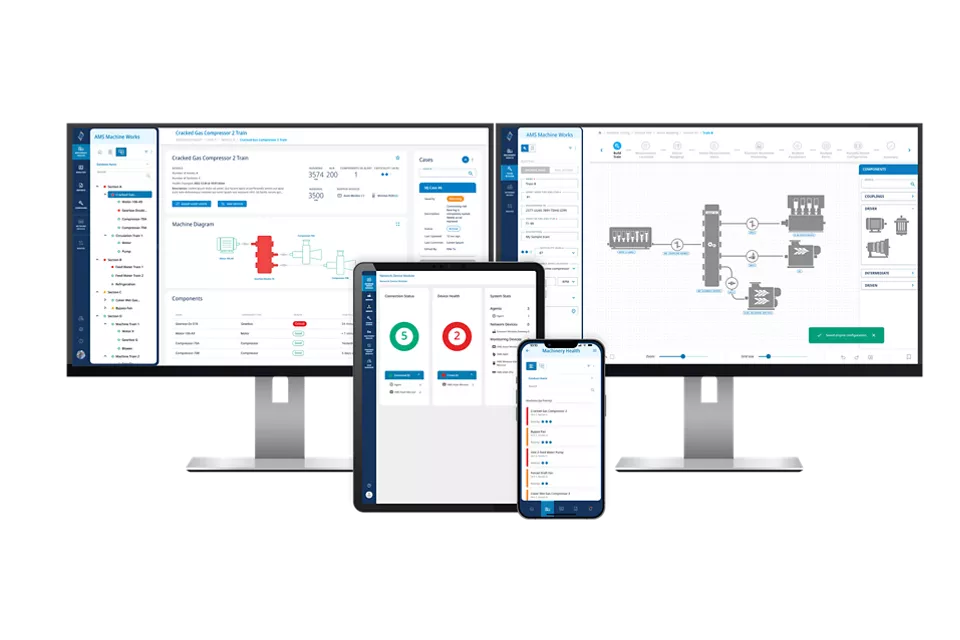
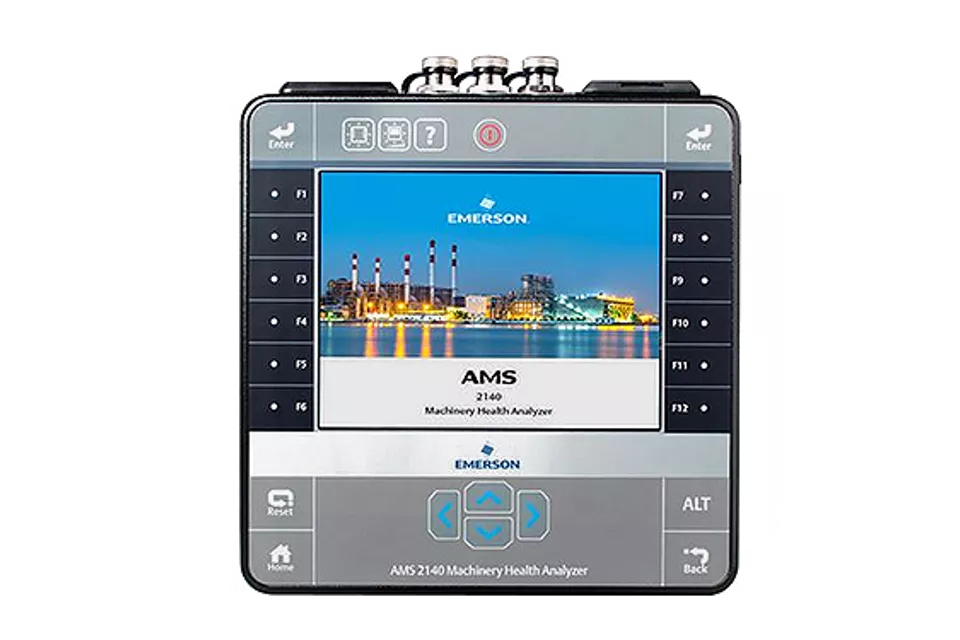
Depending on the specific frequency of data collection or channels required, solutions like AMS Asset Monitor and AMS Wireless Vibration Monitoring provide continuous AI-powered insight to detect issues such as imbalance, misalignment, and bearing wear early, while AMS 2140 Machinery Health Analyzer may be used for advanced troubleshooting—all viewable within the interfacing AMS Machine Works software suite.
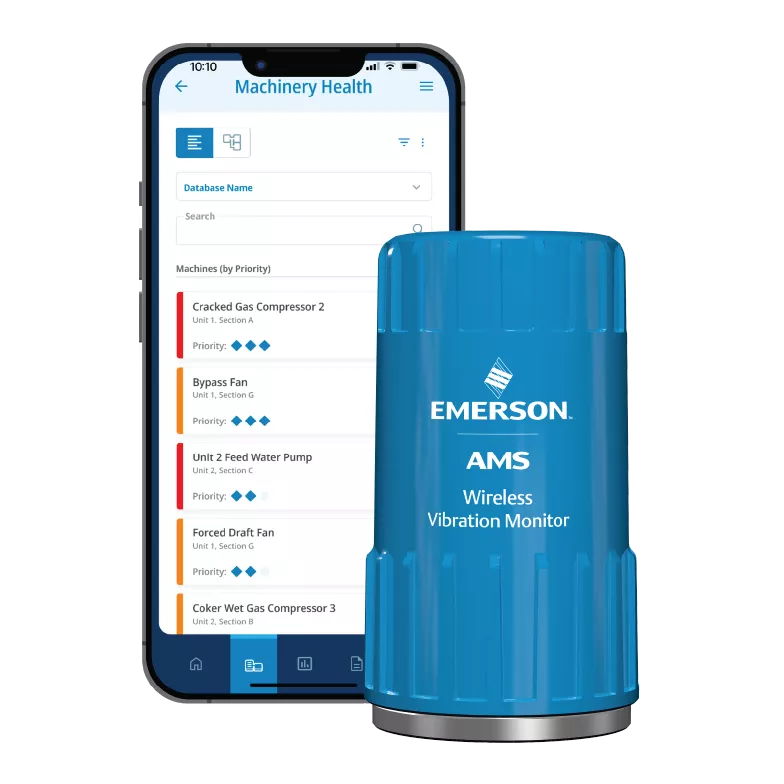
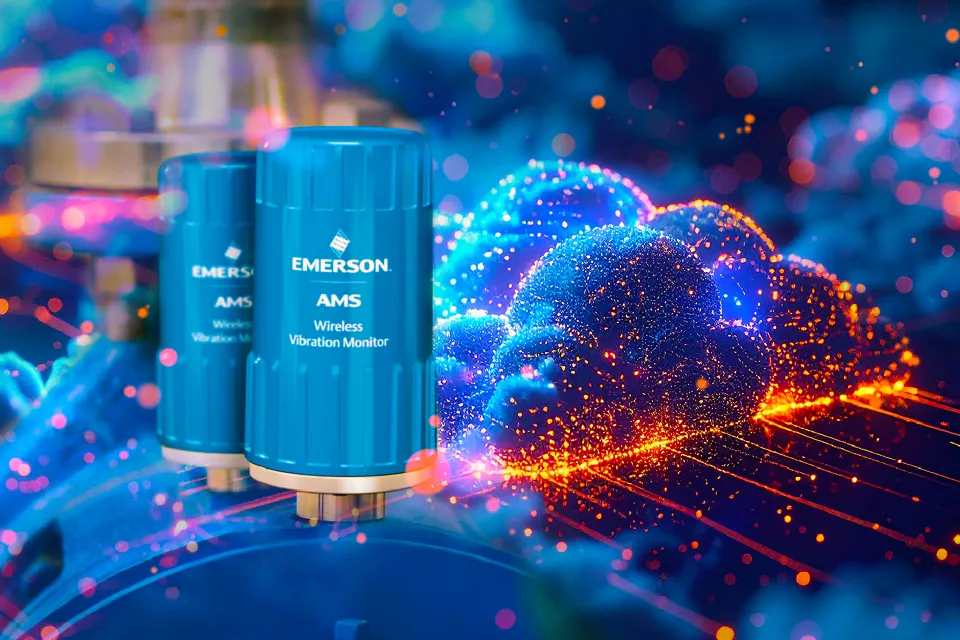
AMS Wireless Vibration Monitor
Cloud-ready, AI-powered wireless monitoring collects full vibration data from more rotating assets in more locations over a self-organizing wireless network — delivering real-time insights for predictive maintenance and greater machinery reliability.
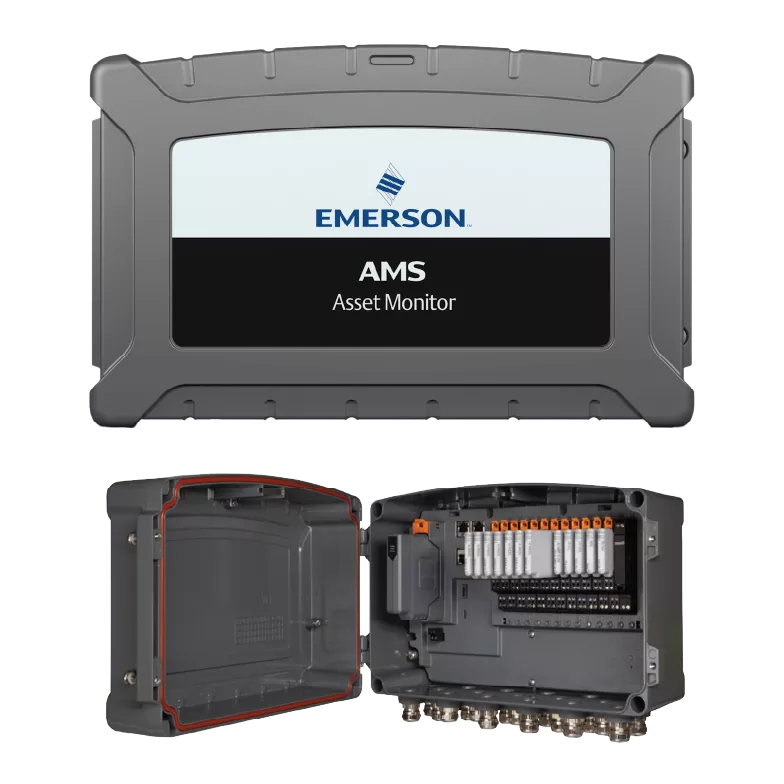
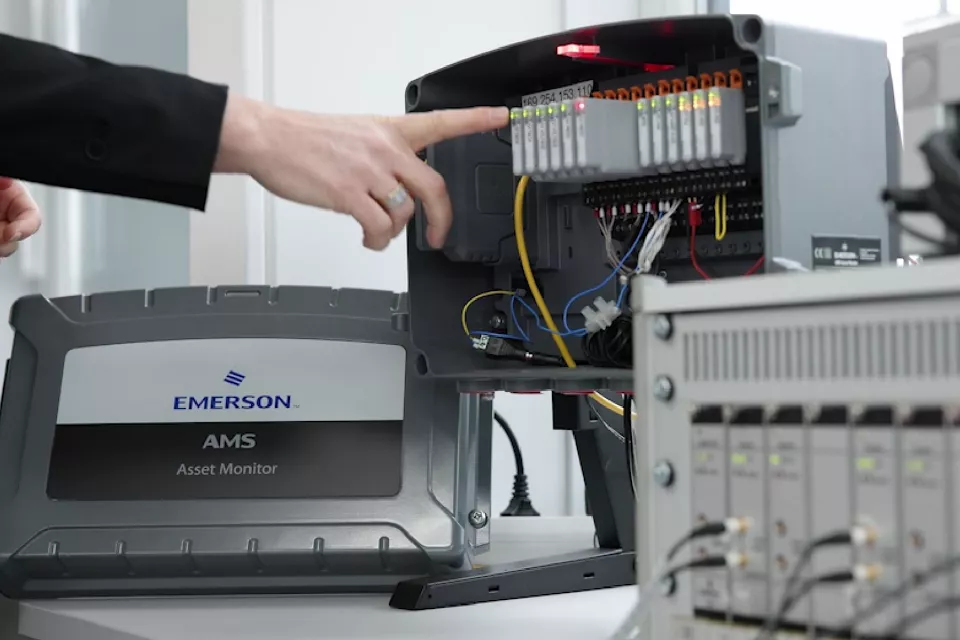
AMS Asset Monitor
Ulta-versatile, award-winning edge monitoring solution utilizes CHARMs-based technology to collect vibration and process data from BOP assets. It applies embedded auto analytics to alert personnel to common faults for a wide range of assets.
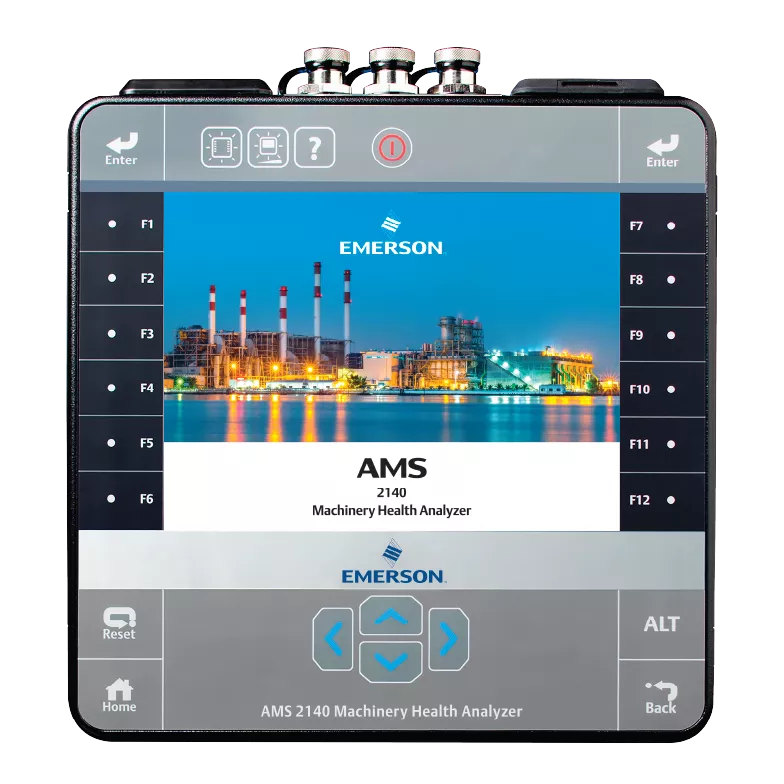
AMS 2140 Machinery Health Analyzer
4‑channel, high‑resolution portable vibration analyzer for route‑based data collection and advanced diagnostics. Detects bearing faults, imbalance, misalignment, and transient issues with FFT, waveform, and envelope analysis. Rugged, touchscreen‑driven, and plant‑ready.
Field Device Management (Instrument & Valve Monitoring)—Data Center Applications
Commissioning hundreds of transmitters and valves across systems like chilled water, CRAH/CRAC units, and liquid cooling creates a key opportunity to accelerate startup through efficient calibration, loop checks, and configuration. The most numerous assets—temperature, flow, and pressure transmitters, plus control valves—directly impact cooling and system stability. Improved visibility enables teams to remotely troubleshoot issues like drift or valve position errors, even when systems appear normal. This supports predictive maintenance, catching bad actors early and reducing unnecessary replacements.
Chilled Water Plant—Associated Instruments & Valves
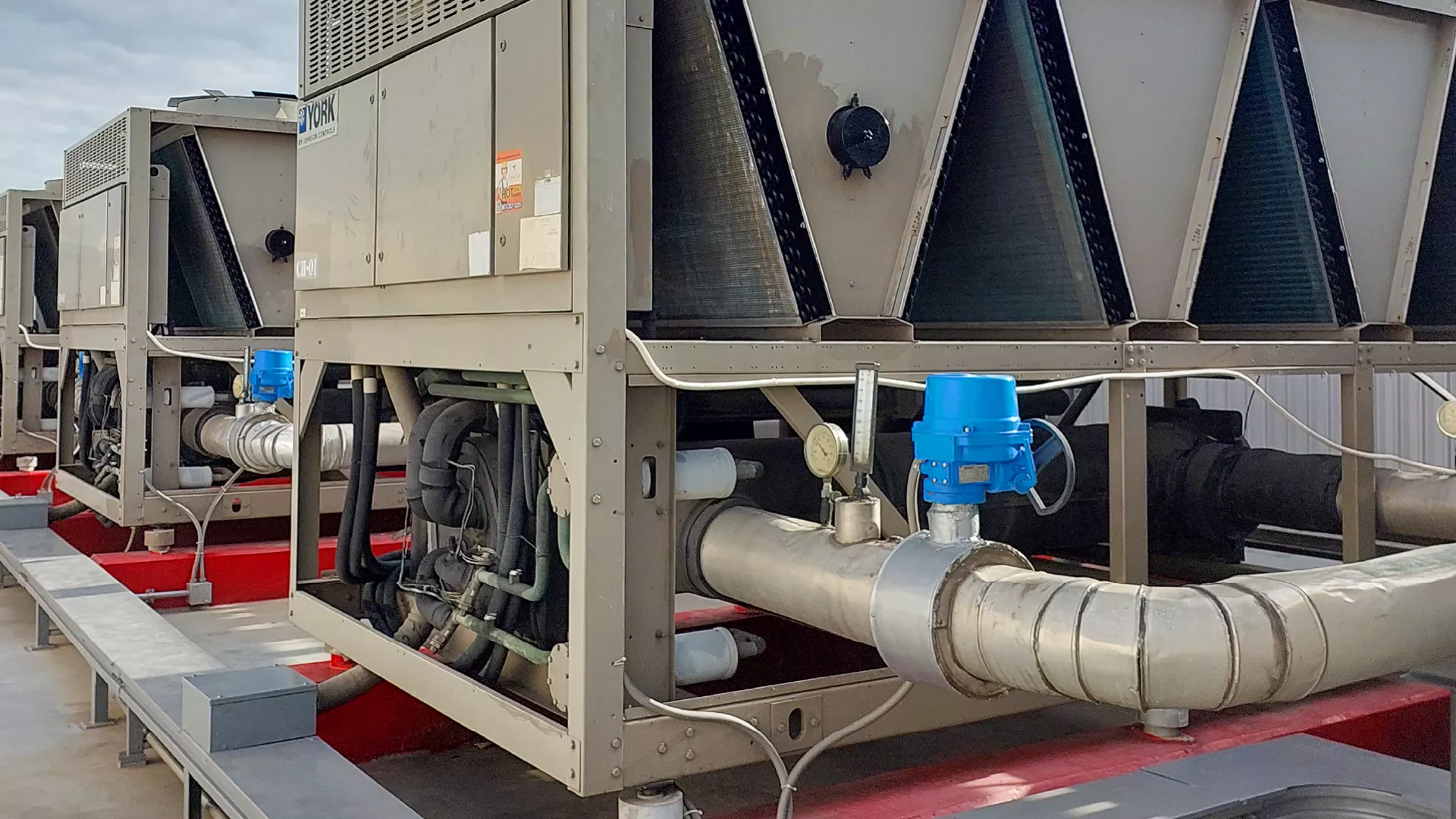
Key Instrumentation Assets / Monitoring Opportunities: Flow meters, pressure transmitters, temperature transmitters, control valves, valve actuators.
The chilled water plant serves as the foundation of data center cooling infrastructure, supplying cooled water to CRAH units, heat exchangers, and other cooling systems throughout the facility. Precise measurement of flow, pressure, and temperature is essential for maintaining cooling capacity, optimizing chiller efficiency, balancing system demand, and ensuring reliable heat removal under varying load conditions.
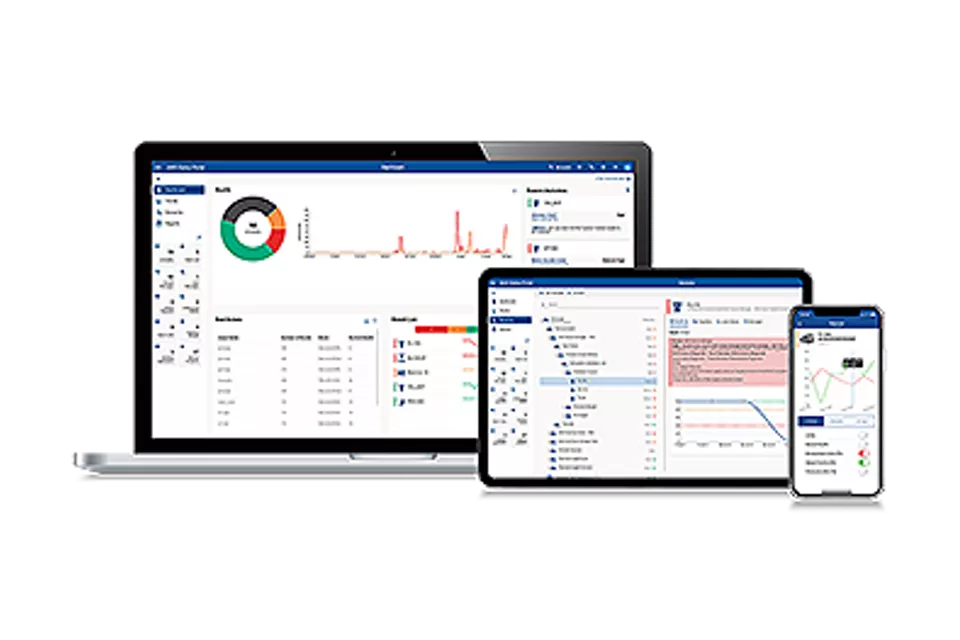
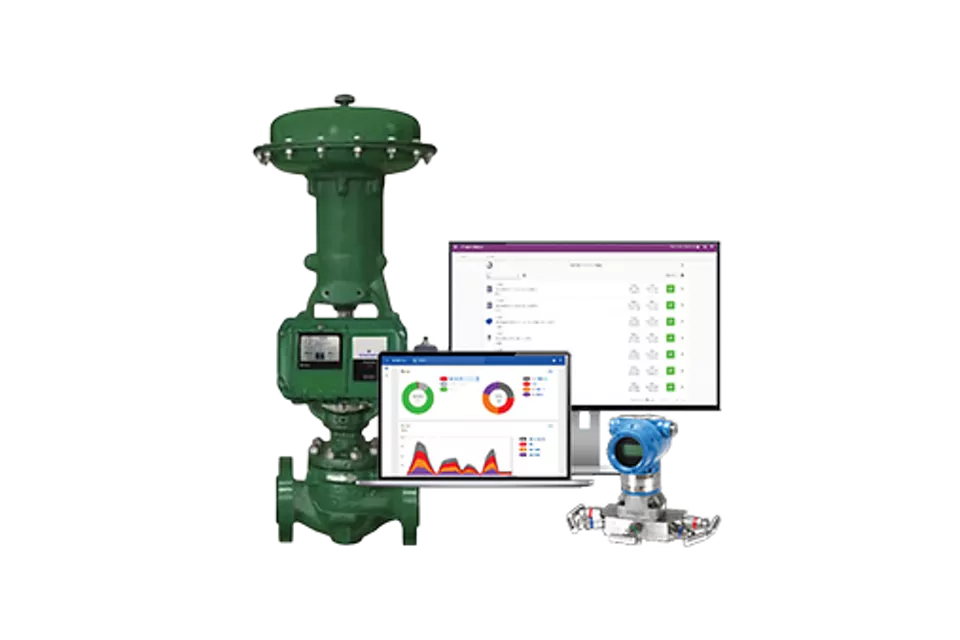
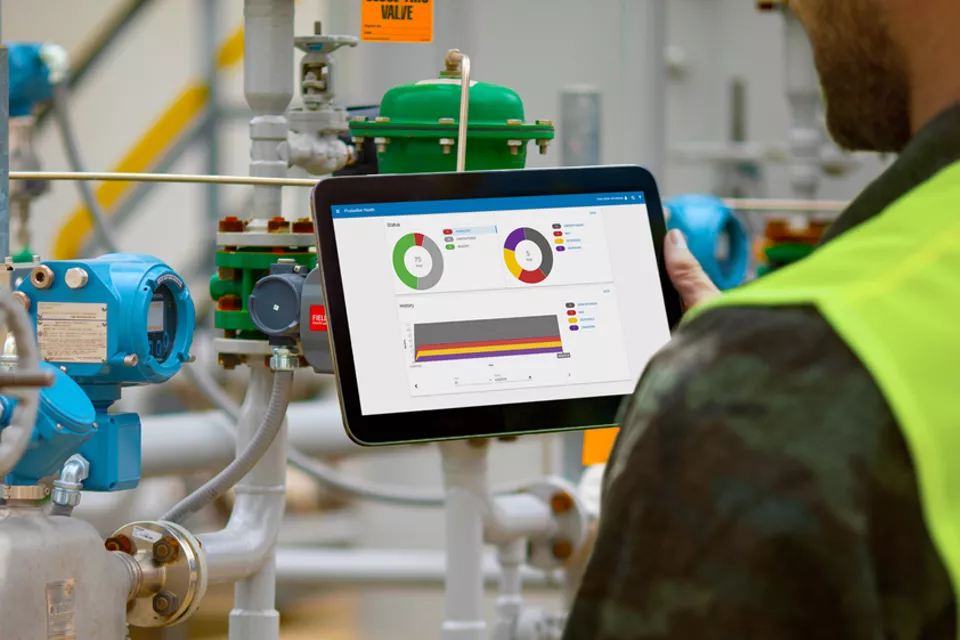
AMS Device Manager provides centralized visibility into the health and performance of critical instruments and control valves, helping identify issues such as sensor drift, valve stiction, actuator degradation, and communication problems before they impact system performance. AMS Trex Device Communicator enables technicians to quickly commission, troubleshoot, and verify field devices directly at the asset, reducing maintenance time and helping ensure reliable operation of the chilled water system that supports continuous data center uptime.
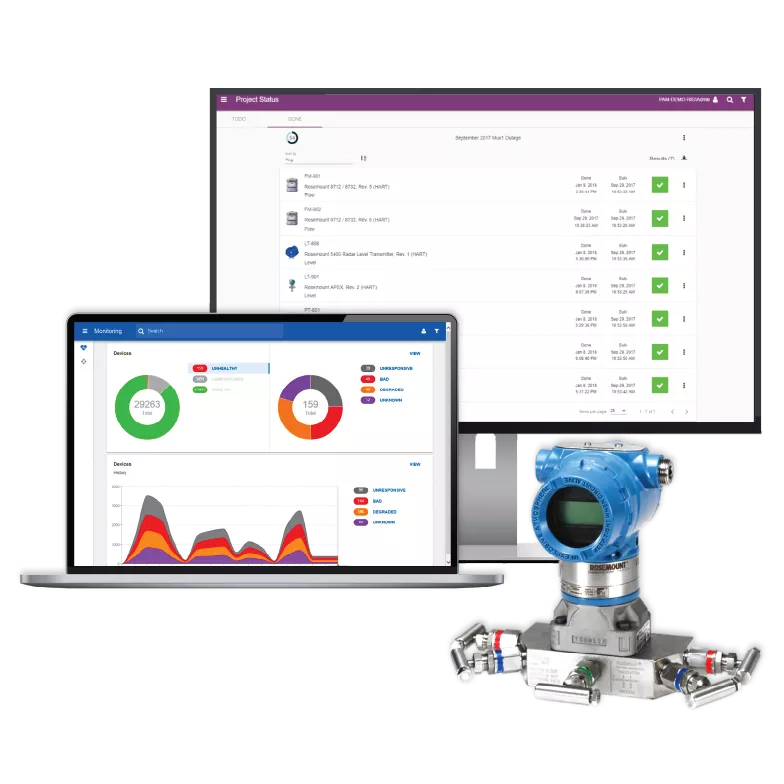
AMS Device Manager
The premier plant asset management software for expert management of measurement instruments, wireless and analytical devices, control valves, and more. Effortlessly integrate and oversee all smart devices associated to a near-endless range of host systems—whether from Emerson systems like DeltaV™, Ovation™, or from other automation manufacturers' DCS, SIS, and PLC environments.
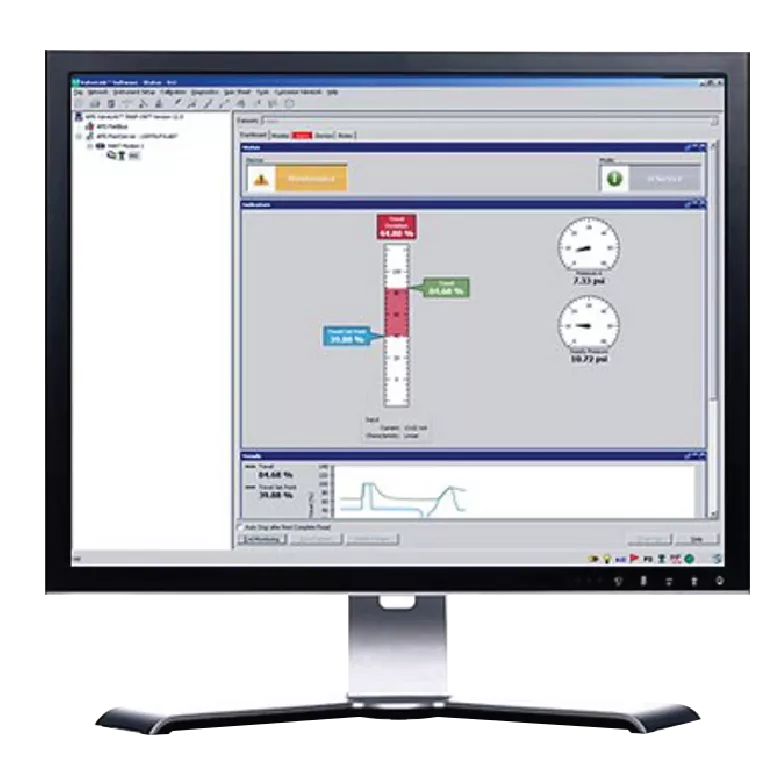
AMS Device Manager ValveLink™ SNAP-ON™ App
AMS Device Manager allows easy access to powerful device diagnostics for configuration, calibration, and documentation of the operating characteristics of HART and Foundation fieldbus Fisher FIELDVUE digital valve controllers. Using the ValveLink SNAP-ON application, you can obtain valve diagnostics needed to solve problems before they affect the process. The ValveLink SNAP-ON application’s diagnostic capabilities permit you to select only those control valves that need to be rebuilt during plant turnarounds to optimize use of your valuable maintenance resources.
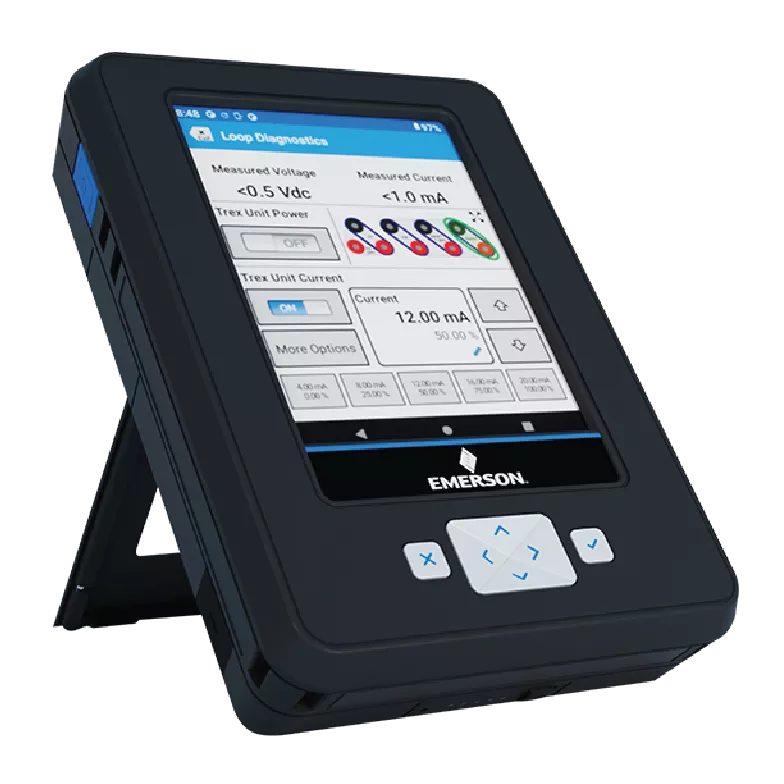
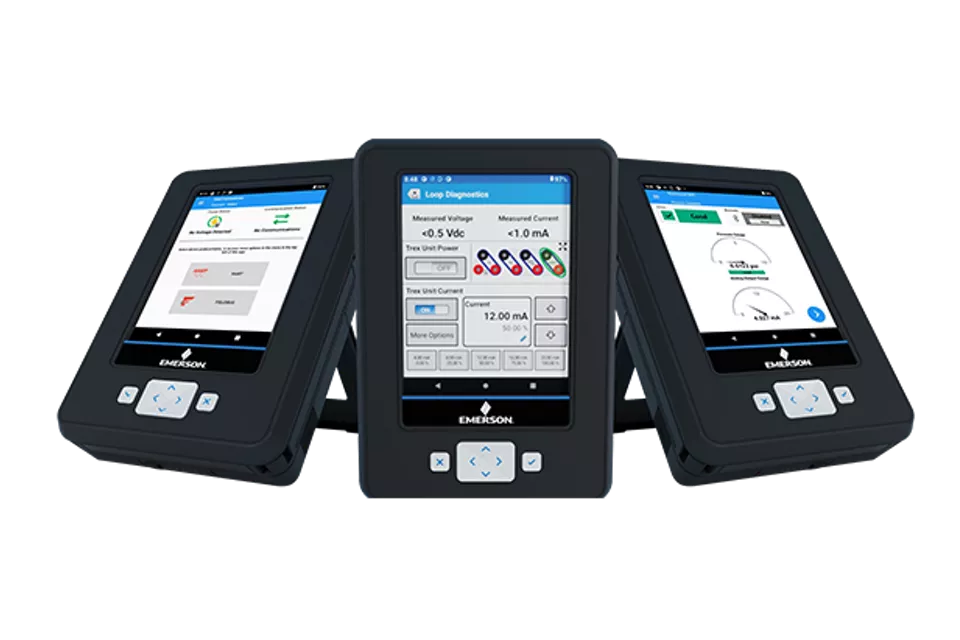
AMS Trex Device Communicator
The AMS Trex Device Communicator enables maintenance, instrumentation, operations, and control teams to diagnose and troubleshoot HART®, FOUNDATION Fieldbus™, and Bluetooth® devices directly in the field—without invasive inspections. With real-time access to device data and diagnostics, teams can identify issues quickly, accelerate troubleshooting, and minimize downtime and disruption.
Frequently Asked Questions
By continuously analyzing vibration and operating data, monitoring systems can detect early indicators of failure and identify “bad actors” before they impact operations. This allows maintenance teams to prioritize work based on actual condition, reducing unnecessary maintenance and avoiding unplanned outages.
In data center and/or their power generation environments where skilled staff are at a premium, this approach proves especially valuable.
Data centers operate with minimal thermal margin and increasing system complexity, where even small mechanical issues can quickly impact cooling or power availability. At the same time, facilities are often lightly staffed, leaving limited time for detailed inspections or follow-up on emerging issues.
This combination of high operational risk and limited resources makes proactive monitoring essential to maintaining uptime.
Data centers operate with minimal thermal margin and increasing system complexity, where even small mechanical issues can impact cooling or power availability. At the same time, many facilities face staffing constraints, making it difficult to perform frequent inspections or investigate emerging equipment issues.
Machinery health monitoring helps address these challenges by continuously analyzing vibration and operating data to detect early signs of degradation and identify potential problem assets before they affect operations. This enables maintenance teams to focus on the equipment that needs attention most, reducing unnecessary maintenance activities, improving resource utilization, and helping prevent unplanned outages.
For data centers and their supporting power generation environments, this proactive approach is especially valuable when skilled reliability and maintenance resources are limited.
Implementing reliability solutions across multiple data centers creates a standardized approach to monitoring asset health, maintenance practices, and performance. By consolidating reliability insights across facilities, organizations gain greater visibility, operational consistency, and the ability to share best practices.
The result: a more resilient, scalable data center portfolio with optimized resources and more predictable uptime.
Data center operators can start by monitoring their most critical infrastructure assets—such as cooling systems, backup power equipment, pumps, fans, and other rotating machinery—and expand coverage as reliability goals evolve. This phased approach allows teams to establish a reliability program, demonstrate value, and prioritize investments based on the assets that have the greatest impact on uptime.
A phased deployment lays the foundation for a scalable reliability strategy that protects uptime, improves maintenance efficiency, and supports future data center expansion.
Instruments and valves play a critical role in maintaining the cooling, power, and utility systems that support data center operations. By providing continuous visibility into device health, configuration status, and performance, AMS Reliability solutions help teams identify potential issues earlier, reduce troubleshooting time, and maintain optimal operation of critical infrastructure.
Early insight into instrument and valve health helps prevent small issues from becoming larger problems that could impact availability, efficiency, or uptime.
No. AI is designed to support maintenance and reliability teams by providing earlier insights and actionable recommendations. Human expertise remains essential for evaluating asset conditions, prioritizing actions, and making operational decisions. For organizations facing resource or expertise gaps, Emerson can help bridge that gap through AI-driven analytics and remote monitoring and analysis services without requiring specialized resources at every data center site.
Teams can make more informed decisions while building a stronger and more scalable reliability program.
Areas of Expertise
Field Device Management

Machinery Health Management
Asset Performance Management
Explore Data Center Solutions
Connect deeper into Emerson's technologies and software supporting data center performance.



Maximize Performance and Reliability of Production and Automation Assets, Integrate Across Industrial Systems, and Foster a Connected Workforce
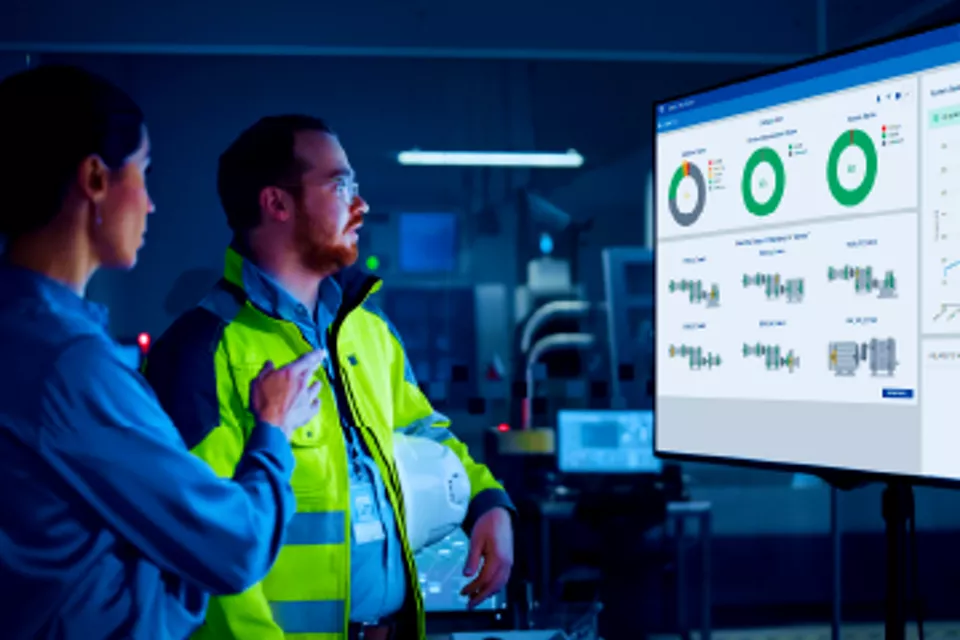
Emerson’s AMS brand represents its Reliability Solutions business, delivering sensing and software technologies that help keep assets running safely, efficiently, and predictably. AMS combines machinery health management, field device management, condition monitoring, diagnostics, and workflow orchestration into a unified portfolio.
Using AI-driven analytics and intelligent sensing, AMS helps detect equipment issues early, optimize maintenance, reduce downtime, and improve reliability. Its digital field device management solutions simplify configuration, calibration, and monitoring of critical instruments. By connecting reliability, maintenance, operations, and engineering teams, AMS provides a unified, data-driven view of asset performance across the enterprise.