How does liquid level detection improve safety and efficiency?
Liquid level switches provide point liquid level detection inside tanks and vessels to identify critical high or low levels. They are used when operators need fast, reliable liquid level detection to prevent overfills, protect pumps, and trigger alarms without complex setup.
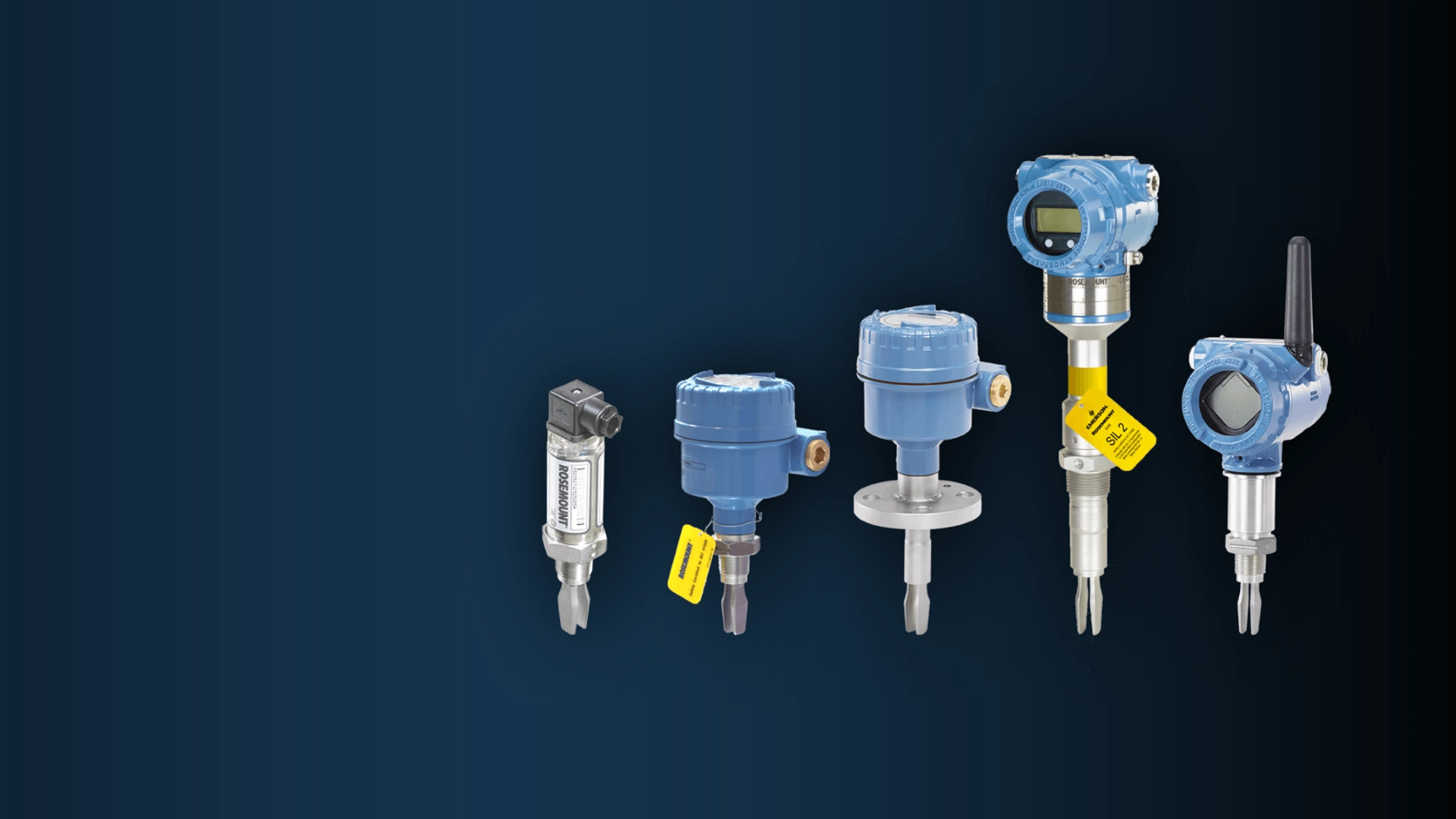
Rosemount vibrating fork level switch portfolio delivers safe, reliable performance across most liquid applications and can be used as a primary level switch or alongside other level technologies to add redundancy and reduce operational risk.
Products
How liquid level switches help solve process challenges
Prevent tank overfills with reliable point level detection
Overfills can lead to safety incidents, environmental damage, and unplanned shutdowns. Level switches for liquid tanks provide reliable point liquid level detection for alarms, monitoring, and control, helping operators respond before unsafe conditions develop.
How Rosemount level switches help:
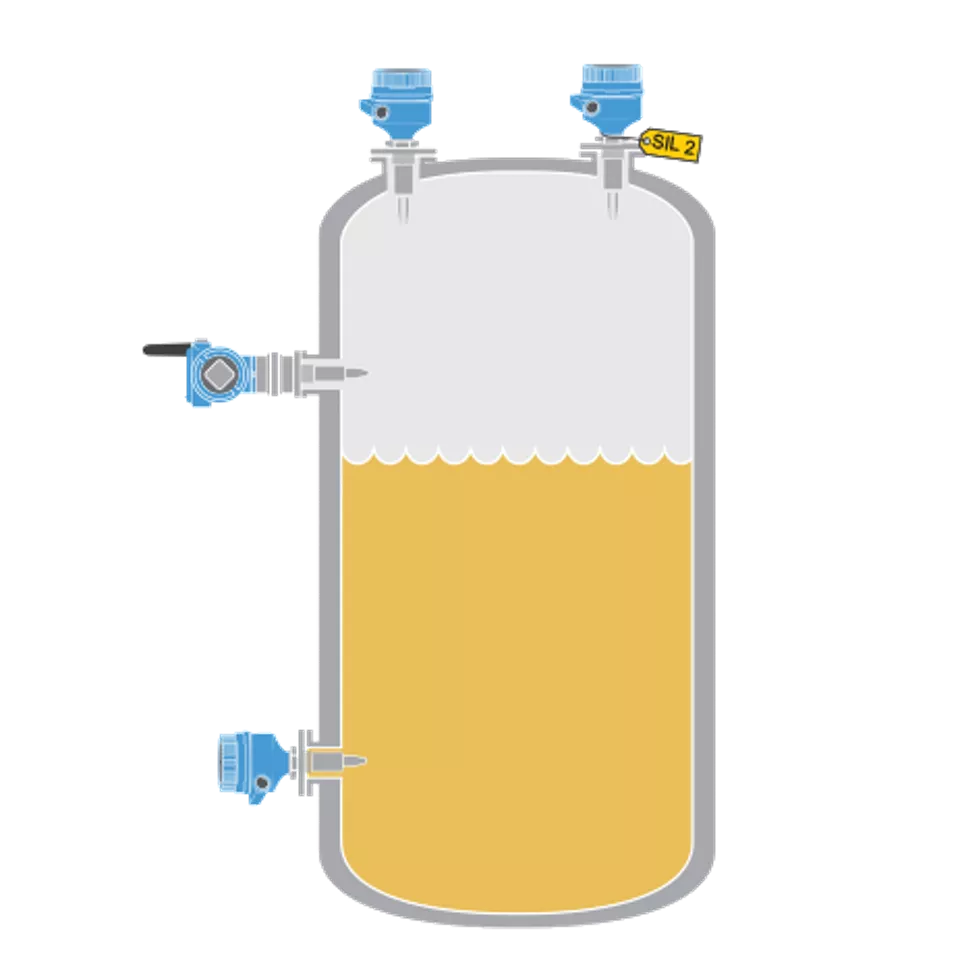
Detect high and high‑high levels to prevent spills and environmental incidents
Support low‑level detection for safer process control and shutdown logic
Provide fast response for critical alarms and interlocks
Can be installed as primary protection or as redundant level switches alongsideother level technologies
Rosemount 2120, 2130, and 2140 vibrating fork level switches are widely used foroverfill prevention and alarm applications in liquid tanks, even with foam, turbulence, orviscous media.
Product Applications for Liquid Level Switches
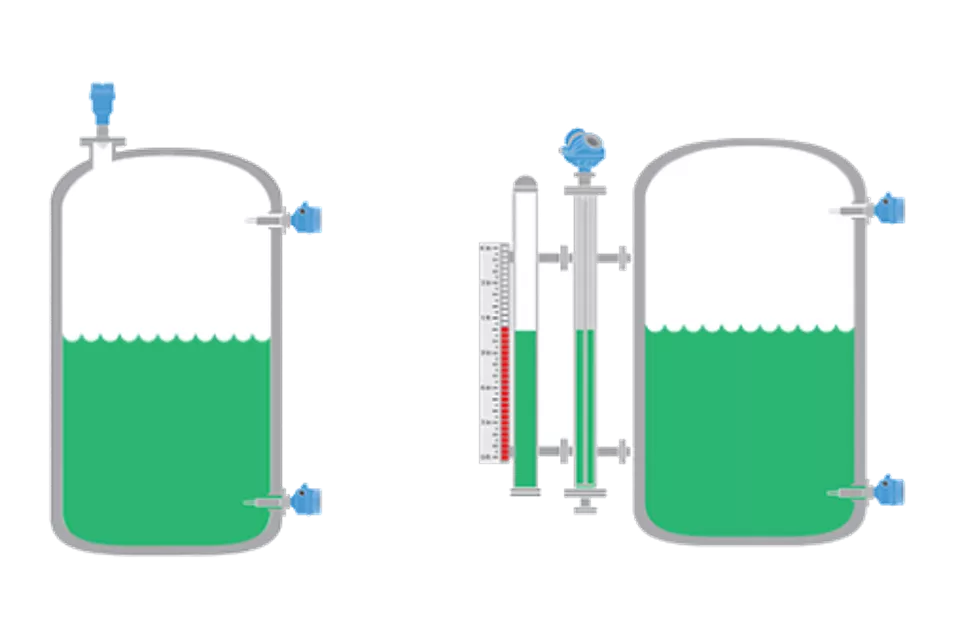
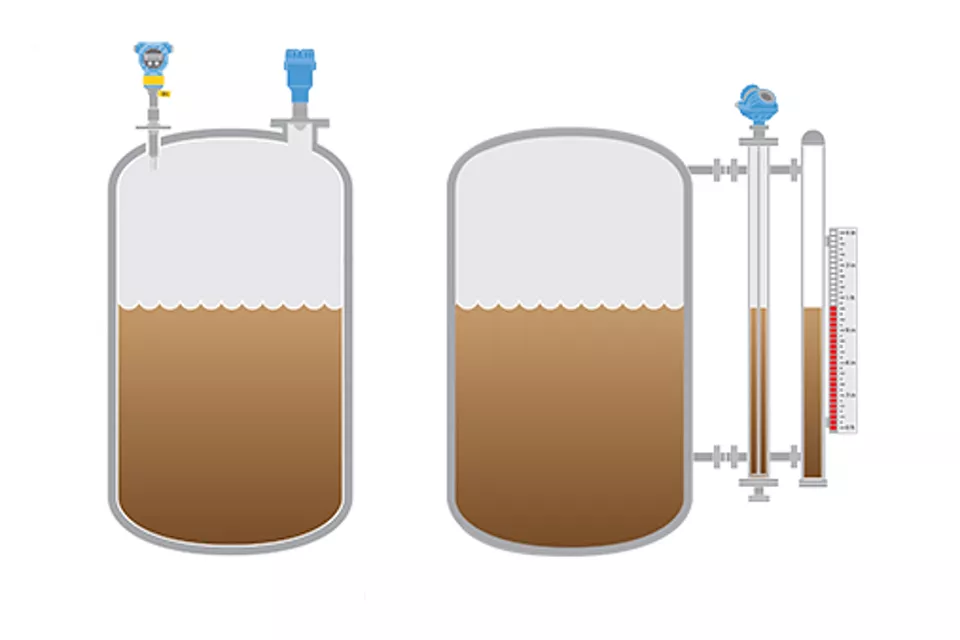
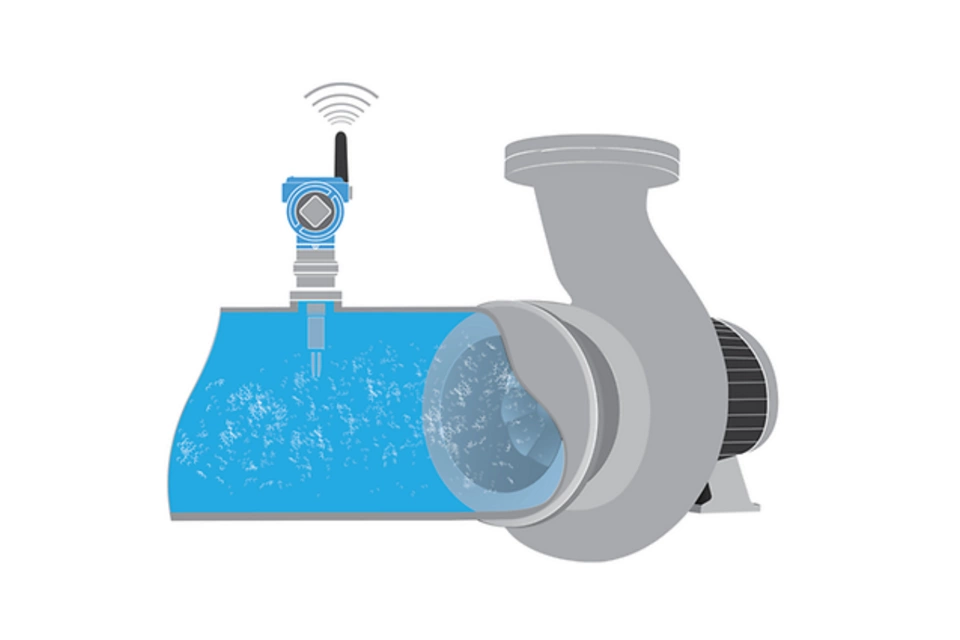
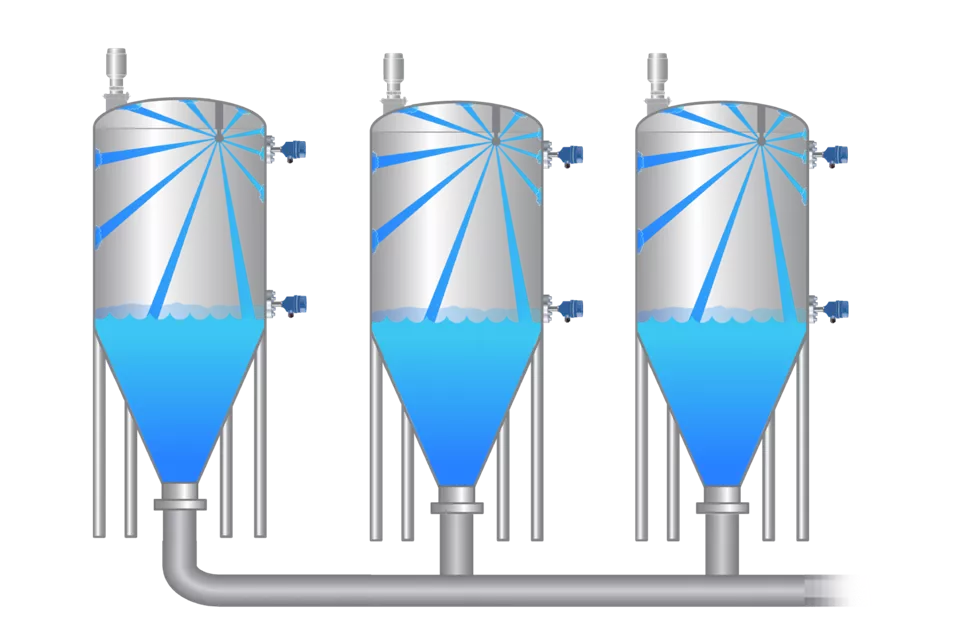
Resources
Frequently Asked Questions
Find Answers to The Most Frequently Asked Questions About Liquid Level Switches
Vibrating level switches are ideal for overfill prevention, high and low-level alarms, and pump protection. They are used in various industries, including chemical processing, water treatment, and food and beverage production.
- Resistant to challenging process conditions such as flow, turbulence, foam, bubbles, and splashing
- Reliable switching even when material properties change, including density, temperature, or composition
- Consistent performance in difficult applications where other technologies may give false readings
- Virtually unaffected by the measured material, delivering dependable point level detection in a wide range of processes
Float switch
- Uses a buoyant float that moves up and down with the liquid level
- Activates a switch when the float reaches a set position
- Can be affected by build‑up, sticking, or mechanical wear
Vibrating level switch
- Uses a vibrating rod or fork to detect the presence of material
- Works by sensing changes in vibration frequency when covered by liquid or solid
- Suitable for both liquids and solids
- No moving parts, resulting in lower maintenance and higher reliability
Why choose a vibrating fork level switch?
- Maintenance‑free design with no moving mechanical components
- More reliable than float switches in challenging materials and process conditions
- Long‑term stability and repeatable switching, even in demanding applications
A vibrating level switch works by using a piezoelectric crystal to convert electrical energy into mechanical vibrations. When the vibrating rod or fork contacts the material, the vibration is dampened. This change is detected by the electronics in the switch, which then alters the state of the relay to indicate the presence of the material.
Rosemount 2120, 2130 and 2140 Vibrating Fork Switches are all SIL-rated. The Rosemount 2140 Vibrating Fork, are certified for use in hazardous areas (such as ATEX, IECEx) and are available with SIL2 certification for use in Safety Instrumented Systems (SIS), making it ideal for critical overfill or dry-run protection.
Rosemount vibrating fork switches are factory-calibrated and require no field calibration. With no moving parts and a robust design, they offer long-term, maintenance-free operation, even in demanding process conditions.
Rosemount switches can detect a wide range of liquids, including clean, dirty, viscous, foaming, or aerated fluids. They can handle high temperatures and pressures, depending on the model, and are designed to manage a broad span of liquid densities.
The Rosemount 2120 with hygienic process connections is designed for food, beverage, and pharmaceutical applications. It meet 3-A and EHEDG standards and are compatible with CIP/SIP cleaning processes.
Selection depends on factors like media type, process conditions (temperature, pressure), installation location, and certification needs.