
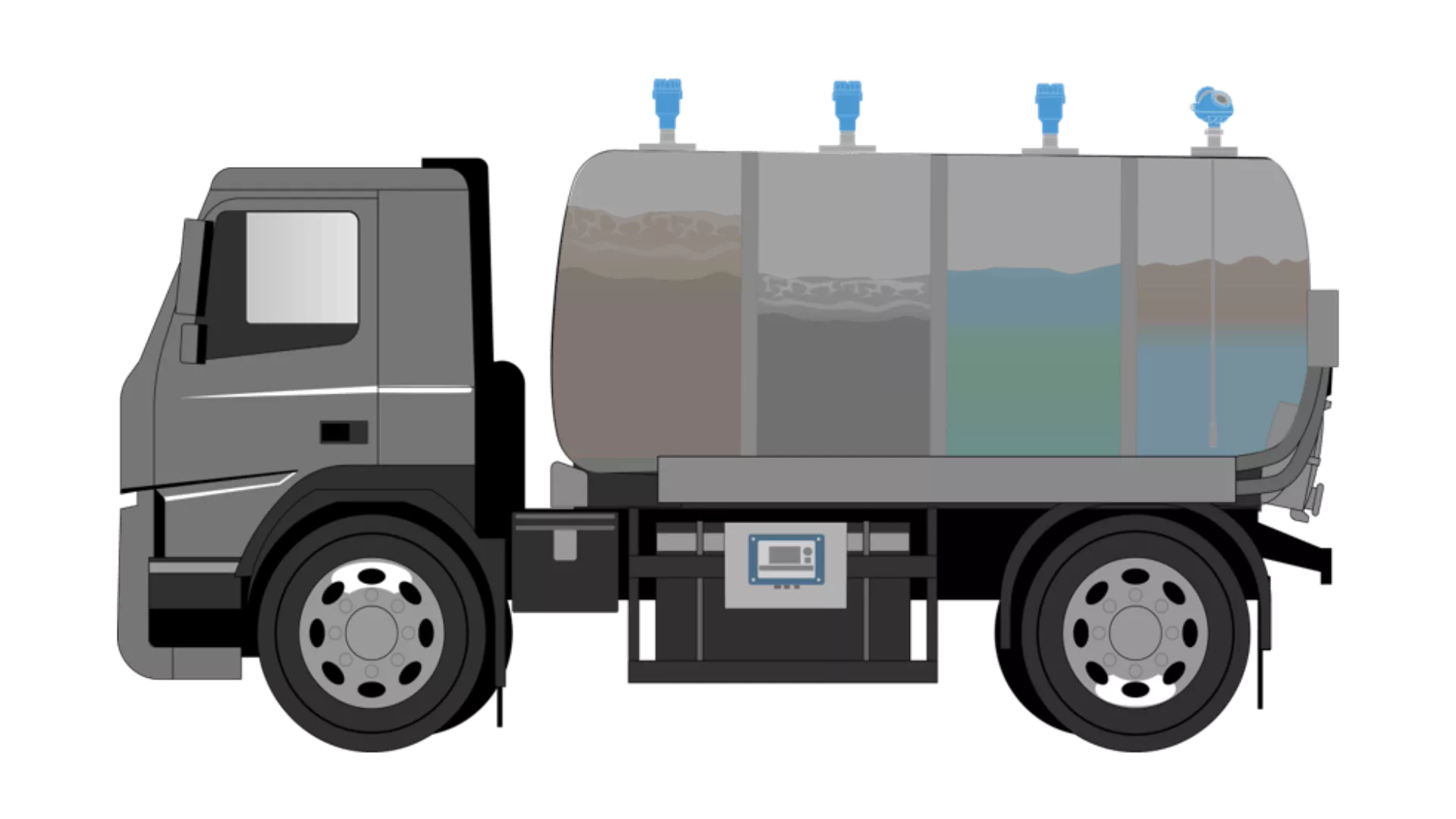
Application Overview
Tanker trucks and transport trailers are widely used to move liquids such as produced water, chemicals, fuels, and heavy hydrocarbons like bitumen or pitch.
KEY CHALLENGES IN TANKER TRUCK APPLICATIONS
- Overfill prevention during loading
- Pump protection and dry-run prevention
- Lack of level and volume visibility
- Manual monitoring and safety risks
- Difficult process conditions
Learn how tanker trucks and transport trailers are used across industries, the key challenges operators face, and how level measurement technologies help optimize operations.
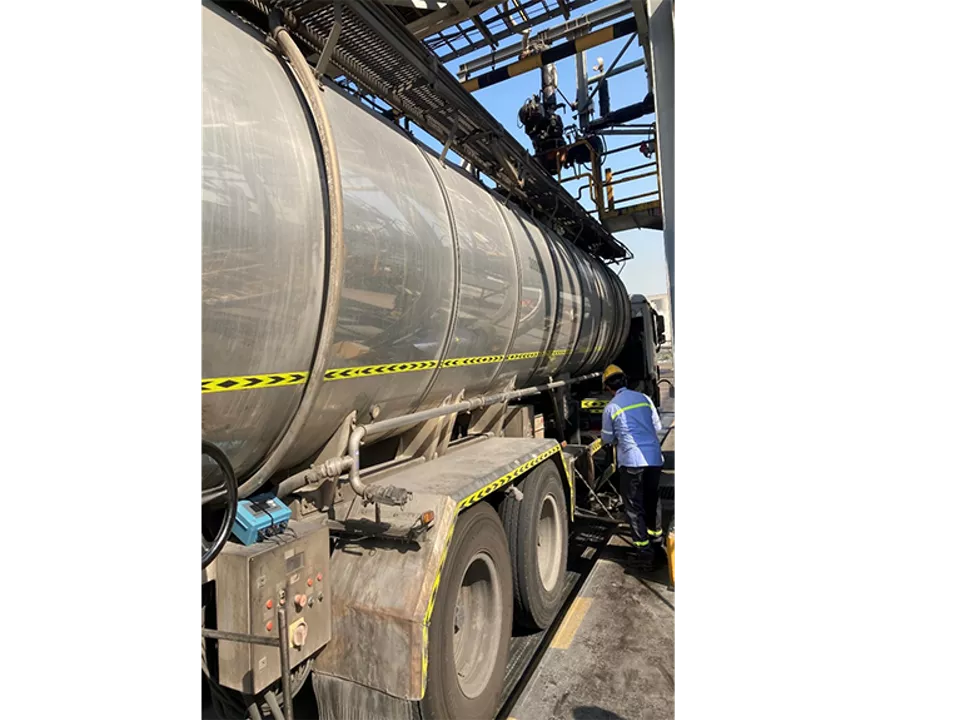
Produced Water & Hydrocarbon Transport
Tanker trucks in the Oil & Gas industry transport produced water and hydrocarbons between well sites, treatment facilities, and storage locations.
Challenges
- Limited visibility into transported volumes
- Unreliable legacy monitoring systems
How level measurement helps
- Volume and level visibility across fleet assets
- Reduced manual data entry and errors
- Improved logistics and billing accuracy
Recommended technologies
- Non-contacting radar for continuous, low-maintenance measurement

Frequently Asked Questions
Level in tanker trucks is typically measured using radar technologies, which provide continuous measurement for both liquids and bulk materials (e.g., powders).
These measurements are often part of a complete monitoring solution, combining:
- Level transmitters → continuous measurement
- Controllers or communication hubs → data processing, alerts, and system integration
Non-contact radar is commonly used because it:
- Provides accurate measurement in harsh conditions
- Is unaffected by coating, temperature, or product properties
- Requires minimal maintenance
When combined with a controller or communication hub, it enables:
- Automated pump control (start/stop based on level)
- Overfill prevention and alarms
- Real-time data visibility for operators
- Integration with control systems (PLC/SCADA)
For more demanding applications:
- Guided wave radar can be used for difficult media or interface conditions.
Mechanical sensors can clog, wear, or fail due to buildup, vibration, and harsh conditions, leading to inaccurate readings and frequent maintenance.
Automated level measurement reduces manual intervention, improves safety, and enables real-time monitoring of transported volumes.