
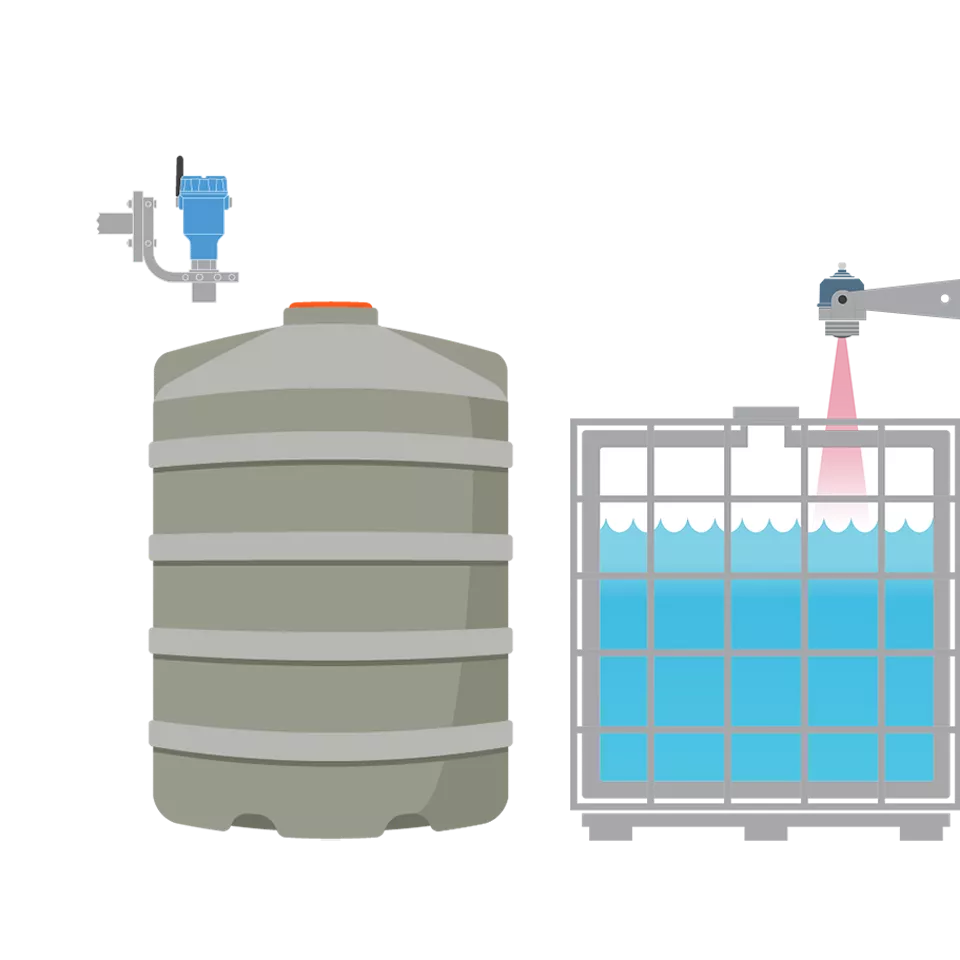
Application Overview
Plastic tanks, IBCs, and totes are widely used to store chemicals, ingredients, and process liquids. Continuous level measurement helps improve inventory visibility, reduce manual inspections, and support more efficient replenishment planning.
KEY CHALLENGES
- Limited visibility into inventory levels across distributed tanks, IBCs, and totes.
- Manual inspections create safety risks, labor costs, and replenishment uncertainty.
Learn how wireless level measurement helps reduce costs, improve visibility, and optimize operations across industries and applications.
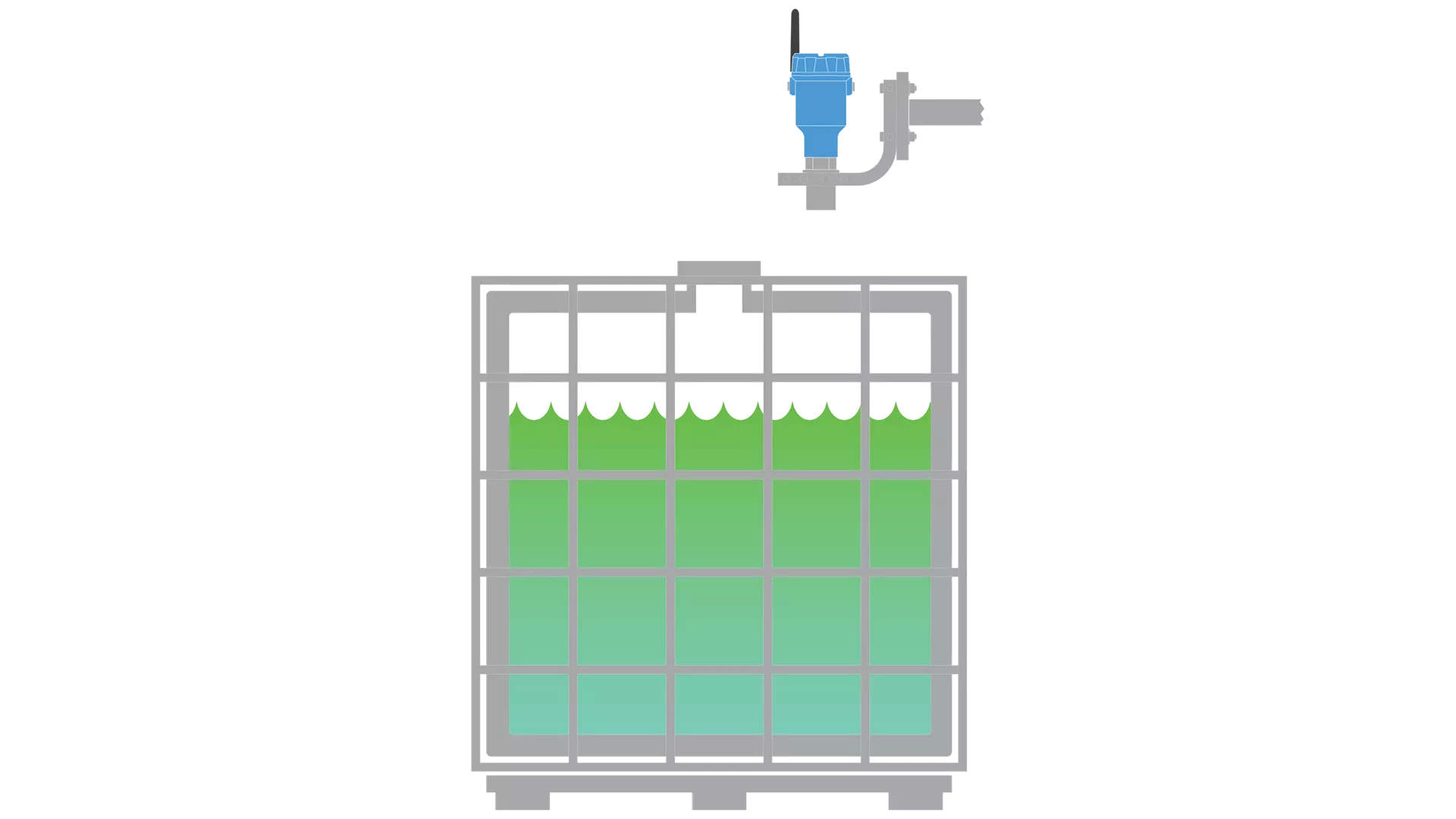
Chemical Storage and Additive Inventory
Plastic tanks, IBCs, and totes are commonly used to store acids, caustics, additives, solvents, and specialty chemicals throughout production and storage areas.
Challenges:
- Corrosive media and material compatibility concerns.
- Limited inventory visibility for distributed storage assets.
How level measurement helps
- Improves inventory visibility across storage assets.
- Supports replenishment planning and inventory accuracy.
- Reduces the need for manual level checks.
Recommended technologies
- Non-Contacting Radar – Continuous inventory monitoring where wiring is available
- Wireless Non-Contacting Radar – Inventory visibility where wiring is impractical in distributed assets

Frequently Asked Questions
Non-contacting radar level measurement provides continuous, non-intrusive monitoring of liquids stored in plastic tanks, IBCs, and totes. It helps improve inventory visibility, reduce manual inspections, and support more efficient replenishment planning across multiple storage assets.
The best solution depends on the application, tank design, and installation requirements. Non-contacting radar level measurement is commonly used because it provides continuous inventory visibility without direct contact with the stored liquid. In many plastic tanks, totes, and IBCs, it can measure through the non-metallic roof, simplifying installation and reducing the need for manual inventory checks.
Yes. Non-contacting radar technology can measure through many non- metallic tank roofs, enabling continuous inventory monitoring without contacting the process or requiring additional tank openings. This can simplify installation, reduce operator exposure to stored chemicals, and help maintain inventory visibility.
Wireless level measurement eliminates the need for signal wiring in many applications. This can reduce cabling, engineering effort, and installation costs while making it easier to monitor tanks, IBCs, and totes located throughout a facility or at remote locations.
Accurate inventory visibility helps operators avoid stockouts, improve replenishment planning, reduce manual inventory checks, and maintain production continuity. Continuous level measurement provides real-time inventory information to support operational decisions.
Level measurement is commonly used in chemical manufacturing, food and beverage, water and wastewater treatment, mining, agriculture, and specialty chemical applications where liquids are stored in plastic tanks, IBCs, or totes.
Continuous inventory monitoring reduces the need for personnel to manually inspect tanks and containers. This can help minimize operator exposure to hazardous or corrosive chemicals while improving visibility into storage levels.
Wired radar level measurement is typically used where power and communication infrastructure are available. Wireless radar level measurement can be a good option for distributed storage assets where running cables is difficult or costly.
Inventory monitoring solutions can collect level data from multiple storage assets and provide centralized visibility into available inventory. This helps improve planning, replenishment, and operational efficiency across facilities.