
Measure Differential Pressure Flow & Differential Pressure Level
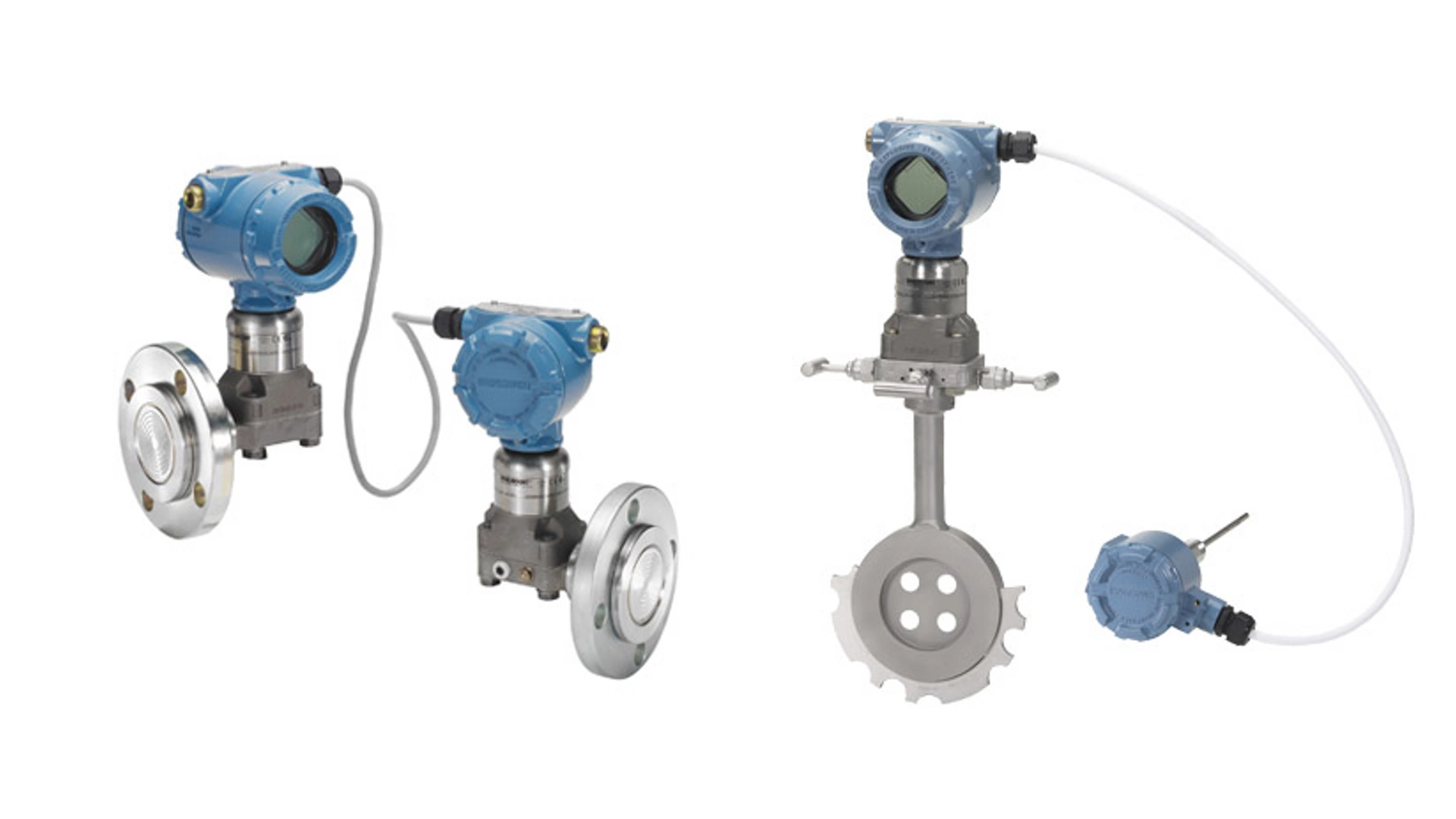
Emerson can help you get accurate and reliable differential pressure measurements. Rosemount Differential Pressure Flow Transmitters measure the flow rate of fluids, both gases and liquids, in a pipeline. A restriction in the flow path and the pressure drop measurement across the restriction is how differential pressure flow is measured. Rosemount Differential Pressure Level Transmitters measure the pressure difference between two points in a tank or vessel using the hydrostatic pressure principle. The pressure at a given depth is proportional to the level of the liquid above that point, multiplied by the liquid’s density and the gravity acceleration.
Products
Frequently Asked Questions
Differential pressure is the difference in pressure between two points in a system. It is commonly used to measure flow and level in various industrial applications.
In flow measurement, differential pressure is created by an obstruction (like an orifice plate, venturi tube or flow nozzle) in the flow path. The pressure difference across this obstruction is proportional to the flow rate, which can be calculated using established equations.
For level measurement, differential pressure is used to determine the height of a liquid in a tank by measuring the pressure difference between the bottom of the tank (full pressure) and a reference point (usually atmospheric pressure or a known reference).
Differential pressure transmitters and sensors are commonly used in these applications. These instruments have two pressure ports to measure the pressure at different points and compute the differential pressure.
Yes, differential pressure measurement can be applied to both liquids and gases. However, considerations such as density, viscosity and compressibility need to be accounted for during the measurement and calculation process.
Some common applications of differential pressure measurement include monitoring flow rates in pipelines, measuring the level of liquids in tanks, controlling HVAC systems and ensuring process safety in chemical and pharmaceutical manufacturing.
The advantages of using differential pressure measurement include high accuracy, reliability, simplicity of installation and the ability to measure flow and level without direct contact with the process fluid (important for corrosive or hazardous substances).
Selection criteria for differential pressure transmitters typically include the type of fluid being measured, the required measurement range, the environmental conditions, compatibility with existing systems and specific application requirements (e.g., accuracy, response time).
The calibration frequency of differential pressure transmitters depends on your application's accuracy requirements and environmental conditions. However, periodic calibration is essential to maintain accuracy and reliability, usually recommended annually or semi-annually.