
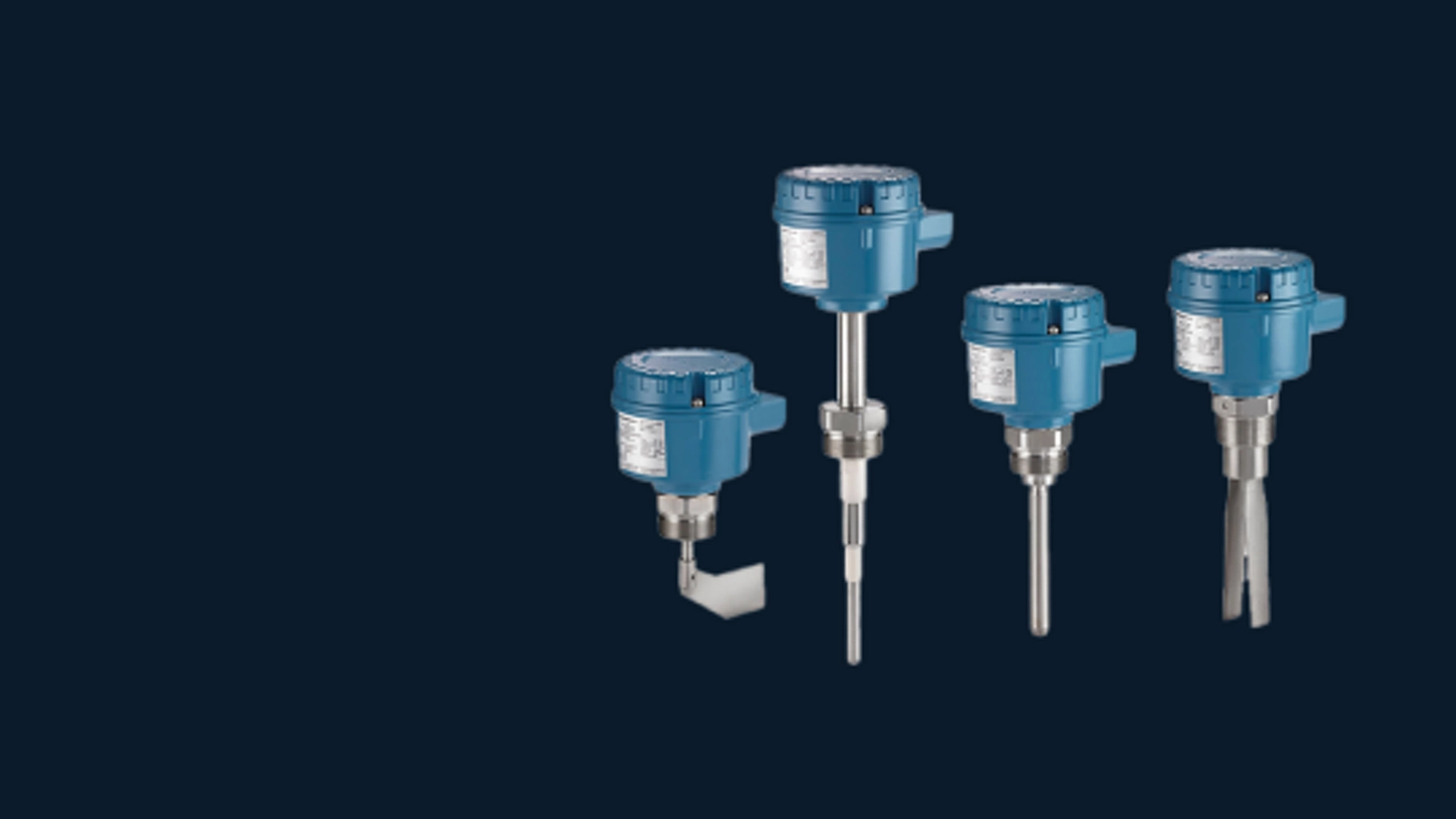
Rosemount solids level switches are often selected for applications where overfill protection, silo safety, pump protection, and ease of maintenance are critical. Point-level technologies such as a rotary paddle level switch, capacitance level switch, tuning fork level switch, and vibrating rod level switch provide reliable detection and control for high‑, low‑, or demand‑level applications in bulk solids handling.
Products
ROSEMOUNT SOLID SWITCHES
Reliable point level detection for bulk solids
What is a level switch for solids?
A solid level switch is a point level device used to detect the presence or absence of bulk solids in silos, bins, and hoppers. Also known as a level switch for solids, it supports accurate solids point level measurement for alarms, automation, and safe bulk material handling.
Key benefits of solids level switches include:
- Reliable solid level detection at defined points
- Simple on/off signaling for control and alarms
- Support for high level detection for silos
- Proven performance in dusty, harsh environments
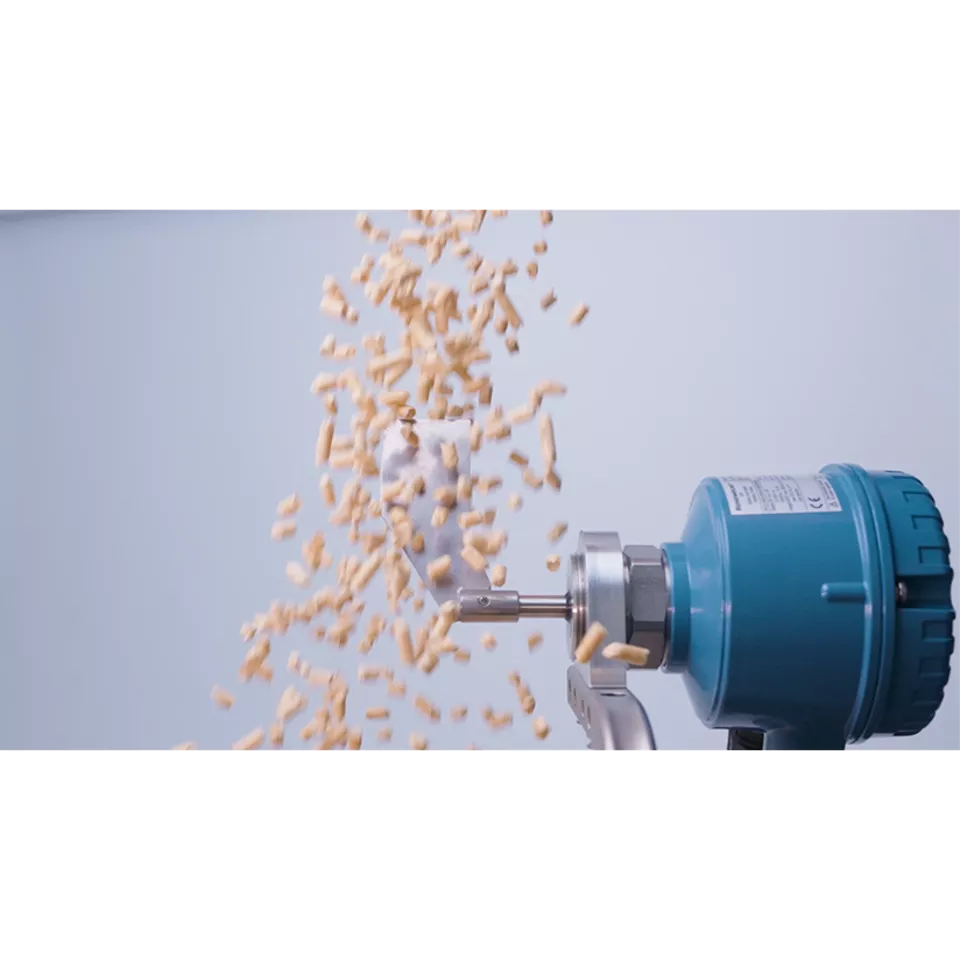
Solids Level Switches Comparison
Discover the key distinctions between various technologies used for solids level switches
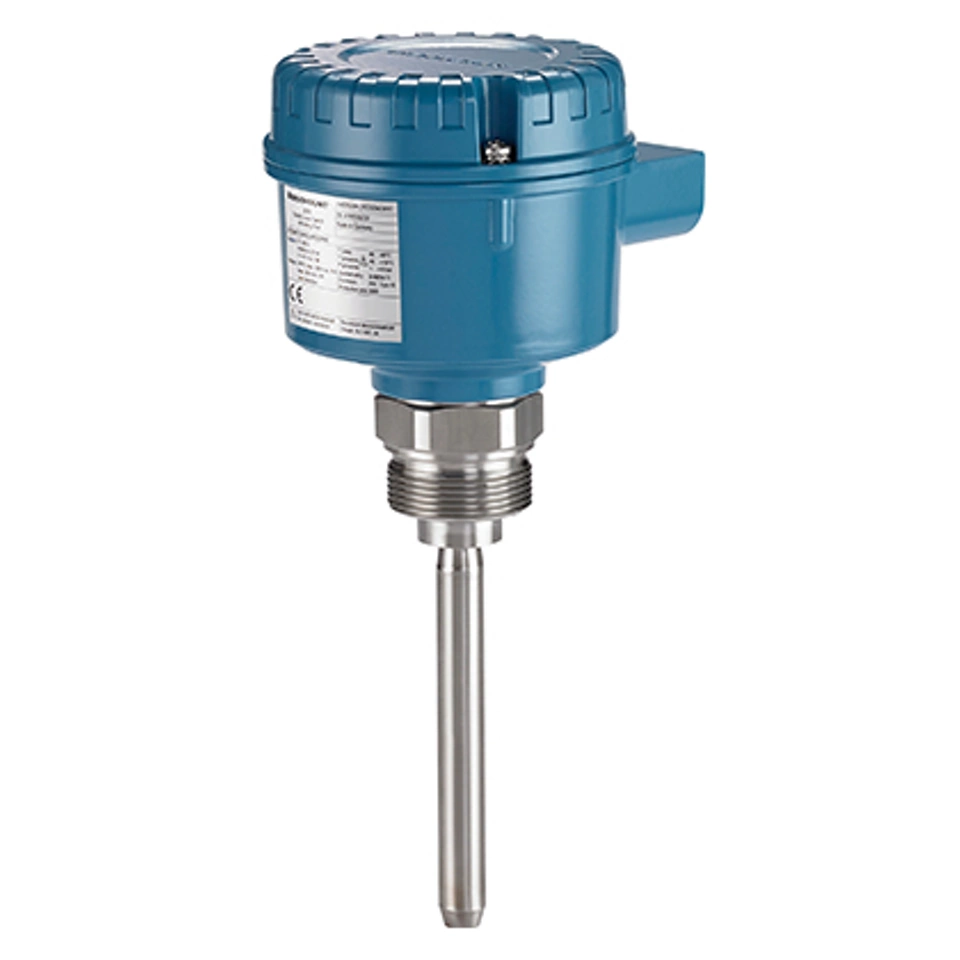
Vibrating Rod Level Switch
Media type
- Light, free‑flowing bulk solids such as dry powders and granules
- Suitable regardless of particle size
- Minimum density: 1.2 lb/ft³ (20g/l)
Process specifications
- 302°F (150°C)
- 232 psi (16 bar)
Reliability and performance
- No risk of bridging or jamming due to single‑rod design
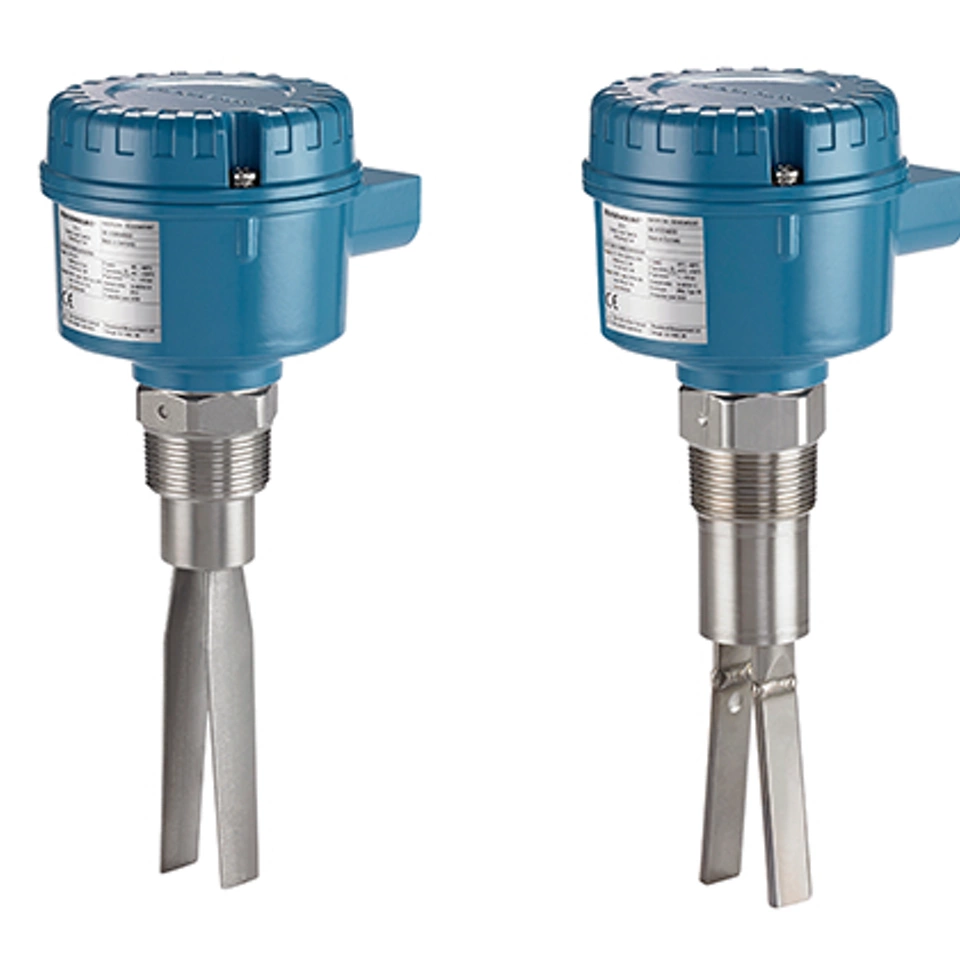
Vibrating Fork Level Switches
Media type
- Fine‑grained and powdered bulk solids
- Particle sizes up to 0.39 in (10 mm)
- Minimum density: below 0.3 lb/ft³(5 g/l)
Process specifications
- 302°F (150°C)
- 232 psi (16 bar)
Reliability and performance
- Choose Rosemount 2511 for standard applications with minimum density of 3.8 lb/ft³ (30 g/l)
- Rosemount 2521 model offers extra mechanical robustness for high‑vibration applications and enhanced sensitivity for detecting extremely low densities
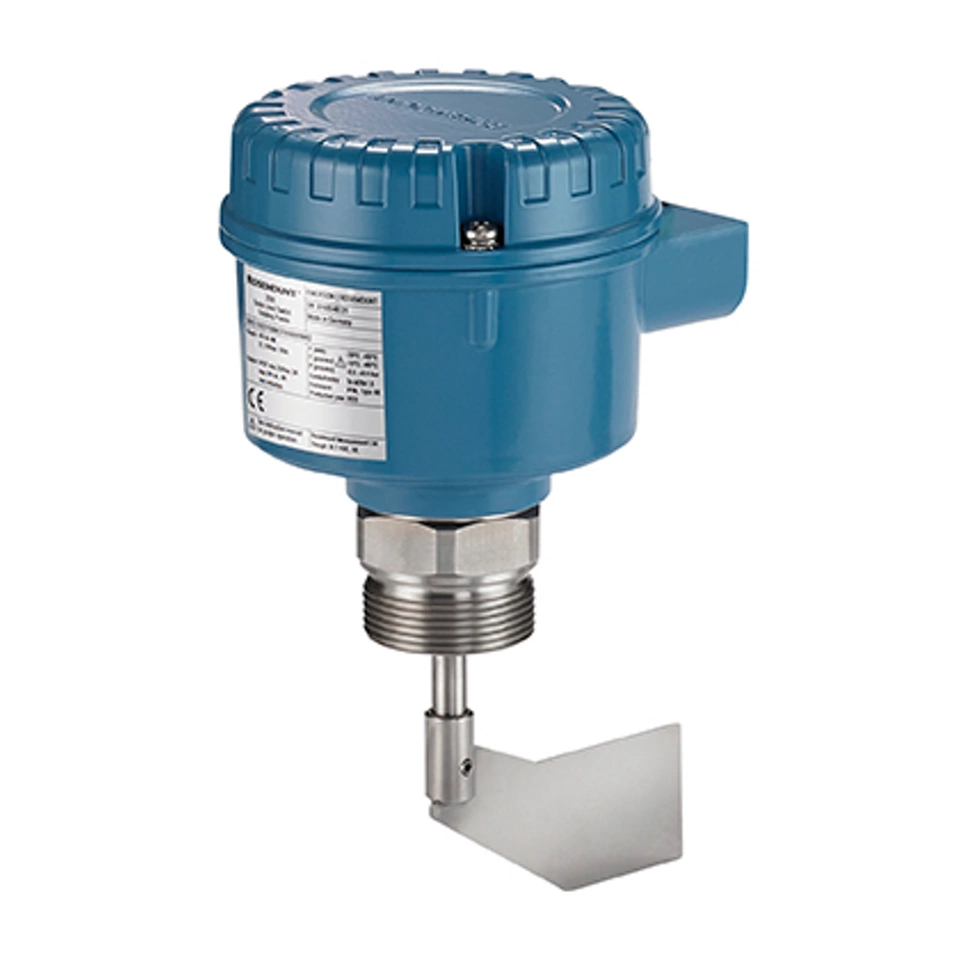
Rotating Paddle Level Switches
Best suited for
- All bulk solids media, from light powders to coarse and heavy particles
- Suitable regardless of particle size
- Minimum density: 0.9 lb/ft³ (15 g/l)
Process specifications
- 2012°F (1100°C)
- 145 psi (10 bar)
Reliability and performance
- Rotating technology suitable even in sticky media or with risks of caking
- Tolerates high mechanical loads
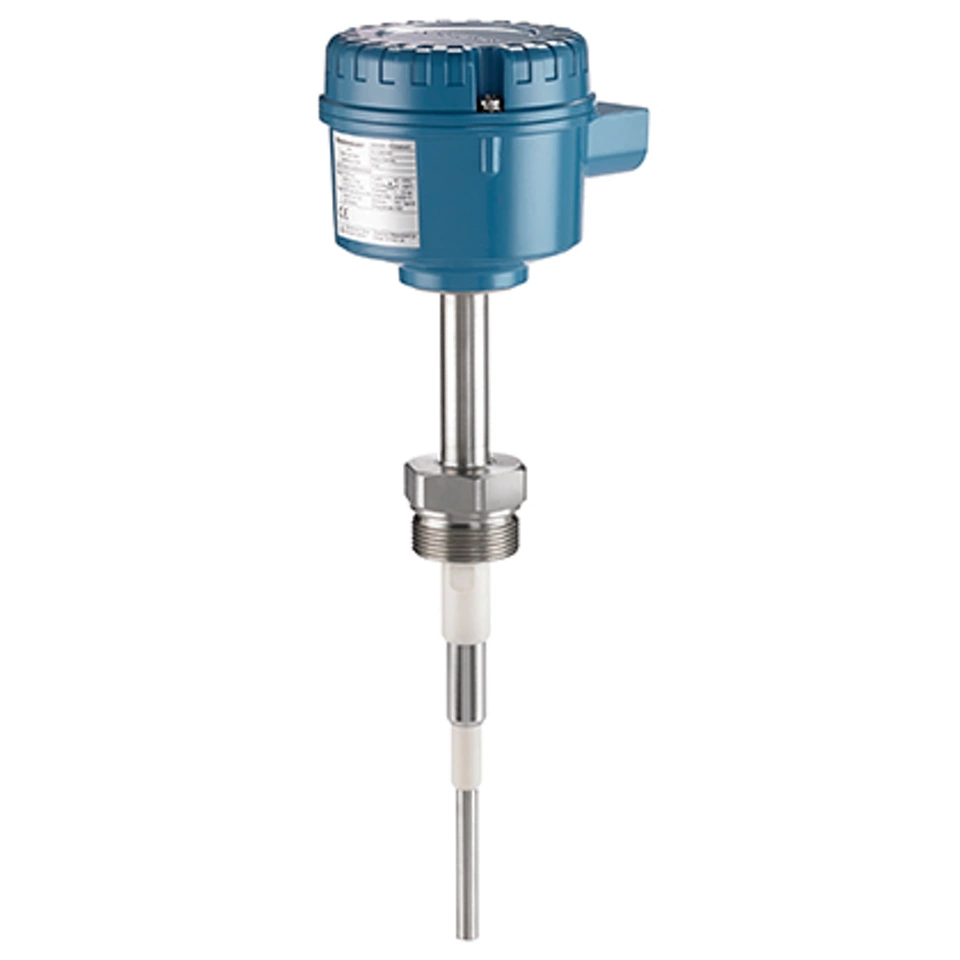
Capacitance Level Switch
Best suited for
- All bulk solids media, from light powders to coarse and heavy particles
- Suitable regardless of particle size
- Detects materials with dielectric constant as low as 1.5
Process specifications
- 932°F (500°C)
- 363 psi (25 bar)
Reliability and performance
- Active Shield Technology prevents media buildup
- Tolerates high mechanical loads
Configuration and diagnostics
- Configurable sensitivity via local operator interface
- Self‑diagnostics with automatic or manual function tests
Hygienic and material options
- Fully PFA‑coated versions for aggressive or adhesive media
- EHEDG approval for hygienic applications
Resources
Frequently Asked Questions
Find answers to the most frequently asked questions about solids level switches
Solids level switches are used for full, demand or empty detection of all kinds of bulk solids. It can be used for overspill prevention in all kinds of storage and process vessels or silos.
A vibronic level switch is driven by a piezo electric crystal which oscillates in its natural frequency when the switch is powered and uncovered by media. When the vibrating fork tines or rod is covered by media the sensor will detect the change in frequency and switch its output signal to covered state. When the media is not covering the fork tines or rod anymore the frequency will change again and thus also the output signal will switch to uncovered state.
The rotating paddle switch is driven by a synchronous motor which rotates a paddle vane at 1 or 5 revolutions per minute. The rotation stops when the vane is hindered by media and hence the output will switch from uncovered to covered state. When the media is removed from the vane, the rotation will resume, and the output signal switches to uncovered.
Capacitive level switches use the principle of measuring capacitance through radio frequency (RF) to detect the presence or absence of solids media. When the materials in the vessel rises and covers the rod, it causes an increase of capacitance which is detected by the sensor and the output signal will switch to covered state. When the media in the vessel falls away from the probe level, it causes a decrease in capacitance and the output switches to uncovered state.
Models like the Rosemount 2501 Rotating Paddle and 2555 Capacitance Probe are designed to be unaffected by dust, caking, or electrostatic buildup. The Rosemount 2555 also features Active Shield Technology to prevent false switching due to material buildup.
Yes, Rosemount level switches are commonly used for both high-level, low-level or demand detection, and can be installed at the top, side, or bottom of vessels depending on the application.
Models like the Rosemount 2555 capacitive probe and 2501 rotary paddle are certified for use in hazardous areas (e.g., ATEX, IECEx, FM) and rated for high temperatures and pressures. They’re built for tough environments with dust, vibration, or extreme conditions.
Selection depends on:
- Material type (fine powder, granules, pellets)
- Flow behavior (free-flowing vs. sticky)
- Installation location (top, side, or angled)
- Environmental conditions (dust, temperature, pressure)
Our selection guides and local experts can help you choose the best-fit model for your process.