
Application Overview
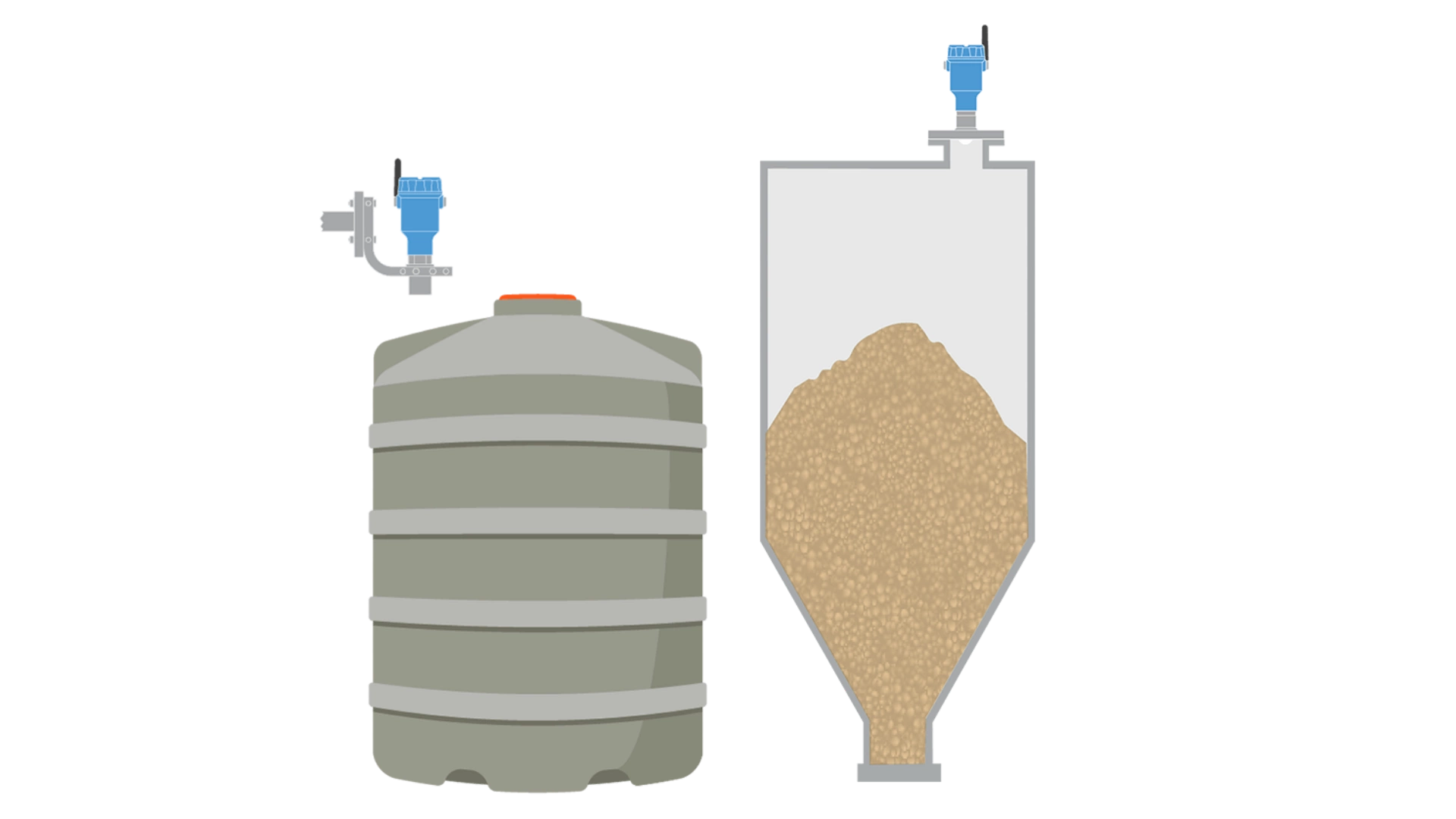
Many tanks, totes, ponds, and storage assets are located in remote or hard-to-access areas where wiring is costly or impractical. Wireless level measurement helps operators improve tank inventory accuracy, reduce manual inventory checks, and maintain visibility of critical assets.
KEY CHALLENGES IN REMOTE STORAGE APPLICATIONS
- Limited visibility into inventory levels
- Manual inspections and data collection
- High cost of running power and signal cables
- Remote or temporary installations
- Risk of stockouts, overfills, or process interruptions
Learn how wireless level measurement helps reduce costs, improve visibility, and optimize operations across industries and applications.
Plastic Chemical Totes and Tanks
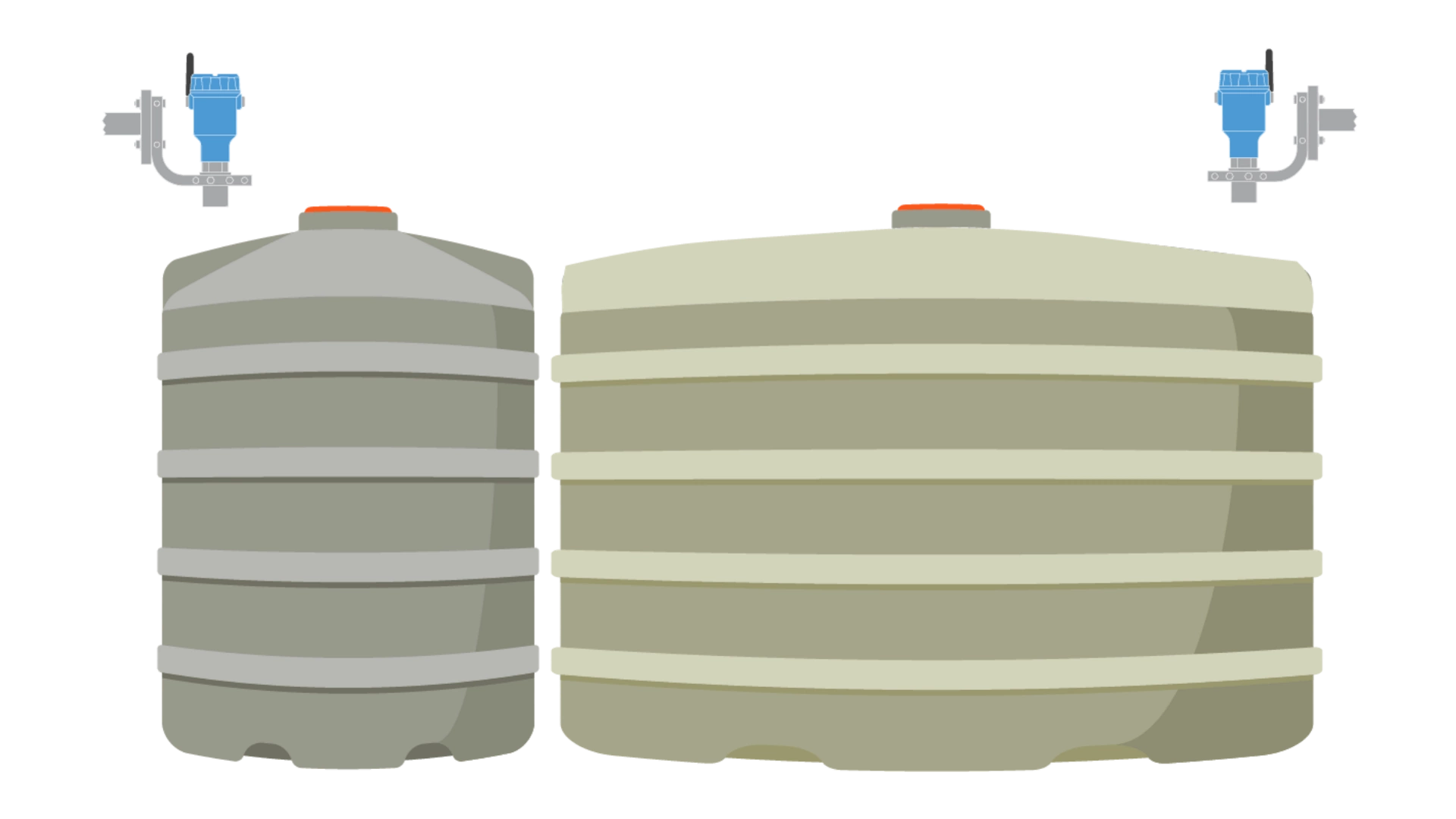
Plastic chemical totes, IBCs, and chemical storage tanks are commonly used to store corrosive chemicals, additives, and raw materials. Many applications have no suitable tank connection and are difficult to wire.
Challenges:
- Corrosive media and compatibility concerns
- Limited inventory visibility
How level measurement helps
- Enables wireless tank level monitoring for inventory
- Reduces manual inventory checks
- Improves replenishment planning
Recommended technologies
- Wireless Non-Contacting Radar: Through-plastic, non-intrusive level measurement.
- Wireless Point Level Detection: High- and low-level alarm protection.

Frequently Asked Questions
Wireless tank level monitoring uses battery-powered level measurement instruments, including continuous level transmitters and point level switches, to provide level data without requiring signal wiring. Using WirelessHART® communication, operators can monitor tanks, ponds, silos, and other assets remotely from a central location, helping reduce the need for manual inspections and windshield trips to remote sites. Wireless solutions are especially valuable where running cables is costly, impractical, or impossible.
Wireless level measurement instruments use WirelessHART® communication and long-life power modules to deliver reliable level data without the need for power or signal wiring. Available technologies include wireless non-contacting radar, wireless guided wave radar, wireless level switches, wireless DP level transmitters, wireless submersible level transmitters, as well as complete systems such as wireless tank gauging or wireless tank monitoring solutions. Benefits include fast commissioning, easy scalability, the flexibility to add or relocate measurement points, reduced installation costs, and eliminating many of the engineering studies, site surveys, approvals, and infrastructure changes typically associated with wired installations.
One of the primary benefits of remote level monitoring is cost reduction. Wireless instruments eliminate many of the expenses associated with wiring, including cabling, engineering work, approvals, site surveys, and installation labor. They also reduce the need for field visits and manual level checks, lowering operating costs while improving safety and productivity.
In existing facilities, wireless level measurement provides a cost-effective way to automate measurements in remote or hard-to-reach locations without additional wiring infrastructure. In new facilities, wireless technologies can help reduce CAPEX by minimizing initial installation costs while preserving the flexibility to add measurement points later without major infrastructure modifications. Wireless solutions also help improve inventory visibility, reduce manual inspections, and support better operational decisions through continuous access to level data.
Wireless level measurement is used across chemical manufacturing, mining, refining, food and beverage, oil and gas, water and wastewater, and many other industries with remote or difficult-to-access assets.
Emerson’s wireless portfolio includes:
- Wireless non-contacting radar level transmitters
- Wireless guided wave radar level transmitters
- Wireless liquid level switches
- Wireless differential pressure (DP) level transmitters
- Wireless submersible level transmitters
- Wireless tank monitoring solutions
- Wireless tank gauging systems for inventory management applications
These technologies support applications ranging from small additive tanks and remote storage assets to large tank farms, terminals, ponds, dams, and inventory management systems.
The best wireless level measurement technology depends on the application requirements. Emerson offers a broad portfolio of wireless solutions designed for different measurement challenges.
- Wireless Non-Contacting Radar: Ideal for liquid and solids storage tanks, open-air applications, ponds, dams, and non-pressurized vessels requiring reliable non-contact measurement.
- Wireless Guided Wave Radar: Recommended for interface measurement, chamber installations, and applications where process conditions require direct guided measurements.
- Wireless Level Switch: Used for high- and low-level alarms, overfill prevention, and pump protection in liquid applications.
- Wireless DP Level Transmitters: Suitable for level measurements in applications such as filters, heat exchangers, pumps, turbines, and compressors.
- Wireless Submersible Level Transmitters: Designed for groundwater monitoring, well level measurement, pond monitoring, and dam level monitoring applications.
- Wireless Tank Monitoring & Tank Gauging Solutions: Recommended for inventory management of large remote tanks, tank terminals, refinery tank farms, pipeline breakout tanks, chemical and specialty chemical storage, additive tanks, edible oils, biofuels, and other bulk liquid storage applications.