
Discover how guided wave radar level measurement delivers reliable performance in challenging applications where process conditions, foam, vapor, or changing product properties can affect accuracy. This section highlights how Rosemount guided wave radar transmitters combine robust measurement principles, advanced signal processing, integrated diagnostics, and flexible installation options to support reliable operation across a wide range of level applications.
Increase Uptime with Guided Wave Radar Level Sensors
The Rosemount guided wave radar level transmitter portfolio delivers reliable level and interface measurement across a wide range of industries and applications. Based on time‑domain reflectometry (TDR), these guided radar level transmitters provide consistent performance despite foam, vapor, buildup, or changing process conditions, helping reduce maintenance, improve safety, and increase uptime.
Products
ROSEMOUNT GUIDED WAVE RADARS
Improve confidence and reduce maintenance with Guided Radar Level Transmitters
What is a Guided Wave Radar Level Transmitter?
A guided wave radar level transmitter, also known as a GWR level transmitter or TDR level transmitter, measures level using time‑domain reflectometry. Radar pulses are guided along a probe and reflected back from the product surface or interface.
This proven guided radar measurement principle delivers accurate, reliable level and interface measurement for liquids, solids, and challenging applications involving foam, buildup, vapor, or changing density, helping improve safety and process performance across industries.
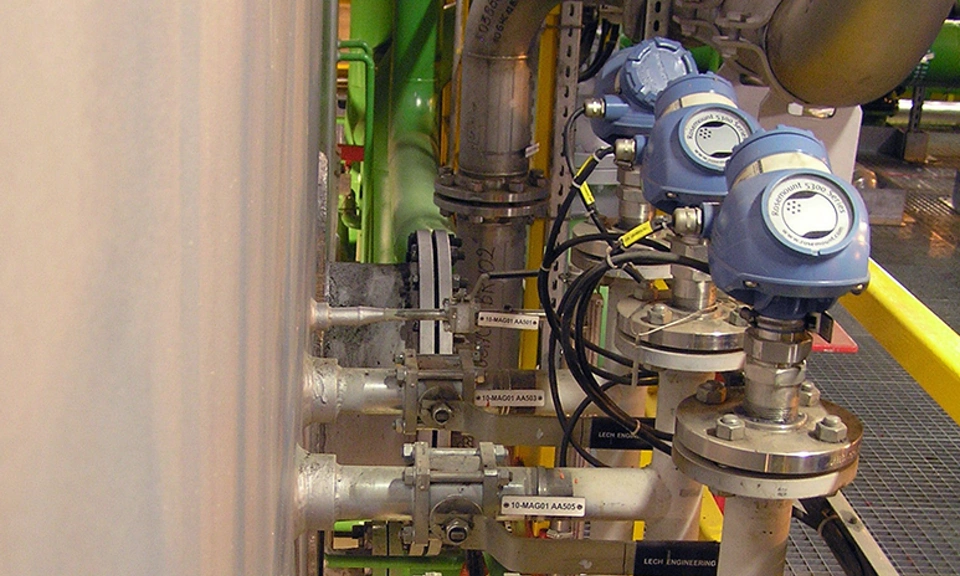
Guided Wave Radar Comparison
Learn more about the unique features of each Rosemount Guided Wave Radar Level Transmitters
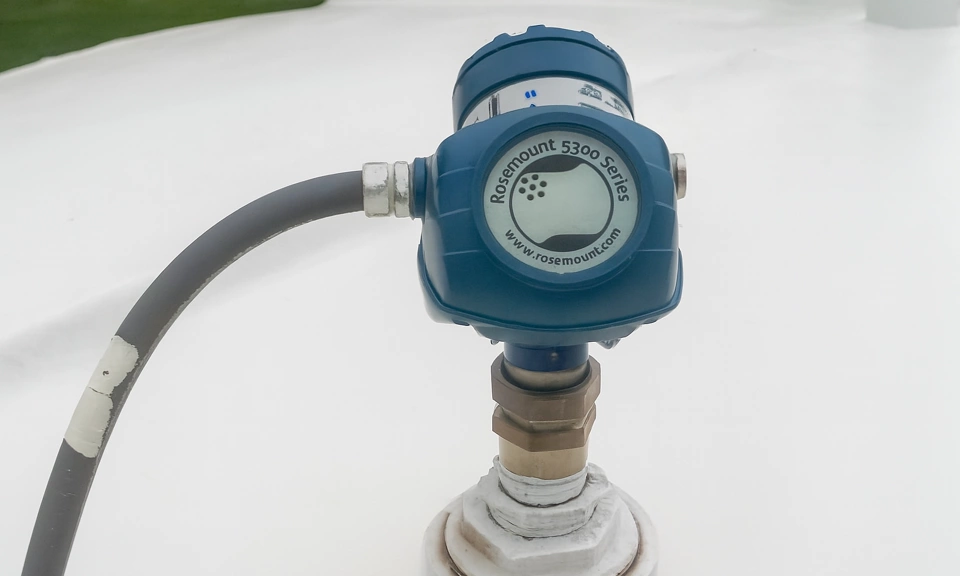
Rosemount 5300 Guided Wave Radar
The Rosemount 5300 is ideal for level measurement in challenging applications with liquids, slurries, solids or interface, offering reliability and safety features to help improve process efficiency and optimize your plant’s performance.
Measurement Accuracy: ± 0.12 in. (3 mm)
Process Temperature: -320 to 752 °F (-196 to 400 °C)
Pressure Limits: Full vacuum to 5000 psi (Full vacuum to 345 bar)
Advanced Features: Direct Switch Technology, Signal Quality Metrics, Probe End Projection, Verification reflector SIL 2 IEC 61508 certification
Probe Types: Rigid single lead, Segmented single lead, Flexible single lead, Rigid twin lead, Coaxial and large coaxial, PTFE coated probes, Vapor probe
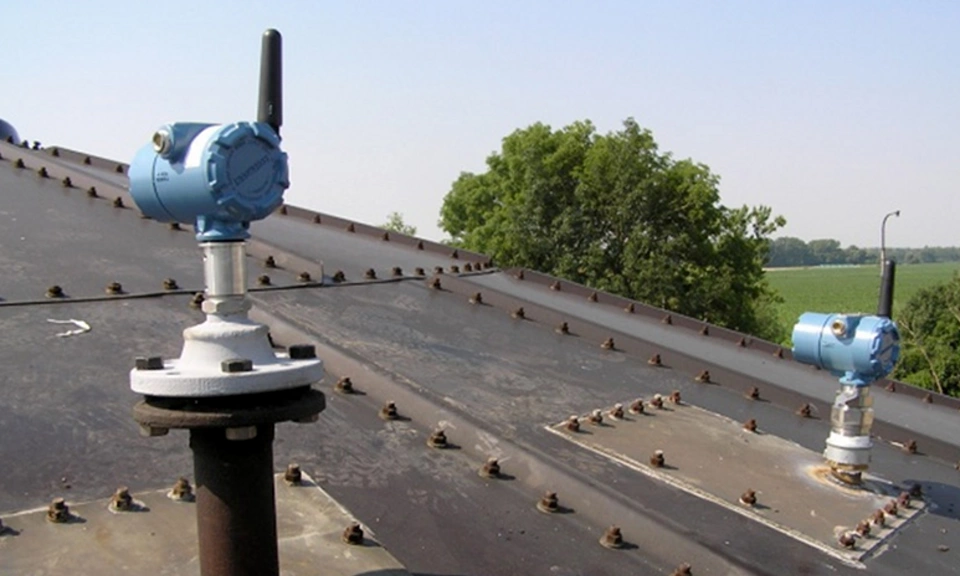
Rosemount 3308 Wireless Level Transmitter
The Rosemount 3308 offers easy automation of level and interface measurements in previously inaccessible locations. It offers easy installation without wires, no calibration and it’s immune to changing process conditions.
Measurement Accuracy: ± 0.12 in. (3 mm)
Process Temperature: -40 to 302°F (-40 to 150°C)
Pressure Limits: Full vacuum to 580 psi (Full vacuum to 40 bar)
Advanced Features: Direct Switch Technology, Signal Quality Metrics, Native Wireless Technology
Probe Types: Rigid single lead, Segmented single lead, Flexible single lead, Coaxial, PTFE coated probes
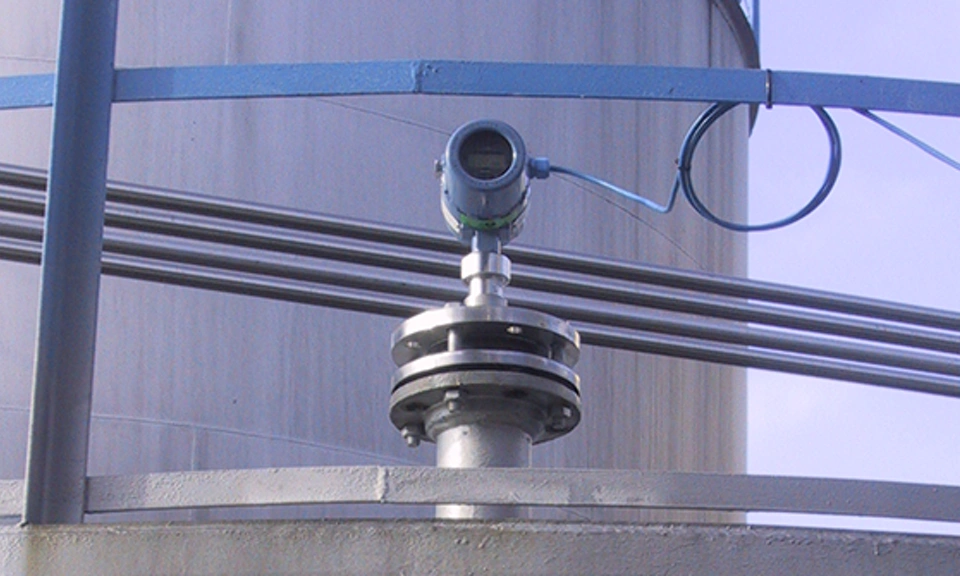
Rosemount 3300 Guided Wave Radar
The Rosemount 3300 provides a reliable and cost effective solution for liquid applications. The Rosemount 3300 has no moving parts, needs no calibration, and is virtually unaffected by process conditions.
Measurement Accuracy: ± ± 0.2 in. (5 mm)
Process Temperature: -40 to 302°F (-40 to 150°C)
Pressure Limits: Full vacuum to 580 psi (Full vacuum to 40 bar)
Probe Types: Rigid single lead, Segmented single lead, Flexible single lead, Coaxial, PTFE coated probes
Product Applications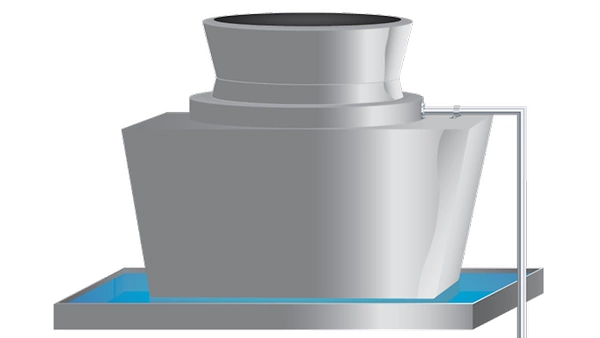
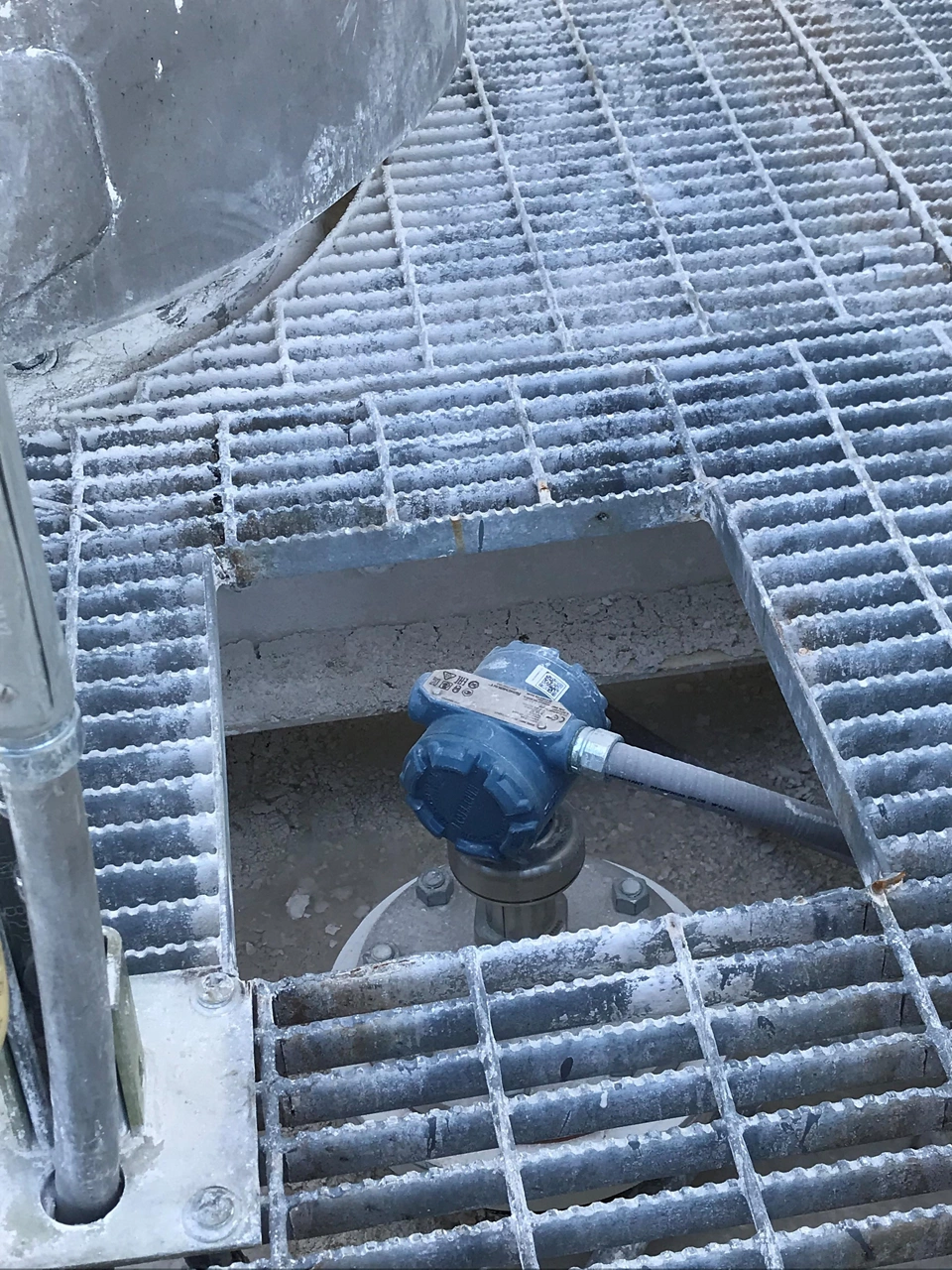
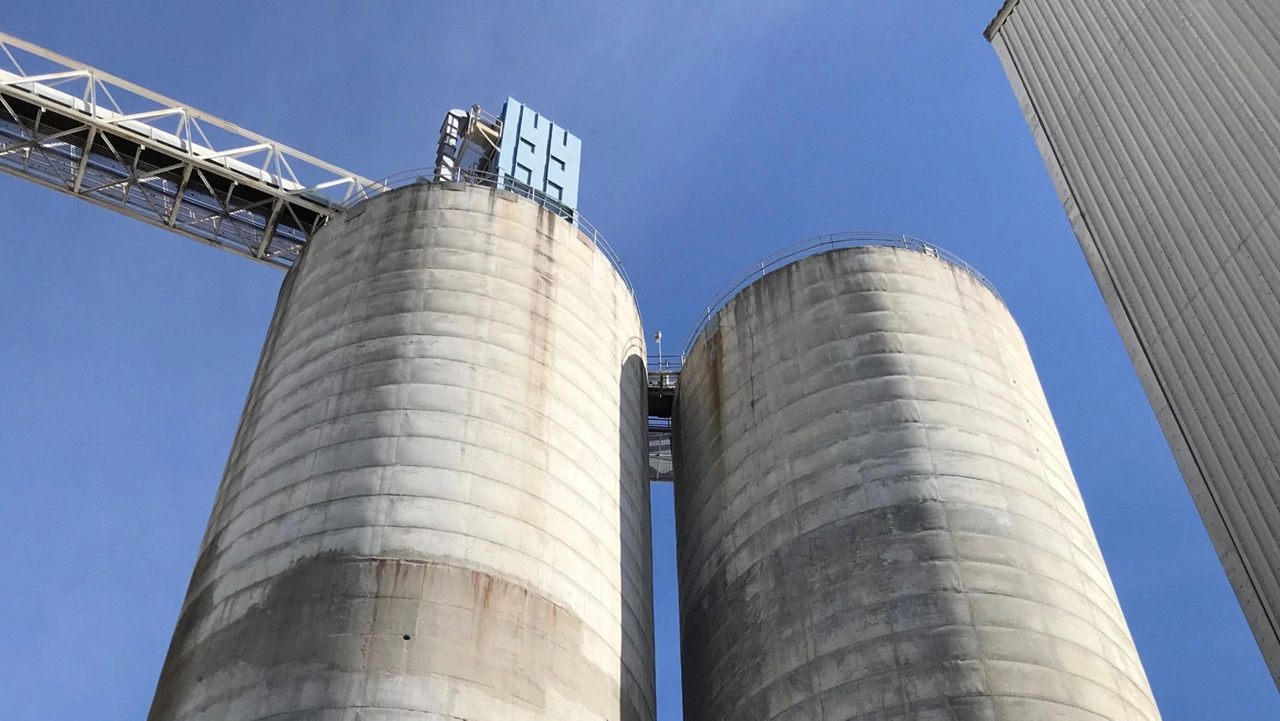
Product Applications
Power
Oil & Gas
Data Centers
Downstream Hydrocarbons
Chemical
Mining & Minerals & Metals
Food and Beverage
Power
Level Measurement in Cooling Tower Basins
Level Measurement in Steam Drums
Level Measurement in Saturated Steam Applications
Level Measurement in Fly Ash Silos at Coal-Fired Power Plants
Level Measurement in PAC Silos at Coal-Fired Power Plants
Level Measurement in Lime Silos at Coal-Fired Power Plants
Level Measurement of Raw Coal Piles at Coal-Fired Power Plants
Level Measurement in Gypsum Bins at Coal-Fired Power Plants
Level Measurement for Stacker Positioning at Coal-Fired Power Plants
Level Measurement in ESP Hoppers at Coal-Fired Power Plants
Level Measurement in Coal Hoppers at Coal-Fired Power Plants
Level Measurement in Salt Bins for Coal-Fired Power Plants
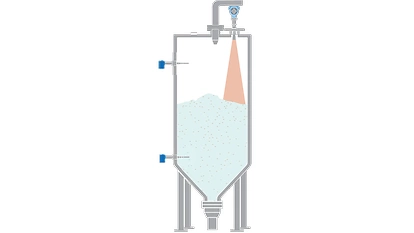
Solids Level Detection in Wood Gasifier Reactor
Frequently Asked Questions
Find answers to the most frequently asked questions about guided wave radar transmitters:
The principle of operation for guided wave radar is based on Time Domain Reflectometry technology, which means that the transmitter sends out radar pulses. The actual level measurement is a function of the time taken from when the electromagnetic signal is emitted to the time at which the echo from the media is received.
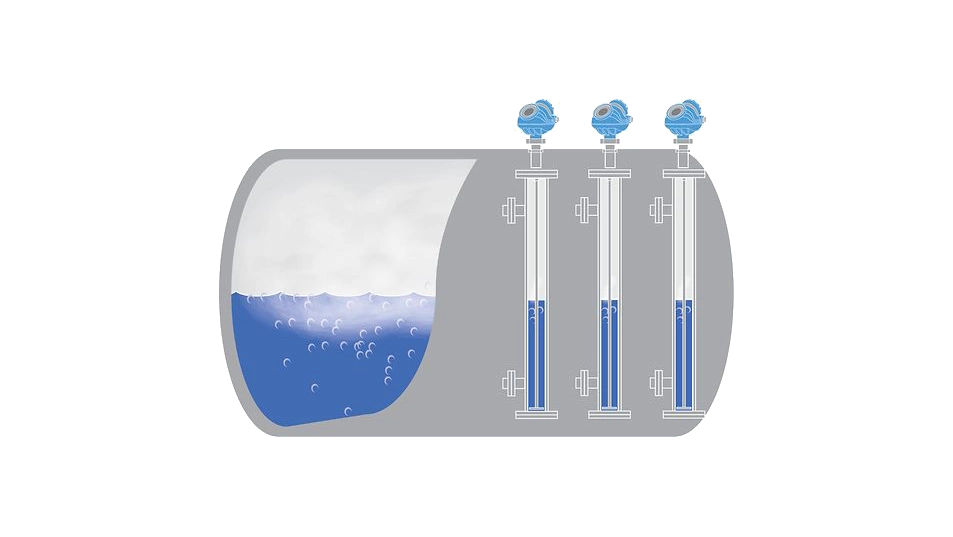
Guided wave radar is a preferable choice for the majority of challenging chamber applications and processes where there is a need to measure level interface and/or level as well. Applications such as lube oil feed tanks, different types of separators, columns, trays, and boiler drums can benefit from guided wave radar technology.
Do guided wave radars need calibration?
Rosemount guided wave radar do not have any moving parts, so there is no need for calibration or compensation for changing process conditions such as density for displacers or conductivity, viscosity, pH, temperature, and pressure for other level measurement techniques. The benefits of this for a customer are:
- Elimination of unplanned shutdowns
- Risks reduction
- Maintenance cost reductions
Guided wave radar transmitters can be tested by performing a full or partial proof test from the control room. These tests simulate a process condition to trigger a high-level alarm and checks if the signal is correctly received by the host system.
Guided Wave Radar (GWR) uses contacting measurement, where part of the measurement system is in direct contact with thecontents in the vessel. In a guided wave radar installations, the guided wave radar is mounted on the top of the tank or chamber,and the probe usually extends to the full depth of the vessel.
Advantages of guided wave radars:
- Accurate and reliable measurement for both level and interface
- Can be used with liquids, sludges, slurries, and some solids.
- Not affected by changes in pressure, temperature, and most vapor space conditions
- No moving parts, so maintenance is minimal.
Limitations of guided wave radars:
- Mounting restrictions influence the probe choice
- Should not be in direct contact with a metallic object, as that will impact the signal
- Should never be used in cases where the probe might interfere with the process (i.e. agitators, pumps, hopper outlets)
Non-Contact Radar (NCR) uses non-contacting measurement, and no part of the measurement system directly contacts the contents of the vessel.
Advantages of non-contacting radars:
- Accurate and reliable measurement
- Can be used with liquids, sludges, slurries, and solids
- Not affected by changes in pressure, temperature, and most vapor space conditions
- No moving parts, so maintenance is minimal.
Limitations of non-contacting radars:
- Obstructions in the tank, such as pipes, strengthening bars, and agitators can cause false echoes, but Rosemount Non-Contacting radar level transmitters feature Smart Echo Supervision™, which automatically suppresses the false echoes generated by internal obstructions.
- Non-contacting radar gauges can handle agitation, but their success will depend on a combination of the fluid properties and the amount of turbulence.
- Dielectric constant (DC) of the medium and the surface conditions will impact the measurement.
- The measurement may be influenced by the presence of foam.
The probe is a waveguide and a vital component of a guided wave radar transmitter. It directs microwave pulses from the transmitter down to the surface of the process medium and guides the reflected signal back. Acting as a transmission line, the probe ensures accurate signal propagation and strong echo return, even in demanding process conditions. Emerson offers a large variety of probe designs to match different application requirements. Some of the common ones are:
- Coaxial – Ideal for clean liquids in short to medium range applications where high signal strength and accuracy are needed, especially in bypass chambers.
- Large Coaxial – Can be used in most applications, where space allows. With this probe there is no upper blind zone.
- Rigid single lead – For shorter chambers and low dielectric/interface applications.
- Flexible single lead - For tall tanks and tanks with limited head room.
- Segmented single lead - For tall chambers and pipes up to 10m (32 ft.) and installations with limited headroom. Best for applications with limited head space and narrow installations such as small still pipes.
GWR technology can accurately detect the interface between two immiscible liquids, such as oil and water, by analyzing how microwave pulses reflect at different dielectric boundaries.
- First reflection: The first reflection occurs at the surface of the upper liquid (typically with a lower dielectric constant).
- Second reflection: The remaining energy continues down the probe and reflects again at the interface with the lower liquid (which has a higher dielectric constant).
By identifying both reflections, the transmitter calculates the distance to both the upper surface and the interface level.
The dielectric constant (relative permittivity) indicates a material’s ability to store electrical energy in an electric field. In level measurement, it determines how strongly a material reflects microwave signals. Materials with higher dielectric constants (e.g., water at ~80) produce stronger reflections, while those with lower values (e.g., oil at ~2) reflect less energy. Emerson’s high-sensitivity Guided Wave Radar transmitters are engineered to reliably measure even low-dielectric media, down to 1.2, ensuring accurate performance in challenging applications.
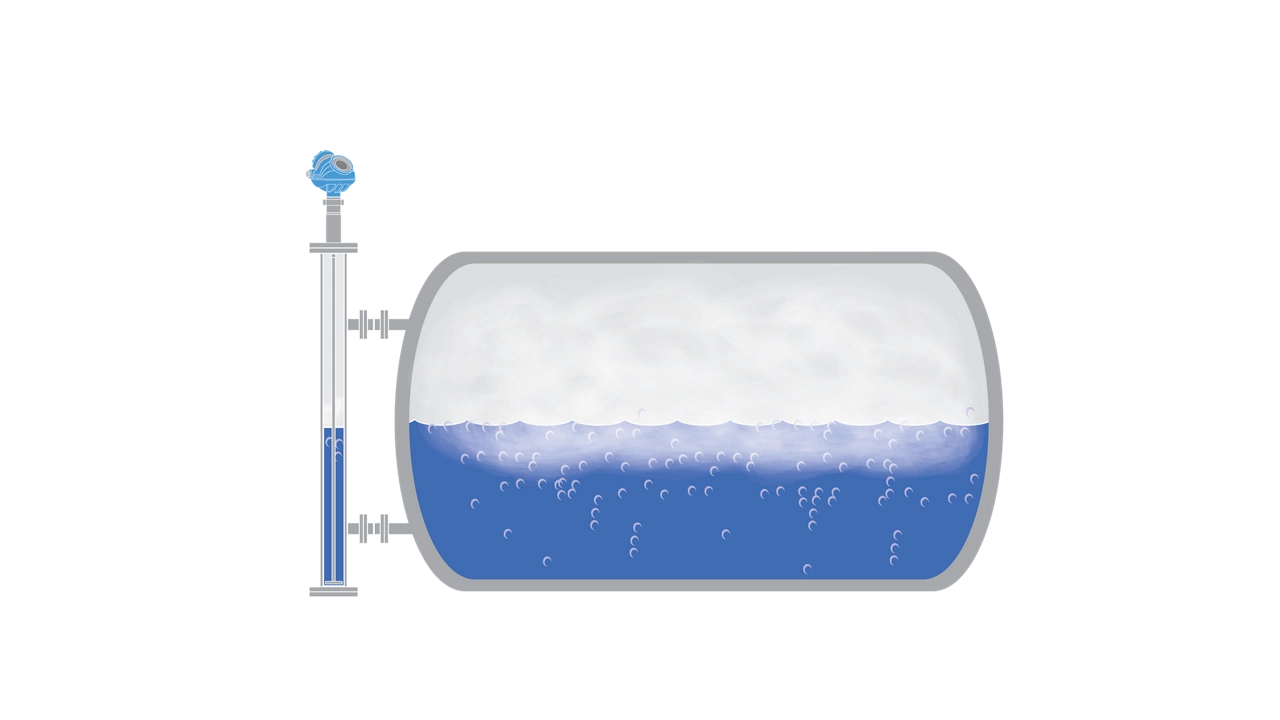
Guided Wave Radar is well-suited for applications involving foam. In many cases, the radar pulse can penetrate light to moderate foam layers and accurately detect the true liquid level beneath. However, very dense or heavy foams with high dielectric properties may cause partial reflection, potentially leading to measurement inaccuracies.
Emerson’s advanced signal processing helps mitigate these effects, improving reliability in foamy conditions.
There is no difference. GWR level transmitters and TDR level transmitters refer to the same technology (time-domain reflectometry).
Use a guided wave radar level sensor when applications involve foam, vapor, changing density, or extreme process conditions
Yes. Guided radar is ideal for interface measurement due to its ability to detect changes in dielectric constant between media