


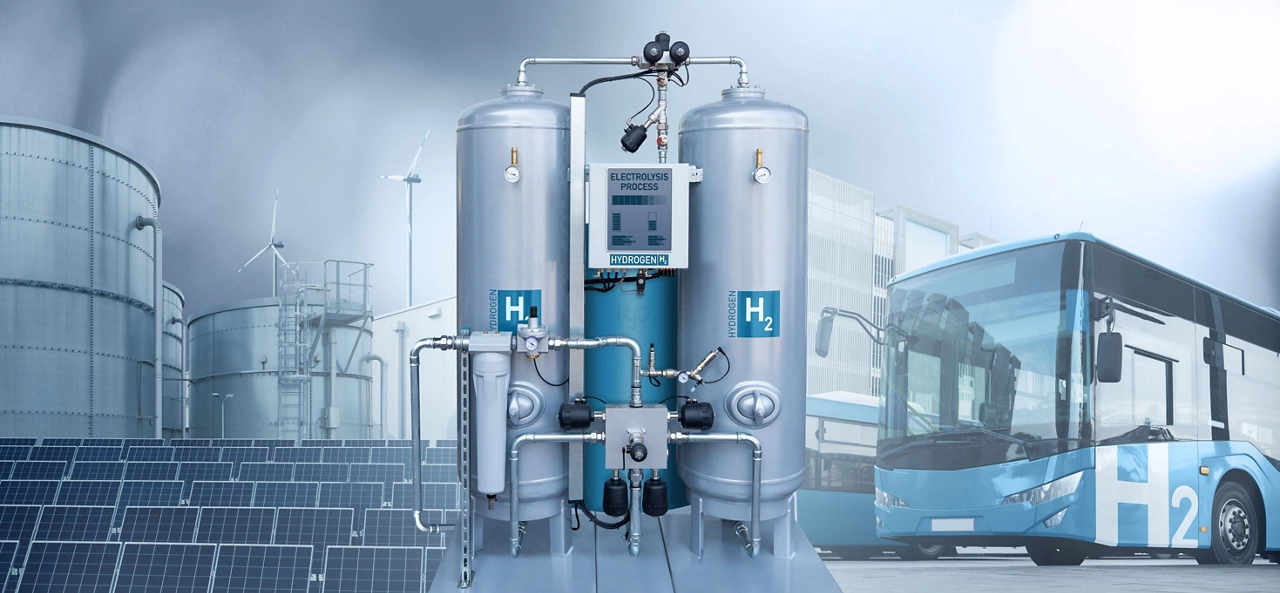
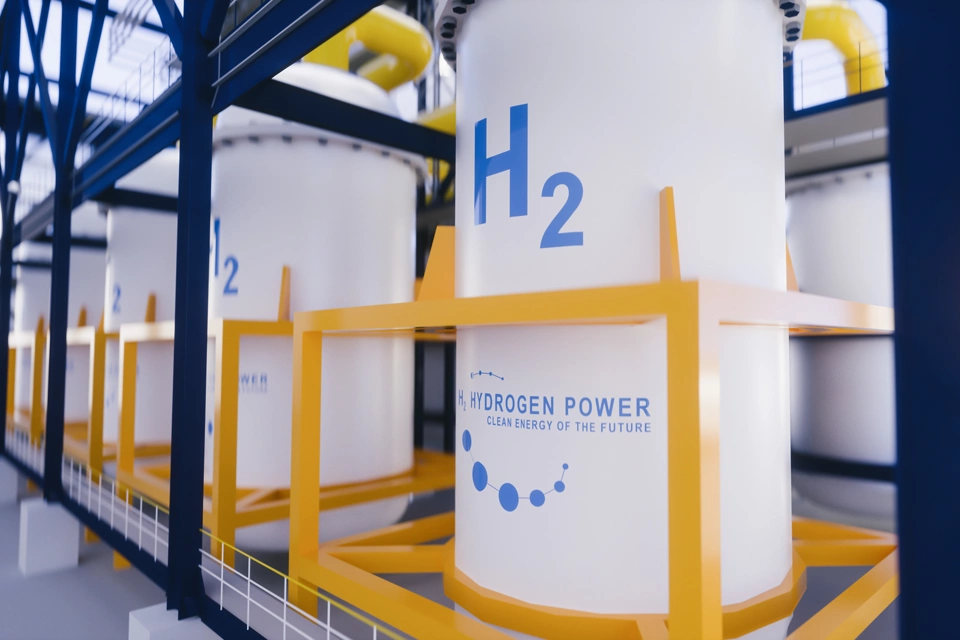
Optimize Electrolyzer Performance Across the Lifecycle
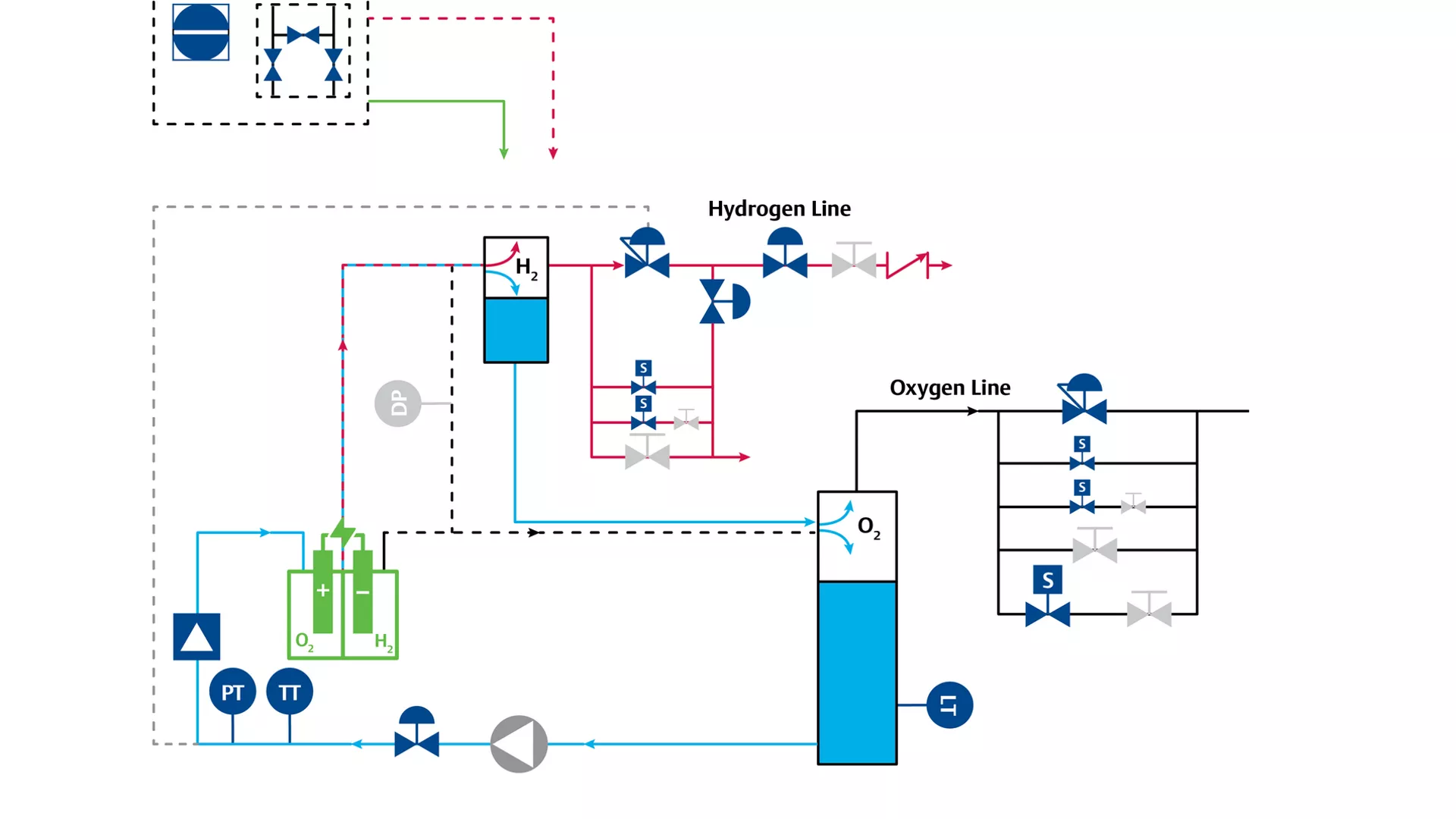
From process control and flow management to safety compliance and leak detection, electrolysis systems require coordinated, high-performance technologies. Real-time diagnostics, fugitive emissions reduction, and energy monitoring tools help operators manage complex variables, reduce operational costs, and ensure compliance across hydrogen production processes.
Hydrogen Electrolysis Solutions in Action
Whether deploying containerized units or multi-megawatt plants, hydrogen producers rely on scalable systems that deliver performance and reliability. Flow, pressure, and temperature control are essential to maintaining safe reaction environments. Integrated platforms enhance visibility while supporting regulatory compliance and asset longevity.
Improve Safety and Process Stability
Hydrogen electrolyzer production requires scalable designs and capacity to respond to market demand. Manufacturers must execute projects on-time, on-budget with low complexity, as well as operate safely, reliably, and profitably using the most advanced technologies.


Business Groups in Hydrogen Electrolysis
Hydrogen electrolysis involves complex chemical reactions, thermal management, and safety controls. Our portfolio of technologies spans all core functions — from edge computing and flow measurement to advanced valve actuation and energy efficiency. Discover how each business group brings essential value to your process.
Discrete Automation
Final Control
Measurement Instrumentation
Solution-Related Documents for Hydrogen Electrolysis
Access valuable content supporting your hydrogen production goals
Explore key resources offering insights and best practices to optimize hydrogen electrolysis processes. Leverage Emerson’s expertise to enhance efficiency and support your hydrogen production goals.
Frequently Asked Questions (FAQs)
Explore common questions about electrolyzer efficiency, water purity, and system integration. Learn how Emerson technologies help improve process control, reduce energy consumption, and support scalable, cost-effective hydrogen production.
Hydrogen is used in the manufacture of two important chemical compounds, ammonia and methanol. Therefore, hydrogen is considered a building block to fertilizer made from ammonia and polymers made from methanol.
No. Millions of tons of hydrogen are used in the industry, but not all hydrogen produced today can be considered carbon neutral. Blue and green hydrogen are the two key low-CO2 alternatives and they could replace carbon-intensive grey hydrogen, which represents 95% of the hydrogen production today.
Automation technologies increase the capacity, reliability, and efficiency of electrolyzers -- and with them the potential of a green hydrogen economy -- in several ways, from handling fluctuating power loads to measuring and controlling water flow with greater precision to using digital analytics for energy management applications. Automation can also improve safety, equipment lifespan and regulatory compliance while lowering materials and workforce costs.
Hydrogen is not only a key enabler to become net-zero for the industry, but also an important opportunity for chemical companies to generate new sustainable revenue streams. Chemical companies can leverage their strong global assets, interlinked supply chains, existing sales and distribution, and hands-on engineering knowledge to shift to a more sustainable portfolio using cleaner and more sustainable resources.