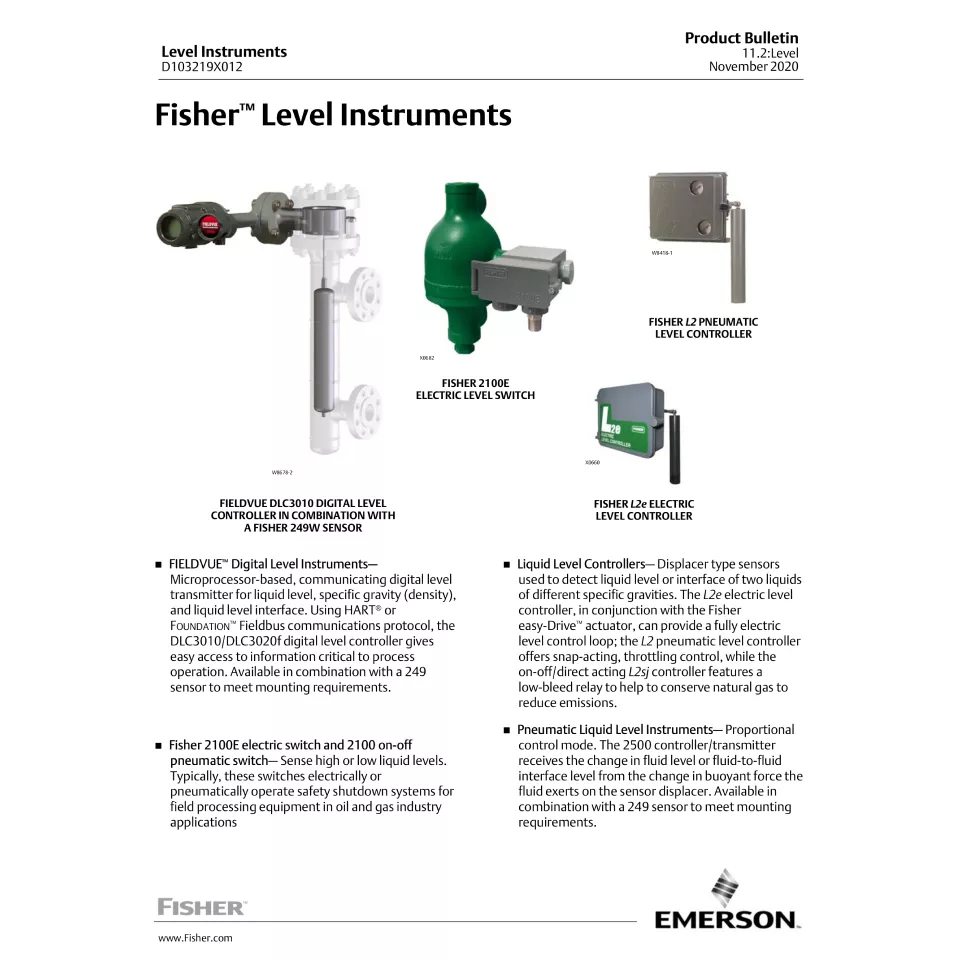


What is a Level Controller?
A level controller is an instrument that uses analog, digital, or pneumatic signals to measure, sense, or control liquid level, liquid level interface, or specific gravity (density) within a vessel.
Achieve dependable and accurate control using Emerson’s extensive selection of Fisher™ level controllers.
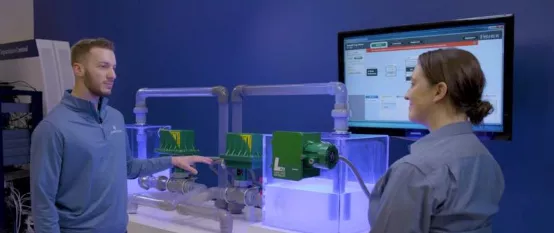
Level Controller Sensing Types
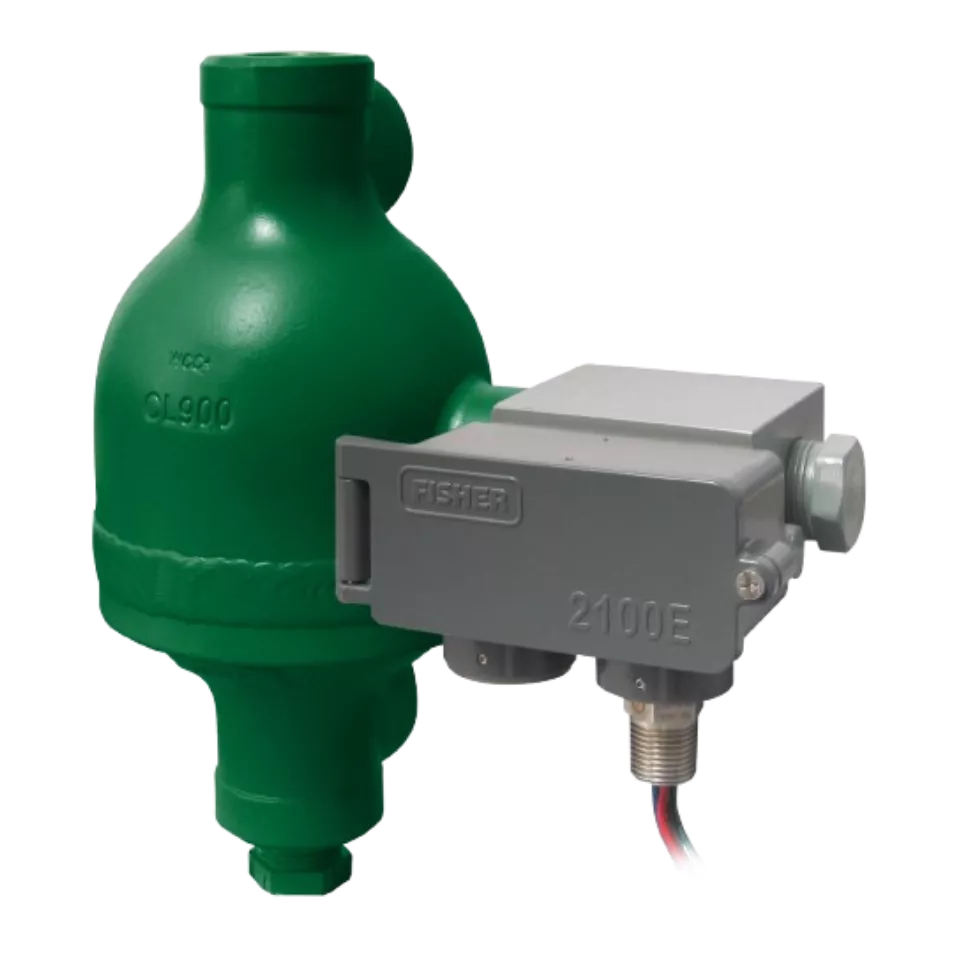
Float-style Level Sensing
Float-style level sensing uses a floating device that rises and falls with the liquid surface. The float is linked to a sensor or switch that provides feedback to a controller.
Float-style level sensing is available only in snap-acting (on/off) or gap control. Signal types of switch (on/off) or pneumatic switch (on/off) are available.
An example of a float-style level controller is the Fisher 2100e electric liquid level switch.
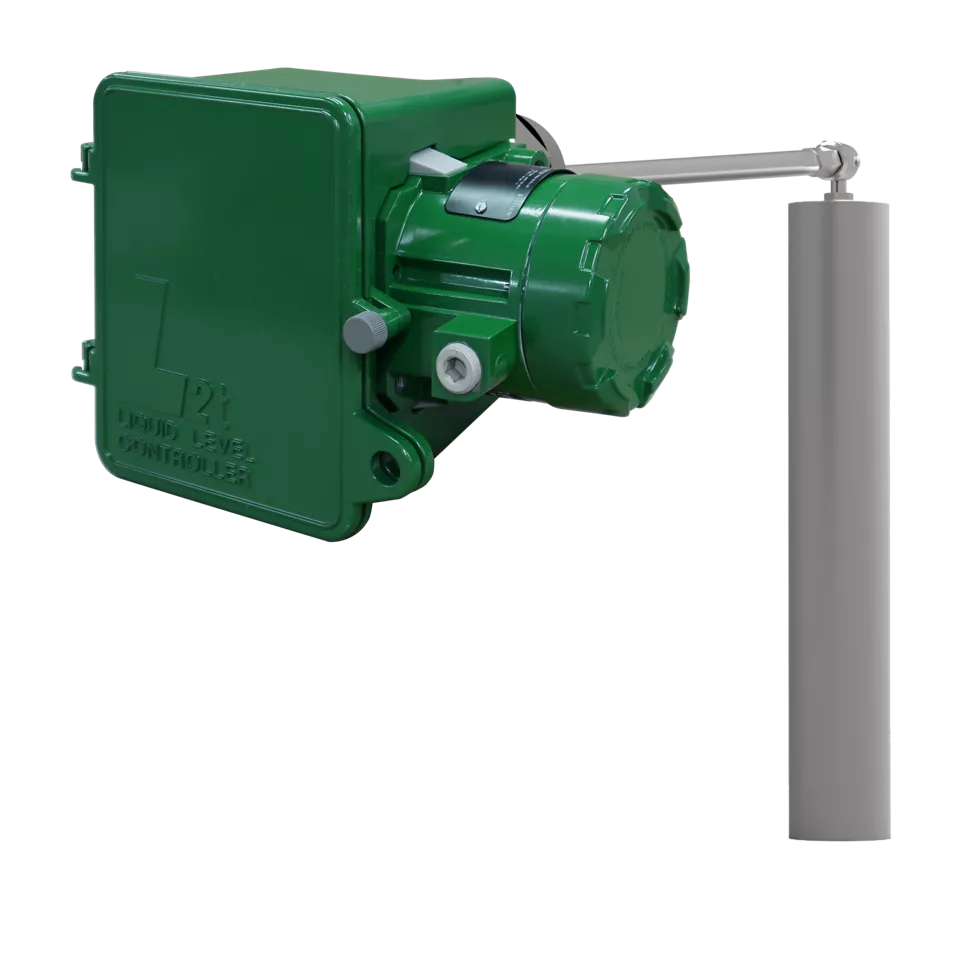
Displacer-style Level Sensing
Displacer-style level sensing uses a solid cylinder suspended in a liquid. As the liquid raises the buoyant force acting on the displacer increases, causing a change in force on the displacer’s suspension mechanism (often a spring or torque tube). The controller / transmitter detects this change and converts it into a level signal.
Displacer-style level sensing is available in throttling control in addition to snap-acting (on/off) and gap control. Three different signal types are available, including: digital, analog, or pneumatic.
An example of a displacer-style level controller is the Fisher L2t liquid level controller.