

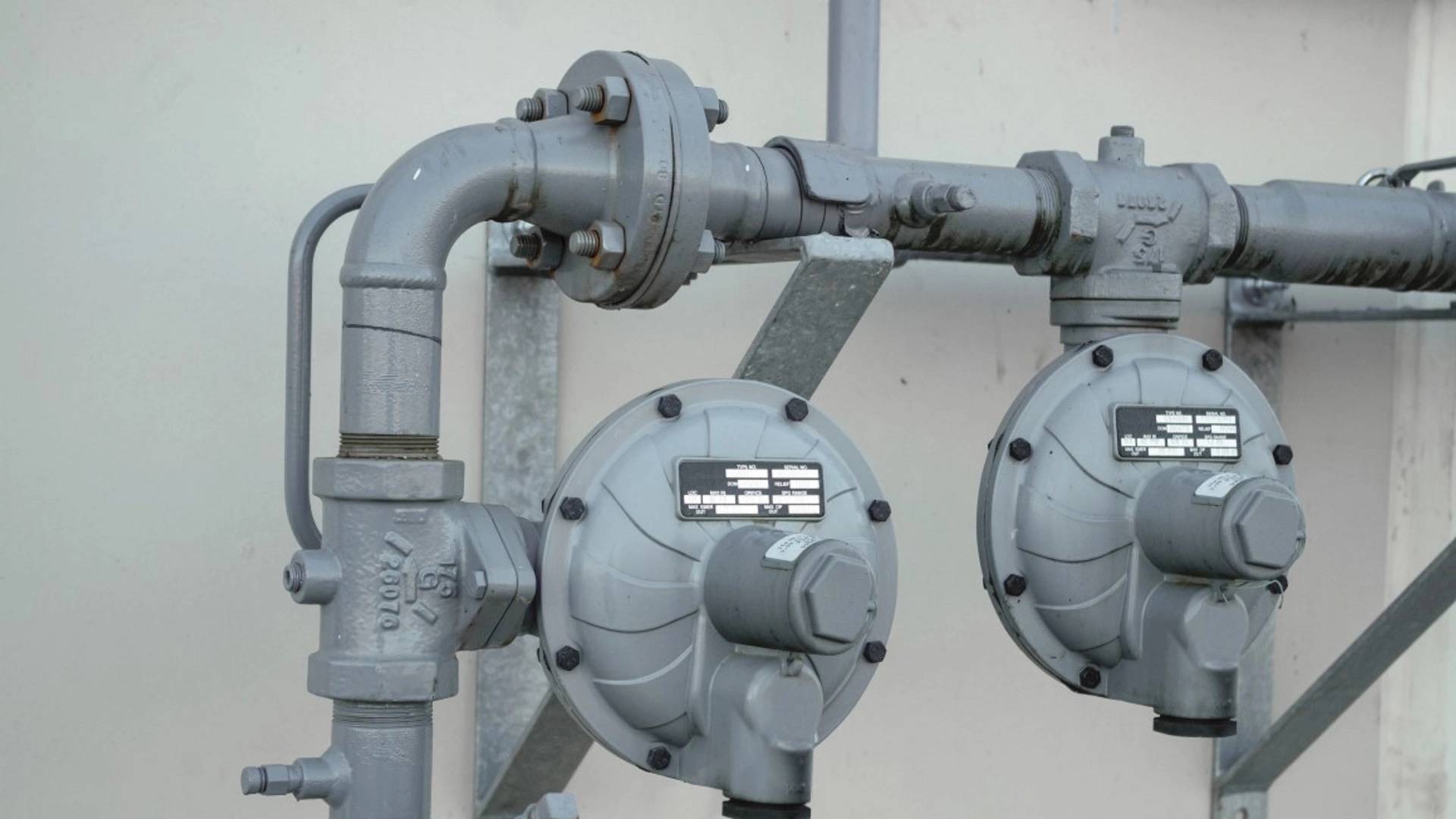
What is a Propane Regulator?
A Propane Regulator is a pressure reducing regulator used specifically for service with propane gas (LPG, LP-Gas). Pressure reducing regulators, also known as pressure reducing valves, are mechanical devices which achieve automated pressure control without an external power source. Pressure reducing regulators reduce a high, often variable upstream pressure to a lower steady outlet pressure despite varying flow demand from the equipment it is supplying. To match this demand, the pressure reducing regulator valve throttles, allowing more flow when demand increases and choking off the flow when demand decreases.
Frequently Asked Questions for LPG Regulators
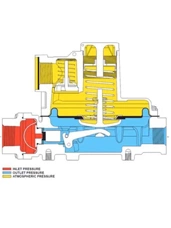
Spring-loaded or direct-operated regulators balance spring force with outlet pressure via a diaphragm to control regulator. It is known for its simplicity and cost-effectiveness.
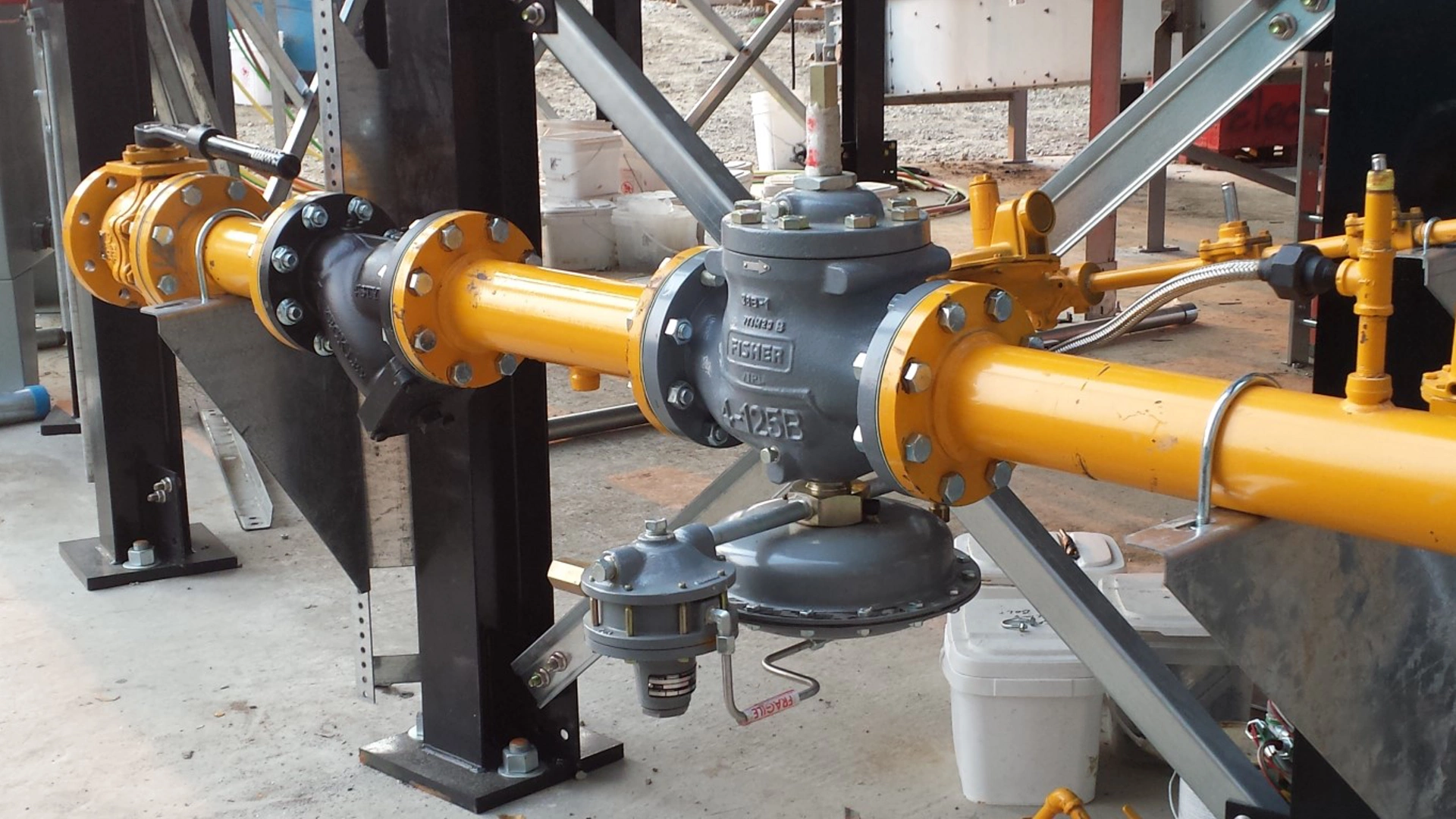
A pilot-operated regulator amplifies slight changes in outlet pressure to the main valve, offering larger flow capability and maintaining outlet pressure closer to the setpoint.
Pilot-operated regulators are inherently more accurate and handle higher flow capacities than direct-operated regulators. They are more sensitive, with the ability to flow more gas for a given change in downstream pressure. Pilot-operated regulators tend to offer larger valve body sizes as direct-operated regulators are aimed to be simple, robust and cost-effective.
The fundamental 3 attributes to consider are:
- Inlet pressure
- Outlet/control pressure
- Downstream flow capacity required
Secondary attributes include but are not limited to:
- Valve body size
- Material selection
- Accuracy requirements