


Why are Molecular Sieve Valves Essential for Your Dehydration Processes?
Molecular sieve valves control the flow of gas throughout the dehydration process, switching between the adsorption and regeneration phases. These valves are critical for efficient operations and require proven technology to effectively perform with frequent cycling, thermal variations, high temperatures and erosive dust. In the harsh conditions valves require high reliability, tight bidirectional shutoff, and low emissions.

Consult a Molecular Sieve Valve Expert

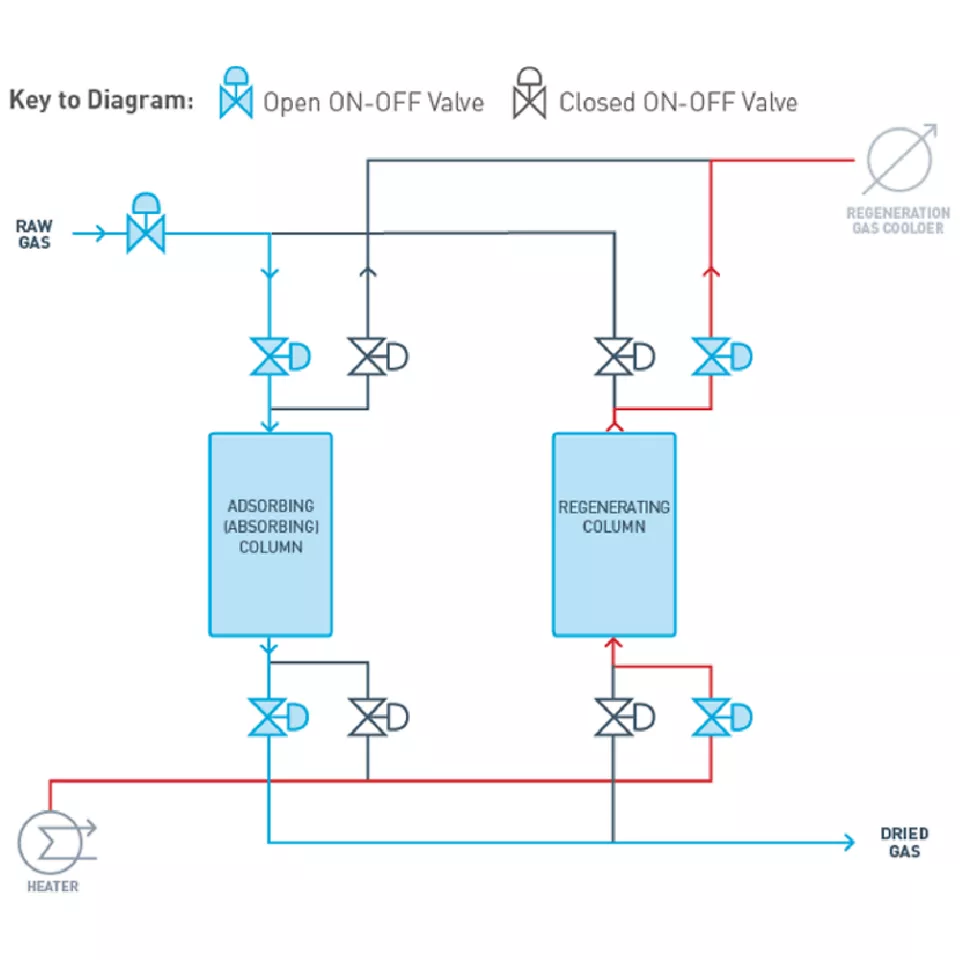
Molecular Sieve Process
The process consists in multiple vessels operating in parallel and has three primary stages:
The gas is passed through a vessel containing desiccant material.
Before reaching saturation, the process transitions to regeneration. The vessel is isolated and heated to remove water and impurities. The process gas is directed to an adjacent vessel.
The vessel then undergoes a cooling phase. Once cooling is complete, gas flow is reintroduced to the vessel, while the adjacent vessel is isolated and begins its regeneration sequence.
Molecular Sieve Valve Application Challenges

Frequent Cycling
Frequent cycling of valves, where the regeneration cycle occurs from 1 to 8 times per day, can lead to quicker wear due to the increased frequency of operation.
The more often a valve cycles, the faster it deteriorates.
What does a superior molecular sieve valve look like?

Innovative valve solution
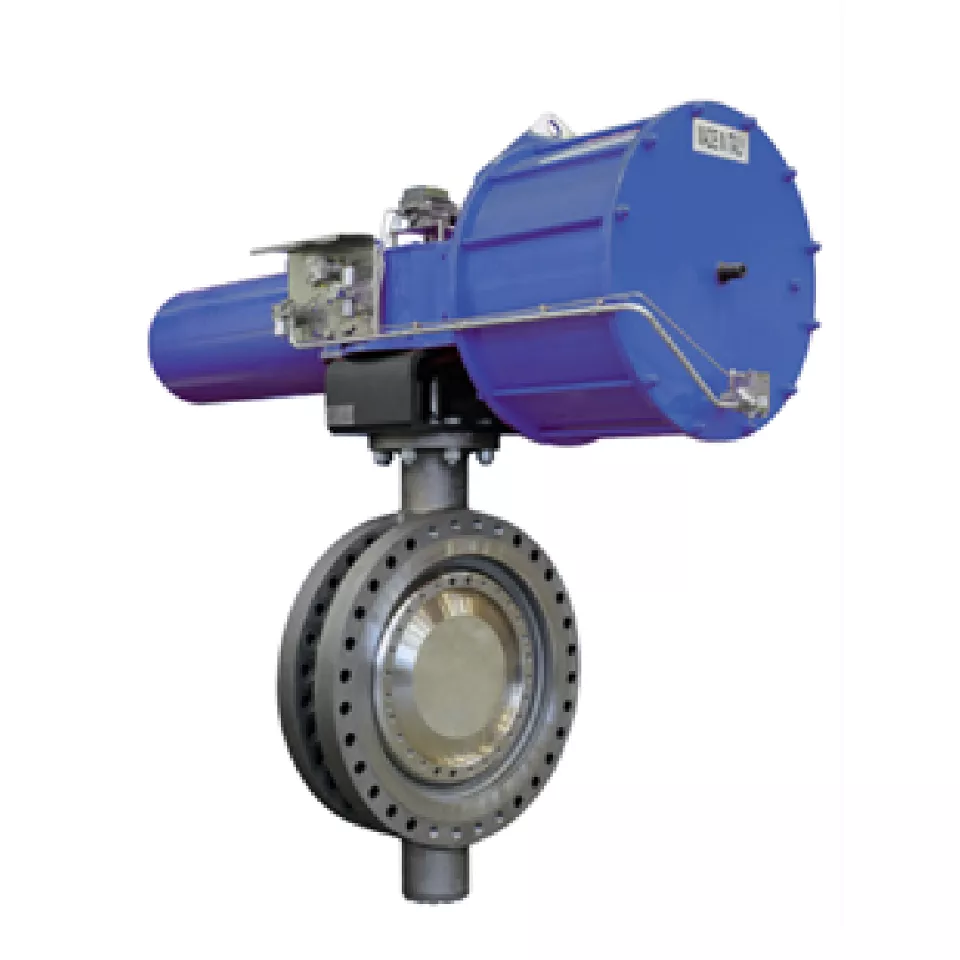
Triple offset valves (TOVs) represent an advanced solution for molecular sieving due to their design and ability to handle extreme conditions.

Triple offset design
Optimized seating angles and rotational characteristics guarantee superior tightness via an ingenious combination of the triple offset design and a flexible metal seal ring across all configurations.

Quarter turn rotation
Triple offset valves (TOVs) rotational features translate into lower footprint and weight, improved operability, reduced fugitive emissions and a longer valve life.

Robust but flexible seal ring
The metal seal ring resiliency allows for a uniform distribution of the contact force to seat across its circumference, ensuring excellent tightness, and compensates for slight differences of expansion between body and disc. Material selection and gaps/tolerances calculations take into consideration the material expansion within the thermal transient.

Non-rubbing design
The triple offset non-rubbing design completely eliminates wear between sealing components. The entire trim, including bearings and thrust bearing, is designed for heavy duty services.

Cone-to-cone sealing
Triple Offset Valves (TOVs) use a sealing system consisting of stationary seat and a rotating sealing surface sharing an identical shape: an inclined conic section.

Ultimate process valve
The triple offset technology has evolved to deliver metal-to-metal torque seating, quarter turn non-rubbing rotation and withstand the harshest service conditions.

Compact design
Triple offset valves (TOVs) provide a significant footprint reduction compared to conventional ball valves while minimizing the need for, and the cost of, maintenance.
Molecular Sieve Valve Frequently Asked Questions
The valves that control the switching of the towers are known as switching valves.
Unlike most isolation valves, molecular sieve switching valves operate as a divider between two streams, the process stream being dried and the hot gas regenerating the beds.
Molecular sieve switching valves optimize system performance by ensuring efficient and continuous operation in various industrial and scientific applications.
The best valve solutions for molecular sieve processes are metal-seated valves due to their ability to withstand the severe conditions encountered in these applications.