


Improve productivity of your powder discharge system with superior valves
Handling of polyethylene and polypropylene powder during the product discharge process is a challenging application for valves. It is characterized by high speed, frequent cycling in the presence of abrasive, intrusive powder particles. Polyethylene and polypropylene producers need solutions that deliver tight sealing performance over a long service life to extend the uptime and productivity of the reactor that supplies their downstream processes.

Designing for Reliability - Engineered Solution in Powder Discharge Systems Podcast
Consult a Powder Discharge System Valve Expert
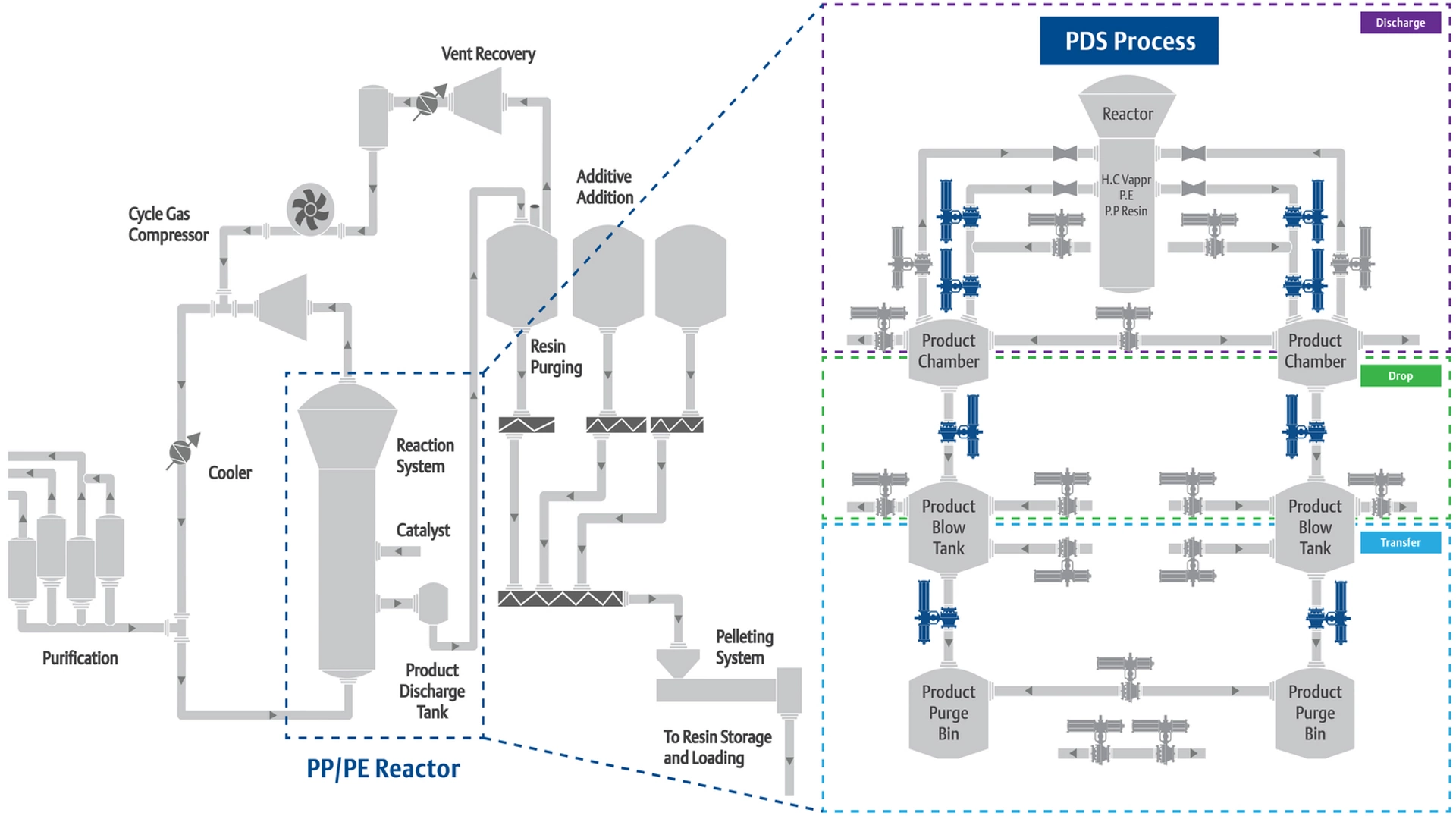
The Powder Discharge System Process
The production of polyethylene and polypropylene is a licensed process. Within this process, powder is created in a reactor with the addition of a catalyst. This powder is discharged from the reactor for further processing and pelletizing for downstream use. It is during this powder discharge system (PDS) phase that producers face significant challenges in their valve reliability, and ultimately, the productivity of their operations. These process challenges, illustrated in detail below, require superior valve technology to advance producers’ quality and efficiency goals. The blue colored valve icons in the process map below indicate the critical service valves that require priority attention.
Powder Discharge System Valve Challenges
Cycle Frequency
Automated valves in powder discharge applications must be capable of operating at high speed and high frequency. Open or close speeds are typically required to be less than 1 second per inch, with more than 600 cycles per day.
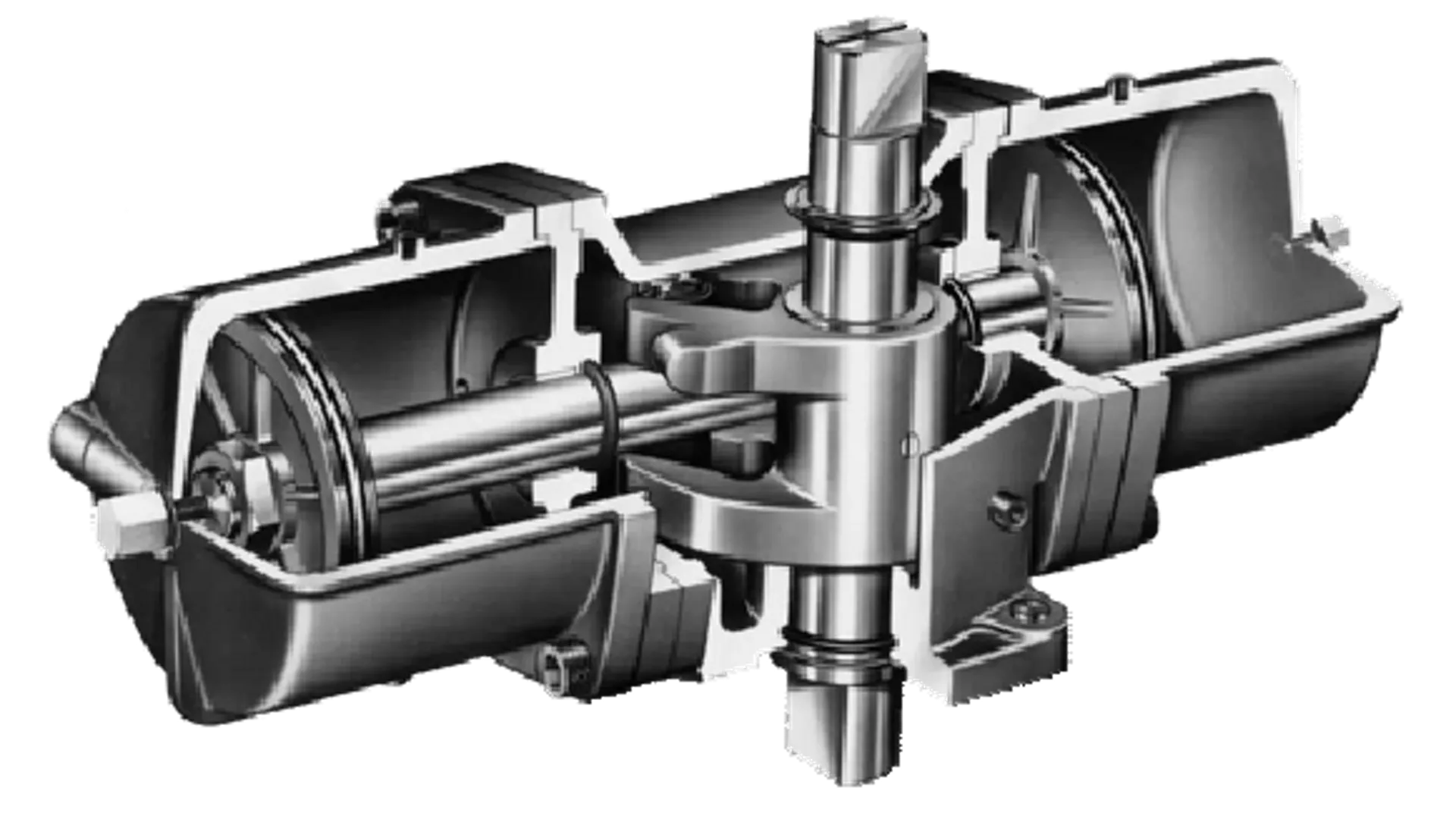
This places significant demand not only on valve components but also requires a highly engineered actuator. These actuators must be constructed of hardened materials, optimized springs, bearings and seals. Actuators must also incorporate cushioning to eliminate excessive shock load.
What does a superior powder discharge system valve look like?

Licensor Approved
When deployed in a licensed process, select a valve solution approved by the licensor to ensure the integrity of your process.

Verified Performance
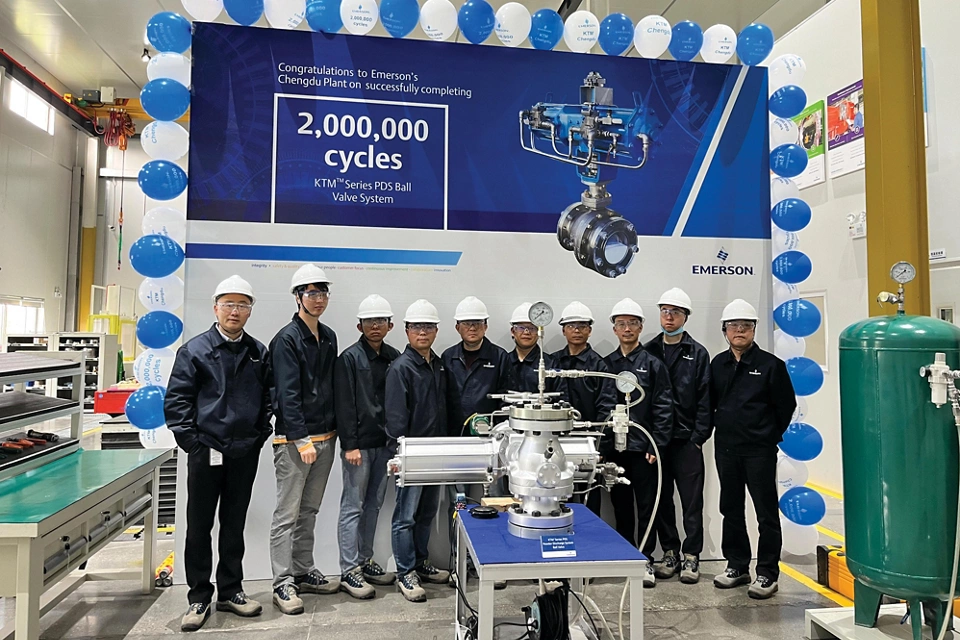
Valves proven to perform 700K cycles are the minimum requirement. Emerson has proven its KTM solution to 2,000,000 cycles.

Integrated Scraper Seat
A smart seat designed to remove powder prior to sealing. The wider face reduces ball surface area pressure and improves longevity.

High Performance Actuator
Must be able to perform high speed, high frequency cycles with the component quality and shock absorption to match the valve life.
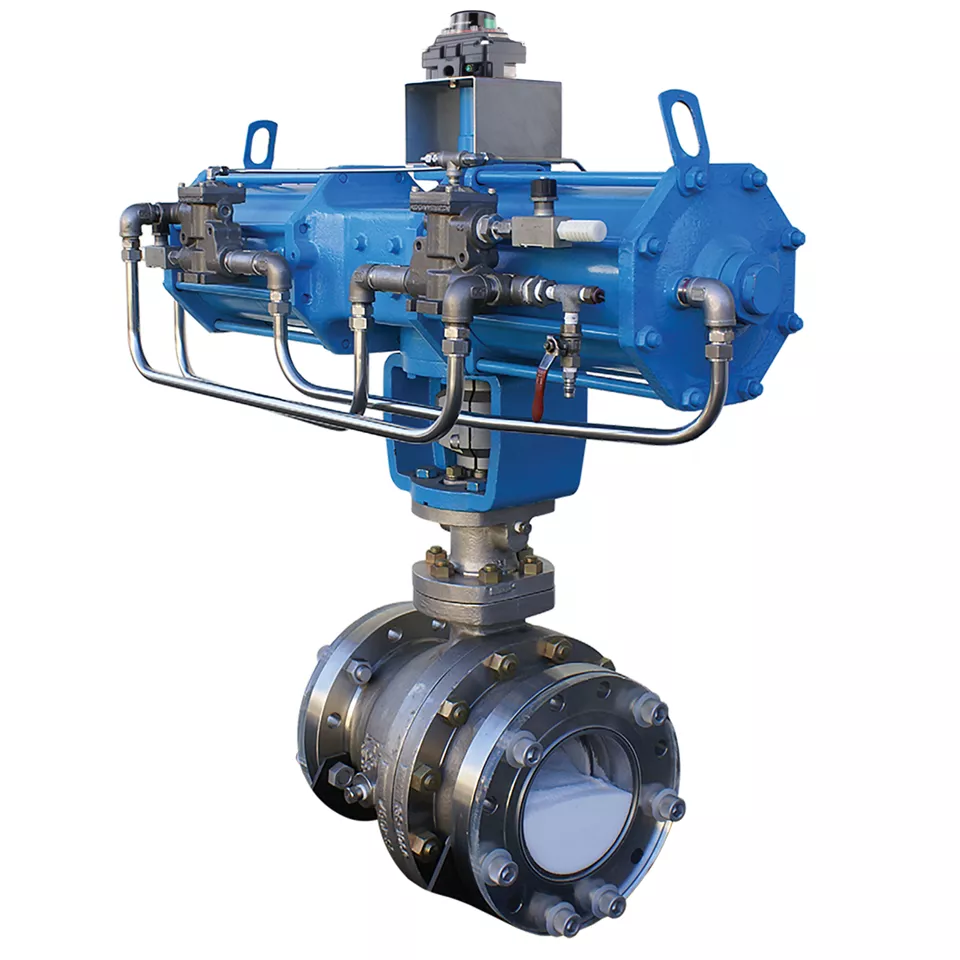

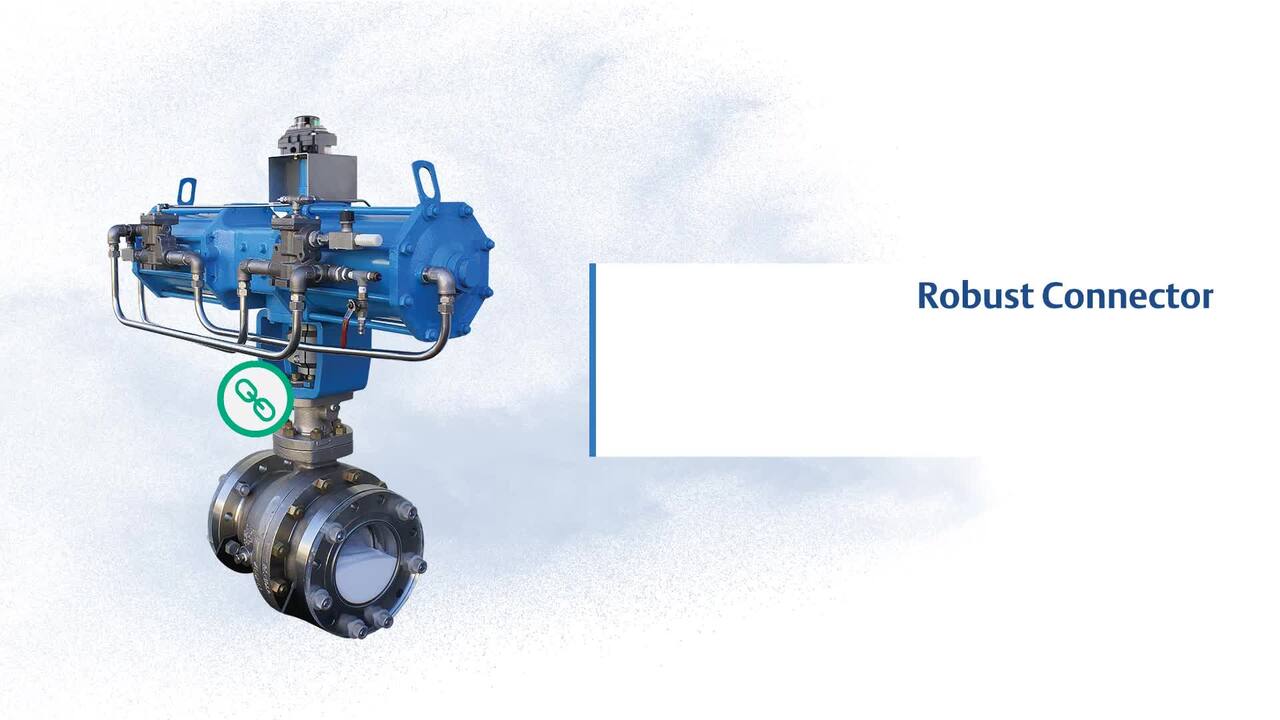
Robust Connector
Must withstand high loads while maintaining tight, vertically aligned engagement between valve and actuator to prevent backlash.

Engineered Sealing Materials
Backup seals are essential to prevent powder infiltration of the seat springs. A 4 point X-shaped seal is superior to a standard O-ring.

Proven Stem Seal System
An engineered stem seal arrangement is crucial to prevent water ingress and process egress while resisting cycle wear.

Hard Coated Components
For enduring performance, critical components across the full valve package should be hard coated including the ball and actuator cylinder.
Powder Discharge System Valve Videos
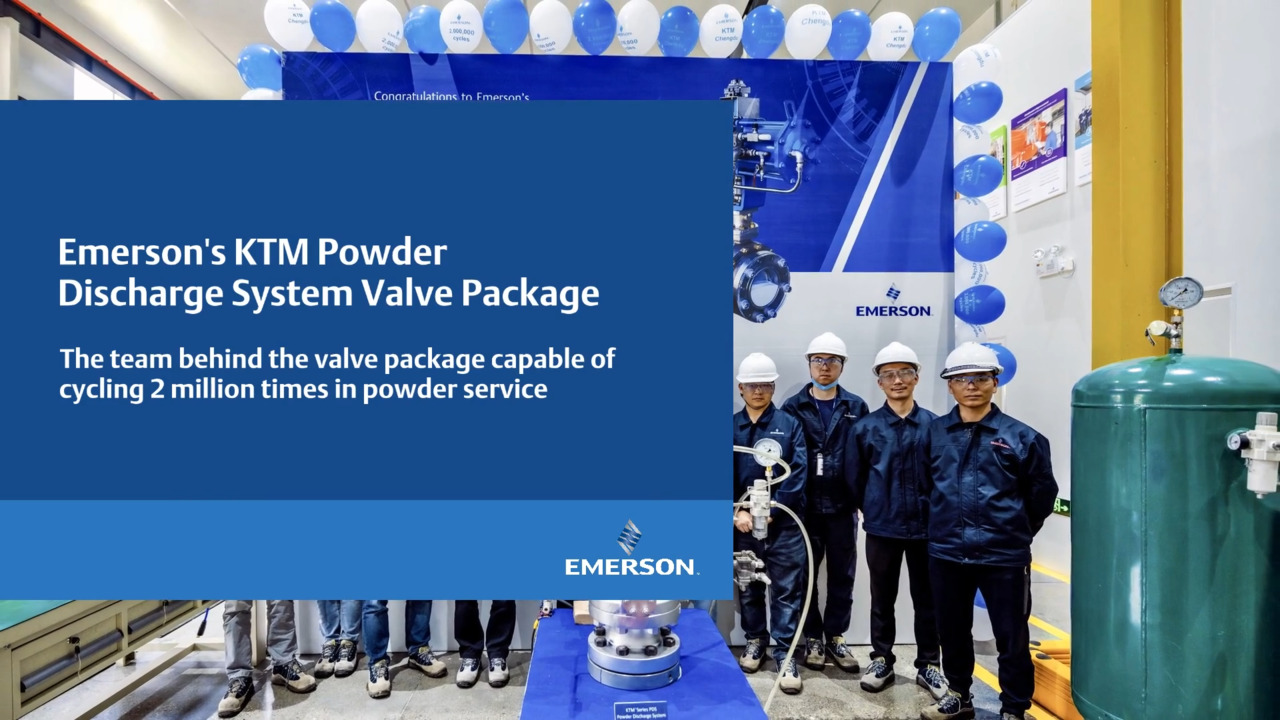
The Team Behind the Powder Discharge System Valve Capable of 2 Million Cycles
It takes a team to develop valve technology that endures 2 million cycles, especially in polymer services, to achieve new levels of performance for polypropylene and polyethylene producers.
The Team Behind the Powder Discharge System Valve Capable of 2 Million Cycles
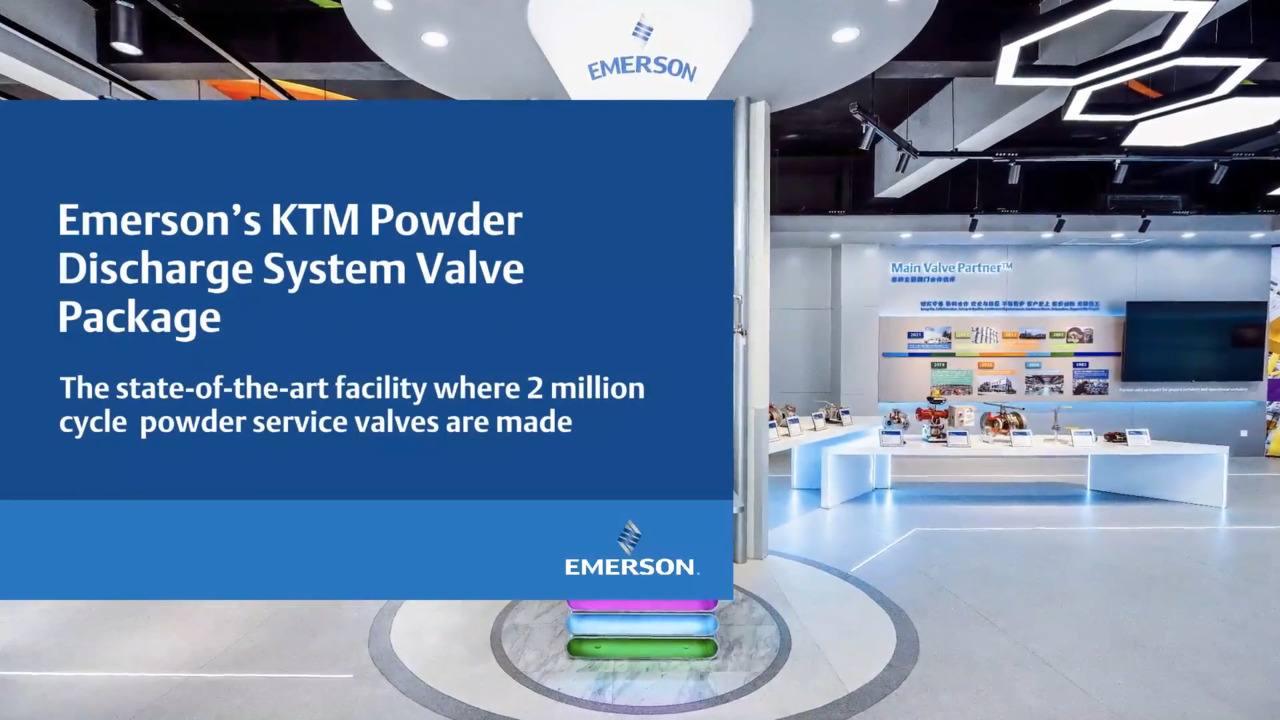
The Facility Behind the Powder Discharge System Valve Capable of 2 Million Cycles
The Powder Discharge System Valve Capable of 2 Million Cycles
Powder Discharge System Valve Frequently Asked Questions
A Powder Discharge System Valve is a mechanical device used to control the release and flow of bulk powders from storage containers such as silos, hoppers, or bins.
Valves can be manually operated or automated using pneumatic, electric, or hydraulic actuators. They function by opening or closing a passage to regulate the flow of powder.
Important features include:
- Material compatibility
- Seal integrity
- Ease of operation and maintenance
- Durability and wear resistance
- Pressure and temperature ratings
The lifespan of a valve depends on factors such as media, frequency of use, and maintenance. Typically producers require a minimum of 700,000 cycles.