
Ethylene is one of the most widely produced chemicals in the world—a critical building block for countless everyday products, from plastics and cleaning agents to paints and automotive components. As the premier petrochemical, its impact spans nearly every industry. For decades, Emerson has been at the forefront of innovation in ethylene production. Our advanced valve solutions, automation technologies, and deep industry expertise help producers achieve safer operations, greater efficiency, and reduced environmental impact. By driving digital transformation and sustainability, we lower risks and empower manufacturers to optimize performance, lower costs, and meet the growing demands of a rapidly evolving market.
The Ethylene Plant: A Look at Major Risk Factors
Ethylene plant operations carry significant risks and potential hazards that require rigorous attention. Emerson’s structured approach delivers proven strategies to identify, manage, and mitigate these risks, prioritizing safety, reliability, and operational integrity at every step.

High Volume of Emissions: Flammable Hydrocarbon Gases and Liquids
- Tight Sealing: Ensure all fittings, seals, including valve packings meet safety and fugitive emissions requirements.
- Detection: Implement robust leak detection systems and inspections.
- Emergency Response: Develop and drill comprehensive emergency response plans, including evacuation routes and procedures.
- Maintenance and Training: Regular maintenance schedules and staff training on handling flammable materials safely.

Managing Extreme Conditions: Temperature and Pressure
- Temperature Control & PPE: Implement advanced temperature monitoring systems and equip personnel with specialized Personal Protective Equipment (PPE) to safely handle extreme heat or cold.
- Durable Materials: Utilize proper insulation and select construction materials specifically designed to withstand significant temperature variations.
- Pressure Relief & Inspection: Install and maintain pressure safety valves to prevent over-pressurization, alongside conducting regular inspections of all pressure systems.
- High-Pressure Training: Provide comprehensive training to operators on the risks and safe handling procedures for high-pressure equipment.
Corrosion
- Corrosion-Resistant Materials: Use materials that are resistant to corrosion for construction whenever possible.
- Coatings and Linings: Apply protective coatings and linings to vulnerable equipment.
- Inspection and Monitoring: Implement regular inspections and monitoring systems, such as ultrasonic thickness testing, to detect early signs of corrosion.

Complexity of Operation
- Standard Operating Procedures (SOPs): Develop comprehensive and clear SOPs for all operations.
- Training and Certification: Ensure all personnel are adequately trained and certified to handle the complexity of operations.
- Process Automation: Implement process automation systems to reduce human error and simplify operational complexity.
Products for High Performance Ethylene Production
These valve and actuator products are designed to provide maximum uptime and extend maintenance intervals, helping you meet your throughput targets with confidence.
Feedstock Preparation
Loading...
Loading...
Loading...
Loading...
Loading...
The Ethylene Plant Process Overview
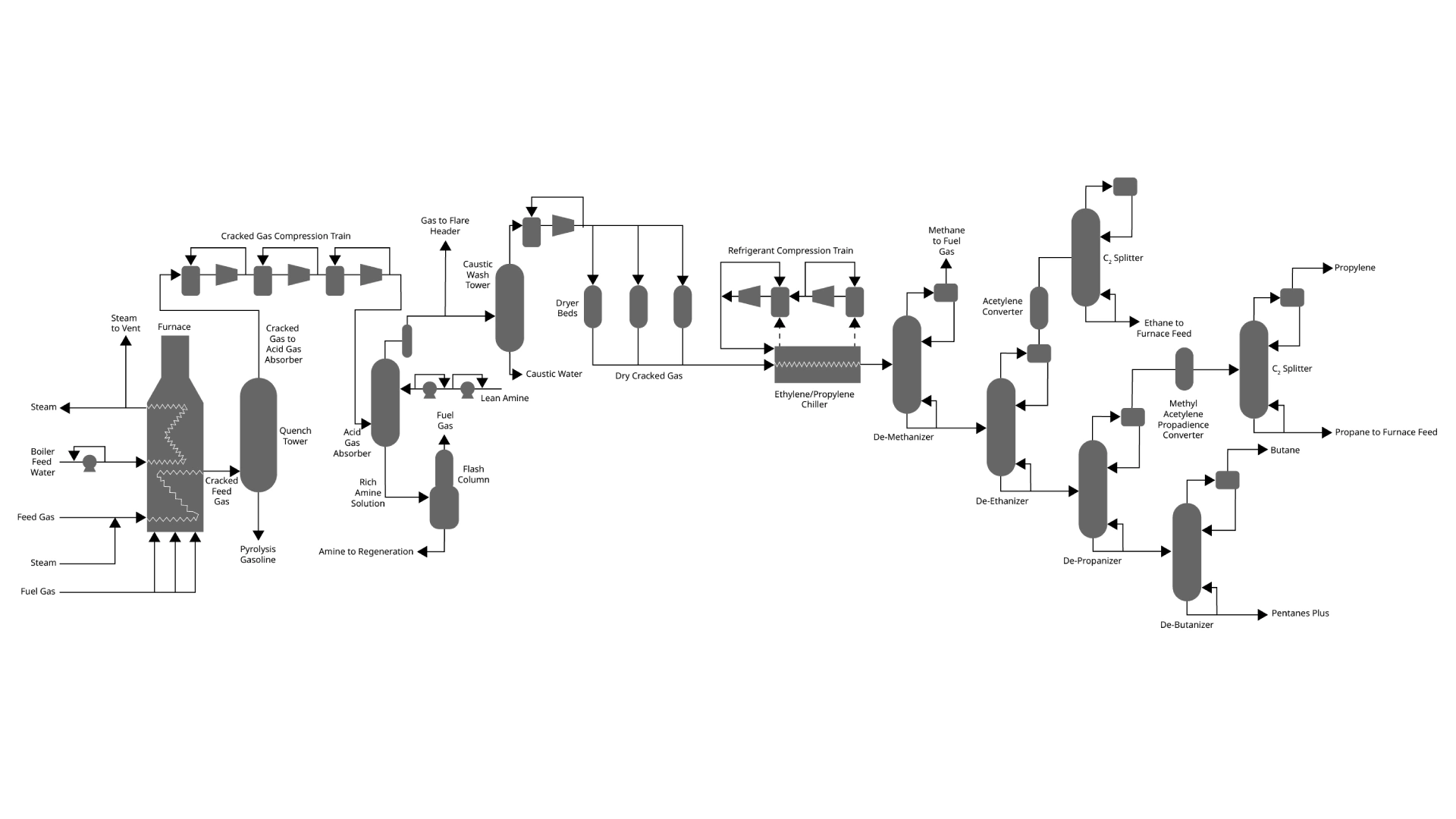
The rendering highlights the steps in ethylene production, from cracking furnaces to purification towers, ensuring efficient and high-quality transformation from raw materials to ethylene. Emerson empowers ethylene producers with advanced control, isolation, and regulator solutions that optimize every stage of production, from cracking to purification. Our technologies ensure safer, more efficient operations and deliver the high-quality ethylene needed to drive global industries forward.
How It Works
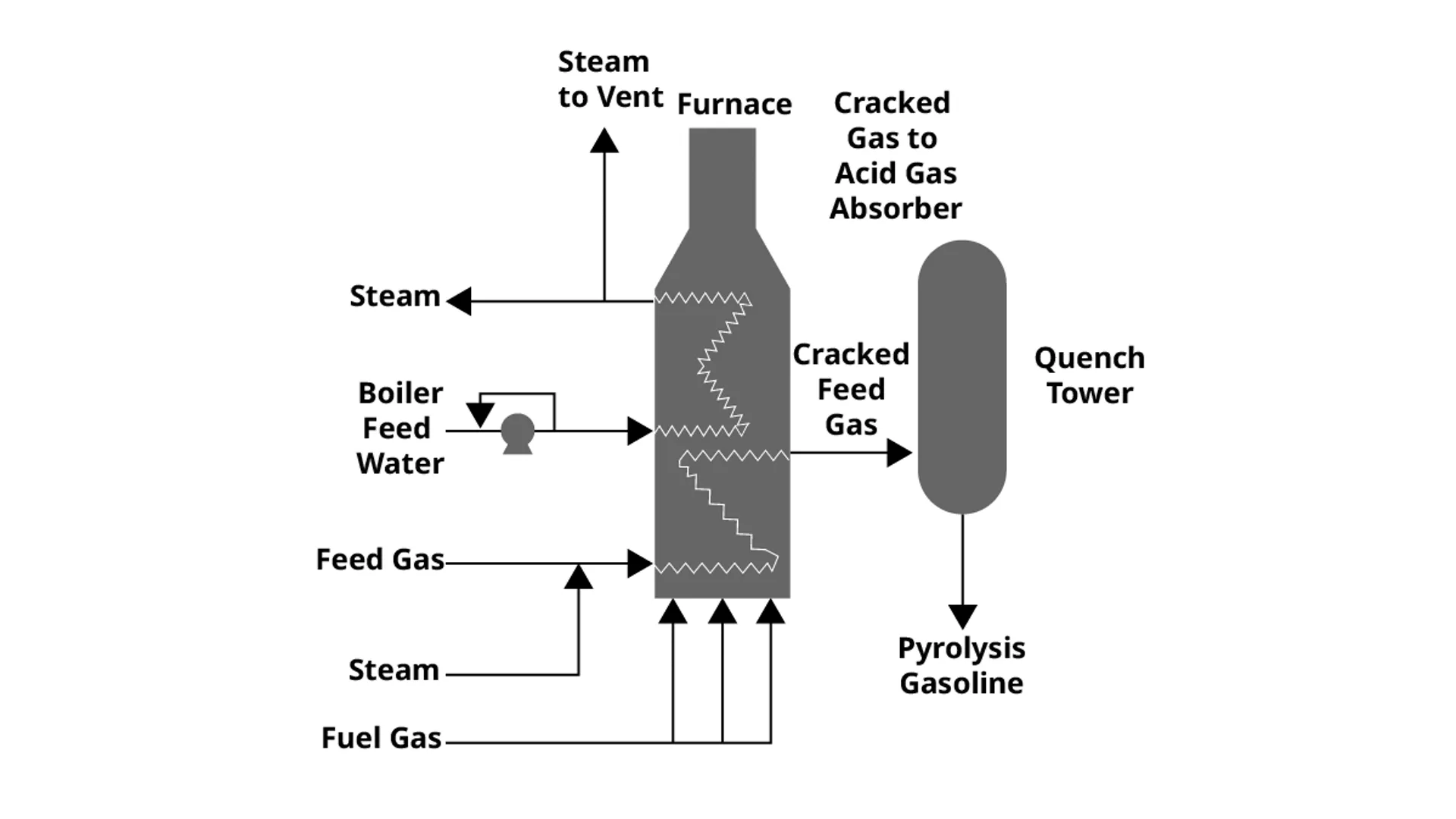
Cracking
A Furnace heats a controlled mixture of naptha/ethane and steam to temperatures near 800 C to “crack” their molecules into smaller ones including ethylene. The furnace is also used to produce steam by heating a source of boiler feedwater.