




Enhancing Distillation Performance
Achieve consistent product quality and energy efficiency
Variations in feed composition, temperature, and pressure can disrupt distillation operations, leading to off-spec products and increased energy consumption. Implementing advanced sensors, transmitters, and control technologies provides predictive diagnostics and optimized process control, ensuring stable operations and reduced energy usage.
Chemical Distillation Solutions in Action
Leading facilities have adopted state-of-the-art control systems and measurement instruments to enhance distillation processes. These implementations have resulted in improved product consistency, reduced energy costs, and minimized downtime, showcasing the tangible benefits of integrating advanced solutions.
Maintain Optimal Thermal Conditions
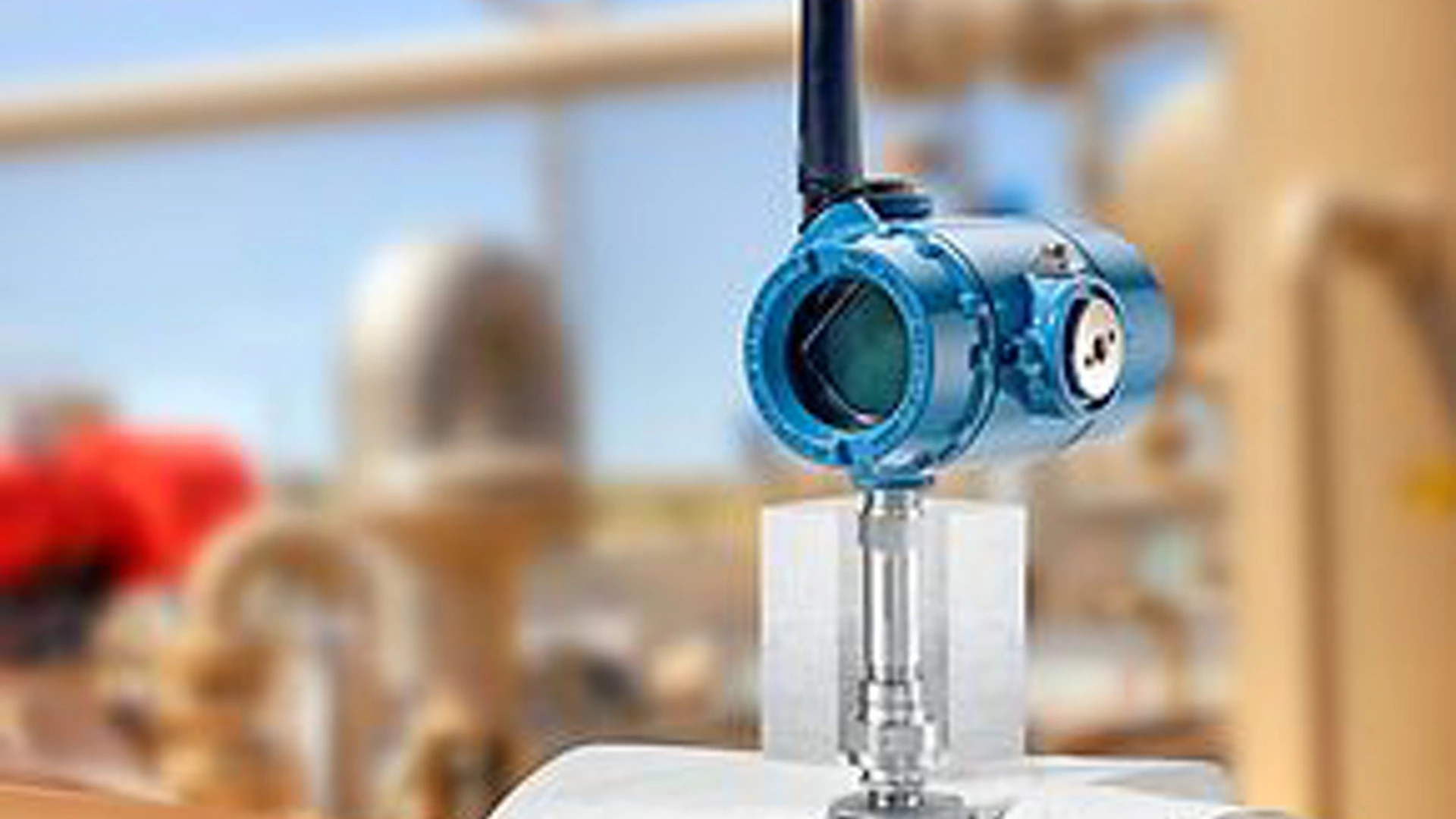
Measuring and optimizing temperature at specific tray levels is necessary for effective separation. The ability to control the temperature profile at all levels ensures the greatest product quality at each extraction point. Emerson offers a wide variety of temperature probes and transmitters, suitable for every imaginable mounting option and measurement range.
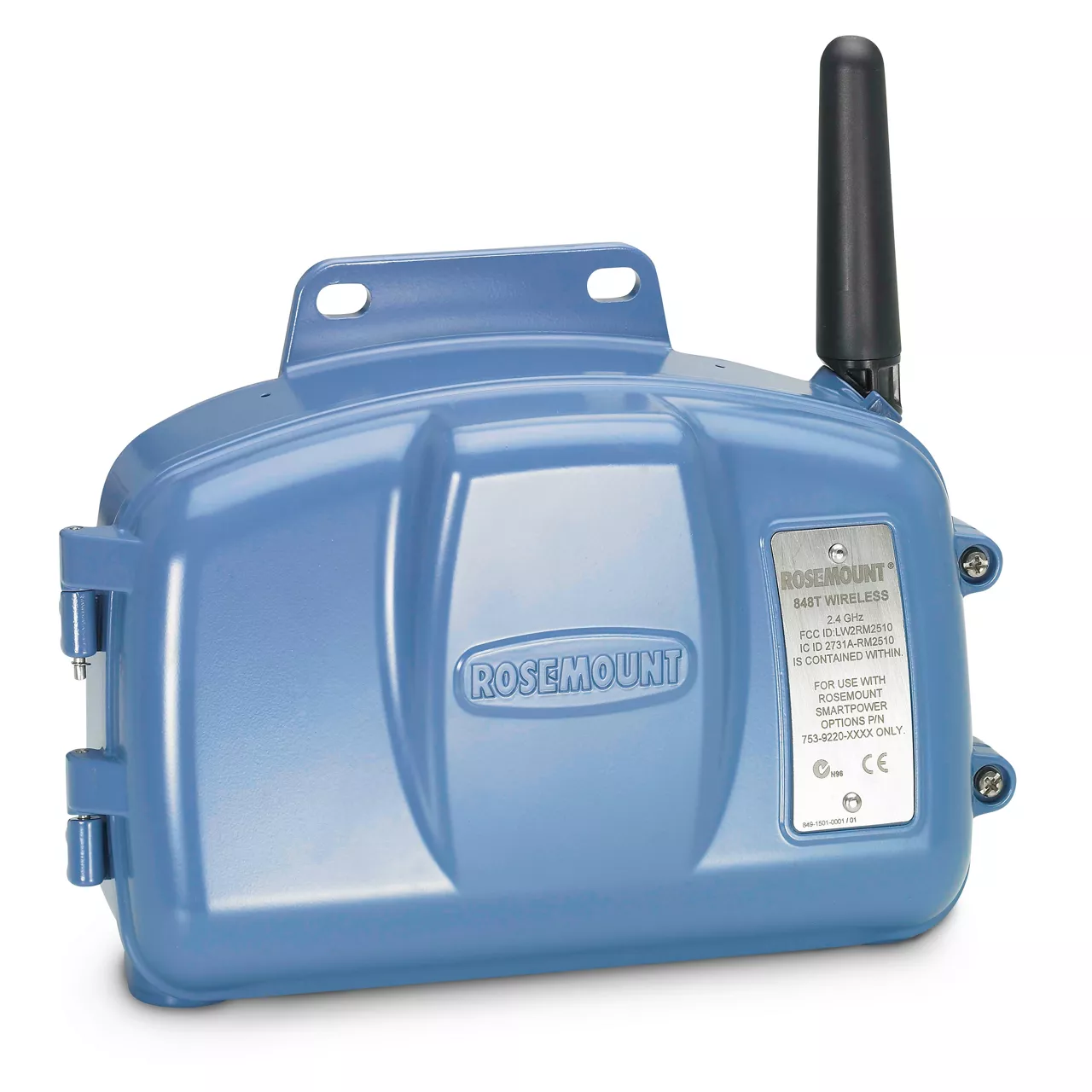
Rosemount™ 848T Wireless Temperature Transmitter
Provides high-density temperature measurements, enhancing process visibility and control.
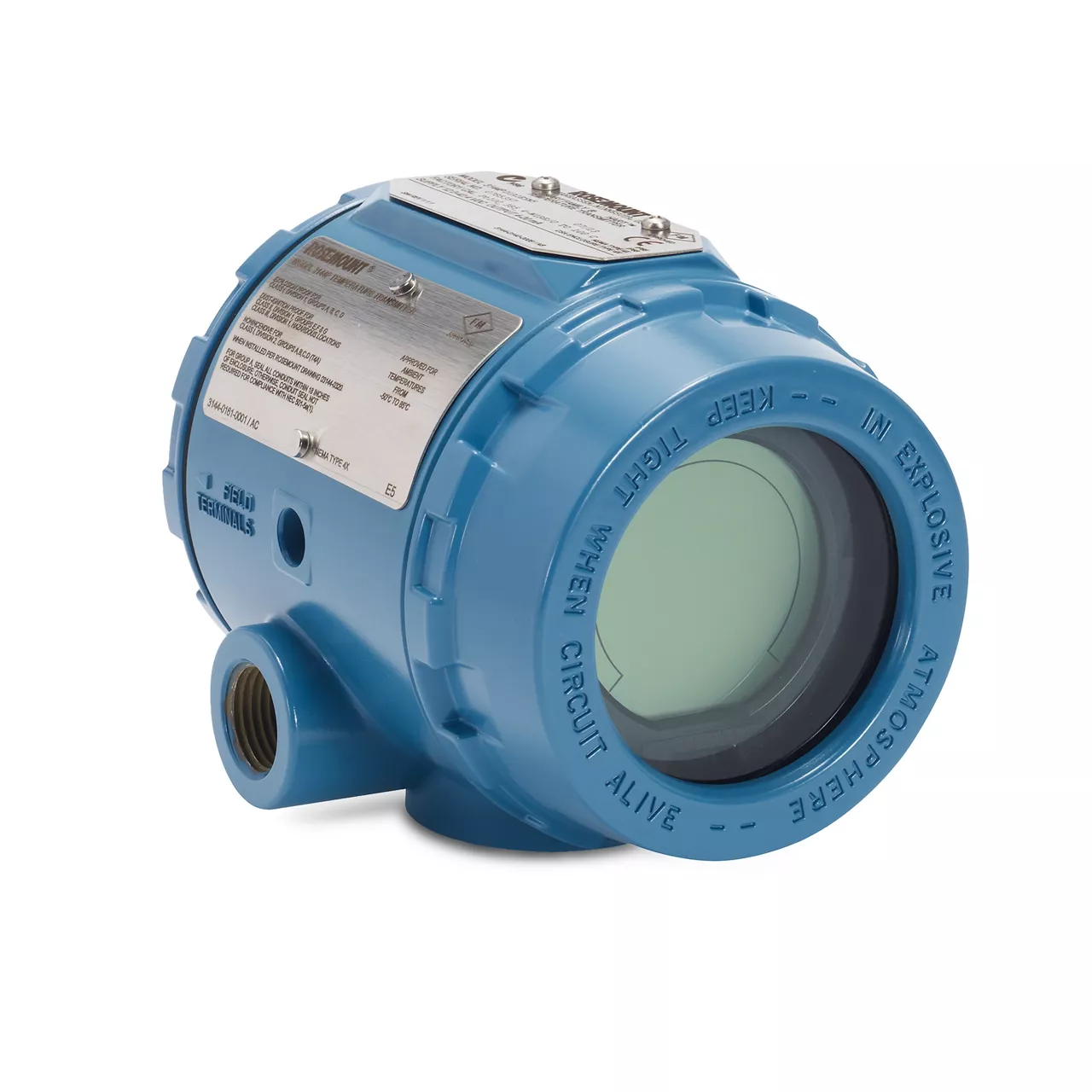
Rosemount™ 3144P Temperature Transmitter
Delivers reliable and accurate temperature readings for critical applications.
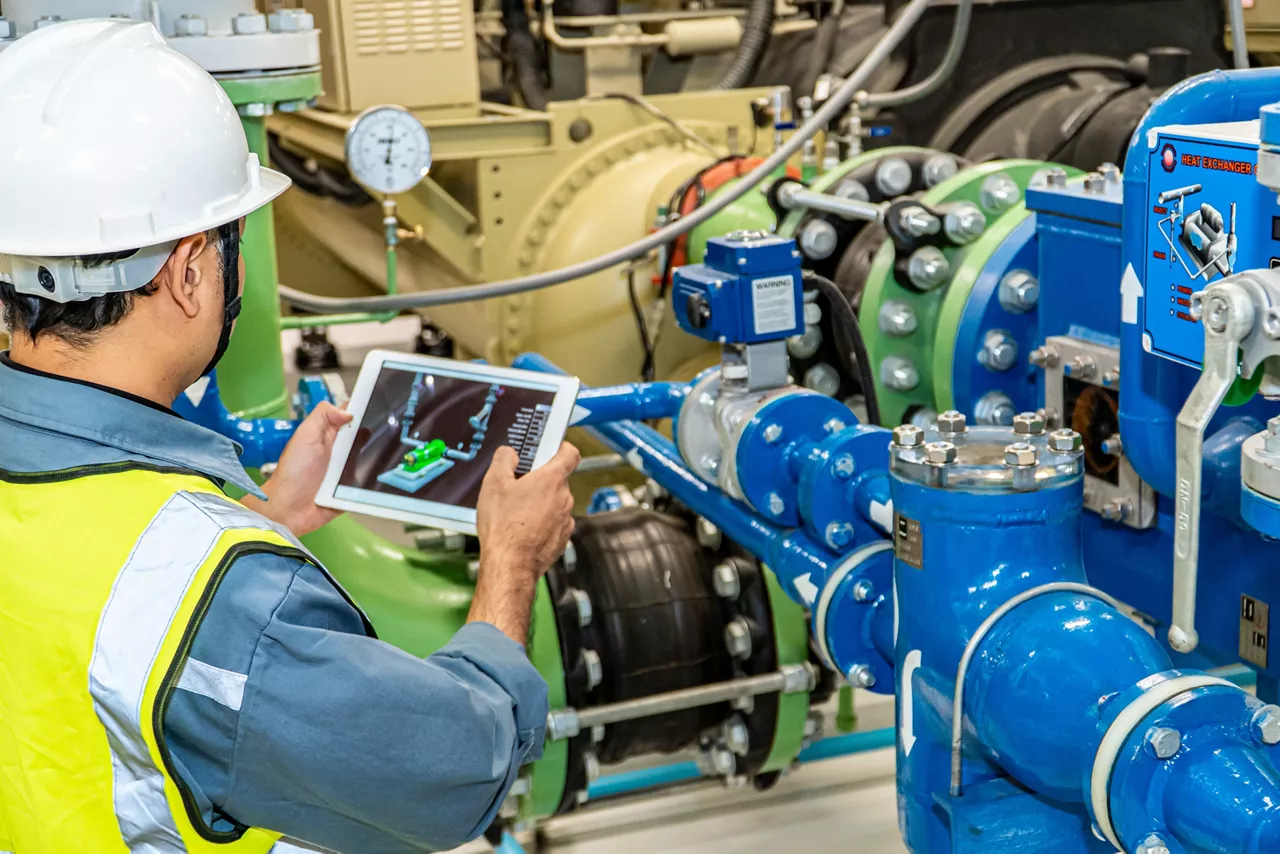
Control Systems and Software for the Chemical Industry
Offers integrated solutions for precise temperature control and monitoring.
Business Groups in Chemical Distillation
Our diverse business groups offer specialized technologies and services that, when integrated, provide comprehensive solutions for chemical distillation processes.
Automation Systems
Discrete Automation
Final Control
Measurement Instrumentation
Solution-Related Documents for Chemical Distillation
Access a collection of high-value documentation developed to help optimize chemical distillation processes. These resources offer strategic insights and technical guidance to support process stability, energy efficiency, and regulatory compliance. With Emerson’s deep industry expertise, you can drive continuous improvement, reduce variability, and ensure safe, consistent distillation performance across your operations.

Frequently Asked Questions (FAQs)
Gain insights into the fundamentals and complexities of chemical distillation, including column control, energy efficiency, and safety considerations. These frequently asked questions highlight how Emerson technologies help enhance separation performance, reduce operational costs, and maintain product quality.
Distillation columns are inherently difficult to control since there are so many variables, from feedstock inconsistency to the local weather conditions. Emerson has developed many effective control strategies, each capable of balancing a very wide range of variables, but these must all be measured. Effective control across all such variables calls for a variety of instruments, and these investments result in increased production and product quality.
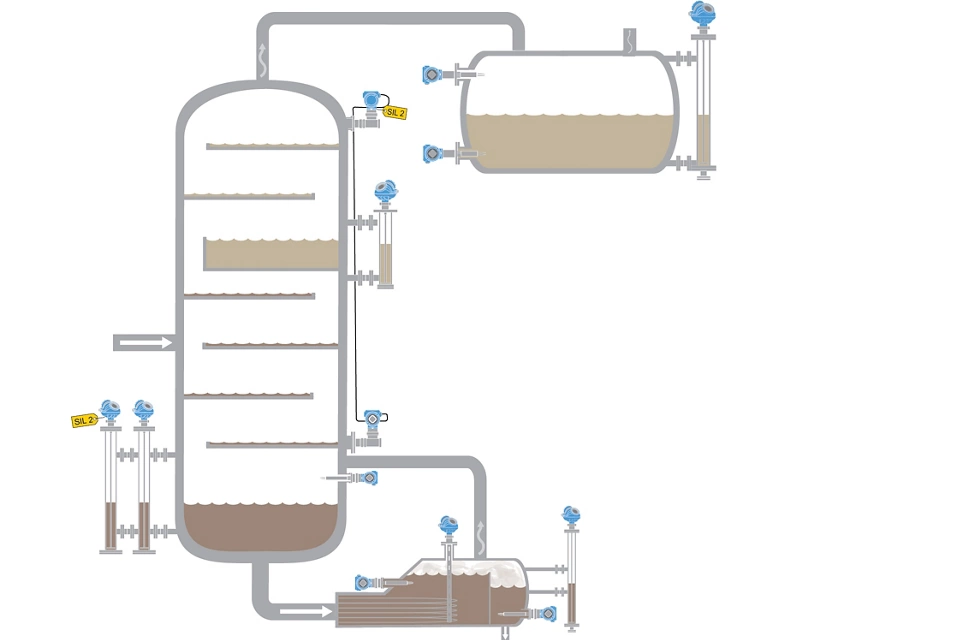
Since most distillation columns are pressurized, using DP to measure the bottom level calls for one of the measurement points to be at the top of the tower. Using a conventional approach, this calls for one impulse line to be as long as the tower is high, a daunting prospect in most cases. Emerson has multiple options to simplify this approach, but the best is an electronic remote sensor that uses a second pressure transmitter at the top. This replaces the long impulse line with an electric cable sending the tower pressure value digitally, simplifying maintenance and increasing reliability.
There are two excellent ways to reduce the amount of wiring infrastructure for temperature sensors. First, Emerson offers a temperature transmitter designed to support four sensors. It sends the four signals sequentially over one pair of wires. This is practical because temperature readings do not change significantly from one second to the next. Second, the same four-sensor transmitter is available using WirelessHART, so no wires are needed at all. Most facilities have WirelessHART networks installed, so adding measurement points in this manner is the lowest cost approach.
Effective tower operation is a balancing act of upward vapor and downward liquid movement. Tray flooding is often a result of vapor gaining the upper hand and choking off liquid flow. This impedes effective separation and hurts product quality. Often such an imbalance may not be recognized if liquid level in strategic trays is not measured. Adding level readings, either using Emerson’s DP transmitters or guided-wave radar level instruments, indicates when such an imbalance has taken hold so the automation system can modulate the feed rate more precisely.