
What is a Rack & Pinion actuator?
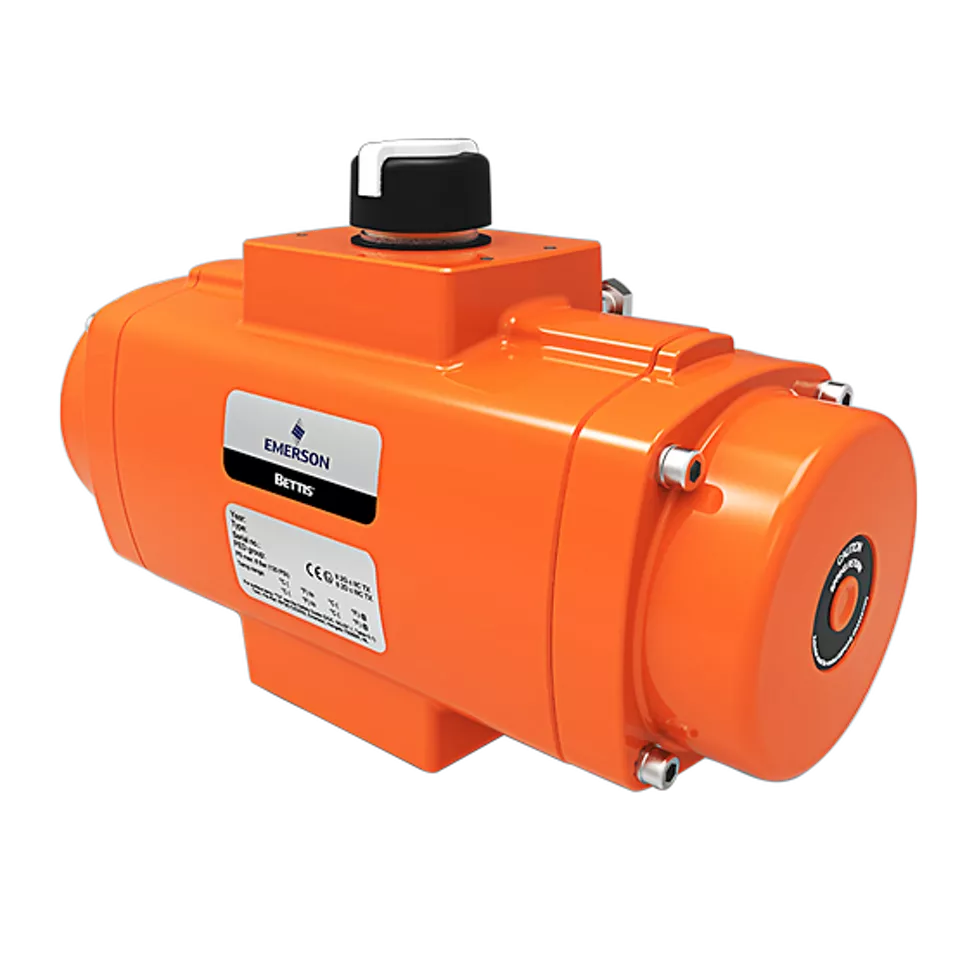
- Rack and pinion actuators are mechanical devices used to automatically open and close valves or dampers, usually for industrial applications.
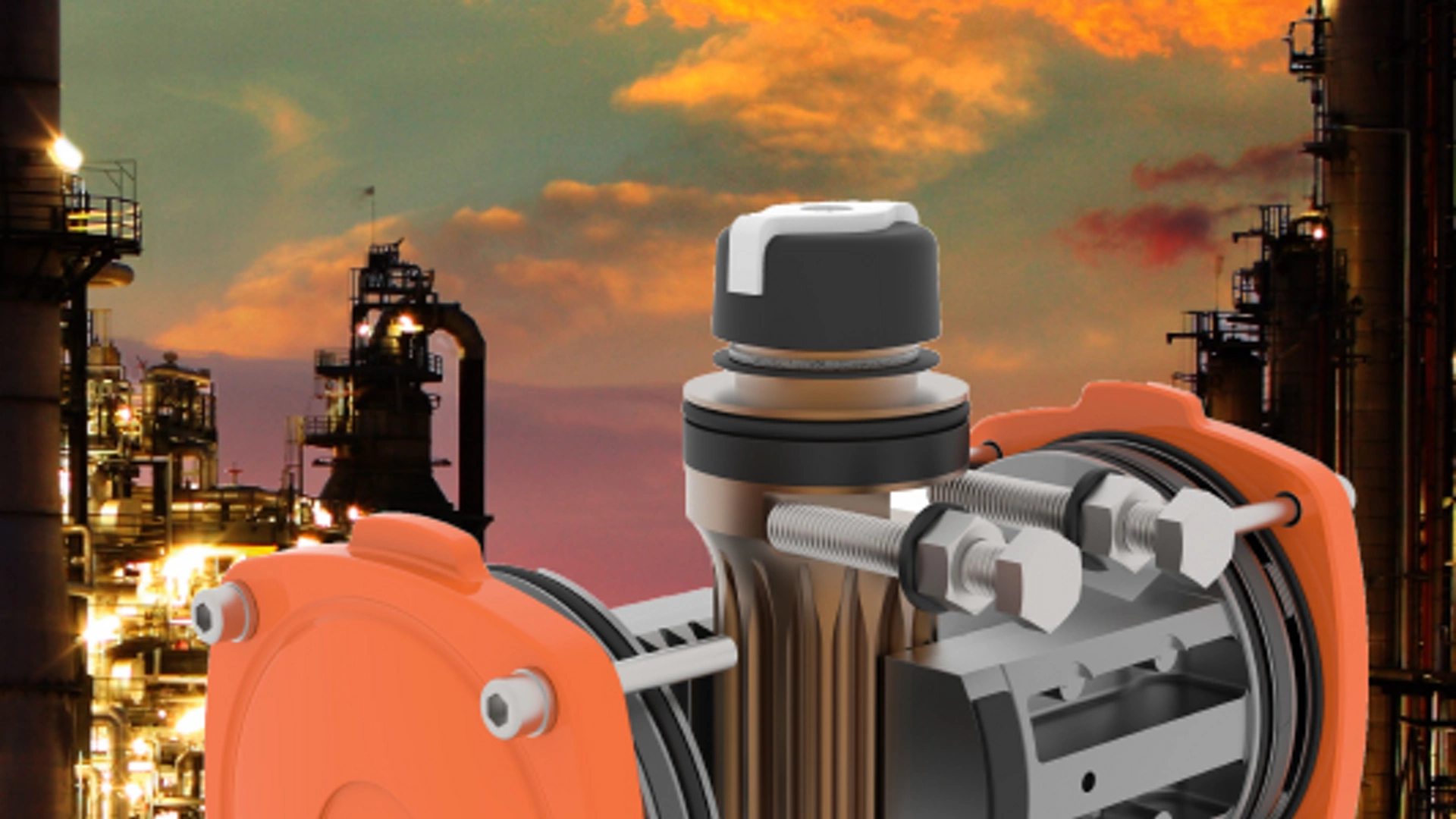
- “Rack and pinion” is a generic term for a pair of gears which convert linear motion into rotational motion. A linear gear bar called “the rack” engages teeth on a circular gear called "the pinion". Linear force exerted on the rack will cause a rotational motion of the pinion.
- For valve automation, a common actuator design uses two piston-type racks moving in opposite directions to ensure balanced forces on the pinion. Typically, pneumatic air pressure is used to power the actuator. By applying pressure to the piston racks, the pinion can be turned to the desired position. The pinion bottom connects to the valve stem to open and close the valve as the pinion turns.
How It Works
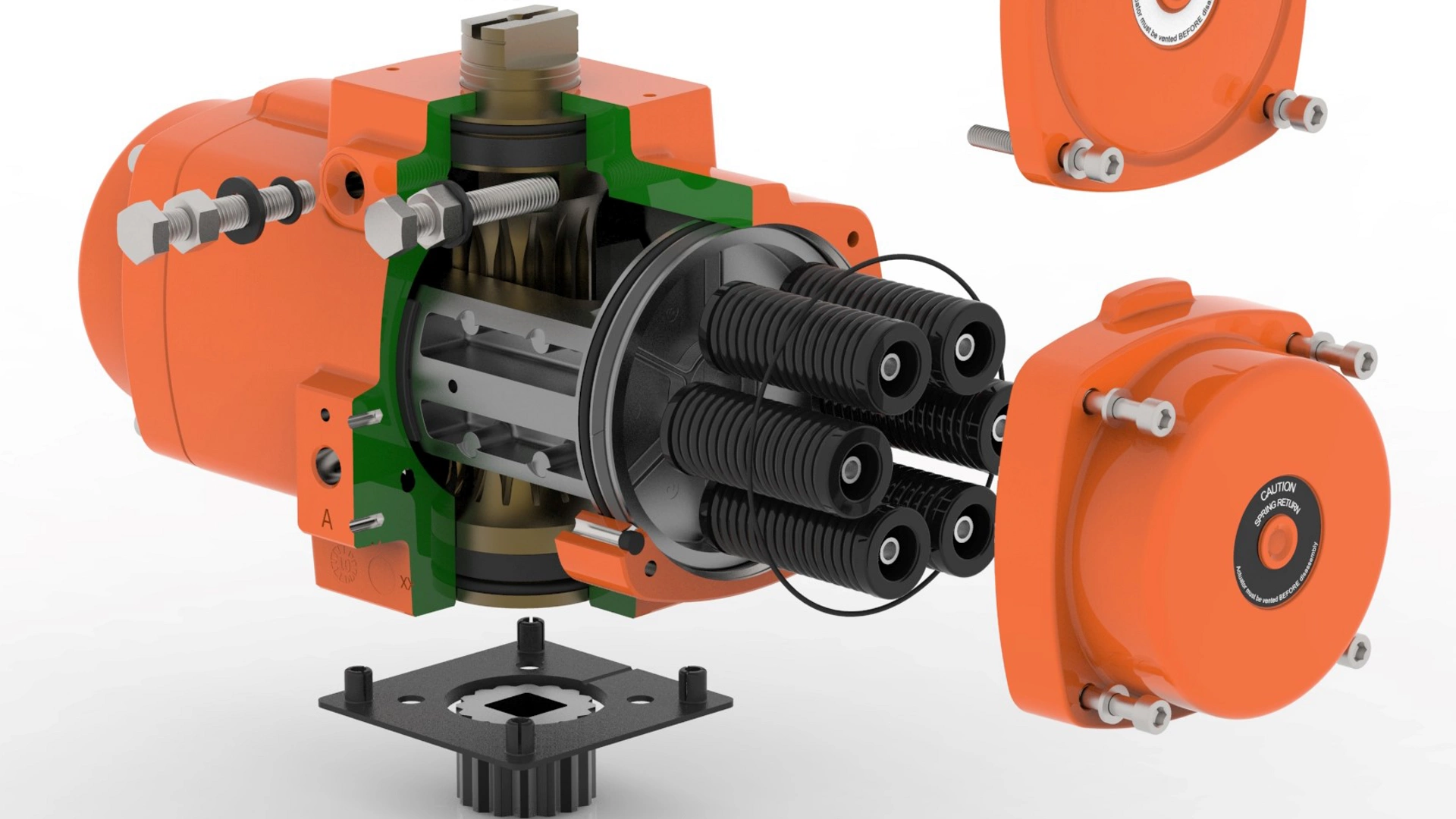
Common Rack and Pinion Applications
Rack and Pinion actuators are for automation and operation of quarter-turn valves like Butterfly, Ball and Plug valves as used in process industries like chemical, pharmaceutical, water processing, oil & gas, etc.
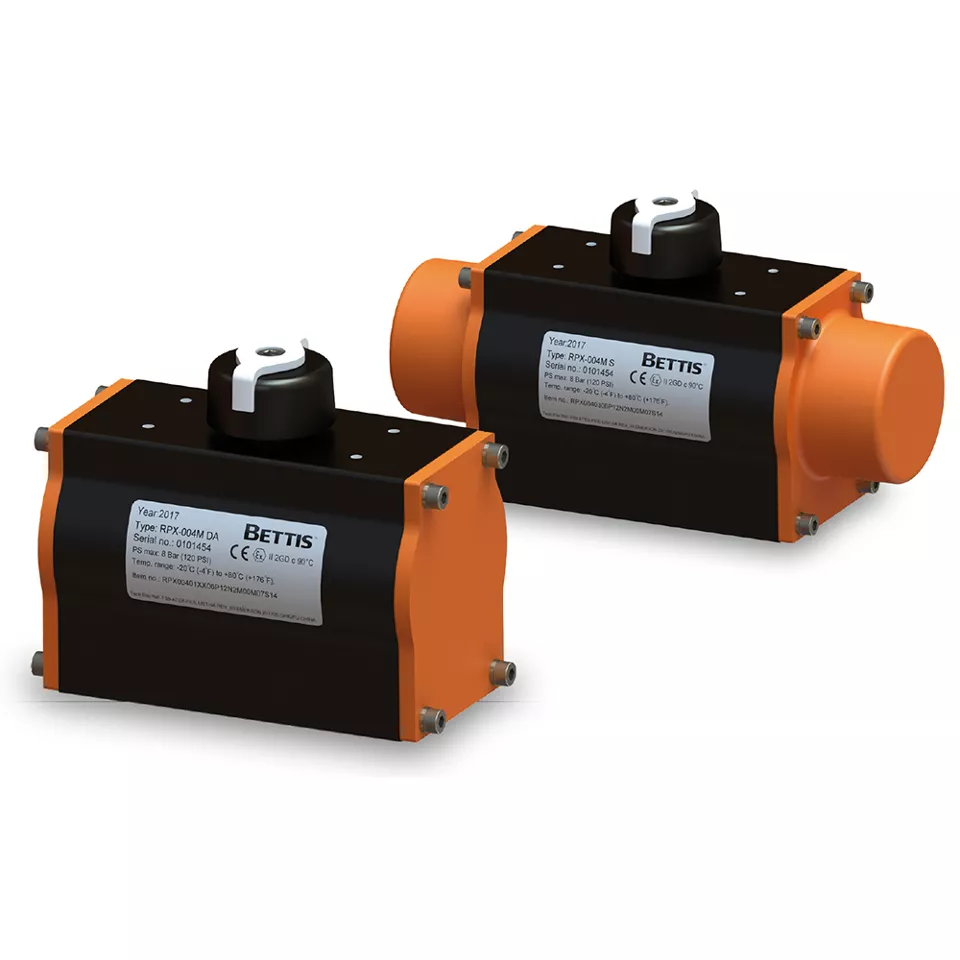
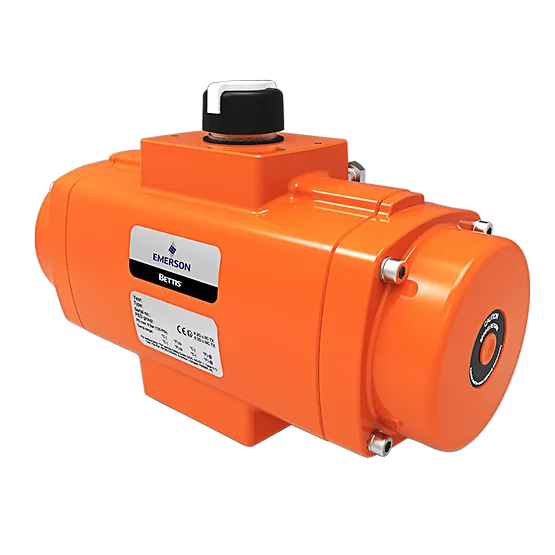
The actuators are available in two constructions: Spring Return and Double Acting. Mechanical Spring Return is for fail-safe applications and can be assembled for “Fail-Close” or “Fail-Open” safety function.
Double Acting actuators can be used for a “Fail-In-Last-Position” safety function.
Videos
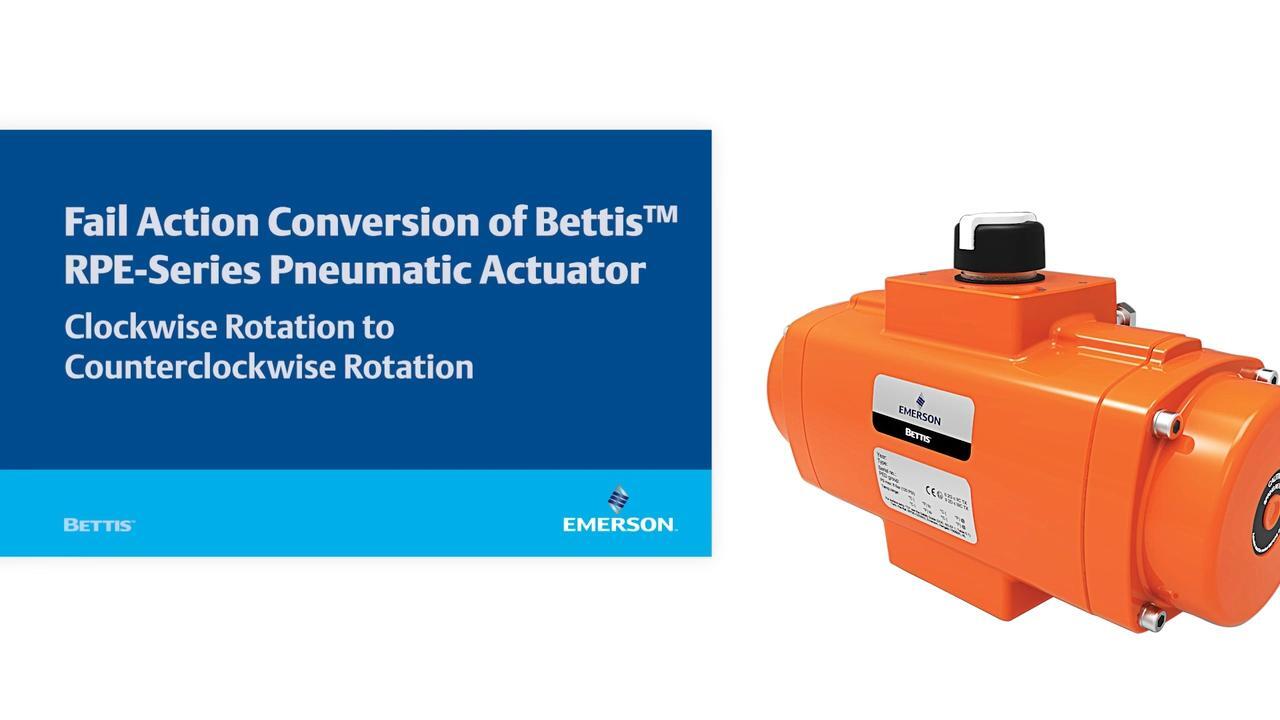
Spring change training video of a Bettis RPE Series actuator.
In this training video you will see how to change the spring set of an RPE Series actuator. This video should be used in conjunction with the instructions provided in the IOM manual which is available for download from the Bettis RPE Series web site.
Spring change training video of a Bettis RPE Series actuator.

Bettis Q Series Fully integrated Valve Operating System (VOS)