
Comprehensive Solutions for Hydrogen Value Chain
With a wide portfolio of control, isolation and relief valves, regulators, and actuators, Emerson offers advanced solutions for hydrogen applications throughout the entire value chain: production, transportation, injection, fuelling and dispensing.
Our expertise drives your operations forward, helping you achieve low emission, safety and productivity goals.
Value Chain Expertise & Solutions
Green Hydrogen
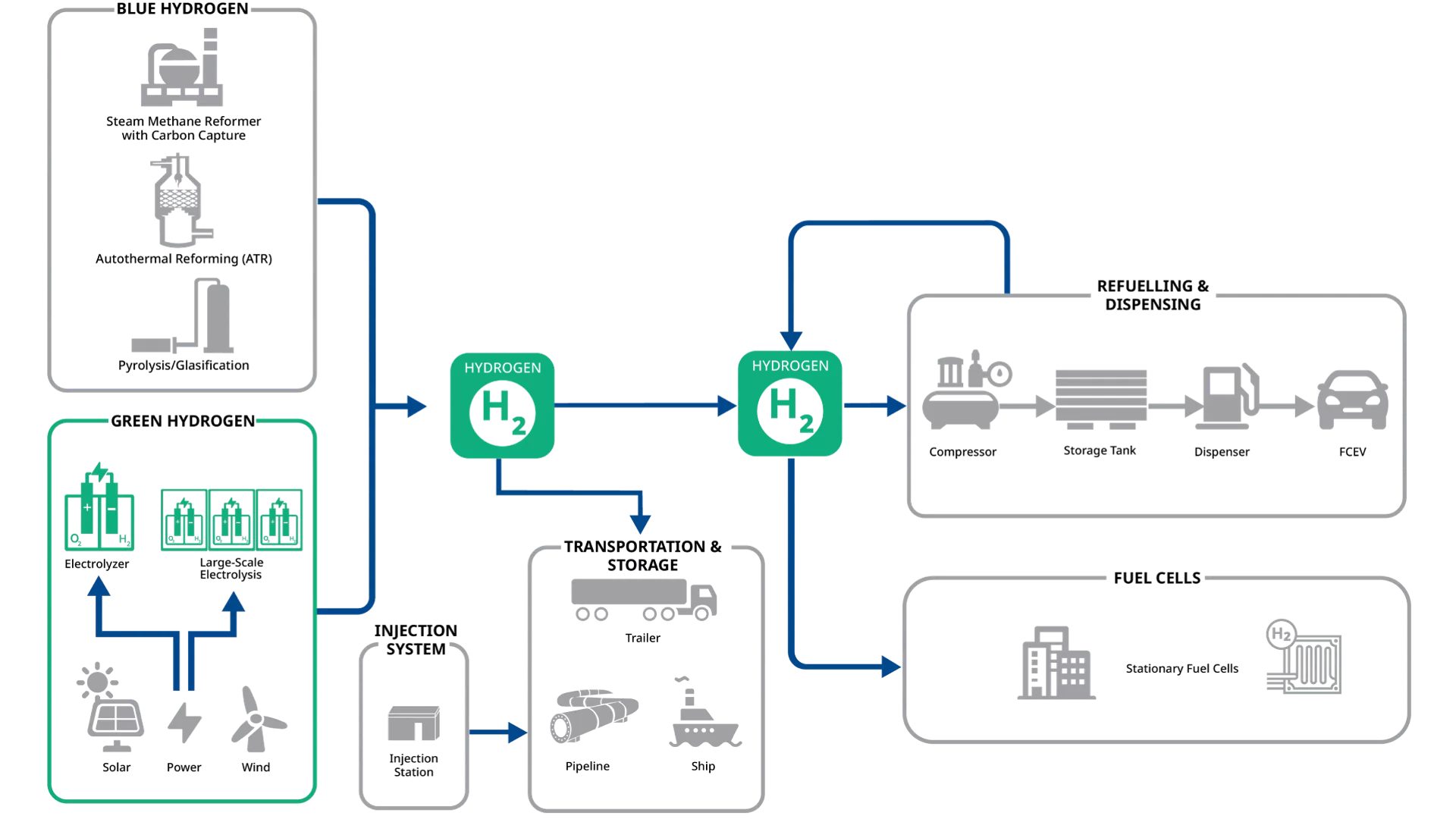
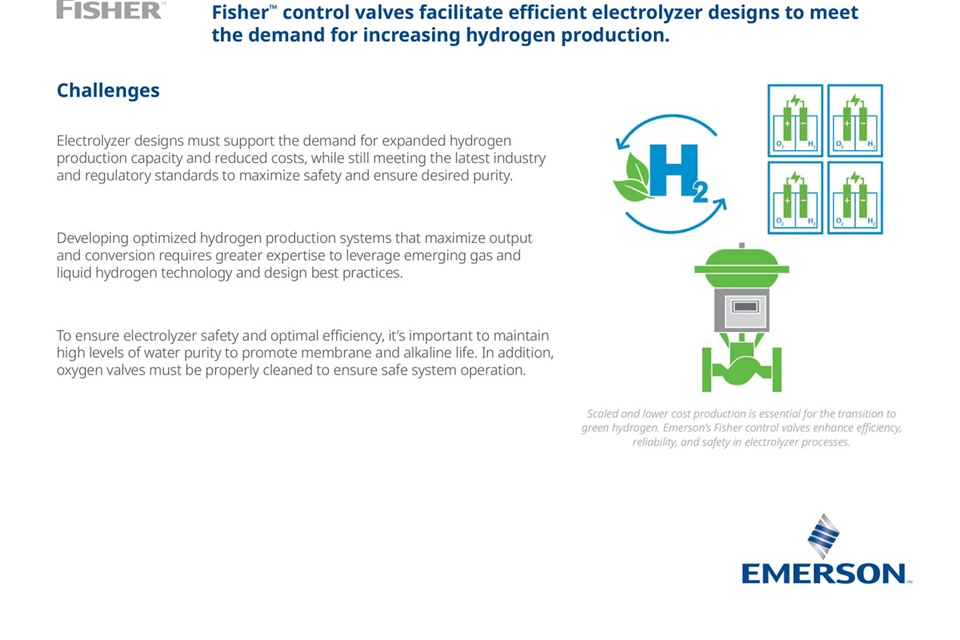
Hydrogen electrolyser production uses water and electricity to produce hydrogen through electrolysis, breaking water into hydrogen and oxygen in an electrolyser. Electrolysers range from small devices to large-scale facilities. Large-scale electrolysis requires scalable designs for efficient, safe, and cost-effective operations. Emerson valve solutions play a crucial role in electrolyser and large-scale electrolysis by providing reliable and advanced technologies to ensure safe, efficient, and profitable operations.
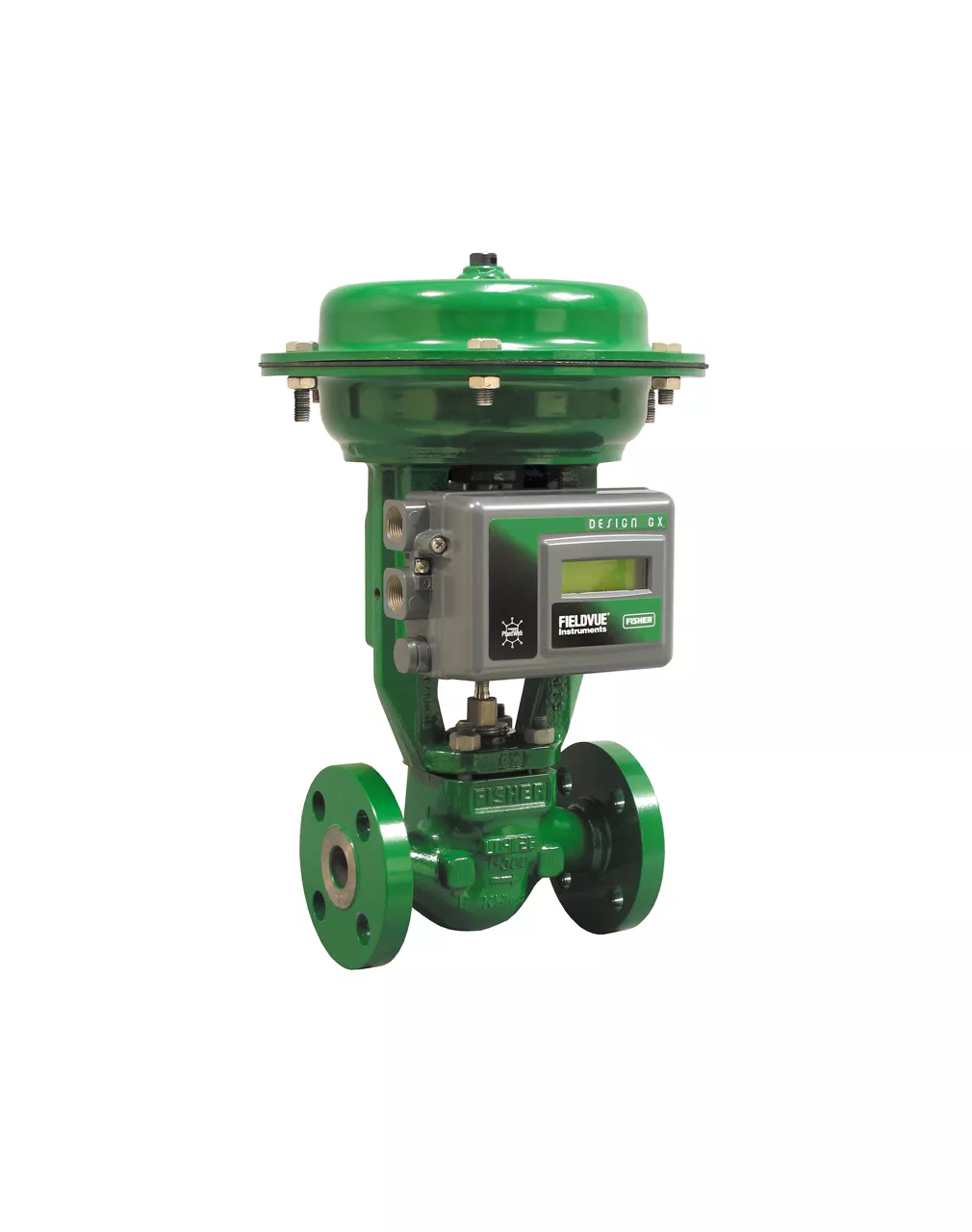
Fisher™ GX Control Valve and Actuator System
Meet of flow & pipeline sizing requirements. The engineered passages within the valve body offer optimal capacity & a stable flow pattern for smooth operations.
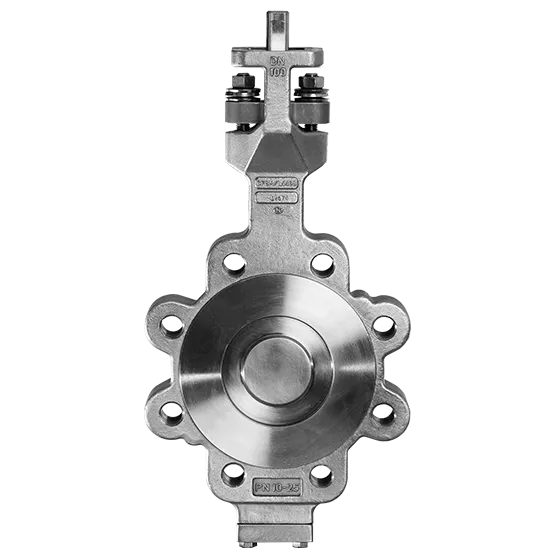
Keystone™ K-LOK Series 38 Butterfly Valve
High performance butterfly valve suited for high cycle applications. The valve complies with EN 558, features bidirectional dead-end service, blow-out resistant shaft, and double eccentric design for durability.
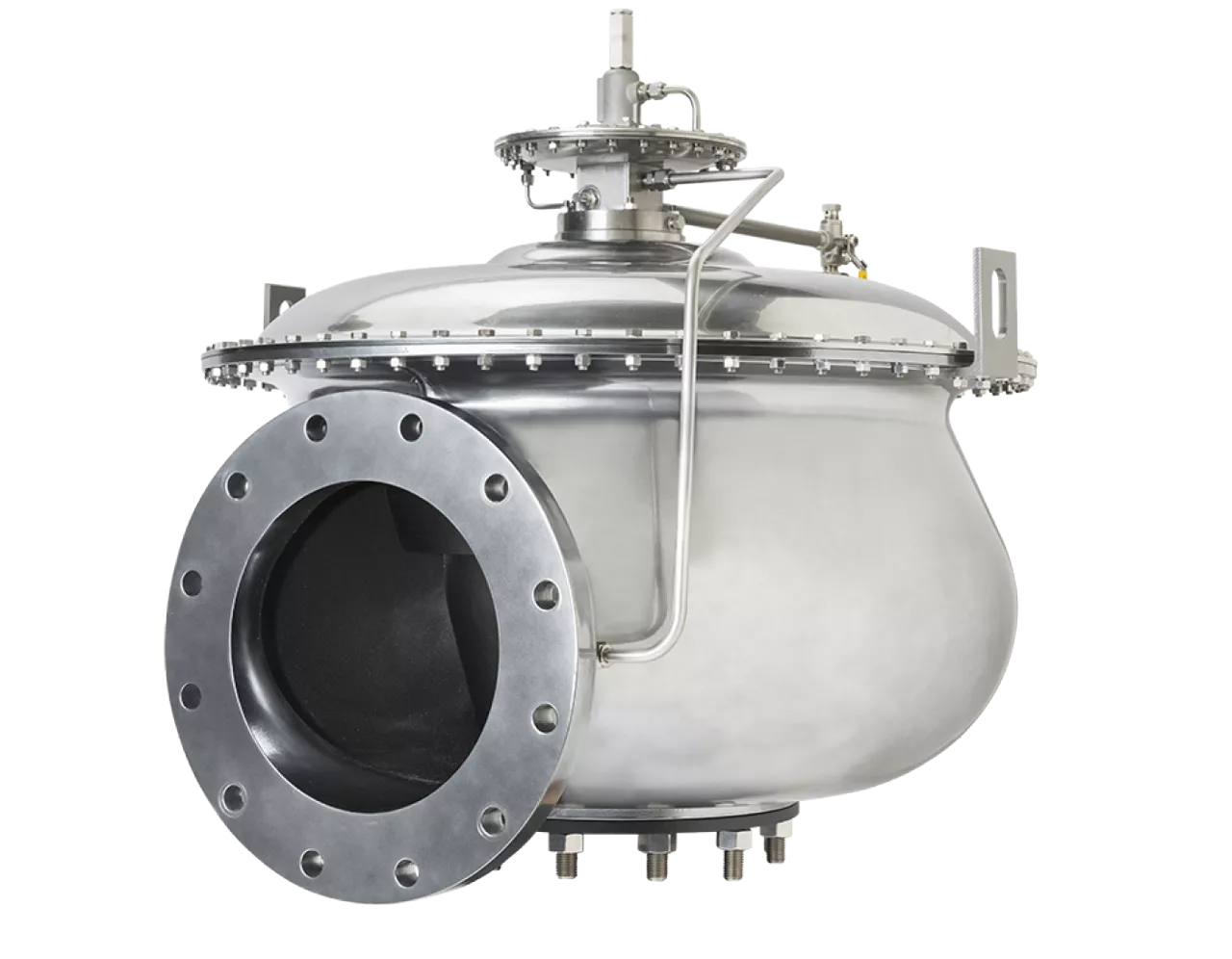
Anderson Greenwood™ Type 9300 modular LP pilot operated safety valves
Pilot operated pressure relief valves with unmatched capacity and seat tightness designed specifically for LNG and LPG Carriers, FSRUs and FLNG ships.
FAQs
Hydrogen embrittlement (also known as hydrogen-assisted/hydrogen-induced cracking) happens when hydrogen atoms are absorbed into a metal, causing it to become brittle and fracture. As the concentration of hydrogen carried in a pipeline increases, the risk of hydrogen embrittlement also increases. In order to manage this risk, the design and fabrication of both valves and actuators need to be carefully considered for hydrogen service. For example, electric valve actuators do not use pipeline gas for power, thus limiting their contact with the hydrogen being carried in the system.
There are 3 core applications applicable to all types of electrolyzers: ultra-pure Water flow control valve, hydrogen flow control valve, oxigen flow control valve. Each application raises various challenges for a control valve, such as potential leakage, outgassing, safety, integrity, controllability. Reach our experts if you want to learn more about hydrogen production challenges and solutions.
Currently the hydrogen percentage in the NG/H2 blend goes from 5% to 10%, in some rare case it can reach 20%
The main components of the hydrogen blending station are: pressure and flow control devices to adjust the quantity of NG and H2 and their pressure, flow meters to measure the quantity of NG and injected hydrogen, a GC to evaluate the composition of the blended mix and a control system with its programmable logic. Also, odorant injection system can be included if hydrogen is injected into the distribution network.
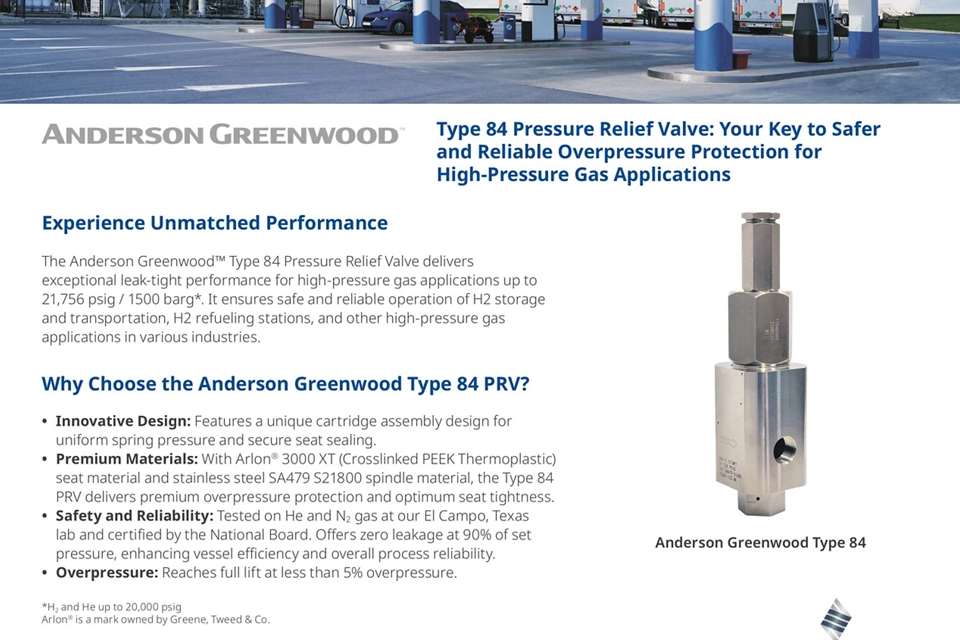
On most CO2 applications, there is a risk of solid CO2 (‘dry-ice’) forming at the outlet of the valve due to the cooling of the gas from Joule-Thomson effect. If not swiped out, this dry-ice will accumulate in the outlet pipe and will dangerously restrict the flow path. Because a modulating safety valve will flow only what is needed by the protected system, there is a high risk that the flow through the modulating safety valve during an overpressure event will be too small to effectively swipe any dry-ice out of the piping. On the reverse, a snap-acting (or ‘pop’ action) valve always opens fully and discharges its full capacity at every overpressure event: this large flow will easily send any dry-ice out, avoiding dangerous accumulation in the exhaust piping. Of course, if the conditions are such that dry-ice is not likely to form (in some cases of super-critical CO2 applications for example), then the use of a modulating safety valve will be preferred.
Due to design standardisation, safety margins and the various potential overpressure scenarios, safety valves are always oversized: they often discharge much more than what the protected system requires to stay within safe pressure limits. On hydrogen compressors, this excessive relief represent a big waste of gas and energy, but also it can cause undesirable interactions the compressor control systems. A true-modulating pilot operated safety valve is able to discharge from 0 to its maximum flow, in a fully proportional way, depending on the need of the system. A true-modulating pilot operated safety valve will therefore keep the discharged inventory to the strict minimum necessary to protect the equipment, and by doing so, will limit the perturbations on the compressor system.
Hydrogen proximity for end use requires safety and efficient transportation, research and development are ongoing to find the best economically vital and scalable solution. Currently there are 4 major solutions to transport hydrogen: 1) pipelines, 2) compressed hydrogen, 3) liquified hydrogen, 4) hydrogen conversion to other chemicals like Ammonia, Methanol or Liquid Organic Hydrogen Carrier (LOHC).
Hydrogen gas compresses at high pressures, e.g., 300 bar, 500 bar, 700 bar, and 1000 bar, depending upon the capacity required. The high-pressure hydrogen is stored in specially designed tubes and transported in a truck. It is common to see a diaphragm compressor to increase the gaseous hydrogen pressure to the desired level. A pressure control valve is required to control the outlet pressure in the hydrogen compression skids.
Hydrogen gas liquifies at -254°C and its volume in such form is 1/800 of the gaseous state. Therefore, liquefied hydrogen is suitable for large-amount transportation in a vacuum-insulated cryogenic tank. The liquefaction process needs cryogenic control, cold box, and general service valves.
Explore Our Series of Expert Webinars on Hydrogen Valve Solutions
Watch Our Experts
Blue Hydrogen Valve, Regulator & Actuator Solutions
Efficient equipment and regular maintenance from an OEM service provider help ensure extended uptime and minimize operational challenges. Secure reliability and safety in your blue hydrogen production processes. Choose valve solutions that:
- Deliver 99.9% blue hydrogen purity level
- Lower fugitive emission rate
- Boost productivity
- Reduce energy consumption and costs
Explore the Emerson portfolio of control, isolation, relief valves, regulators and actuators for safer, smarter, reliable and scalable blue hydrogen production.
Blue Hydrogen Valve, Regulator & Actuator Solutions
Low-Emission Valve Packing Solutions - Blue Hydrogen Production Through Steam Methane Reforming (SMR)

Driving Sustainability: Our Journey with Hydrogen-Ready Solutions
Valve Solutions for Carbon Capture in Steam Methane Reformer and Pressure Swing Adsorption Units