


The OT Edge: How Distributed Control Unlocks Autonomous Operations
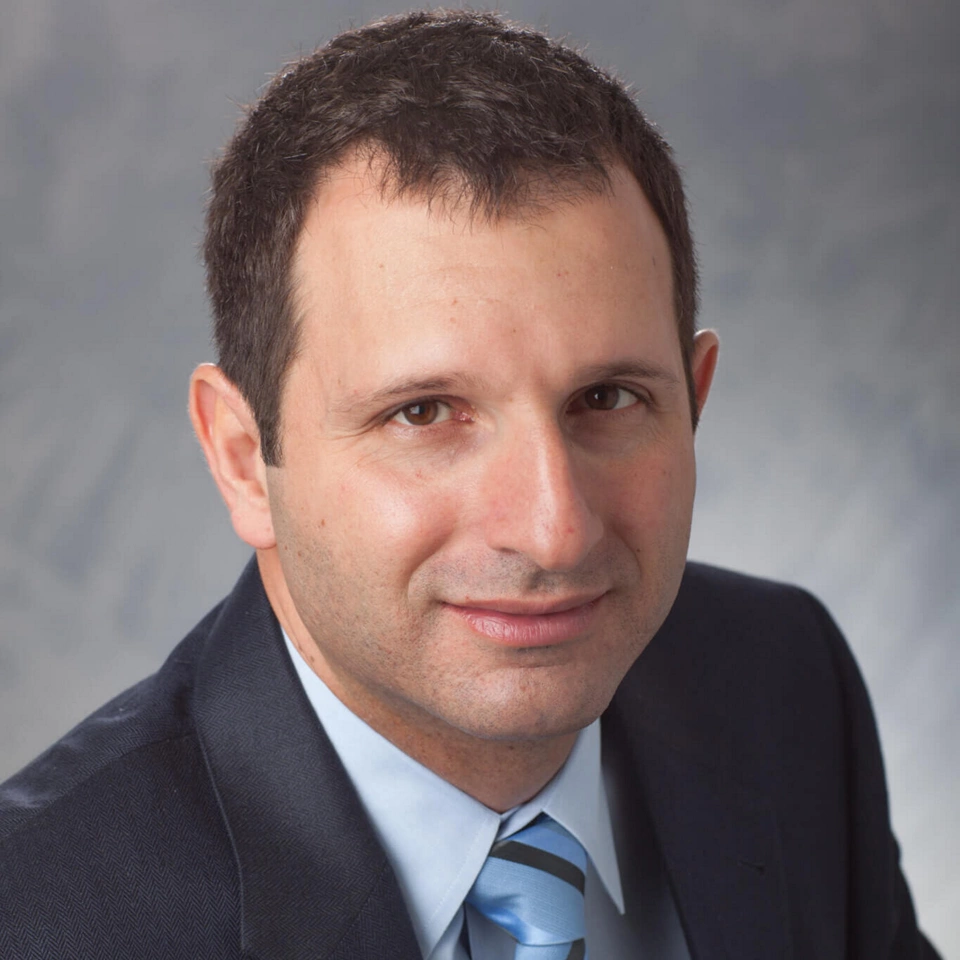
Claudio Fayad, Chief Technology Officer of Emerson’s Aspen Technology business, leads technology direction across industrial software including AI. He explains how the modern OT edge serves as the backbone of modern automation to enable more accessible data and robust computing power from the intelligent field to the cloud.
What is the OT Edge?
Ask 10 people for their definition of 'the edge' and you are likely to get 12 answers. But in operational technology (OT), there is a new, field-specific definition that is accelerating automation transformation.
Why it Matters
Legacy automation architectures were designed for static control, not AI and continuous optimization. The OT edge flips that model: it decouples control from the field, pushes compute closer to assets, and unifies data flows – enabling real-time insights and autonomous decision-making at scale.
Over the last four decades, organizations have invested heavily in automation technology to improve production efficiency and safety and to gain a better understanding of equipment health. The traditional automation architecture was relatively simple with sensors and valves in the field connected through wired I/O to a centralized control system or other function-specific software systems, like maintenance and reliability and safety. The structure of this technology architecture was roughly the same last year as it was 40 years ago. Only one major change in computing platform technology happened in the mid-1990s.
The demand for more actionable information from more applications, delivered faster to more people, is driving a revolutionary rethink of the automation architecture. The backbone of this new architecture is the OT-specific edge, where new technologies are making data more securely and freely accessible, pushing computing power to all levels of the operation – both on-premises and off – while simultaneously simplifying the management of ever-increasing technology density.
Seven Trends Demonstrating How OT Edge Will Redefine On-Premises Computing
1. I/O and Controller Decoupling
This massive transformation of field connectivity simplifies how field devices are connected to systems. Emerson’s CHARMS technology was the first of its kind to provide this capability. Soon, Ethernet-APL will continue that journey, using the power of Ethernet to decouple I/O from the control system. Ethernet equivalents of current protocols will bring more data types into the control system and directly to cloud analytics.
2. Hyper-Convergence
Hyper-convergence makes expanding or reconfiguring control system capacity easier and less costly. New control capacity can now be provisioned in half the time, with a much simpler technology footprint, lower upfront cost, and greater speed and flexibility.
3. Software-Defined Control
Today, the distributed control system (DCS) is designed with hardware controllers to handle extreme temperature, humidity and vibration conditions. However, only about 25% of applications really require it. Most controller hardware is safely tucked in cabinets or placed in climate-controlled rooms. Software-defined control empowers users to select control software and hardware independently and scale as needed. This provides flexibility of deployment and system management, without sacrificing determinism, accuracy or system integrity.
4. Software Containerization
By decoupling software functions from the operating system, lightweight software containers can be more easily deployed across an infrastructure. This provides greater flexibility and security of computing architectures and data utilization. Workload deployment can reduce bottlenecking and expand accessibility to software functionality in the context where it’s needed.
5. Unifying Data Fabric – Breaking Down Silos
Making data more uniformly accessible by more applications, including cloud analytics, requires a unified data fabric deployed across the OT edge. A unified data fabric, made possible through distributed standard data models and data integration tools like AspenTech’s Inmation, helps connect the intelligent field to the cloud with contextual data delivered to the right person, no matter where they are, enabling easier analytics and new operating models with expert support anywhere.
6. IT/OT Technology Integration
As IT and OT need to better converge to deliver secure enterprise connectivity and better integration between OT systems and IT platforms, the OT edge works as the main integration point between both disciplines. This convergence is making it easier to deploy DCS data throughout the enterprise, with technologies like Emerson’s DeltaV™ Edge Environment.
7. Secure, Open Access
Traditional automation security solution restrict data access within the plant environment. Creating more open yet secure access through tools like Emerson’s AMS Device Manager Data Server enables remote experts to monitor and advise corrective actions on equipment health, accelerating prioritization and response time of on-prem resources.
Innovations like artificial intelligence, machine learning, digital twins and embedded computing are driving the demand for richer data sets, and easier access. Not only are central systems providing more powerful computational capabilities, but nearly every piece of equipment or asset now also has the possibility to perform software-enabled computational tasks onboard, immediately. The modern OT edge is making this possible.
Real World Impact
A great industry example is in the power industry. Net zero ambitions globally are driving greater demand for electricity from renewable energy sources. It is also changing the very structure of the `grid’, with decentralized generation driving demand for more flexible control solutions. As a result, the resilience, flexibility, and responsiveness of our electrical grid infrastructure becomes even more critical. Emerson’s Ovation™ grid edge solutions help to provide high-resolution grid data from field devices, distributed control systems and grid management software. Grid edge controllers expand control options beyond the control centre and into the field, where equipment like voltage control systems, breakers, distributed energy resources (DER’s) like solar arrays and electric vehicle chargers must be monitored and controlled.
The Future of OT Edge
Advanced technologies like these are helping companies evolve their operating models, making cloud-based enterprise operations and engineering possible in ways only dreamed about a few years ago. The OT edge is the backbone that will make this possible.