


Pourquoi les vannes à tamis moléculaire sont-elles essentielles à vos procédés de déshydratation ?
Les vannes à tamis moléculaire contrôlent le débit de gaz tout au long du procédé de déshydratation, en basculant entre les phases d’adsorption et de régénération. Ces vannes sont essentielles au bon fonctionnement des installations et nécessitent une technologie éprouvée pour fonctionner efficacement malgré des cycles fréquents, des variations thermiques, des températures élevées et la présence de poussières abrasives. Dans des conditions difficiles, les vannes doivent offrir une grande fiabilité, une fermeture bidirectionnelle étanche et de faibles émissions.

Consulter un expert en vanne à tamis moléculaire
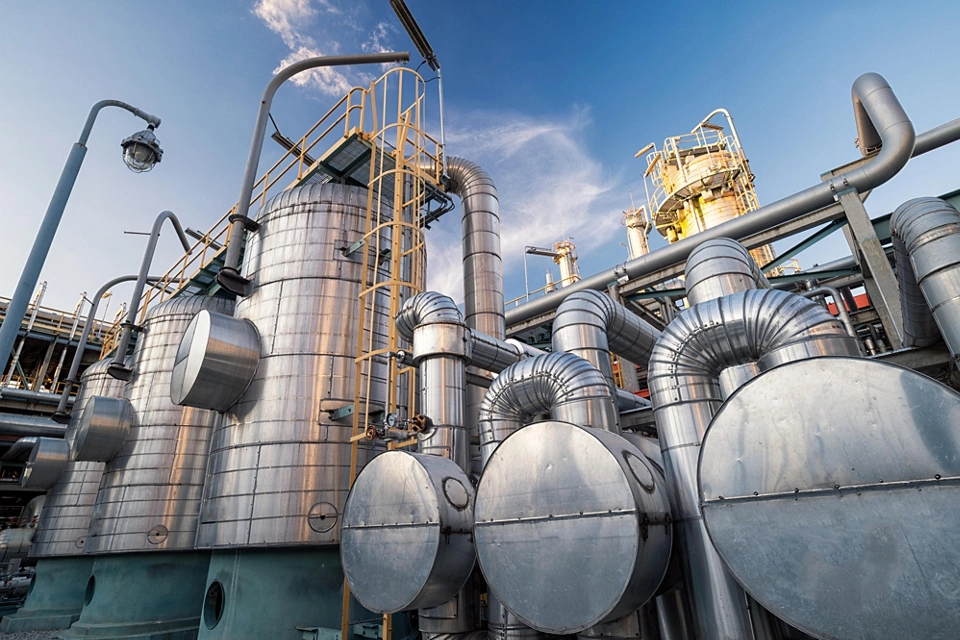
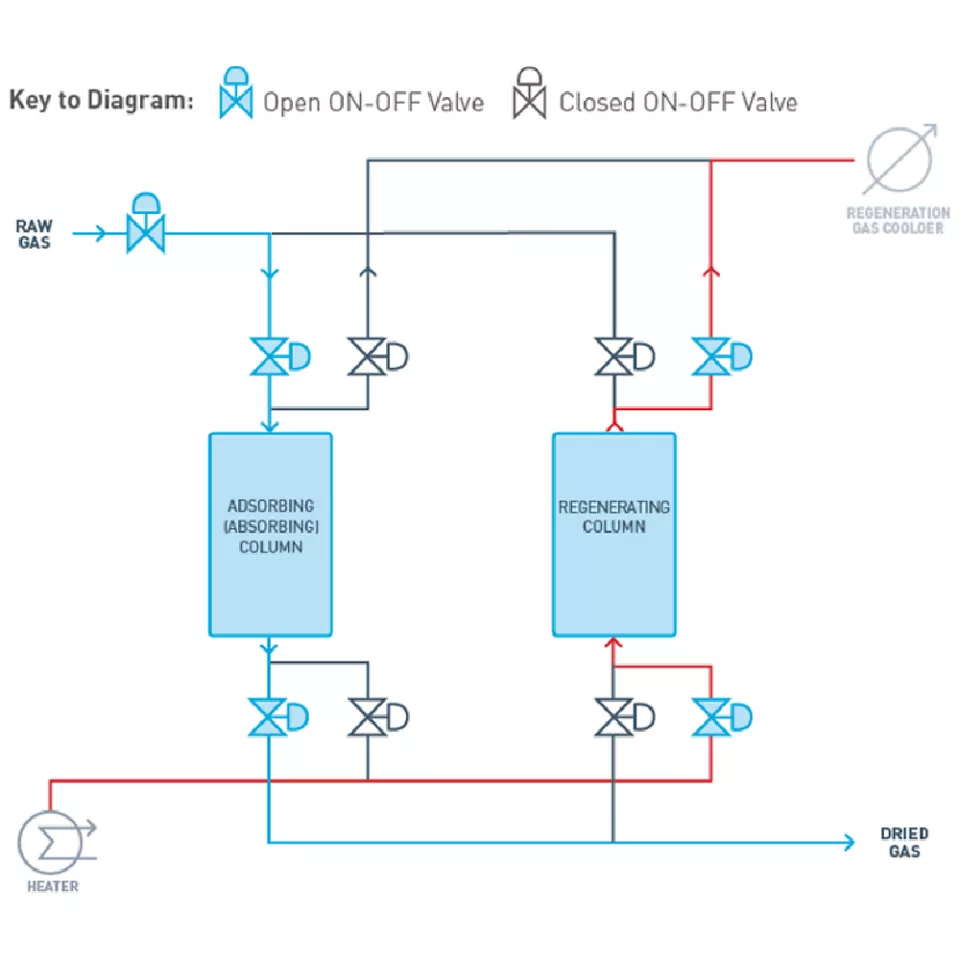
Procédé de tamis moléculaire
Le procédé consiste en plusieurs cuves fonctionnant en parallèle et comporte trois étapes principales :
Le gaz est acheminé à travers une cuve contenant un matériau dessiccatif.
Avant d’atteindre la saturation, le procédé passe à la régénération. La cuve est isolée et chauffée afin d’éliminer l’eau et les impuretés. Le gaz de procédé est dirigé vers une cuve adjacente.
La cuve passe ensuite par une phase de refroidissement. Une fois le refroidissement terminé, le flux de gaz est réintroduit dans la cuve, tandis que la cuve adjacente est isolée et commence sa séquence de régénération.
Défis liés à l’utilisation des vannes à tamis moléculaire
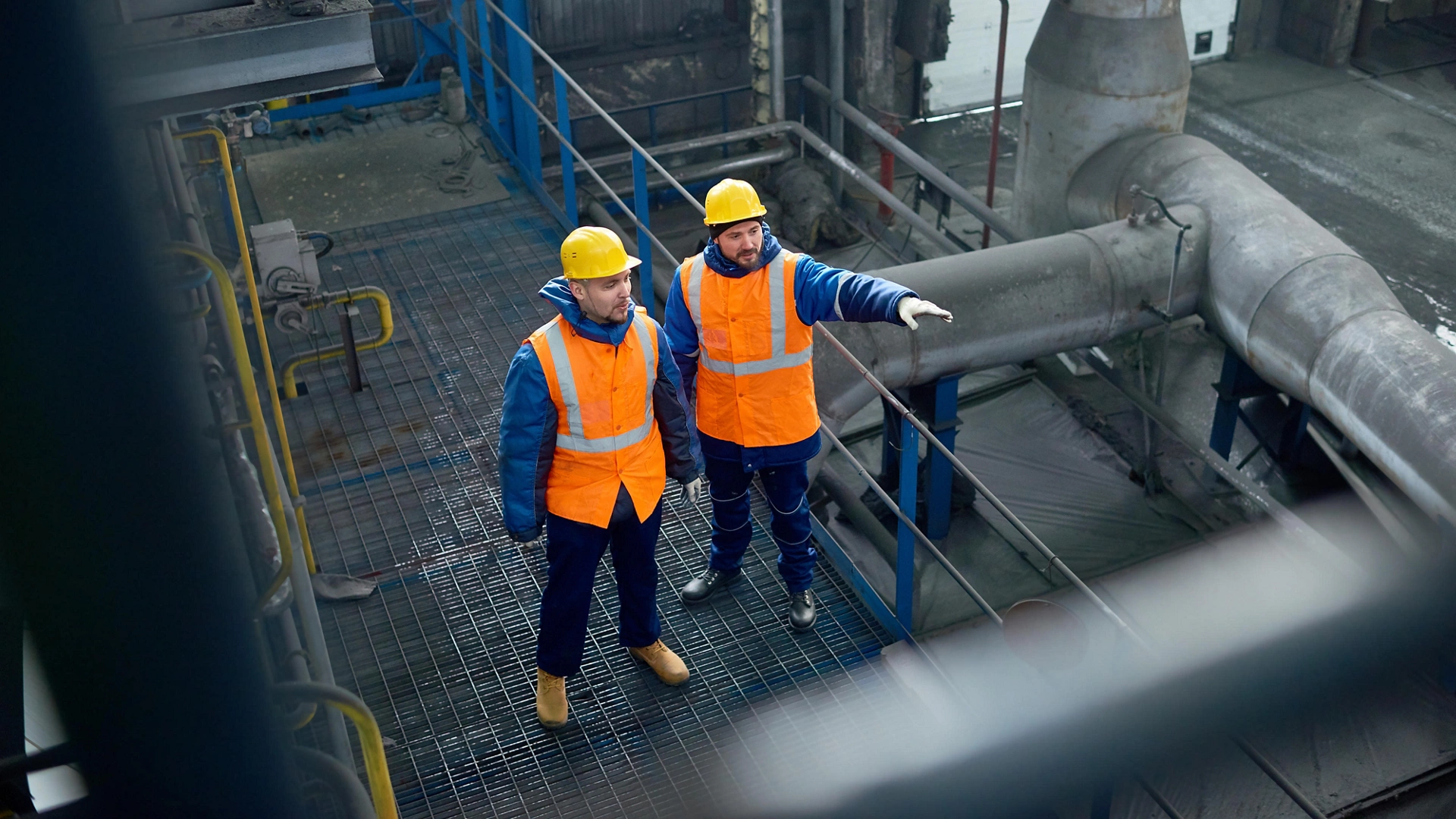
Cycle fréquent
Le cycle fréquent des vannes, où le cycle de régénération se produit entre 1 et 8 fois par jour, peut entraîner une usure plus rapide en raison de la fréquence accrue de fonctionnement.
Plus une vanne est sollicitée, plus elle s’use vite.
À quoi ressemble une vanne à tamis moléculaire de qualité supérieure ?

Solutions de vanne innovantes
Les vannes à triple décalage (TOV) constituent une solution avancée pour le tamisage moléculaire grâce à leur conception et à leur capacité à supporter des conditions extrêmes.

Conception à triple décalage
La combinaison ingénieuse du concept de rotation triple excentration avec des angles d’appui optimisés et d’un anneau d’étanchéité métallique flexible, permet de garantir une étanchéité optimale dans toutes configurations.

Rotation quart de tour
Les caractéristiques de rotation des vannes à triple décalage (TOV) se traduisent par un encombrement et un poids réduits, une meilleure maniabilité, une réduction des émissions fugitives et une durée de vie prolongée des vannes.

Bague d’étanchéité robuste mais flexible
La résilience de la bague d’étanchéité métallique permet une répartition uniforme de la force de contact sur toute sa circonférence, garantissant une excellente étanchéité et compensant les légères différences de dilatation entre le corps et le disque. Le choix des matériaux et le calcul des jeux/tolérances tiennent compte de la dilatation des matériaux dans le cadre des transitoires thermiques.
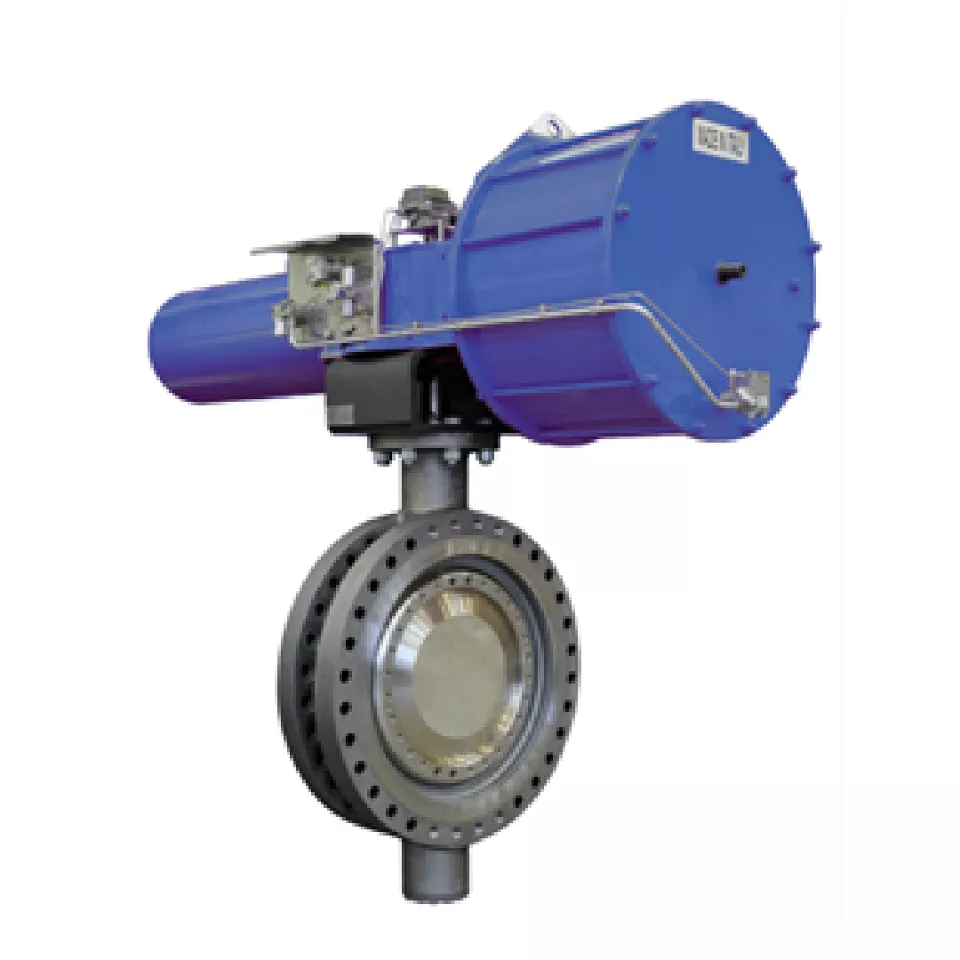

Conception sans frottement
La conception à triple décalage sans frottement élimine complètement l’usure entre les composants d’étanchéité. L’ensemble du système de garniture, y compris les roulements et le palier de butée, est conçu pour les services intensifs.

Joint d’étanchéité cône-cône
Les vannes à triple décalage (TOV) utilisent un système d’étanchéité et sont composées d’un siège immobile et une surface d’étanchéité rotative de forme identique : une section conique inclinée.

Vanne de procédé ultime
La technologie à triple décalage a évolué pour offrir un serrage métal sur métal, une rotation quart de tour sans frottement et une résistance aux conditions d’utilisation les plus difficiles.

Conception compacte
Les vannes à triple décalage (TOV) permettent une réduction significative de l’encombrement par rapport aux vannes à boule classiques, tout en minimisant les besoins et les coûts de maintenance.
Questions fréquentes sur les vannes à tamis moléculaire
Les vannes qui contrôlent la commutation des tours sont appelées vannes de commutation.
Contrairement à la plupart des vannes d’isolement, les vannes de commutation à tamis moléculaire fonctionnent comme un séparateur entre deux flux, le flux de traitement étant séché et le gaz chaud régénérant les lits.
Les vannes de commutation à tamis moléculaire optimisent les performances du système en garantissant un fonctionnement efficace et continu dans diverses applications industrielles et scientifiques.
Les meilleures solutions de vannes pour les processus à tamis moléculaire sont les vannes à siège métallique, en raison de leur capacité à résister aux conditions difficiles rencontrées dans ces applications.